

A Monday night in late September has a way of shrinking a long season into one lighted rectangle. The noise arrives earlier, the broadcast booth leans closer, and a missed fit feels larger than it will on an ordinary Sunday. This Bears Eagles Week 3 preview starts from that pressure, and from the thinner truth underneath it. Chicago and Philadelphia meet while the league is still sorting sturdy contenders from teams that only looked ready in August. Two games make a short file. It is also the only file that counts until the ball is snapped under those lights.
Why the stage changes the math
Prime time does not rewrite the rule book, but it does change how mistakes travel. A busted coverage is not a private error between hash marks. It becomes a national clip before the next commercial. Coaches know this, and players know it, which is why the first series often looks tighter than the talent on the field would suggest. Both clubs will want an early answer that settles the sideline: a sustained drive, a clean stop, something that says the week of preparation survived contact.
For a broad audience, the useful point is not mystique. It is attention. Officials, pass rushers, and return units all operate with less room to hide. A holding call that might pass unnoticed in a noon window becomes part of the story. That is the real Monday tax. It rewards teams that can play within themselves when the camera is impatient.
Quarterbacks and the burden of early judgment
By Week 3, every throw is treated as evidence. That is unfair, and it is also how the sport works. Chicago’s offense will be judged on whether the quarterback can find a rhythm without forcing the spectacular. Philadelphia will be judged on whether its passer can punish a defense that has had a fortnight to study his first reads. Neither question is settled by a highlight or a groan from the couch.
Watch the second reaction, not only the first throw. When the initial concept is covered, does the ball come out to a checkdown with composure, or does the play become a scramble that invites a strip? Late September is a poor time for hero ball, even if hero ball photographs well. The cleaner path is repetition: play action that actually sells, pockets that last long enough for a route to finish, and a willingness to take the modest gain that keeps the sticks moving.
Protection tells you as much as arm talent. If the edges collapse early, the preview conversation about scheme becomes academic. If the pocket holds, you can finally see whether the design matches the man asked to run it.
The line of scrimmage still runs the show
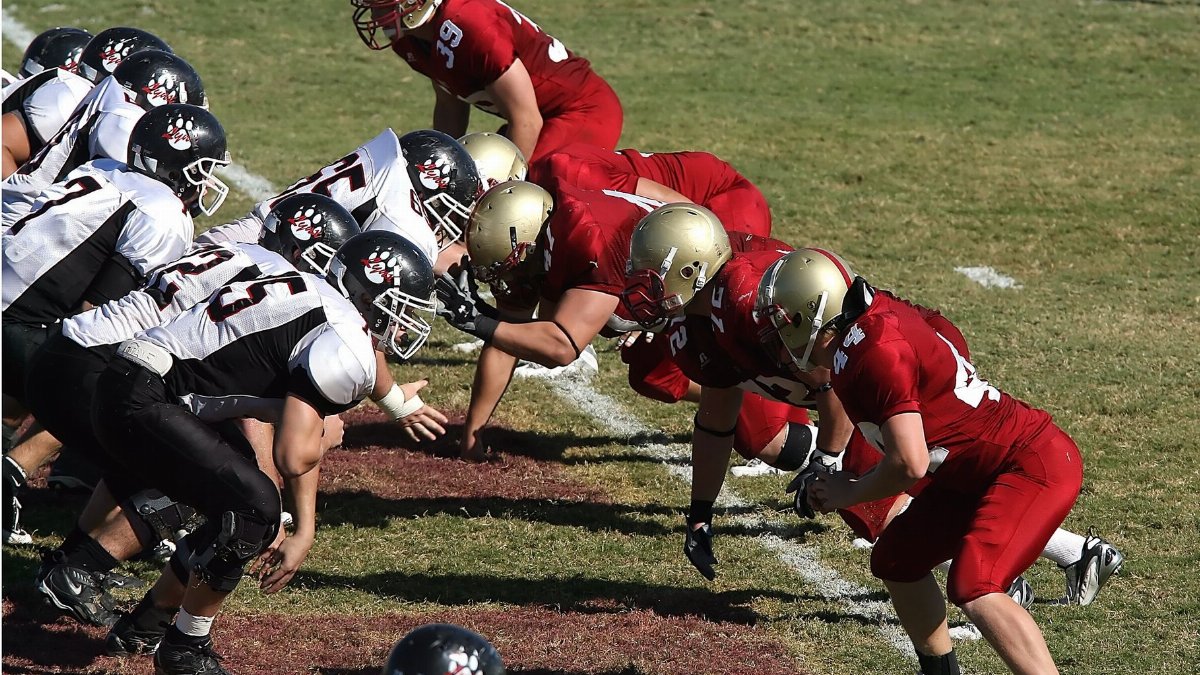
Any serious Bears Eagles Week 3 preview has to live in the trenches before it lives in the skill positions. Philadelphia has built recent success on a physical front that can both move people in the run game and rush without extravagant blitz volume. Chicago’s path on Monday night depends on whether its own front can disrupt that comfort and whether its offensive line can keep the quarterback off the ground on obvious passing downs.
Run fits are the quiet scoreboard. A linebacker who shoots the wrong gap does not show up in a fantasy column, but he shows up in a nine play drive that never faces third and long. Conversely, a defensive tackle who wins the first step can make a designed run look broken before the back has the ball. Those are the snaps worth rewinding, even if the television cut stays on the ball carrier.
Pass rush without coverage is noise. Coverage without a rush is a slow leak. The interesting matchup is the pairing: can either side generate pressure with four, and can the other side answer with chips, slides, and hot throws that do not become interceptions? That exchange, more than any pregame ranking, will decide which offense looks coherent after halftime.
Injuries and the roster that actually takes the field

Injury reports in this part of the calendar are half medical update and half gamesmanship. A name listed as questionable on Friday may be a decoy, a limitation, or a genuine absence by Monday. Readers should treat midweek certainty as a rumor with better stationery. What matters is the functional roster: who can cover, who can rush, who can stay on the field for a full series without a substitution that tips the play call.
Depth is not a moral virtue. It is a tactical one. If a starting corner is limited, the opponent will test the replacement early, often with a vertical route that forces a decision before the safety can help. If an interior lineman is shelved, the run game shrinks and the play sheet shrinks with it. This Bears Eagles Week 3 preview cannot honestly name a final inactive list from a distance. It can say that the team which adjusts its menu to the bodies available, rather than mourning the menu it drew up in July, will look like the more professional side.
Watch the pregame warmups with a narrower eye than usual. Who is cutting, who is only jogging, who is absent from the individual period. Those images are imperfect, but they are more current than a Wednesday quote.
Coverage, explosives, and the price of a missed fit

Modern offenses do not need to sustain ten play marches if they can steal a chunk play. That reality puts a premium on eye discipline. A single high safety who bites on play action can turn a modest concept into a touchdown before the broadcast crew finishes the sentence. Both defenses will talk all week about keeping the ball in front. The test is whether they actually do it when the formation is ambiguous and the quarterback’s eyes sell the fake.
Chicago will want to shrink the field and make Philadelphia earn points in the red zone, where space disappears and physical corners matter more than raw speed. Philadelphia will want the opposite: explosives that flip field position and keep Chicago’s offense in long down and distance. Neither plan is exotic. Execution is the exotic part.
Also watch the underneath. A defense obsessed with the deep ball can be bled by crossers, sticks, and swing passes that are not glamorous and are very hard to stop for sixty minutes. The team that mixes those grains with an occasional shot downfield will control the emotional temperature of the night.
Special teams as a quiet plot twist
Kick coverage and return lanes rarely lead a preview, which is why they so often decide a one score game. A muffed punt, a long kickoff return, or a field goal unit that cannot get the snap and hold right under noise can erase a quarter of careful offensive work. Monday environments are loud. Silent counts and operation details are not trivia.
Field position is a form of defense. Pinning an opponent inside its own twenty is worth more, on many nights, than a speculative fourth down attempt from midfield. Coaches who treat special teams as an afterthought usually discover the cost in the fourth quarter, when the math is no longer abstract. If this game tightens, look there before you look for a conspiracy in the play calling.
What two weeks of tape can and cannot teach
Tape is real, and it is also a trap. Coordinators will have answers for what they saw in Weeks 1 and 2, which means the thing you expect may be the thing that does not appear. A heavy personnel grouping from last Sunday might be a decoy. A blitz that worked against a shaky line might be sat on, replaced by a simulated pressure that drops an extra body into coverage.
The honest use of early film is tendency, not prophecy. Which side of the formation does a runner prefer? Does the quarterback check to a run when he sees a light box, or does he ignore the box and throw anyway? Does the defense disguise late, or show its hand before the snap? Those habits travel. Specific play calls do not.
Chicago’s staff and Philadelphia’s staff will each try to steal a series with something the other has not faced in a game yet. The first answer to that wrinkle, more than the wrinkle itself, reveals which sideline is truly prepared.
How the crowd and the clock interact
Home noise is not a personality trait. It is a communication problem. If Philadelphia is at home in this spot, silent counts, wristbands, and tempo become part of the defensive plan as much as the offensive one. A delay of game is not a small footnote when it turns a makeable field goal into a longer one, or a fourth and short into a punt. Visitors who cannot operate cleanly in the first quarter often spend the second quarter playing from behind the sticks.
Clock management deserves the same attention. A team that scores quickly and then cannot stop the opponent gifts the ball back with time still on the side. A team that drains the clock without points can lose the night while looking physical. Balance is the unfashionable goal: enough urgency to punish a tired defense, enough patience to avoid the empty possession.
A careful way to talk about predictions

Predictions are a genre, not a science. They satisfy the desire for a score before the score exists. A responsible Bears Eagles Week 3 preview can describe leanings without pretending the future has already been filmed. Philadelphia enters nights like this with a recent reputation for physical, well coached football and a quarterback who can extend plays. Chicago enters with the burden and the opportunity of a franchise still trying to prove that its offensive investment can survive a defense that does not gift easy looks.
If forced to a lean, the sounder one follows the line of scrimmage and the injury reality on Monday afternoon, not a national narrative written in July. Whichever club wins the early downs, protects the quarterback, and avoids a special teams disaster will be the club most viewers remember as the better team. That is less satisfying than a bold number, and it is closer to how these games are actually lost.
The rest is weather, whistles, and the small courage of taking the checkdown when the home run is covered. Those details will not trend. They will decide the night.
What a casual viewer can track without a coach’s sheet

You do not need a telestrator to follow the important things. Count how often the quarterback is hit, not only how often he is sacked. Notice whether running backs are met at the line or five yards downfield. See if receivers are open because of design or because a defender fell. Listen for whether the offense can change the play at the line without burning a timeout.
Those four checks will tell you more than a pregame graphic. They also keep the evening honest. Football at this level is a craft sport dressed up as theater. The theater is real. The craft is what separates a flattering September from a season that still has meaning in December.
However the night breaks, the useful memory is specific. Not that one club is back or buried, but which problems looked structural and which looked like a bad Monday. That distinction is the whole point of an early Bears Eagles Week 3 preview, and it is the only one that ages well once the lights go down.