
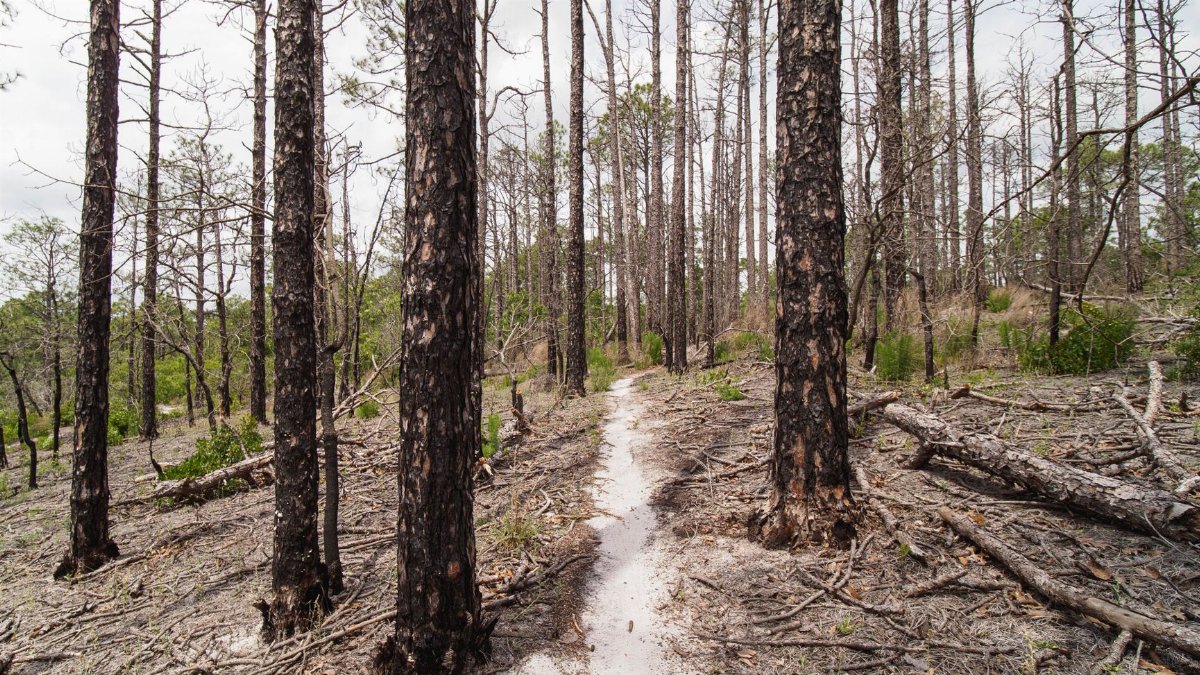
On a foggy morning along the Mendocino coast, the redwoods do not look like a policy problem. They look like a cathedral that someone forgot to roof. Visitors walk the trails. Tribal leaders speak of relatives in the canopy. The state still runs these acres as demonstration forests built, in an earlier century, to show how commercial logging could be practiced with a measure of care. That tension is what made the Newsom AB 2494 veto feel larger than a routine missing signature. The bill would have pulled those forests away from a commercial logging mandate and toward conservation, with tribal stewardship closer to the center of the work.
What the measure actually asked for

Assembly Bill 2494 was not a ban on every saw in a state forest. It was a change in purpose. California demonstration state forests were created to test and display timber practices, and the commercial harvest has long sat at the core of that mission. The bill would have shifted that center of gravity. Conservation, research, and tribal stewardship would have defined the work. Logging, where it continued, would have had to justify itself against those newer aims rather than the other way around.
Supporters described a forest system that had outgrown its founding brief. Climate stress, public recreation, and tribal claims on ancestral land do not fit neatly inside a demonstration of industrial forestry. Opponents heard something else: a quiet rewrite of a working landscape, with jobs, county revenue, and a research tradition put at risk. The Newsom AB 2494 veto landed in that gap, and it did not close it.
Demonstration forests and an older idea of progress
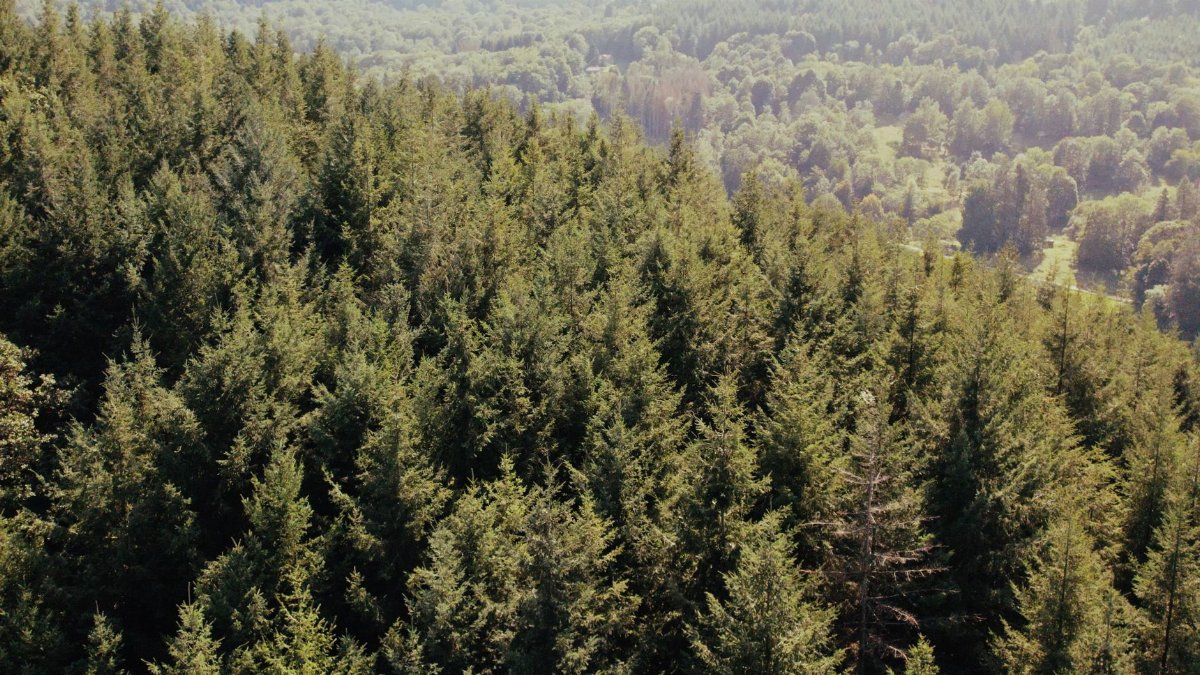
The demonstration forests are a peculiar California institution. They are public land managed to show landowners and students how trees can be grown, cut, and grown again. Jackson Demonstration State Forest, the best known of them, sits in coast redwood country where almost every stand carries a human history. Some of that history is scientific. Some of it is extractive. Some of it is older than the state.
For decades the model had a certain logic. If private timberland was going to be cut anyway, the state could model better methods on its own ground. Roads, stream buffers, and harvest intensity could be studied in the open. The trouble is that the audience changed. Many Californians no longer want a public forest whose first job is to prove that logging can be done. They want a public forest that stores carbon, shelters wildlife, and remains standing.
A commercial mandate under new weather

A mandate is a stubborn thing. It tells an agency what success looks like before the season begins. In these forests, success has often been measured in volume removed and lessons learned for the timber trade. That metric is not imaginary. Mills still need wood. Rural counties still watch the tax base. Researchers still want sites where they can compare treatments over decades.
Yet the weather has changed the argument. Hotter summers, longer dry spells, and fires that run farther than old plans assumed have made a purely commercial brief feel thin. A forest managed first for harvest can still be a laboratory. It is a poorer answer to a public that now asks what the trees are worth if they are left to do their older work: shade a stream, hold a slope, keep carbon out of the air.
Tribal nations and a claim the state cannot file away
The tribal dimension is not a footnote. Coast redwood country is the homeland of peoples who were removed, confined, and then asked to watch their forests become someone else’s classroom. Shared stewardship, in this setting, is not a courtesy. It is a correction, partial and late, of a legal order that treated Indigenous knowledge as folklore and tribal governments as spectators.
AB 2494 would have given that correction a statutory place inside the demonstration system. It would not have returned every acre. It would have said that conservation and tribal authority belong in the mission, not in a side agreement that can be narrowed when timber targets slip. Tribal leaders have argued for years that ceremony, food, medicine, and the health of salmon streams are management criteria, not sentimental additions. A bill is one way a state admits that those criteria count.
Why a governor says no

Veto messages are a genre of their own. They praise the aim, name a flaw, and leave the politics half visible. In this case the public record points to a familiar cluster of concerns: how the shift would be funded, how existing research would continue, how contracts and local economies would absorb a change in mandate, and whether the bill did more than the executive branch was ready to carry out by regulation and agreement.
I have read enough of these letters to know that a veto is rarely only about the paragraph that explains it. Newsom has signed major climate and tribal measures and has also guarded the practical machinery of state agencies. A forest bill that rewrites a mandate touches Cal Fire, the timber sector, county budgets, and a research network built over generations. The Newsom AB 2494 veto reads, in that light, as a refusal to let the statute get ahead of an administrative plan the governor was willing to own.
Conservation advocates and the timber towns

On one side of the hearing rooms were groups that have spent years trying to slow or stop commercial logging in Jackson and its sister forests. They argue that a public redwood forest should not be a showroom for the industry that reduced the old groves to fragments. They point to recreation, water, and the simple fact that second growth redwood, left alone, can become remarkable within a human lifetime.
On the other side were mill workers, contract loggers, and local officials who hear conservation as a synonym for disappearance. A demonstration harvest is not the gold rush. It is still a paycheck, a truck on the highway, a reason a school stays open. Any honest account of this veto has to hold both facts. The ecological case for easing the commercial mandate is strong. The social cost of doing it carelessly is real. Pretending either side is inventing its injury does not make a better forest.
What shared stewardship can mean without a new statute
A veto does not freeze the woods. The state can still expand tribal consultation, alter harvest levels, retire certain stands from commercial entry, and fund research that is not designed to serve the mill. Memoranda and management plans are slower than a statute and easier to reverse, which is precisely why advocates wanted the bill. They are also how much of California land policy actually moves.
Shared stewardship, done seriously, means more than a seat at a meeting. It means tribal governments help set objectives, review projects before they are real, and hold authority that does not vanish when staff changes. It means the state accepts that some places will not be cut because cutting them would break a relationship older than the demonstration program. None of that required AB 2494. All of it is harder to lock in without it.
The politics of a careful refusal

California’s governor sits at the junction of climate ambition and institutional caution. Forests are useful to both instincts. They photograph well in a climate speech. They also employ people, generate receipts, and belong to agencies that do not like surprise. A bill that sounds like a moral correction can still fail a governor’s test if the fiscal note is fuzzy or the implementation path runs through a fight he does not want this year.
Readers outside Sacramento often treat a veto as a verdict on values. Sometimes it is. Sometimes it is a verdict on timing, drafting, and which coalition showed up with a workable second draft. The Newsom AB 2494 veto belongs in that second category as much as the first. The values were not obscure. The machinery was.
Forests as kin, not only as inventory
There is a reason this fight keeps returning to language that sounds, to a secular ear, almost religious. Tribal witnesses do not describe redwoods as fiber. They describe beings, teachers, and the conditions of a people’s continuity. That is not a metaphor pasted onto a resource debate. It is a different accounting system, one in which a tree’s worth is not exhausted when its board footage is known.
A broad public does not have to share every ceremony to see the point. Many Californians already walk these trails looking for something the timber tables do not measure: quiet, scale, a sense that the state still contains places not organized around extraction. The demonstration forests were built to teach a craft. They have become, without anyone planning it, a referendum on what the public thinks a forest is for.
Research that does not require a saw

Defenders of the old mandate often say the forests exist so that science can happen in the open. That claim deserves respect and also a question. Science in a coast redwood stand can study decay, wildlife response, stream temperature, and the return of complex structure in stands that are not entered by logging equipment. A commercial mandate is one research design. It is not the only one, and it is not a neutral one. It selects for questions that assume harvest.
If the state wants these acres to remain a laboratory, it can say so without saying they must remain a sales floor. Long records of growth and yield are valuable. So are long records of what happens when the saw stays in the truck. A revised mission could have kept the plots and retired the presumption. That was the offer on the table. It did not become law.
Counties, receipts, and the fear of a hollow promise

Local governments in timber country have heard promises before. When harvest declines, advocates of conservation often speak of tourism, restoration jobs, and state backfill. Some of that arrives. Some of it arrives late, or in a form that does not replace a family wage. Skepticism in those counties is not merely industry talking points. It is memory.
Any future bill that revisits this ground will have to be more concrete about money. Which receipts change. Which workers are offered restoration and monitoring work at comparable pay. Which county services are insulated during a transition. A moral argument about ancestral forests can be true and still lose if it treats rural economies as an externality. The veto, whatever else it was, reflected that political fact.
What the public record does not settle

No single document tells a citizen how many acres would have left commercial entry, how tribal authority would have been exercised stand by stand, or how research plots would have been protected. Those details lived in the bill text, the committee analyses, and the arguments that never quite became a consensus. Readers who want the grain of the statute should read it, and should read the veto message beside it, rather than trust a slogan from either camp.
What the record does settle is the direction of travel. A Legislature was prepared to say that demonstration forests should no longer be defined by a commercial logging mandate. A governor was not prepared to sign that sentence. Between those two facts sits the next session, and the forests themselves, which do not wait on either.
After the signature that did not come

The trees will not notice the Newsom AB 2494 veto. The people who walk under them will. Tribal governments will decide whether to invest more political capital in statute or in the slower work of plans and agreements. Conservation groups will test whether public pressure can shrink harvests even without a rewritten mission. Timber interests will treat the veto as proof that the old purpose still has a defender in the horseshoe.
A state that calls itself a climate leader cannot keep treating its most visible public forests as a demonstration of commerce and expect the argument to stay technical. The bill failed. The question it asked is still standing in the fog, taller than the politics that declined to answer it. If lawmakers return to this ground, they will need a text that names tribal authority with precision, funds the transition without euphemism, and tells rural counties the truth about what will change. Until then, the demonstration continues, and so does the dissent.