
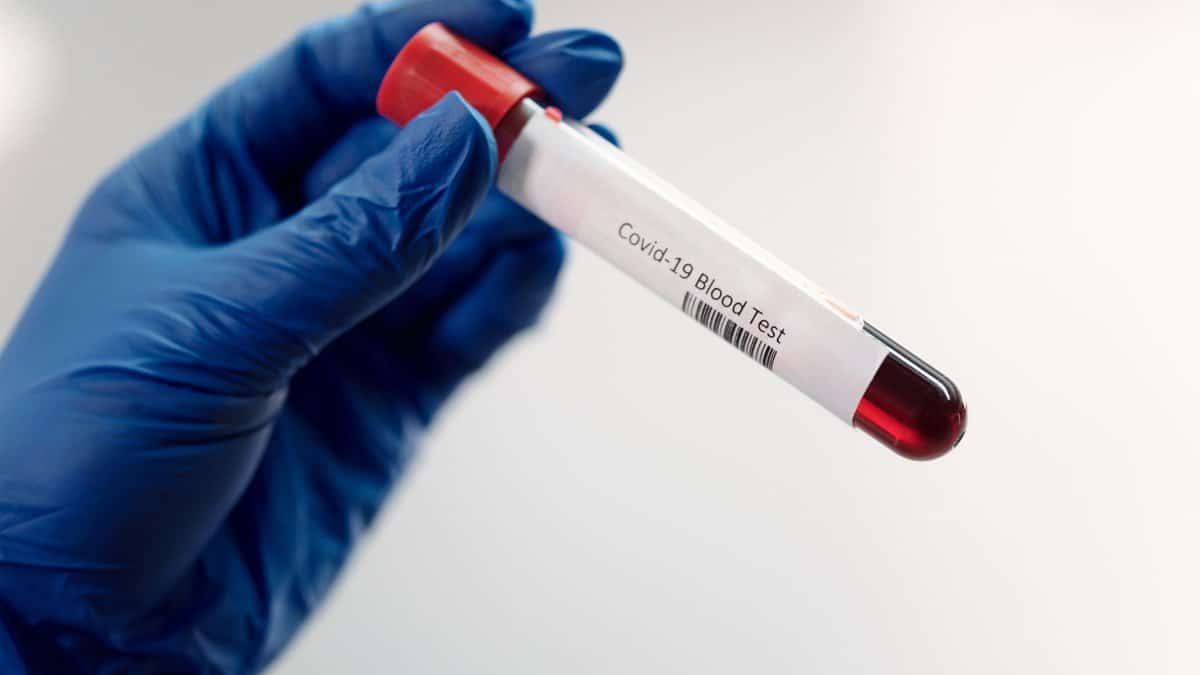
A nurse tightens a band around an arm, the vial fills, and the visit ends with the ordinary feeling that nothing dramatic has happened. For a growing number of adults, that quiet draw is being asked to do something far larger than check cholesterol. The Galleri cancer blood test searches a blood sample for a signal associated with many cancers at once, then suggests where in the body a tumor may be hiding. Mayo Clinic researchers have supplied evidence that federal advisers are now weighing, including accounts that the test surfaced 173 cancers patients did not know they had. The promise is earlier warning. The harder question is what a warning is worth when medicine must still show that finding cancer sooner saves lives without sending worried people through needless scans.
What a single vial is being asked to find

Most familiar cancer checks look for one disease in one organ. A mammogram is not a colonoscopy. A stool test is not a low dose scan of the lungs. Galleri takes a different bet. It reads patterns in cell free DNA, fragments of genetic material that drift into the bloodstream from dying cells. Tumors tend to leave a chemical signature, especially in how methyl groups sit on that DNA. The assay looks for a shared cancer signal and then offers a best guess about the tissue of origin, a clue meant to guide the next scan rather than to stand as a final diagnosis.
That design is why the test can, in principle, flag cancers that have no routine screening test at all. Pancreatic cancer, ovarian cancer, and many others often announce themselves late. A blood test that noticed them earlier would change the calendar of illness. It would not, by itself, change the biology. A signal is not a mass on a film, and a mass on a film is not proof that treatment will add years of healthy life. Doctors who use the test still send patients onward for imaging, endoscopy, or biopsy. The vial starts a search. It does not finish one.
The Mayo record now sitting with regulators

Mayo Clinic has been central to the American case for this technology. Its investigators helped enroll people who felt well enough to join a study and then watched what happened when a cancer signal appeared. Reporting on that work, now part of the record moving toward federal review, describes 173 cancers that had been hidden from both patient and clinician before the blood was drawn. For families who have buried someone after a late diagnosis, that number lands with moral force. A cancer found in a person who had no lump, no persistent cough, and no reason to be in an oncology waiting room feels like a rescued future.
Earlier published work pointed in a similar direction, with important limits. The PATHFINDER study, reported in The Lancet and indexed at PubMed, followed adults who received a multiple cancer blood test and then standard diagnostic follow up. A cancer signal was uncommon. When it appeared, a substantial share of those signals led to a confirmed cancer, and many of those cancers were types that routine screening does not cover. Specificity was high, which matters in a healthy population, because a test used widely cannot afford to be wrong often. None of that settles the hardest endpoint: fewer deaths.
An advisory blessing is not a finished approval

An FDA advisory panel can recommend. It cannot, by itself, put a product on the market under a new federal label. Advisers weigh whether the data match the claim a company wants to make, whether the risks are explained, and whether the proposed use is narrow enough to be honest. A favorable vote, which reporting has described in this case, shifts the political and scientific weather. Career scientists at the agency still write the decision. They can narrow an indication, demand warnings, or ask for more evidence.
Readers should keep that sequence straight. A headline that says a test is advancing toward approval is not the same sentence as a headline that says the test is approved. The Food and Drug Administration has spent years trying to bring more laboratory developed tests under clearer oversight, and multiple cancer detection has become a test case for how fast the agency should move when the public desire is intense and the mortality data are still maturing. Speed and rigor are both forms of care. Choosing only one of them is how regulators lose trust.
The ordinary terror of a positive line

Imagine the call. A coordinator says the blood showed a cancer signal, perhaps pointing toward the pancreas or the lymphoid system. Nothing hurts. Work is busy. A child has a game on Saturday. Suddenly the week is a sequence of scans, a possible endoscopy, and nights spent reading worse case stories. Some of those patients will learn they have a treatable tumor. Some will learn the signal was a false positive, a statistical ghost that still consumed months of attention and a measurable dose of fear. A few will learn they have a cancer so slow, or so advanced, that finding it changed the label more than the outcome.
This is the ethical core of screening, and it is older than any blood test. The United States Preventive Services Task Force has always asked not only whether a test can find disease, but whether finding it helps more people than it harms. Harm here is not theatrical. It is contrast dye, radiation, biopsies that bleed, surgeries for lesions that would never have mattered, and the quiet tax of anxiety. A test with elegant science can still fail that test of net benefit. Mayo physicians have been frank, in public comments and in institutional materials at Mayo Clinic, that a signal requires a careful diagnostic path and that no blood test replaces colonoscopy, mammography, cervical screening, or lung screening in people who already qualify.
Who is likely to be offered it, and who is not

If regulators eventually clear the Galleri cancer blood test for a defined use, the first eligible group will almost certainly be older adults at average or elevated risk, not young people shopping for reassurance. Cancer incidence rises with age, so the chance that a signal is real rises too. In a younger adult the same assay would produce more worry per true cancer found. Pregnancy, active cancer treatment, and a recent cancer diagnosis are typical reasons to stay away from a screening claim. A test built to search the well is a poor tool for monitoring the already sick, unless studies designed for that job say otherwise.
Primary care doctors will carry the practical burden. They will have to explain a result that sounds definitive and is not. They will have to know which scan matches which predicted tissue. They will have to tell a patient with a negative result that a negative result is not a pardon. Many cancers shed too little DNA to be seen. Interval cancers, the ones that appear between tests, will still appear. The honest script is short: this may add a net, it does not replace the nets already shown to save lives, and a quiet result is not immortality.
Price, coverage, and the shape of a checkup

Money will decide who meets this technology. The Galleri cancer blood test has often been offered for a cash price near 949 dollars when insurance does not pay, a figure that company materials at GRAIL and clinic billing offices have made familiar. That is less than a year of some specialty drugs and more than many households can spare for a test their plan calls experimental. Medicare coverage, if it comes, will not arrive as a courtesy. It will arrive because advisers conclude that the test improves outcomes enough to justify public spending, or because Congress tells the program to pay before that conclusion is firm.
Either path reshapes the annual physical. A visit that once meant blood pressure, a lipid panel, and a lecture about walking more could include a vial aimed at dozens of cancers. Some patients will want that vial the way an earlier generation wanted a total body scan. Others will hear the price and the uncertainty and decline. Equity sits in that gap. People with concierge doctors and spare cash will learn their cancer signal status years before people who struggle to get a colonoscopy that is already recommended. A scientific advance that sorts Americans by wallet is still an advance. It is also a policy failure if public coverage and clear rules lag behind the marketing.
What earlier still does not guarantee

Finding cancer at a smaller size is not automatically finding it in time. Some tumors are born aggressive. They seed distant sites before any blood test, however sensitive, can name them. Others linger for years and would have been curable even if found later, by a symptom or by an older screening test. Lead time can make survival statistics look better without adding a single day of life, because the clock starts sooner. Randomized trials that follow people to death, not merely to diagnosis, are the only clean way to separate those stories. Those trials are large, slow, and expensive. They are also the reason a careful reader should treat every sensitivity percentage as a beginning.
There is a second limit that has nothing to do with methylation chemistry. Treatment has to exist, and it has to be tolerable, for early news to be good news. A pancreatic signal found at a stage when surgery is possible is a different gift from a signal that only moves a hospice conversation forward by two months. Both findings matter to the person who receives them. Only one matches the hope printed in advertisements. Journalists and clinicians owe readers that distinction every time they quote a detection count, including the 173 cancers in the Mayo centered record.
Hope, ritual, and the wish to know

Health news of this kind travels in a culture that already treats the body as a text to be read before it speaks. Annual labs, wearable monitors, and genetic reports have trained people to expect a number that predicts the future. A cancer blood test fits that hunger. It also brushes against older questions that hospitals never fully medicalize. What do we owe one another when the future is suddenly less abstract? Who sits with the patient between the positive signal and the scan? Chaplains, adult children, and partners often do as much work in that interval as any algorithm.
None of that mysticism belongs in a regulatory dossier. All of it belongs in a clear eyed account of why the Galleri cancer blood test has drawn such attention. People are not only buying a laboratory service. They are buying a story in which vigilance is a form of love, and in which fate can be negotiated if the paperwork is done early enough. That story can be true in individual cases. A surgeon who removes a still local tumor because a blood test pointed the way has altered a life. The story becomes false when it is sold as a general law. Medicine does not owe anyone a bargain with death. It owes them honest odds.
How to read the next headline

The next months will bring more numbers, a possible agency decision, and a wave of clinic emails offering appointments. A useful reading habit is simple. Ask what the test was compared with, not merely what it found. Ask how many false positives followed each true cancer. Ask whether deaths fell, or only diagnoses rose. Ask who paid, and who was absent from the study. Ask whether standard screening was continued, because a new net that leads people to abandon an old one can do harm even if the new net works.
Mayo Clinic research has made the scientific case harder to dismiss. Federal advisers have signaled that the evidence deserves a serious look. That is a real step for the Galleri cancer blood test, and for the wider idea that one blood draw might survey many organs. It is not a benediction. Until trials show fewer funerals, not merely more discoveries, the responsible stance is interested, specific, and unfinished. Patients who are offered the test deserve that tone from their doctors. Readers deserve it from the news.