
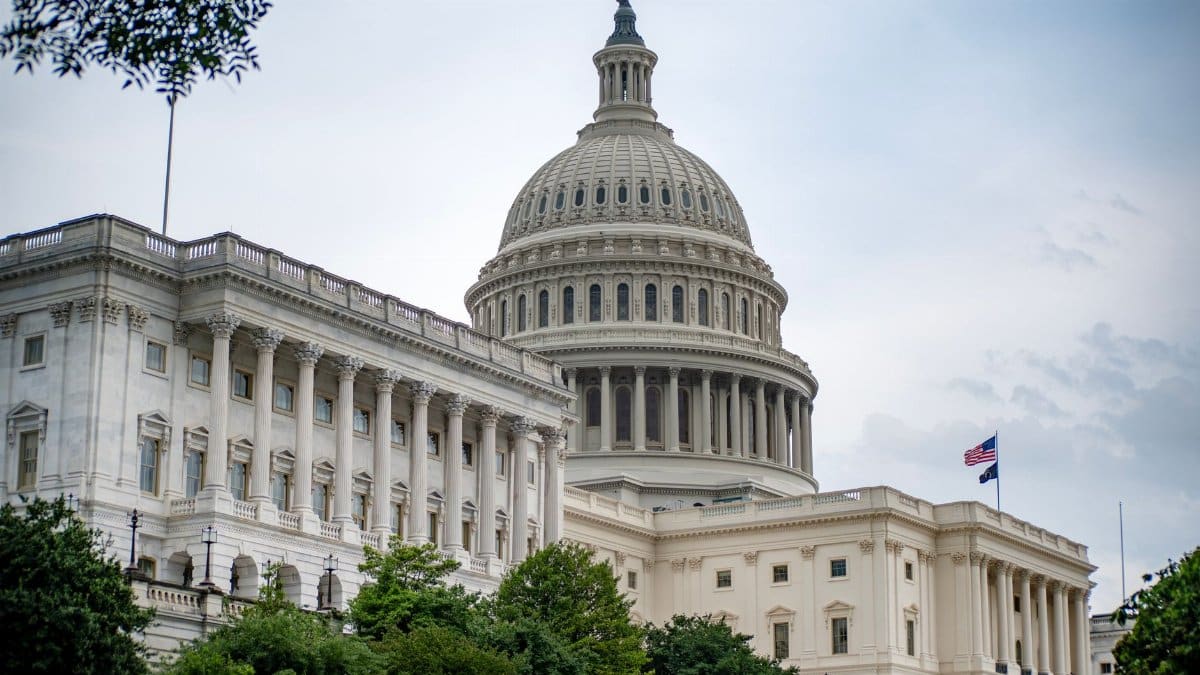
On a weeknight when most of Conroe is thinking about traffic on Interstate 45 rather than orbits, two members of the City Council have asked their colleagues to consider something far larger than a zoning case. They want the city to test whether it can mount a Conroe Space Academy bid for a national training campus that President Donald Trump has tied to the Houston region. The request is not a finished plan. It is a probe: can a fast growing Montgomery County seat, better known for timber money, lake weekends, and suburban spillover, stand in a competition that Houston will treat as its own?
A council conversation that outgrew the agenda

City halls are built for drainage bonds, hotel taxes, and arguments over where a new fire station belongs. Space academies do not usually appear between those items. That is why the suggestion landed with a jolt. Two council members did not claim Conroe had already won anything. They asked for permission to find out whether a bid was even plausible, and whether staff time should be spent on a letter, a site list, or a meeting with people who actually control the process.
In a city that has spent a generation absorbing Houston commuters, the instinct is familiar. When a large federal or state prize is announced nearby, local officials scan the map for acreage, highway access, and a story they can tell in a room full of skeptics. Sometimes the scan ends in a press release. Sometimes it ends in a quiet no. The early question in Conroe is which of those endings is honest.
What officials think the academy is supposed to be

Public descriptions of the proposed United States Space Academy have been grander than they have been specific. The idea, as residents have heard it, is a national training ground linked to the human spaceflight industry clustered around Houston, with a presidential imprint and a promise of jobs, students, and prestige. Exact enrollment, governance, and funding formulas have not been laid out in a way a city finance director could drop into a spreadsheet.
That vagueness is both the opportunity and the trap. A city can imagine itself as host before anyone has published site criteria. It can also waste months chasing a concept that later settles inside an existing NASA campus, a university, or a defense contractor campus that never needed a suburban rival. Until selection rules exist in writing, every local pitch is a hypothesis.
Why Conroe thinks it might belong in the conversation

Conroe sits north of the ship channel and the historic mission control romance, but it is not remote from the industry that romance produced. Engineers already live in Montgomery County. Contractors already commute south. The city has land that Houston proper does not, and a political culture that treats growth as a default setting rather than a controversy.
Supporters of a Conroe Space Academy bid would likely lean on that practical geography. A training campus needs housing that young specialists can afford relative to the urban core, roads that can handle shift changes, and room for expansion if a pilot class becomes a permanent institution. They would also lean on civic hunger. Mid sized Texas cities have learned that identity is partly a competition, and that missing a marquee project can feel, years later, like a failure of nerve.
Houston will not volunteer to be upstaged

Any serious reading of the politics starts in Houston, not on the north loop. The region already holds Johnson Space Center, a deep bench of contractors, universities with aerospace programs, and a civic story that runs from Apollo to commercial crew. If a national academy is branded as a Houston area prize, the largest city and its allies will expect first refusal, or at least a process that treats them as the natural address.
Conroe cannot out narrative that history. It can only argue complementarity: a satellite campus, a residential college model, a secure training site with cheaper land, a partnership rather than a theft. Whether Houston leaders hear partnership or poaching will depend less on Conroe slogans than on who is invited into the first meetings. A bid that ignores the center of the industry will read as amateur hour.
Land is the easy part of the pitch

Texas economic development talks often begin with a parcel and a highway. Conroe can produce both. Parcels near Interstate 45, rail lines, and the airport corridor have been marketed for logistics, health care, and corporate back offices for years. A space academy would need more than a flat field and a monument sign. It would need power, water, fiber, security, and a surrounding city that can absorb hundreds or thousands of temporary residents without treating them as a burden.
Land also brings politics of its own. Neighbors who accepted a distribution warehouse may not accept dormitories, night training, or a federal footprint with unfamiliar rules. School districts will ask who pays for new students. Hospitals will ask about emergency capacity. Those questions are not hostile. They are the price of being a real candidate rather than a wish.
The workforce story is stronger than the skyline story

Conroe does not need to pretend it looks like a launch coast. Its better argument is people. Lone Star College and other regional institutions already train technicians. High schools in Montgomery County have poured students into engineering pathways because parents demanded them. A training academy, if it is truly an academy and not a visitor center, lives or dies on instructors, apprenticeships, and a pipeline that does not empty out after the ribbon cutting.
That is also where a weak bid would show. If the city can list acres but cannot name education partners, unions, veteran programs, or community colleges ready to share curriculum, the package will look like real estate with a flag on it. Federal site selectors have seen that costume before.
Money, incentives, and the silence around both

No one at this stage can honestly quote a local price tag, because no one has published a program cost. Still, residents are right to ask what compete means. Does it mean a resolution and a staff memo? Does it mean a consultant? Does it mean tax abatements, land donations, infrastructure, or a bond that would compete with streets and drainage?
Texas cities have been burned by confidential incentive deals that sounded strategic in a closed session and thin in daylight. A space academy carries extra risk because the brand is national and the glamour is high. Glamour is not a revenue model. Council members who want to explore a bid owe the public a boundary: what they will not spend, what they will not promise, and when they will stop if the criteria never favor a suburban site.
Memory of projects that stayed on the drawing board
Longtime residents have a catalog of almosts. Corporate relocations that toured and left. Venues that were drawn and never financed. Highways that remade commute patterns while the civic payoff lagged. That memory is not cynicism for its own sake. It is a local immune system.
The useful version of that memory asks for milestones. Who is the federal or state counterpart? What document defines eligible sites? What date forces a go or no go? A Conroe Space Academy bid that cannot answer those questions within a defined season should be allowed to die without shame. Exploration is not the same thing as entitlement, and cities that confuse the two end up explaining empty acreage to the next council.
Partisan weather around a technical project

The academy carries a presidential name in the way residents discuss it, and that fact will shape the room even if the curriculum is about guidance systems and emergency medicine in orbit. Some voters will hear a chance to align Conroe with a White House priority. Others will hear a branding exercise that ties local money to national theater. Both reactions can be true at once, and neither replaces engineering.
A durable local case would be boring on purpose. It would talk about instruction hours, housing, transportation, and governance that can survive a change in administration. Programs lashed only to a single political moment tend to wobble when that moment passes. Conroe does not control Washington. It controls whether its own pitch can stand if the slogan changes.
What a credible package would actually contain

If staff return with more than enthusiasm, the packet should be readable by a skeptic. A short list of sites with utilities, not a collage. Letters from education partners that commit to conversations, not vague pride. A fiscal note that separates curiosity from obligation. A map of who in Houston, in state government, and in the contractor community must be consulted before anyone uses the word finalist.
It should also say what Conroe is not offering. A city that promises everything, from free land to curriculum control to a guarantee of local hiring it cannot legally make, signals desperation. Selectors notice. Neighbors notice faster.
Identity, faith in the future, and a quieter civic hope

There is a reason a story like this travels beyond the development office. People want their town to mean something larger than a bedroom community with good barbecue and hard commutes. For some families that hope has a spiritual register: a belief that useful work, shared discipline, and care for the next generation are forms of vocation, not just economic development. An academy, in that telling, is a place where young people learn stewardship of dangerous and beautiful machines.
That language can inspire without substituting for a site plan. Conroe can honor the longing and still demand evidence. The healthiest civic faith is the kind that keeps its receipts.
A clock that belongs to someone else
Local councils move on posted agendas. National announcements move on political calendars. The mismatch is the hazard. If criteria appear suddenly, a city that spent months only talking will be late. If criteria never appear, a city that spent months hiring consultants will look foolish. The discipline is to match effort to information: a modest inquiry now, a larger commitment only when rules exist.
Residents can watch for three signals. First, whether council authorizes staff contact rather than a full campaign. Second, whether any state or federal office answers. Third, whether Houston institutions treat Conroe as a partner or as noise. Those signals matter more than renderings.
The test is seriousness, not slogans

Conroe has every right to ask whether a national training campus could sit north of the city that made American human spaceflight famous. It does not have a right to assume the answer is yes, and it should not spend as if the answer already arrived. The Conroe Space Academy bid, at this hour, is still a question posed by two council members to a city that knows how quickly a headline can outrun a budget.
The grown up response is neither mockery nor a victory lap. It is a bounded look at land, schools, partners, and cost, reported in public, with a date to reconsider. If that look shows a real opening, Conroe can walk into a larger room prepared. If it shows a mirage, the city can spend its ambition on projects it actually controls. Either result would be more dignified than chasing the sky without a map.