

On a gray morning in Boston, a shopping cart is not a nuisance. It is how groceries, a walker, and a week of independence make it from the curb to the kitchen. That ordinary object became a flashpoint this fall when riders of the region’s door to door service pushed back against limits on what they could bring aboard. After a wave of complaints, the Massachusetts Bay Transportation Authority adjusted course. The MBTA RIDE cart policy now again permits trunks and some foldable carts on those trips, a partial reversal that says as much about listening as it does about cargo space.
A reversal that started with rider voices

The change did not arrive as a grand redesign of paratransit. It arrived as a correction. Riders who depend on The RIDE, the MBTA service for people whose disabilities make fixed route buses and trains difficult or impossible, objected when carts they had long used were treated as unwelcome. Trunks, the rolling cases many people use for laundry, medical supplies, or a week of errands, were caught in the same net as bulkier gear. Foldable carts, the kind that collapse beside a seat, were swept up too.
Public reporting, including a Boston Globe account of the shift, described an agency stepping back from the stricter reading after the outcry. The link is here: MBTA reverses The RIDE policy on carts. What riders heard in that retreat was simple. A rule written for vehicle order had collided with the way disabled people actually live, and the agency chose to loosen part of it rather than defend every inch.
What The RIDE is meant to provide

The RIDE is not a luxury shuttle and it is not a taxi in the ordinary sense. Under the Americans with Disabilities Act, transit agencies that run fixed route service must also offer complementary paratransit for eligible riders. In greater Boston that obligation takes the form of shared, scheduled, door to door trips across a defined service area. Vans arrive at homes, clinics, senior buildings, and job sites. Drivers help with boarding. The promise is access, not speed, and the trips are often shared with strangers whose appointments do not match.
That shared reality is why cargo rules exist at all. A van has a finite aisle, a finite number of securement points for wheelchairs, and a finite amount of time before the next pickup. A policy that ignores space can strand another rider. A policy that treats every cart as a threat can strand the person who cannot carry three bags and a folded walker at once. The tension is not theoretical. It shows up at 7 in the morning when a driver has to decide what fits.
Why a cart is not a luxury item

For many passengers, a cart is the difference between one trip and three. Grocery stores sit beyond a comfortable walk. Pharmacies close early. Laundry rooms in older buildings require a haul down a hallway and sometimes a flight of stairs at the other end. A trunk on wheels lets a person move weight without asking a neighbor for a favor every week. A foldable cart can hold produce, a laptop, and the papers for a benefits appointment without turning the rider into a pack animal.
Critics of loose rules sometimes picture a shopper blocking an aisle for sport. Riders describe something quieter. They describe the calculation that happens before they even request a trip. If the cart is banned, do they skip the store? Do they pay for delivery they cannot afford? Do they ask a family member to take a day off? Those are not abstract questions. They are the texture of a city that still asks disabled residents to prove, again and again, that their ordinary tools belong in public space.
The safety case that never fully disappeared
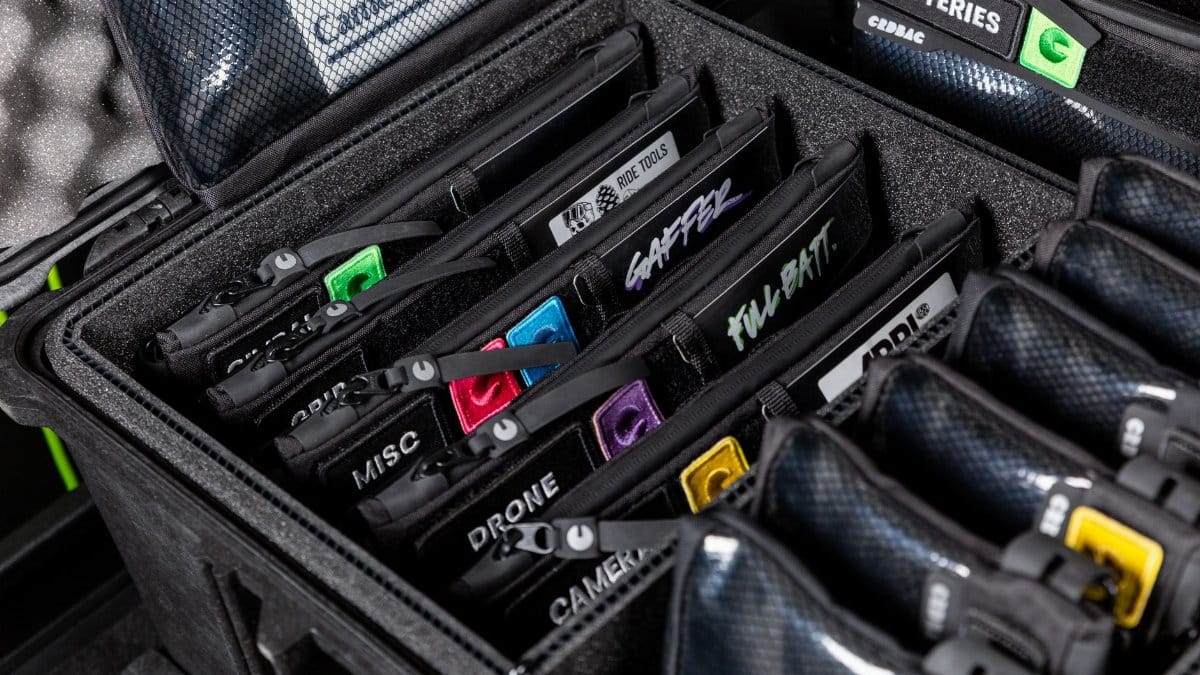
None of this erases the safety case. Loose cargo can shift in a stop. A hard sided trunk can become a projectile if it is not braced. A cart that does not fold can jam a lift or block a wheelchair securement area. Drivers are responsible for every person in the vehicle, including people who cannot brace themselves. Insurance, training, and federal rules all push agencies toward caution.
The wiser reading of the reversal is not that safety lost. It is that a blanket limit was a blunt tool. Trunks and some foldable carts can be managed with clear placement, a driver’s judgment, and a rider who knows the expectation before the van arrives. Refusing the category entirely saved the agency from case by case arguments. It also punished people whose gear was never the problem. Partial permission puts the judgment back where it belongs, on the specific object and the specific vehicle, rather than on a slogan about clutter.
Trunks, foldable carts, and the line that remains

The restored permission is narrow on purpose. Trunks are back. Some foldable carts are back. The word some matters. A cart that collapses, stays out of the lift path, and does not crowd another passenger is a different object from a wide utility wagon or a stack of crates lashed to a dolly. Riders who hear only the headline may arrive with gear the driver still cannot take. That gap between announcement and curb is where frustration grows.
Clear public language would help. What counts as foldable? Must it collapse flat? Is there a size or weight guide? Can a trunk ride in the cargo area if one exists, or must it stay in the passenger cabin where the rider can reach medication? The MBTA RIDE cart policy will be judged less by the press release than by whether two drivers on two different days give the same answer. Consistency is a form of access. Surprise is a form of exclusion.
How complaint becomes policy

Transit agencies are large machines. A frontline refusal can feel final even when it is only one reading of a memo. Riders who called, wrote, and showed up forced that memo back into daylight. That is not a small civic act. Paratransit users are often portrayed as recipients of a service rather than as a public with standing to revise it. The cart fight cuts against that portrait. People with disabilities organized around an object that looked minor to outsiders and essential to them, and the agency moved.
There is a caution in that success. Reversals that follow outcry can still leave the underlying process opaque. If the first rule was written without enough rider review, the next rule on scooters, oxygen tanks, or accompanying animals may repeat the pattern. Advisory groups exist for this reason. They work only when staff treat their objections as design input, not as noise to be managed after the signs are already printed.
Drivers caught between memo and driveway

Drivers deserve a clear rule as much as riders do. They meet the policy in driveways, not in conference rooms. A passenger may be late, anxious, or in pain. The next pickup may already be waiting. If the written standard is vague, the driver becomes the face of a decision they did not author. Some will err toward kindness and take the cart. Others will err toward the strictest memory of training and leave it on the curb. Both choices can be defensible. Neither should depend on mood.
Training that uses real examples would narrow that gap. A trunk with medication in an outside pocket. A foldable cart that still blocks the lift when half closed. A shared ride where two carts and two wheelchairs cannot coexist. Scripts for refusal that explain the reason, offer a smaller bag alternative when one exists, and tell the rider how to appeal would treat people as adults. Silence and a shrug do not.
What riders should ask before the van arrives
Until the agency publishes finer detail, passengers can protect themselves with plain questions. Does my trunk need to be closed and within arm’s reach? Will a cart be accepted only if it folds completely? Is there a limit when the vehicle is already carrying a wheelchair? If a driver refuses an item the new rule seems to allow, where is that refusal recorded, and who reviews it? Those questions are not hostile. They are how a partial reversal becomes a usable right.
Eligibility offices and reservation agents should be ready with the same answers. A policy that lives only on a web page, while the person on the phone still recites the old ban, is not a policy. It is a contradiction. Riders plan their days around what they are told at booking. Changing the rule at the curb, in either direction, wastes a trip that may have been requested days ahead.
Dignity is a transportation issue
It is tempting to file carts under logistics and move on. The deeper stake is dignity. A city that funds door to door service has already admitted that some residents cannot use the mainstream network on equal terms. That admission carries an ethic. The service should not then nibble away the tools that make the trip worthwhile. Carrying one’s own goods is part of adult life. When a rule casually removes that capacity, it sends a message about who is expected to be dependent and who is expected to cope.
Faith communities, neighborhood groups, and disability advocates have long described access as a moral question as well as a legal one. You do not need a sermon to see the point. A person who can get to a grocery store, a clinic, or a friend’s table without surrendering a cart is participating in the common life of the city. A person who must leave the cart behind is participating on someone else’s terms. The reversal, modest as it is, leans toward the first picture.
The unfinished work around the new permission

Partial reversals have a way of freezing in place. Officials can point to the change and declare the matter closed. Riders who still cannot bring the cart they actually own will not experience closure. The unfinished work includes written size guidance, a simple appeal when a refusal seems wrong, and a check on whether shared ride scheduling leaves enough physical room for the items now allowed. If every van is booked to the last seat, permission on paper will fail in practice.
There is also a data question the agency should be willing to answer without drama. How many trips were refused or shortened because of carts before the change? How many complaints arrived, and from which neighborhoods? How often do drivers still turn carts away after the reversal? Numbers will not capture every slight, but they will show whether the MBTA RIDE cart policy is a living standard or a headline that faded. Publishing them would cost little and would build the trust the last controversy spent.
A small object and a larger standard

Boston’s transit system is judged, fairly, on signals, slow zones, and fares. Paratransit rarely leads the evening news unless something goes wrong. The cart dispute is a reminder that the moral quality of a network is often visible in its smallest rules. Who may bring what. Who is believed when they say an object is necessary. Who gets a second look when they complain.
The agency did the harder thing in public. It backed up. That deserves credit, and it deserves follow through. Trunks and some foldable carts belong on The RIDE again because riders insisted that access includes the ordinary freight of a life. If the MBTA RIDE cart policy stays as clear at the curb as it now sounds in print, the reversal will have been more than a retreat. It will have been a standard other rules can meet.