
September has a way of shrinking a baseball season until every inning feels like a public argument. With the schedule nearly exhausted, Chicago is living through a rare double watch, the kind of week when North Side optimism and South Side stubbornness share the same weather. The phrase Cubs White Sox magic numbers has slipped from box score jargon into ordinary talk, muttered on trains and debated at kitchen tables. Both clubs remained alive in the wild card races as the regular season entered its final week, which means the city is doing arithmetic it usually saves for October.
What the phrase is really counting

A magic number is not a prophecy. It is a countdown. Add one club’s wins to the losses of the nearest rival still blocking a playoff spot, then subtract that sum from the number of games left in the relevant race, plus one. When the result reaches zero, the club has clinched, no matter what else happens. Fans treat the figure as destiny. Front offices treat it as a scheduling problem. The number falls when the team wins or when the team it is chasing loses. It can stall for days if both clubs keep winning, which is why a hopeful city can feel stuck even while the standings look kind.
In a final week the math gets loud because the remaining games are few and the outcomes are linked. A Tuesday loss does not merely hurt. It hands the other side a cleaner path. That is why Cubs White Sox magic numbers matter beyond either clubhouse. They translate a crowded wild card board into something a casual fan can follow without a spreadsheet.
One city and two unfinished arguments

Chicago baseball has always been a split screen. The Cubs and the White Sox do not share a ballpark, a color scheme, or, in many households, a vocabulary. They do share a calendar. When both are still alive this late, the civic mood becomes less tribal and more nervous. A Cubs fan may not cheer a White Sox win, yet that fan understands the particular cruelty of a September that refuses to resolve. The reverse is equally true. Rivalry does not cancel recognition.
The races are not the same race. Each club is measured against its own cluster of contenders, its own remaining opponents, and its own tiebreaker standing. Treating the two pursuits as one story is a newspaper convenience and a fan temptation. It is also incomplete. What they share is urgency, not a common opponent or a common standard of proof.
Why the wild card keeps the door open

The expanded wild card changed September. A club no longer needs to win a division to keep October in view. That mercy has a cost. More teams stay mathematically alive, which means more nights end in partial answers. A victory can improve a record and still leave the magic number untouched if the clubs ahead also win. Elimination can arrive not from a collapse but from a rival’s quiet competence two time zones away.
For a broad audience, the useful distinction is simple. Division magic numbers settle a title. Wild card magic numbers settle access. Access is narrower, noisier, and more dependent on other people’s games. That is the condition both Chicago clubs were navigating as the regular season narrowed to its last handful of dates.
How a short week distorts every result

Early in a season, a loss is a data point. Late, it is a verdict with limited appeal. Managers shorten benches, protect arms less generously, and treat off days as strategic objects rather than rest. A starter who might have been skipped in July becomes essential in September because the alternative is a bullpen already taxed by close games. Position players accept strange assignments. A defensive replacement in the eighth inning can matter as much as a three run homer in the third, because the margin for error has collapsed.
Broadcasts lean on the out of town scoreboard for the same reason. The game in front of you is only half the story. A club can play well and lose ground. It can play poorly and gain ground if the teams above it stumble. That asymmetry is what makes the final week feel unfair and, to many viewers, irresistible.
Tiebreakers as the hidden second race

Magic numbers assume a clean finish. Baseball often refuses one. When clubs end level, tiebreakers decide who hosts, who travels, and sometimes who is simply done. Head to head results, intradivision records, and other criteria sit behind the headline number like footnotes that suddenly become the text. A series in May can matter more in late September than the people who watched it understood at the time.
This is where casual tracking gets slippery. Two clubs can share a magic number on Monday and face entirely different stakes by Thursday because one of them owns the tiebreaker and the other does not. Anyone following Cubs White Sox magic numbers should treat the published figure as a starting point, not a complete map. The number says how close. The tiebreaker says how the closeness will be judged.
South Side patience and the cost of almost

White Sox seasons have a long memory in this city, including years when contention arrived late or not at all. A September in which the club is still alive asks fans to update that memory without pretending the past has been erased. Hope here tends to be practical. People want to know which games are must see, which rival results matter, and whether the pitching plan can survive three more tight nights. They are less interested in slogans than in whether the bullpen has another clean inning in it.
Almost is a hard place to live. It is better than elimination and worse than certainty. Players talk about controlling what they can control, a phrase that sounds empty until you watch a club that has no choice. The White Sox portion of this week is a test of attention: stay precise, do not borrow meaning from the other side of town, and accept that the scoreboard elsewhere can rewrite a good night.
North Side crowds and the weight of expectation

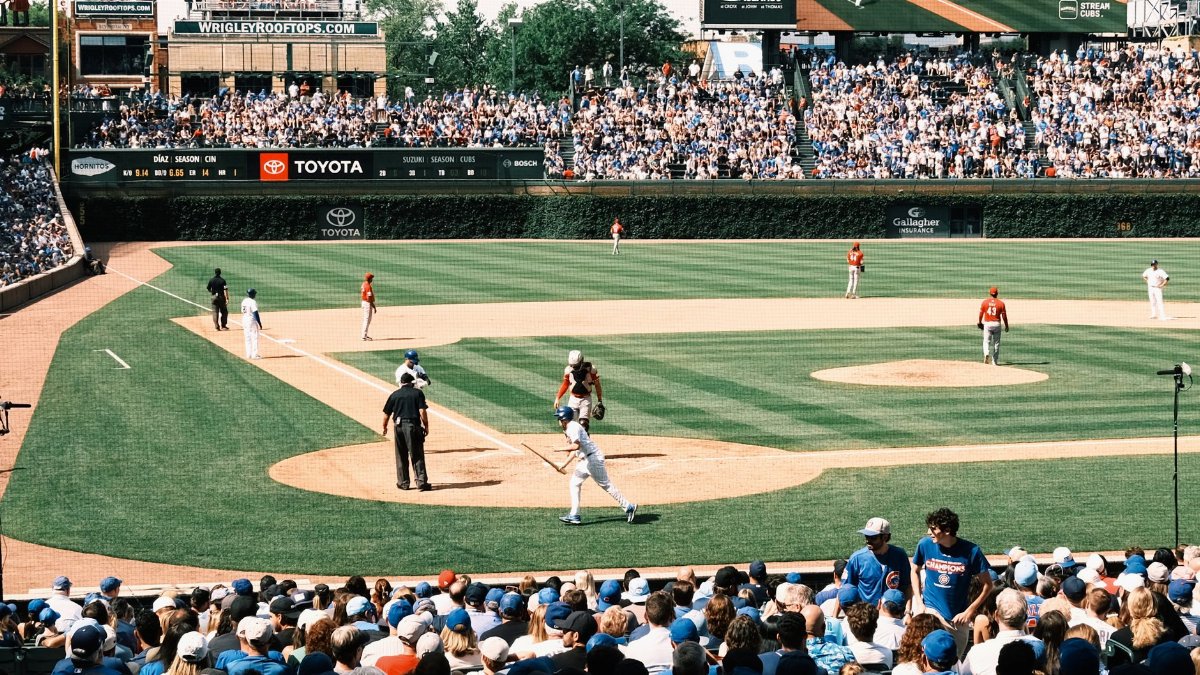
Wrigley Field in late September does not need a clinch to feel occupied by history. The stands arrive already narrating. That can lift a clubhouse and it can tighten one. Young players hear every missed chance twice, once from the field and once from a crowd that has waited through too many summers to treat this one casually. Veterans understand the assignment differently. They try to shrink the week back into innings, outs, and the next pitcher.
Expectation is not the same as entitlement, though the two get confused in national coverage. The Cubs’ place in this particular race is a product of the games already played and the games still listed. Atmosphere does not change the standings. It does change how those standings are experienced, which is why a magic number feels heavier in a full park than it does on a phone screen at midnight.
Pitching plans when rest is a luxury

September roster rules give clubs extra arms, but extra names are not the same as fresh ones. A manager looking at a magic number of any size has to decide whether to spend a top starter on the next game or save him for a game that might matter more if other results break a certain way. That calculation is part baseball and part probability. It can look cowardly when it fails and brilliant when it works. From the outside it mostly looks like guesswork with better information.
Hitters face the mirror problem. A lineup built for a long summer may be rearranged for matchups that exist only because the week is short. Platoons expand. Pinch hitters appear earlier. A club chasing a playoff spot will accept an ugly win and distrust a pretty loss. Style is a spring concern. Sequence is a September one.
What a fan can actually track

The cleanest habit is to follow three items each night: the club’s own result, the results of the teams directly ahead, and any change in tiebreaker status. Everything else is color. National highlights will emphasize home runs. The race often turns on a walk, a stolen base, or a reliever who cannot find the zone. Watching with that narrower lens makes the week less mystical and more intelligible.
People who search Cubs White Sox magic numbers are usually looking for a single updated figure. Responsible coverage should give the figure and the assumptions behind it. Which rival is the measuring stick? Does the number assume the clubs do not meet again? Has a postponed game been added back to the board? A number without those notes is a headline, not an explanation.
Memory, not myth, from other Septembers

Chicago does not need invented drama to understand late races. The city has watched championship clubs and also clubs that spent September proving how quickly a lead can thin. Those memories shape how this week is received. Older fans hear echoes. Younger fans experience the tension as new because, for them, it is. Both responses are fair. What is not fair is treating any past October as a template. Rosters change. Formats change. The emotional rhyme is real. The statistical rhyme is unreliable.
Journalism should resist the urge to declare a turning point before the week has earned one. A single win can feel historic at 10 p.m. and ordinary by the next afternoon if the board does not move. The disciplined story is the one that updates.
The shared weather of a split fan base
There is a social fact underneath the standings. Coworkers who spend six months ignoring each other’s caps suddenly have something precise to ask. Families with divided loyalties negotiate which game stays on the main television. Bars near both parks fill with people who are not yet celebrating and not yet mourning. That in between state is uncomfortable, which is why it produces so much talk. The talk is not always generous. It is often funny, sometimes superstitious, and occasionally cruel in the way only long rivalries permit.
None of that decides a game. It does decide how the city will remember the week if one club advances and the other does not, or if both do, or if neither does. Memory starts before the outcome, in the arguments people are already rehearsing.
A number is a tool, not a promise

Magic numbers reward clarity and punish wishful reading. They do not measure heart, payroll, or ballpark atmosphere. They measure remaining combinations of wins and losses. When commentators inflate them into destiny, they do fans a disservice. When they ignore them, they hide the only scoreboard that still matters. The responsible middle is to state the number, name the rival it is measured against, and admit what the number cannot see, including injuries disclosed late and games postponed into the final days.
As this particular September wound down, Cubs White Sox magic numbers remained a civic shorthand for unfinished business. The shorthand is useful if it stays attached to the math. Detached from the math, it becomes cheerleading. Attached too rigidly, it becomes false precision. Baseball’s last week lives between those errors.
What the final dates can still change
A club that is alive on the last weekend is not yet a playoff club. It is a club with a path. Paths close quickly. They also stay open longer than disappointed fans expect, because other contenders are capable of losing games they are supposed to win. That is the entire drama. It does not require a miracle narrative. It requires enough remaining games for ordinary variance to matter.
Readers who want a prediction will be disappointed by an honest account. The honest account is that both Chicago clubs entered the final week with work left, with rivals who controlled part of their fate, and with fan bases prepared to treat every night as larger than the box score. Whether that preparation is rewarded is exactly what the remaining schedule is for. Until those games are played, the numbers are still moving, and the city is still counting.