
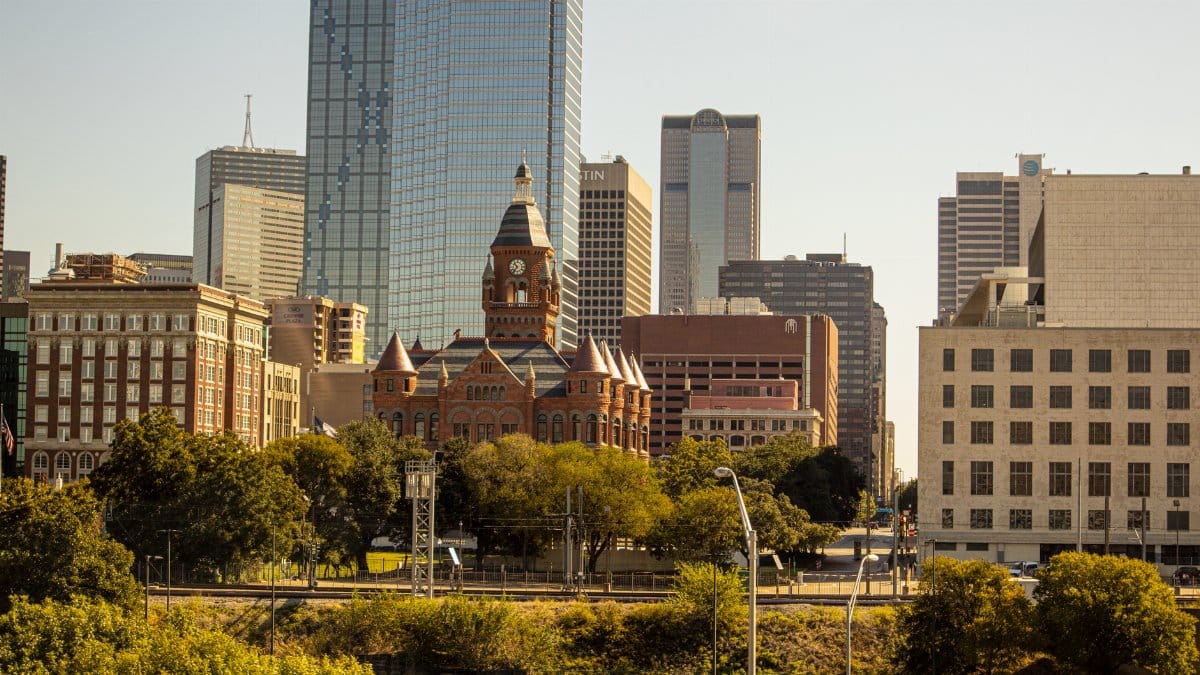
Before the city fully wakes, Greenville Avenue already smells like coffee and grilled bread. Parked cars nose toward a low building that has fed Dallas for more than half a century, and inside, regulars claim the same stools they have claimed for years. The news now traveling through that room is simple and hard. John’s Cafe Dallas, a 54 year old breakfast spot, must leave its longtime home by summer 2027 so the property can become a mixed use development. For a city that often measures progress in cranes and renderings, the announcement is a reminder that some of the most durable civic life happens over eggs, not in a planning document.
A deadline on a familiar corner

The reporting, first laid out by The Dallas Morning News, puts a date on what many neighbors had begun to fear. The cafe has to be out by summer 2027. The building that holds it is slated to come down for a mixed use project, the kind of replacement Dallas has seen again and again along corridors that once felt fixed. A lease can sound like paperwork until it governs a room where people mark birthdays, recover from night shifts, and learn the names of one another’s children.
Fifty four years is not a marketing claim. It is long enough for a counter to outlast several waves of fashion on the same avenue. Greenville has been a music street, a bar street, a place of bungalows and later of denser buildings. Through those turns, a breakfast room kept opening. That continuity is what the deadline now threatens, even if the business itself hopes to continue somewhere else.
What a breakfast room actually does

A cafe of this age is easy to romanticize and easy to underestimate. It is not a museum of scrambled eggs. It is a working kitchen with thin margins, early hours, and a staff that has to be there when the rest of the city is still deciding whether to get up. The spiritual weight people assign to such places is real, but it rests on ordinary labor. Someone cracks the eggs. Someone wipes the same booth for the tenth time. Someone remembers that the man in the corner takes his coffee black and does not want to be asked about it.
That memory is a form of care. In a region where many residents arrived from somewhere else, a stable breakfast counter can function like a parish without a creed. You do not need a shared theology to share a Tuesday. You need a place that is still there, priced for a working morning, and willing to know you without a reservation app.
Why the move is not the same as a closing

It matters to say what is known and what is not. The building is going. The requirement to leave by summer 2027 is the fact that has landed in public view. A relocation is not the same sentence as a permanent end, and readers should not collapse the two. Owners of long running rooms often spend months hunting for a second site that can take a hood, a walk in cooler, enough parking, and a rent that breakfast can actually pay. None of that is settled by a headline.
Still, a move extracts a cost that a new address cannot fully refund. Regulars build their routes around a corner. Neighbors on foot lose a reason to leave the house before nine. Staff lose a commute they had solved. The name can travel. The particular light on that particular stretch of Greenville cannot.
John’s Cafe Dallas and the habit of staying

John’s Cafe Dallas became a reference point because it stayed. In restaurant years, five decades is an outlier. Most concepts flame out, rebrand, or get absorbed. A survivor accumulates stories that no menu can list: the storm morning when only three tables filled, the decade when the avenue felt rough and the cafe felt safe anyway, the quiet stretch after a funeral when a family did not want a formal meal.
Those stories are not nostalgia for its own sake. They are evidence of trust. Trust is slow. It is built by opening when you said you would open. When a development clock overrides that trust, the loss is civic as much as culinary. Dallas has excellent new restaurants. It has fewer rooms that can claim they fed the same block through several economic cycles.
The mixed use promise and its blind spot

Mixed use development is not a villain in a fable. Cities need housing. They need ground floor activity that is not a parking lot. A low commercial building on a desirable avenue will always attract a higher bid than a breakfast margin can match. Planners will say, with some justice, that density near existing streets is better than sprawl at the edge.
The blind spot is tempo and texture. A rendering can show cafes. It cannot promise that the cafe which already knows the block will be the one behind the new glass. Replacement retail often arrives later, smaller in spirit, and priced for a different customer. The people who used the old room at 7 a.m. are not always the people the new pro forma was written for. A city can gain units and still lose a morning ritual. Both facts can be true in the same summer.
Greenville as a test of memory
Greenville Avenue has been asked, repeatedly, to stand for a version of Dallas that is looser and more local than the glass towers to the west. That reputation was always partly a myth, and partly earned by bars, record shops, diners, and houses that refused to look like a brochure. Each demolition edits the myth. After enough edits, visitors meet a street that has the name and not the grain.
Food is where that edit becomes personal. People will forgive a new apartment if they can still find the plate they drove across town for. When the plate moves, or vanishes, the forgiveness gets harder. The avenue does not owe anyone a freeze frame. It does owe its regulars an honest account of what growth is trading away. In this case the trade is a 54 year old breakfast operation for a development schedule that runs out in summer 2027.
The congregation without a sign out front
Call them customers if you like. In practice they behave like a congregation. They arrive at set hours. They sit in unofficial assigned seats. They notice an absence. A regular who misses three mornings becomes a small worry at the pass. That attention is not sentimental copy. It is one of the few remaining public habits in which strangers keep track of one another without being asked to perform community on social media.
Spiritual life, in the wide sense, is not only what happens in sanctuaries. It is also the decision to be present to the same people in the same room until the room is no longer available. John’s Cafe Dallas has hosted that decision for longer than many church plants and civic campaigns. When the stools are pulled, the congregation does not automatically reassemble. Some will follow a new address. Some will not, because the point was the corner, the walk, the fact that it required nothing but showing up.
What relocation will test

If a new site is found, the test will be practical before it is poetic. Can the kitchen be rebuilt without a year of darkness. Can prices stay in reach of the people who made the original room matter. Can staff make the trip. Can a landlord on the next block resist the same pressure that is clearing this one. A beloved name in a worse room is a partial save. A beloved name with the same welcome is the outcome worth hoping for.
Readers who care can do ordinary things that still count. They can eat there while the door on Greenville is open. They can tell the story accurately, including the deadline and the uncertainty about what follows. They can resist the reflex that treats every demolition as either pure progress or pure vandalism. The truthful version is narrower. A private building has a future that does not include this tenant. A city has a habit of letting that future arrive faster than memory can adjust.
A city that keeps its mornings

Dallas will not stop growing, and it should not pretend that every low building is sacred. What it can do is notice which rooms carry more than commerce. A 54 year old cafe on Greenville is one of those rooms. The summer 2027 date is close enough to feel like a season, not a theory. Between now and then, the coffee will still be poured, the regulars will still claim their stools, and the avenue will keep its early smell of bread and work.
Hold that interval without rushing it into a eulogy or a slogan. John’s Cafe Dallas has already proved that staying is a kind of faith, repeated at opening time, unadvertised, and stronger than any single lease. Whether that faith finds another corner is the next chapter. The present chapter is simpler. The door is still a door. The morning is still a morning. The city would be wiser if it treated both as something other than leftover space on a site plan.