
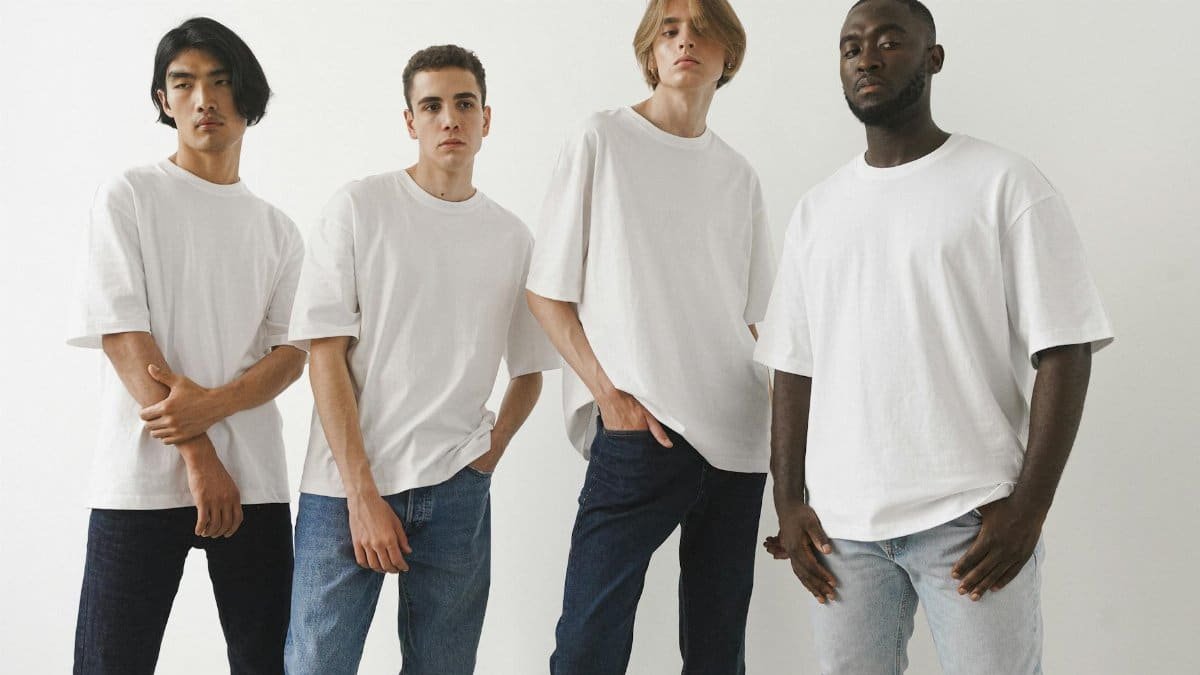
In the dimly lit fitting room of a SoHo boutique last spring, Alex Rivera, a 42-year-old tech executive from Brooklyn, slipped on a plain white T-shirt that changed his view of everyday clothing. At $285, it was not just fabric; it was a promise of perfection. No fading after dozens of washes, no shrinking in the dryer, no pilling at the collar. Rivera walked out with three, convinced he had discovered the holy grail of menswear: premium white T-shirts that justified their steep price through sheer endurance. This scene, repeated across high-end retailers from Los Angeles to London, captures a peculiar 2026 phenomenon. Men, once content with multipacks from discount chains, are now splurging on what critics call “boring” basics, drawn by quality that whispers reliability in an era of excess.
The Quiet Rebellion Against Fast Fashion

Mens fashion has long favored bold statements, from neon sneakers to oversized logos. Yet in 2026, a subtle shift emerges. Men are rebelling quietly, opting for premium white T-shirts as antidotes to the disposable culture peddled by fast fashion giants. These shirts, crafted from supima cotton or proprietary blends, represent longevity over novelty. Sales data from luxury retailers show a 40 percent uptick in basic white tees priced above $200, signaling a broader fatigue with trends that evaporate overnight. For middle-aged professionals juggling careers and families, the appeal lies in pieces that endure, much like a well-worn pair of jeans from youth. This turn toward the elemental feels almost meditative, a way to reclaim control amid relentless consumerism.
Engineering Excellence in Every Thread

What elevates a premium white T-shirt from commodity to coveted item? It starts with the yarn. Brands like Buck Mason and Everlane employ long-staple fibers, such as Pima or Egyptian cotton, which resist wear far better than standard varieties. Advanced knitting techniques create denser fabrics that breathe yet maintain shape. Consider the Japanese loopwheel machines, used by producers like Uniqlo’s premium line; they produce tubular knits without side seams, eliminating weak points prone to tearing. A GQ roundup of top performers in 2026 highlights models tested for 50 wash cycles, retaining vibrancy and fit (GQ’s Best White T-Shirts). Such precision engineering explains the $300 tags, positioning these shirts as feats of textile innovation.
Celebrity Closets and the Bandwagon Effect

Hollywood heavyweights have long shaped style, but their embrace of pristine white tees marks a new chapter. Ryan Gosling wore a $250 Sunspel during a press tour, sparking sold-out frenzies. Tech moguls like Mark Zuckerberg pair premium white T-shirts with jeans for boardroom uniformity, normalizing the look. Social media amplifies this: Instagram reels of actors in buttery-soft basics garner millions of views, prompting everyday men to upgrade. A 2025 Nielsen report on menswear influencers notes that minimalist endorsements drive 25 percent more conversions for high-end basics than flashy items. For aspirational buyers, owning a similar shirt bridges the gap between red carpet and real life.
Durability That Outlasts the Hype
Buyers rave about the tangible benefits. One father of two shared online that his $290 Rhone tee survived a summer of lawn mowing and playground tussles without a snag. Independent tests confirm the claims: premium white T-shirts from brands like Lady White Co. show less than 2 percent shrinkage after repeated laundering, compared to 10 percent for drugstore options. This resilience translates to cost savings; a $300 shirt lasting five years costs pennies per wear. In an age of supply chain disruptions, men value items that do not demand frequent replacement, turning what seems extravagant into pragmatic investing.
Minimalism as a Modern Spiritual Practice
Beneath the surface, the surge in premium white T-shirts taps into a spiritual undercurrent. Minimalism, once confined to Zen retreats, now permeates wardrobes. Owning fewer, superior garments fosters mindfulness, echoing philosophies from Marie Kondo to ancient Stoics who prized simplicity. For men navigating midlife pressures, slipping into a flawless white tee evokes calm assurance. Fashion psychologists link this to “uniform dressing,” where consistency reduces decision fatigue, freeing mental energy for deeper pursuits. In 2026, as burnout rates climb, these shirts symbolize a quest for inner peace through outer restraint.
Sustainable Fibers and Ethical Appeals

Environmental consciousness bolsters the premium case. Leading brands source organic cotton or recycled materials, slashing water use by up to 90 percent versus conventional tees. Pact and Everlane publish third-party certifications, detailing carbon footprints far lower than mass-market rivals. Men, increasingly paternal figures concerned for their childrens future, gravitate toward these credentials. A 2026 Deloitte survey found 62 percent of men over 40 prioritize sustainability in apparel purchases, willing to pay premiums for transparency. Thus, the white T-shirt becomes a quiet statement of stewardship.
The Science of the Perfect Fit

Fit reigns supreme in premium iterations. Tailored patterns account for body contours, with raglan sleeves and enzyme washes ensuring drape without bagging. Brands employ 3D body scanning data from thousands of men to refine sizing, yielding shirts that contour naturally. Wearers report a “second skin” sensation, enhancing confidence. This precision, informed by biomechanics, prevents the bunching common in cheaper cuts, making premium white T-shirts indispensable for fitted jackets or chinos.
Status Signaling in Subtle Strokes

Not all motivations are utilitarian. The premium white T-shirt signals discernment to the initiated. At dinner parties or golf outings, the subtle sheen of high-grade cotton betrays quality, sparking knowing nods. Unlike logos screaming wealth, these tees whisper it, aligning with quiet luxury trends popularized by The Row. For men in competitive fields, this understated prestige elevates presence without ostentation.
Building the Capsule Wardrobe Foundation

Stylists advocate premium white T-shirts as wardrobe anchors. Versatile enough for jeans or suits, they layer seamlessly under blazers or stand alone. GQ experts recommend three in rotation: one fitted, one relaxed, one oversized, forming a years-long base. This strategy streamlines closets, curbing impulse buys and promoting intentionality.
Looking Ahead: 2026 and the White Tee Evolution

By late 2026, expect further refinements: moisture-wicking tech from performance fabrics, antimicrobial treatments for odor control, even customizable dyes for subtle hues. Yet the core allure persists: simplicity that endures. As men prioritize quality over quantity, premium white T-shirts cement their place as timeless essentials, proving that in fashion, less truly delivers more.
Chris F. Weber is a style and culture writer based in New York.