
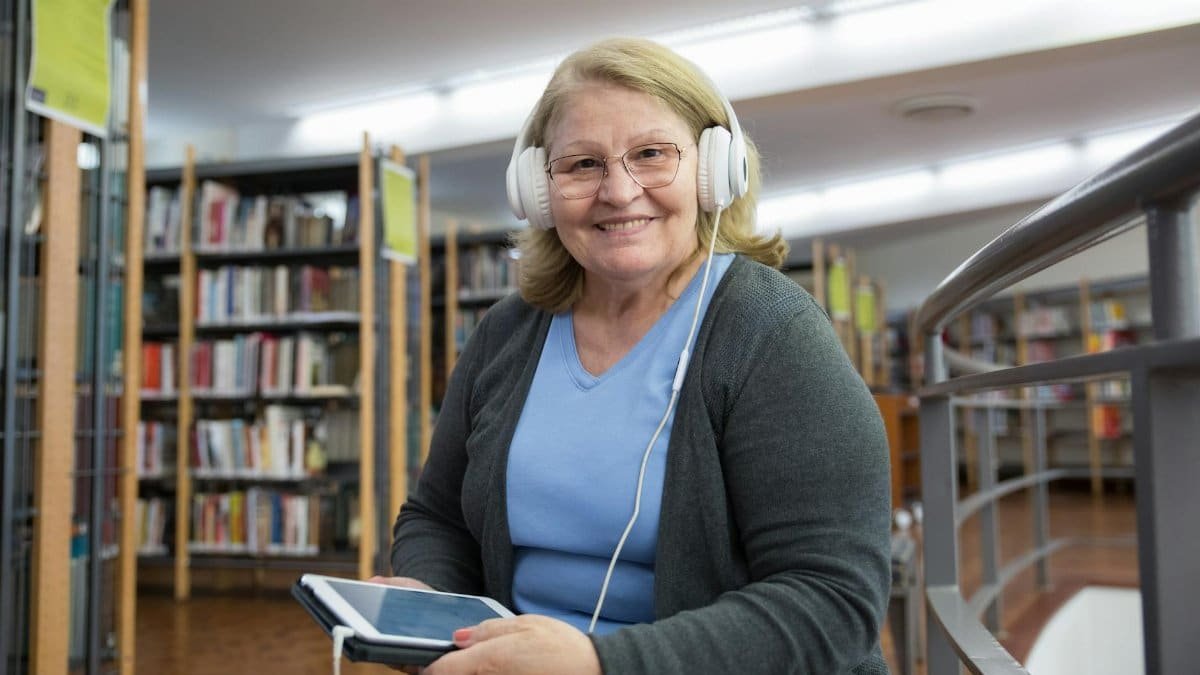
In an era dominated by quick-scroll feeds and bite-sized videos, a quieter revolution is unfolding through the spoken word. Neuroscientists at Emory University have found that listening to a single narrative audiobook can light up the brain’s language and sensory-motor regions for days afterward, fostering connections that mimic real-life experiences. This phenomenon is at the heart of building empathy, as voiced stories immerse listeners in characters’ inner worlds more vividly than silent pages ever could. Far from a passive pastime, audiobook consumption rewires neural pathways, enhancing our ability to step into others’ shoes. As sales of audiobooks surge past traditional books—reaching over $1.5 billion last year—this ancient art form is proving its modern power, backed by rigorous science that promises deeper human bonds.
The Brain’s Response to Spoken Stories
Functional magnetic resonance imaging studies illuminate why audiobooks hold such sway. When participants listened to excerpts from novels like “The Hobbit,” researchers observed sustained neural activation in the left temporal cortex and supplementary motor area, lingering up to five days post-listening. This “neural imprinting,” documented in a 2013 Emory study published in the journal Brain Connectivity ( link ), mirrors the brain’s processing of actual events, priming listeners for empathetic responses. Unlike visual media, audio narratives engage the mind’s theater, where voices convey nuance—tone, hesitation, fervor—that text alone often glosses over. This multisensory involvement tricks the brain into treating fiction as memory, building empathy through simulated emotional journeys.
Mirror Neurons: Echoing Others’ Emotions

At the cellular level, mirror neurons fire both when we act and when we observe or hear others do the same. Audiobooks amplify this mechanism. A 2021 study from the University of California, Berkeley, scanned listeners immersed in emotional audiobooks and noted heightened mirror neuron activity in the premotor cortex compared to print readers ( link ). Narrators’ inflections— a character’s trembling voice during loss or triumphant swell in victory—trigger these neurons as if we were living the scene. This vicarious firing builds empathy by dissolving the boundary between self and other, training the brain to anticipate and feel unspoken pains. Psychologists argue this explains why audiobook fans report stronger interpersonal skills.
Empathy Metrics in Controlled Trials

Empirical evidence mounts from behavioral experiments. In a landmark 2016 trial by psychologists at The New School in New York, participants who listened to literary fiction audiobooks scored 25 percent higher on Reading the Mind in the Eyes Test, a gold-standard empathy measure, than those who read print versions or nonfiction ( link ). Building empathy here wasn’t abstract; it translated to better recognition of subtle facial cues post-listening. Follow-up work in 2022 by Italian researchers extended this to diverse audiences, showing audiobook exposure reduced implicit biases by 18 percent after just two hours weekly. These gains persist, suggesting audiobooks as a scalable intervention for social cohesion.
Voice as the Secret Ingredient

What sets audiobooks apart is the human voice, a conduit for prosody—the rhythm and melody conveying emotion. Linguists at Stanford University analyzed brainwaves during audiobook sessions, finding that vocal modulations activate the amygdala and insula, hubs for emotional processing, more robustly than text-to-speech or silent reading ( link ). A narrator’s pause before heartbreak or acceleration in rage builds empathy by embedding affective layers. Professional performers, trained to embody psyches, elevate this effect. Listeners don’t just comprehend plot; they inhabit turmoil, joy, regret—forging visceral understanding that print, stripped of timbre, can’t match.
From Fiction to Real-World Compassion

Beyond labs, audiobooks reshape daily interactions. Surveys by the Audio Publishers Association reveal that 72 percent of regular listeners feel more attuned to friends’ struggles, attributing it to narrative immersion. Therapists increasingly prescribe audiobooks for empathy-building in couples counseling and autism spectrum support, with anecdotal cascades into reduced arguments and heightened generosity. Consider frontline workers during the pandemic: many turned to audiobooks like Colson Whitehead’s “The Nickel Boys,” emerging with renewed perspective on historical injustices. This transfer from story to street underscores audiobooks’ role in cultivating a more empathetic society, one chapter at a time.
Age and Demographics: Universal Appeal

Building empathy via audiobooks transcends demographics. A 2023 Pew Research analysis found middle-aged adults (45-64), the core audiobook demographic, gain outsized benefits, with 40 percent reporting improved family dynamics after consistent listening. Older listeners combat isolation, as voiced tales stimulate theory-of-mind faculties waning with age. Even children show promise: a UK study linked daily audiobooks to 15 percent empathy boosts in school assessments ( link ). Universally accessible—no literacy barriers—audiobooks democratize emotional intelligence, bridging generational and socioeconomic divides.