
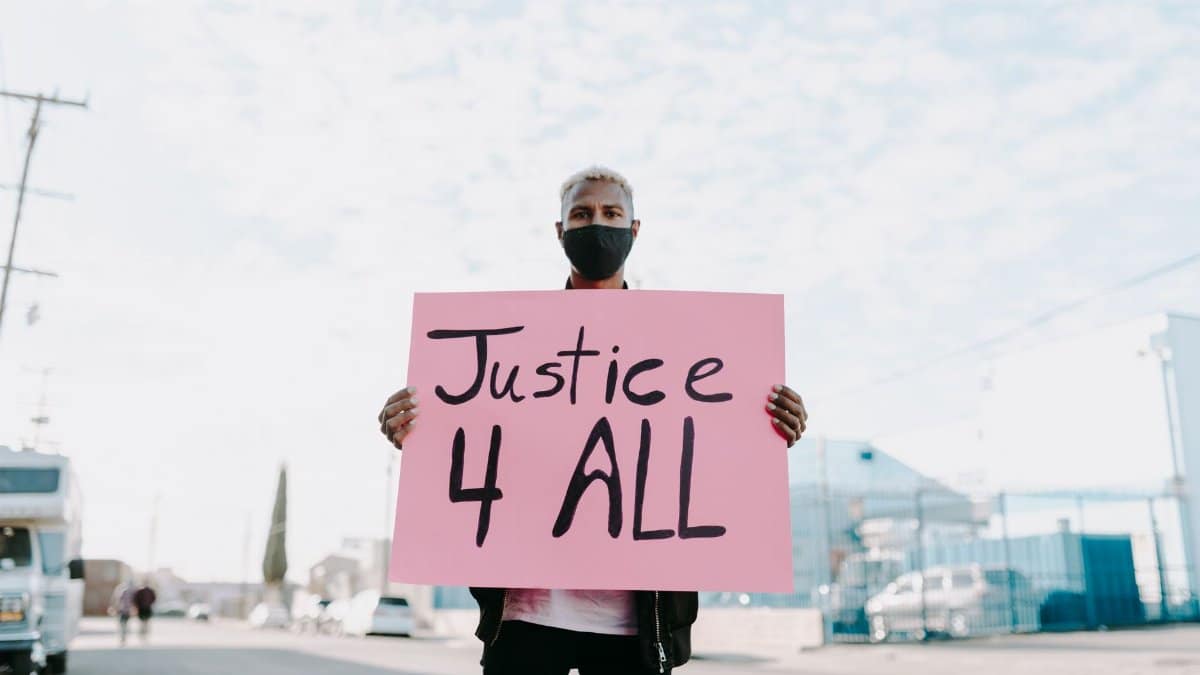
On a bright September morning at the University of Illinois Chicago, students gathered with signs where employers were supposed to meet job seekers. The flashpoint was not a lecture hall dispute or a budget fight. It was a planned recruiting stop by Customs and Border Protection, set inside the ordinary machinery of a campus job event. By the time many arrived, the visit was no longer on the schedule. The protest went ahead anyway. In flyers and group chats, the dispute carried a short name: the UIC CBP career fair.
A table that never opened
Career fairs are usually quiet affairs. Students in borrowed blazers clutch resumes. Recruiters smile, collect names, and talk about benefits. The promise is practical. A conversation might become an internship, a salary, a first adult job. That promise is why universities host these events and why federal agencies show up. A badge, a pension, and a clear ladder can look like stability in a city where rent keeps climbing.
This time the ordinary script broke. Demonstrators condemned the planned Customs and Border Protection stop before it could function as a normal booth. Organizers treated the cancellation as both a victory and an unfinished argument. A missing table does not erase the agency, the students who might have wanted the job, or the students who believe the agency should not recruit on their campus at all.
Why this agency draws a crowd
Customs and Border Protection is not an obscure office. It is one of the most visible arms of federal immigration enforcement, charged with screening travelers, inspecting cargo, and policing the border. For supporters, that work is public safety and national sovereignty. For critics, it is bound up with family separation, detention, racial profiling, and deaths in the desert and in custody. Both descriptions can be heard on the same quad, sometimes from people who share a classroom.
Chicago is not a border town in the geographic sense, yet migration is part of daily life here. New arrivals have filled shelters, church basements, and neighborhood debates for several years. UIC draws students from immigrant families across the city and the suburbs. A recruiting visit that might pass quietly at another campus lands differently when many in the crowd have relatives who have dealt with ports of entry, visas, or fear of enforcement. The agency is not an abstraction. It is a possible employer and, for some, a possible threat.
What a university owes its students
Public universities sit in an awkward spot. They are meant to be open to ideas, including ideas students dislike. They also promise a measure of safety and belonging. A career fair tests both promises at once. If the school bars an employer because a vocal group objects, other students may say their options were narrowed by politics. If the school welcomes every legal employer without comment, protesters may say the institution has chosen a side by offering its logo, its lawn, and its student email lists.
Administrators rarely speak in those terms. They speak about employer relations, equal access, and event logistics. Cancellation can be framed as a scheduling change rather than a moral judgment. That framing rarely satisfies anyone. Protesters hear evasion. Students who wanted the interview hear that their ambitions were treated as an embarrassment. Faculty hear another episode in a long argument about whether a campus is a marketplace, a sanctuary, or both.
The job as a moral question

There is a spiritual current under the slogans, even when no one uses religious language. A career fair asks a person what they are willing to do with their working life. Pay matters. So does purpose. Some students grow up hearing that service in uniform is an honor. Others grow up hearing that certain uniforms arrive at the door with bad news. Conscience is not a slogan. It is the private calculation a twenty year old makes while standing in a line of folding tables.
Faith communities in Chicago have been loud on migration for years. Congregations have housed families, raised bond money, and argued from pulpits about welcome and law. Those arguments do not stop at the church door. They follow students into the student center. A protest against recruiting is, for some, an extension of that moral claim: do not ask us to treat this work as just another internship. For others, refusing the table looks like refusing a neighbor the right to choose a lawful vocation. Neither side owns the language of conscience.
Who gets to be in the room
The UIC CBP career fair dispute is also a dispute about access. Federal jobs have long been a route into the middle class for first generation college students, including children of immigrants. The pay is public. The benefits are real. The application process, however bureaucratic, is more transparent than many private hiring funnels. Closing off that path, even for one afternoon, has consequences that do not show up on a protest sign.
At the same time, access cuts the other way. Students who feel targeted by enforcement may experience a recruiting booth as a claim on their campus rather than an offer. They are not shopping for a job. They are being asked to share space with an institution they associate with raids and removals. A university that says everyone is welcome has to reckon with the fact that welcome is not felt equally. The canceled visit did not resolve that tension. It postponed the moment when both groups would have stood in the same room.
Cancellation is not consensus

It is easy to read a scratched event as a verdict. It is not one. A career fair can be canceled because of security concerns, because an employer withdraws, because organizers fear disruption, or because leaders decide the cost to campus climate is too high. Outsiders rarely learn which reason governed. What they see is absence, and absence gets filled with the story each side prefers.
Protesters can claim they kept the agency off the premises. Critics of the protest can claim a public university flinched. Students who never planned to attend can treat the whole episode as noise. The healthier reading is narrower. A single withdrawn visit does not set national policy, rewrite hiring rules, or prove that one camp persuaded the other. It shows that recruiting is no longer a neutral errand when the employer is this contested.
Speech, disruption, and the line between them

American campuses have rules for protest that look sturdy on paper and messy in practice. Students may criticize an employer. They may urge classmates to walk past a booth. They may demand that trustees explain a partnership. Those are acts of speech. Blocking entrances, drowning out every other recruiter, or threatening staff are different acts, and universities that fail to distinguish them teach the wrong lesson about public argument.
The reporting around this episode describes condemnation and cancellation, not a detailed chronicle of every chant. That gap matters. A fair account should not invent violence where none was documented, and it should not pretend that every protest is gentle because the cause feels urgent. The standard is the same for causes one likes and causes one does not. Speak fully. Do not seize the event so thoroughly that other students lose the chance to hear a pitch and refuse it themselves.
Employers are listening too

Federal agencies recruit because they need people, and they need them young. If elite and urban campuses become reliably hostile ground, agencies will shift toward schools where the reception is warmer. That shift has a geography and a politics. It can deepen the distance between the people who enforce policy and the people who live with it. A Chicago student who might have asked hard questions at a booth never gets the chance. A recruiter never has to answer them.
Private employers watch these fights as well. They ask whether a campus invitation is worth a walkout, a round of social media, or a trustee email. Some will keep coming. Some will quietly drop schools they see as unpredictable. Students rarely see that calculation. They see the booths that remain and assume the market of jobs is what it always was. It is not. Protest changes the menu, sometimes by design and sometimes by accident.
After the signs come down
The practical questions outlast the afternoon. Will the agency be invited again, and under what conditions? Will the university publish a clear rule for controversial employers, or decide case by case in private? Will students who want federal law enforcement careers get another on site chance, or be told to apply online like everyone else? Will protesters build a lasting campaign, or was this a single flare tied to one calendar date?
Those questions belong in student government, in faculty senates, and in plain conversations that do not require a microphone. They also belong in kitchens and congregations, where people already argue about what kind of work is worthy. A campus does not settle a national argument about the border. It can model how to hold that argument without pretending the other side is imaginary.
A fair that was never only about jobs

Look again at the phrase that traveled through campus. The UIC CBP career fair was a scheduling item that became a moral stage. Jobs were on offer, or would have been. So were identity, fear, ambition, and competing ideas of service. Treating it as only a human resources glitch misses why people showed up. Treating it as only a morality play misses the students who needed a paycheck and a path.
Journalism should keep both facts in view. Demonstrators condemned a planned recruiting stop. The stop did not happen. The agency still exists. The students still need work. The university still has to decide what kind of invitation it is willing to extend, and what kind of protest it is willing to host beside that invitation. None of that is solved by a cancellation notice.
The quieter task is harder than a chant. It is to let a classmate explain why a federal badge looks like dignity, and to let another explain why the same badge looks like harm, and to refuse the shortcut that says only one of those explanations is allowed on public ground. A career fair is a small room in a large country. What people do in that room still reveals what they think a university is for.