

On a weeknight when most city offices have gone dark, a school board room can still fill with parents, clergy, and students who came because a child no longer feels safe in a hallway. That local unease is now federal business. The Trump administration has opened a third Philadelphia antisemitism probe into the School District of Philadelphia, examining allegations that Jewish students faced hostility the district failed to address. District leaders say the inquiries are politically motivated and that staff already investigate complaints under civil rights law. For families who measure safety by whether a teenager can wear a star of David without taunts, the legal fight is also a test of whether a diverse city can keep faith and public education in the same sentence.
What a third inquiry actually signals
A single federal review can be explained as routine oversight. A third one, aimed at the same district, reads differently to people on every side of the argument. According to reporting in The Philadelphia Inquirer, the Trump administration has opened another investigation into alleged antisemitism in city schools, and district officials have called the pattern politically motivated. The Education Department’s Office for Civil Rights is the office that typically handles such complaints under federal civil rights statutes.
Opening a probe is not the same as proving a violation. Investigators gather records, interview witnesses, and decide whether a district knew about harassment and responded in a way the law requires. Still, repetition changes the public meaning. Supporters of the inquiries hear persistence. Critics hear a campaign. Parents hear that their children’s days have become evidence in a national fight.
The law that brings Washington into a classroom

Title VI of the Civil Rights Act of 1964 bars discrimination on the basis of race, color, or national origin in programs that receive federal funds. Courts and federal guidance have long treated certain forms of antisemitic harassment as covered when the hostility is tied to shared ancestry or ethnic identity. A district does not have to agree with every complaint to have a duty. It has to take complaints seriously, stop ongoing harm when it can, and keep students from being shut out of learning because of who they are.
That standard is narrower than the moral language people use at kitchen tables. A cruel remark in a cafeteria may wound without meeting a legal test. A pattern of slurs, threats, or exclusion that administrators ignore can meet it. The Philadelphia antisemitism probe, like others of its kind, will turn on records: incident reports, emails, training materials, and what principals did after a parent called.
How the district frames its defense
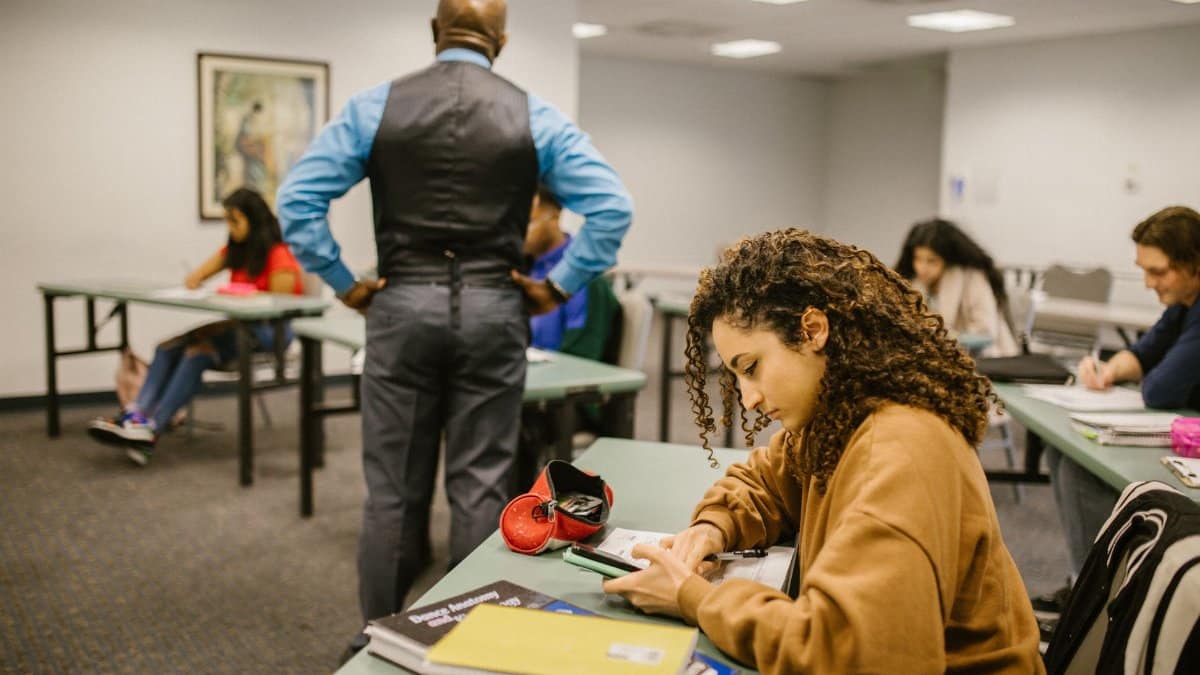
The School District of Philadelphia has rejected the idea that it is indifferent to Jewish students. Officials describe the investigations as politically motivated, a charge that matters because it questions motive rather than merely disputing facts. A large urban system educates children from dozens of language communities and faith traditions. Its leaders argue that they already have complaint processes, and that federal attention has been selective.
Whether that defense holds depends on evidence the public has not fully seen. Political motivation and a real failure can coexist. An administration can choose targets for partisan reasons and still uncover conduct that harmed students. A district can be sincere about inclusion and still mishandle a specific school. Readers should resist the urge to treat the press release as the verdict.
Jewish students and the ordinary school day

Antisemitism in schools rarely arrives as a manifesto. It arrives as a joke about money, a swastika on a desk, a social media pile on after a lesson about Israel, or a classmate who decides that every Jewish student is an agent of a foreign government. For a child, the distinction between political argument and personal threat collapses quickly. The walk from the bus to homeroom becomes a calculation.
Philadelphia’s Jewish community is not a single congregation or a single politics. Orthodox, Reform, secular, Israeli, and American born families share the city and do not share every view of the Middle East. A fair inquiry has to protect students without treating Jewish identity as a political uniform. That is harder than a slogan, and it is the work the Philadelphia antisemitism probe claims to do.
Other students living inside the same argument

The months since the October 2023 attacks in Israel and the war in Gaza have been brutal for more than one group of children. Muslim and Arab students in American schools have reported slurs, threats, and the suspicion that their grief is disloyalty. Palestinian families have watched lessons and social media fights flatten a national cause into a personal accusation. A district that answers only one community’s fear will fail the others.
Civil rights law is not a scoreboard. Protecting Jewish students from antisemitic harassment does not require silencing Palestinian students, and defending political speech does not require tolerating harassment of Jewish classmates. The hard cases sit in the overlap: a chant, a flag, a classroom debate, a post that names a student. Those cases need facts, not tribal loyalty.
When national politics reaches the schoolhouse

Education fights have always carried national politics, from prayer in schools to busing to the teaching of history. Antisemitism investigations under the Trump administration arrive with a louder soundtrack. Allies say Washington is finally treating hatred of Jews with the seriousness it has sometimes reserved for other biases. Opponents say the White House is using Jewish pain to discipline urban districts, universities, and speech it dislikes.
Both claims can be tested without adopting either as gospel. Look at which districts are chosen, which complaints are opened, and whether similar allegations involving other groups receive comparable urgency. Look also at whether findings, when they come, describe specific failures or broad ideological indictments. A Philadelphia antisemitism probe that stays close to student harm will be more credible than one that reads like a campaign document.
What investigators usually want to see

People outside government often imagine agents arriving with warrants. Civil rights reviews of schools are usually paper heavy and slow. Investigators ask for policies, complaint logs, training calendars, and the outcome of particular incidents. They may interview students and staff. They compare what the district promised on paper with what happened after a report.
The questions are practical. Did an administrator separate harasser and target when harm was ongoing? Did the school offer a way back into class, clubs, and teams? Did leaders treat a swastika as vandalism only, or as a message aimed at Jewish students? Did they confuse a heated debate about foreign policy with an attack on a child’s identity? Those distinctions decide cases more often than speeches do.
Teachers standing in the narrow space

Classroom teachers did not design federal enforcement, and they cannot adjourn the Middle East. They can set rules for discussion, interrupt slurs, and refuse to let a lesson become a referendum on a student’s family. Many are undertrained for that work and afraid of saying the wrong sentence in a recorded age. Some avoid the subject entirely, which leaves rumors and social media as the only teachers.
A serious district response invests in that narrow space. It gives educators language for history, for current events, and for the difference between criticizing a government and demeaning a people. It backs them when they enforce rules evenly. It does not ask them to carry a culture war alone while central offices issue statements.
Faith, dignity, and a secular system
Public schools are not houses of worship, and they should not become them. They are, however, places where children learn whether their traditions are treated as normal or as a problem. Synagogues, mosques, and churches around Philadelphia have spent recent years comforting families who come home from school shaken. That pastoral work is not a substitute for a principal’s duty, but it reveals what the legal file can miss: a spiritual injury that shows up as silence at the dinner table.
Dignity is not a partisan property. A city that prides itself on religious variety has to mean it on a Tuesday morning, not only on a holiday. The measure is small and concrete. Can a student explain a holiday without being mocked? Can a student disagree about war without being told to leave the group chat, the team, or the friend circle?
Speech, protest, and the line that matters
Americans are rightly jealous of political speech, including speech that offends. Students do not shed that interest at the school door, though schools may impose rules tied to disruption, harassment, and the age of the speakers. The line is not “nothing that upsets anyone.” The line is conduct that targets people for their identity and interferes with their education.
That line will be argued in this investigation, as it has been argued on campuses and in other cities. Criticism of Israeli policy is not, by itself, antisemitism. Holding Jewish students collectively responsible for that policy can be. Praising Palestinian freedom is not harassment. Threatening a Jewish classmate, or excluding every Jewish student from a club as a class, can be. Precision is not weakness. It is how a free society stays free without abandoning its minorities.
What parents can reasonably watch
Families cannot audit a federal file, but they can watch the public record. They can ask whether the district publishes clear reporting channels, whether it reports outcomes without exposing children, and whether training reaches the schools where incidents actually occur. They can notice if leaders speak about Jewish students only when Washington calls, and if they speak about other targeted students with the same specificity.
They can also refuse rumor. A viral video is not a finding. A politician’s adjective is not a transcript. The Philadelphia antisemitism probe will be judged, eventually, by documents and by whether students report that the hallways changed. Until then, certainty is a temptation, not a duty.
A city practiced at arguing about belonging
Philadelphia has spent generations arguing about who the public belongs to: neighborhoods, unions, parishes, newcomers, and the children who inherit the argument. School controversies here are never only about curriculum. They are about whether the city still believes a shared institution can hold difference without humiliation.
The third inquiry does not settle that belief. It tests a narrower claim, that this district met or failed its civil rights duties toward Jewish students. That claim deserves evidence, not a chant. If investigators find neglect, the remedy should be protection, training, and accountability, not a spectacle. If they find a political hunt with thin facts, that too should be said plainly, because weaponized oversight teaches children that rights are favors.
Living with the investigation while children still attend

Cases like this move on a calendar that does not match a school year. Students graduate. Principals transfer. Memories harden into stories that no longer match the file. The moral assignment for adults, while the Philadelphia antisemitism probe runs, is simpler than the legal one and harder to keep. Tell the truth about what you saw. Do not recruit a child as a mascot. Correct a slur in the moment. Leave room for a classmate whose family is grieving a different loss.
Federal power can compel records. It cannot compel trust. Trust returns, if it returns, when a child walks into a building and does not have to audition for safety. Philadelphia’s schools will be measured by that walk long after the headlines move on, and long after whichever administration opened the file has left office.