
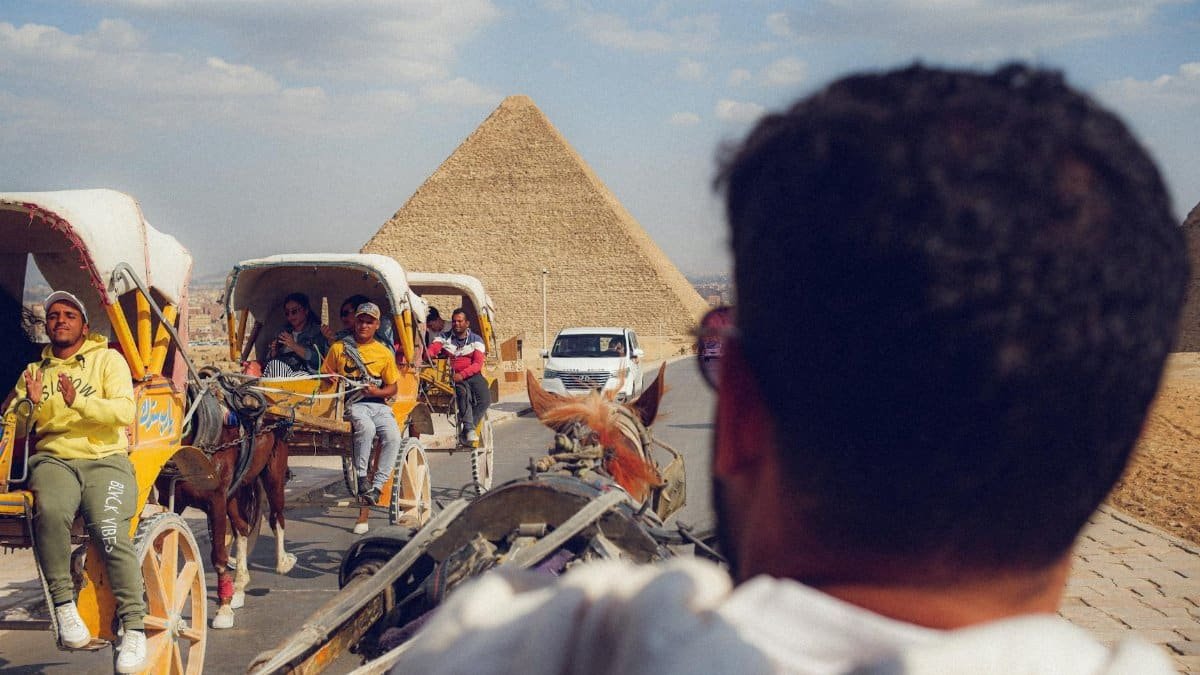
Imagine ascending the vast plateau of Giza under a relentless sun, the Great Pyramid looming like a mountain of limestone, its sides perfectly aligned with the cardinal directions. For millennia, visitors have felt an inexplicable sense of awe and tranquility in its shadow, a calm that seems to transcend time. Recent research reveals that this is no accident. The ancient math woven into the pyramids design, from its slope angles to base perimeters, creates geometric harmonies that resonate deeply with the human mind. Scholars now argue these proportions trigger psychological responses akin to meditation, fostering peace amid the desert heat. As we unravel this hidden calculus, the monuments emerge not just as tombs, but as engineered sanctuaries for the soul.
The Precision of Pyramid Proportions
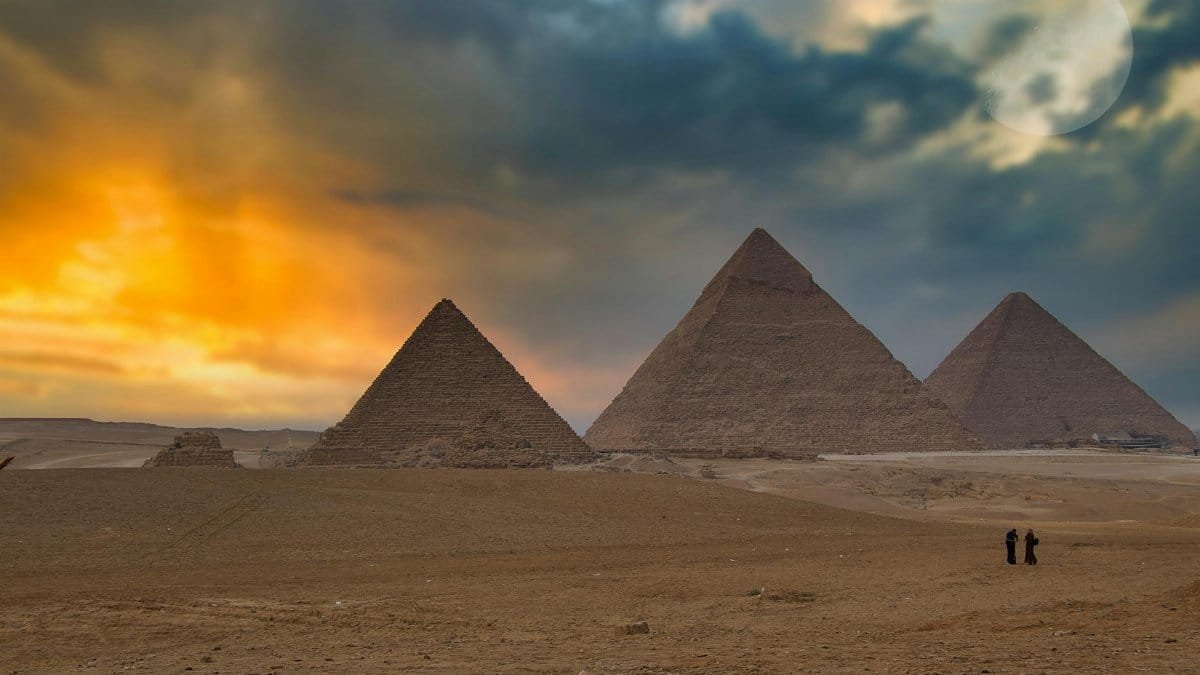
At the heart of the Giza complex lies a mathematical sophistication that rivals modern engineering. The Great Pyramid stands 481 feet tall, with a base spanning 756 feet per side, yielding a perimeter to height ratio that approximates 2 pi to startling accuracy. This circle constant, embedded in a square pyramid, suggests the builders grasped advanced concepts long before Greek philosophers formalized them. Egyptologist Glen Dash, in a 2015 study published by the Ancient Egypt Research Associates, measured the structure and confirmed these ratios hold within inches, defying the tools of the Bronze Age. Such precision was not mere showmanship. It formed the bedrock of the ancient math that imbues the site with an aura of inevitability and order, qualities that soothe the restless mind.
Pi and the Circle of Eternity

The incorporation of pi stands out as one of the most elegant feats of ancient math. Divide the pyramids perimeter by twice its height, and the result edges toward 3.1416, the universal constant defining circles. Why embed this in stone? Funerary texts hint at symbolic intent: the pyramids base evoked the earthly square, its height the ascending light of eternity, bridged by the circles infinite loop. Contemporary researchers, including physicist Joseph West in his analysis on ancient-origins.net, posit that this interplay visually cues the brain toward infinity, diluting petty anxieties. Visitors often report a meditative stillness, as if the math dissolves the self into cosmic scale.
The Golden Ratio’s Subtle Embrace

Beyond pi, the golden ratio, phi at 1.618, appears in the pyramids sloping faces. The angle of 51 degrees 50 minutes creates a rise over run that mirrors this divine proportion, linking the structure to natural spirals in shells and galaxies. Architect and author Richard Heath explores this in The Harmonic Origins of the World, noting how phi generates self similar patterns that feel inherently balanced. Neurologists suggest exposure to such ratios activates reward centers in the brain, much like pleasing artwork. In the pyramids shadow, this ancient math fosters a quiet harmony, turning architectural contemplation into an unwitting therapy session.
Awe as Architectural Alchemy

Psychologists define awe as that blend of vastness and accommodation, where the mind stretches to grasp immensity. The pyramids proportions amplify this through deliberate scale. A 2018 study in the Journal of Personality and Social Psychology, led by Paul Piff at the University of California, Irvine (available at psycnet.apa.org), found awe reduces inflammation and boosts prosocial behavior. Applied to Giza, the ancient math ensures the monument overwhelms without terror, its math made manifest inviting reverence. Tourists linger longer here than at other wonders, their heart rates slowing in subconscious surrender to geometric perfection.
Neuroscience Meets Nile Valley Genius

Brain imaging offers clues to the calm. Functional MRI scans during virtual pyramid tours show heightened activity in the default mode network, the brains resting state linked to introspection. A 2022 paper from the University of Barcelona, published in Frontiers in Psychology (frontiersin.org), ties this to fractal like geometries in nature and art. The pyramids ancient math replicates these fractals on a monumental scale, quieting the amygdala, seat of fear. Egyptian priests may have intuitively known this, designing not just for pharaohs, but for pilgrims seeking solace amid lifes chaos.
From Quarries to Quietude
Constructing these behemoths demanded logistical ancient math: ramps, levers, and star aligned surveying. Texts like the Rhind Papyrus reveal Egyptians prowess with fractions and volumes, essential for hauling two million blocks. Yet the end product transcends utility. The seamless joints and true north orientation create a sensory envelope of stillness. Acoustics play a role too; the grand gallery resonates at frequencies that induce alpha brain waves, per acoustic engineer Paul Devereuxs field recordings. This multisensory ancient math crafts an environment where external noise fades, leaving inner peace.
Modern Echoes of Ancient Serenity

Today, architects draw from this legacy. Frank Lloyd Wrights structures echo pyramid proportions, promoting well being through form. Wellness retreats in Sedona mimic Giza slopes for meditative spaces. A 2023 survey by the American Institute of Architects found 68 percent of designers incorporate golden ratio elements for calming effects. As urban stress mounts, the pyramids ancient math offers a blueprint: simplicity amid complexity breeds tranquility. Visitors leave Giza changed, carrying fragments of that desert calm into hurried lives.
Timeless Lessons from Stone Equations

Ultimately, the pyramids reveal ancient math as more than calculation, a bridge to transcendence. In an era of digital distraction, their silent equations remind us of orders beauty. Researchers continue probing, with laser scans uncovering finer ratios, like the kings chambers phi tuned dimensions. Whether intentional or emergent, this math promotes calm by aligning human perception with universal patterns. As Natasha Weber, reflecting on a recent visit, the pyramids do not shout their secrets. They whisper through geometry, inviting us to pause, breathe, and find peace in the eternal now.