

When voters handed Democrats a commanding midterm result in 2026, the immediate question in Washington was not only who would hold the gavel but what that gavel could do for people who still dread a pharmacy counter or an emergency room bill. Ezekiel Emanuel, the University of Pennsylvania physician who has spent decades inside the machinery of national reform, has been mapping the distance between electoral triumph and a law a president will actually sign. Democratic health policy, in his reading, now has a friendlier Congress and a public that wants lower drug costs and steadier coverage, yet it still meets a veto pen and a Senate that punishes overreach.
A Physician Washington Already Knows

Emanuel is not a newcomer to these fights. He helped shape the Affordable Care Act, advised the Biden White House during the coronavirus emergency, and has argued for years that American medicine spends too much, covers too unevenly, and explains itself too poorly. At Penn he trains students who will inherit a system still split among private insurance, public programs, and gaps that no slogan fully closes. Colleagues describe him as impatient with vague promises and unusually willing to say that every coverage expansion carries a cost someone must pay.
That temperament matters after a wave election. Campaign language treats health care as a moral binary. Governing treats it as a sequence of bills, scores, agency rules, and interest groups that know the markup calendar better than most members. Emanuel’s value, in the account published by The Philadelphia Inquirer, is less cheerleading than triage: which ideas can move, which will die in conference, and which are worth spending political capital on before the next presidential cycle hardens every vote.
A Majority Is Not a Magic Wand

Control of Congress changes the agenda. It does not repeal the Constitution. A Democratic House can hold hearings, attach riders, and force uncomfortable votes on insulin, surprise bills, and Medicaid work rules. A Democratic Senate, if the margin is thin, still needs near unity and often a handful of members who represent rural hospitals and pharmaceutical employers. Reconciliation can move some spending and tax provisions with a simple majority. It cannot rewrite every regulatory statute, and it cannot stop a presidential veto.
Emanuel has long warned Democrats against confusing a favorable map with a blank check. The 2026 result, described by allies as a blue tsunami, gives the party a chance to restore pieces of coverage policy that were narrowed in prior years and to press drug makers harder on list prices. It does not let party leaders ignore the president who remains in office, nor the courts that have grown more skeptical of expansive agency interpretations. Strategy, in his framing, starts with what can survive all three.
Medicaid and the Map of Who Is Covered

Medicaid is where national politics becomes local arithmetic. Expansion states and non expansion states still live in different countries when a low income adult gets sick. Work requirements, frequent eligibility checks, and paperwork that knocks eligible people off the rolls have been sold as integrity measures and experienced by clinics as sudden uninsurance. A Democratic Congress can fund continuous eligibility for children and postpartum patients, raise federal matching rates for holdout states, and limit administrative purges that spike after each renewal cycle.
None of that is costless. Governors will ask who pays when enrollment rises. Rural hospitals will ask whether higher coverage offsets lower commercial rates. Emanuel’s habit is to put those questions on the table early rather than discover them in a late night score from congressional budget analysts. He has argued that unstable coverage wastes money twice: once when people delay care, and again when they return through the emergency department with conditions that primary care could have managed. That is a practical claim, not a sermon, and it is the kind of claim a narrow majority can still legislate if leaders keep the bill focused.
Drug Prices After Years of Half Measures
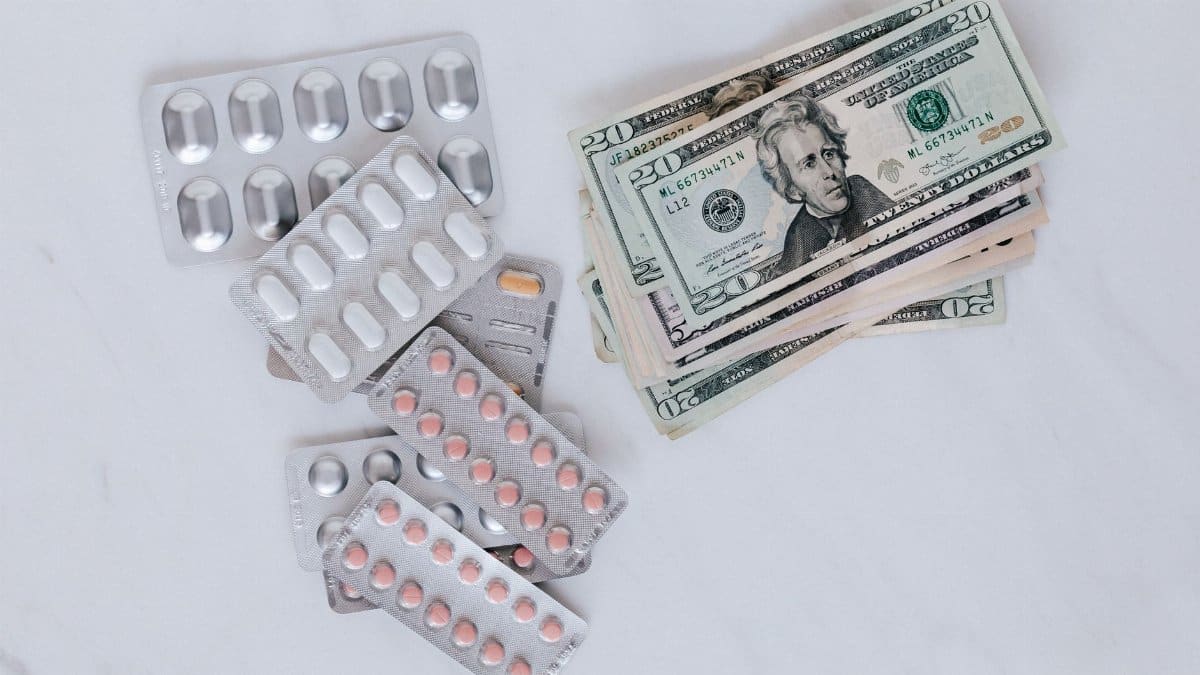
Few issues poll as cleanly as drug costs, and few lobbies are as prepared. Medicare negotiation, inflation rebates, and caps on out of pocket spending have already moved the debate from whether Washington may bargain to how far bargaining should go. Democratic health policy after the midterms is likely to widen the list of negotiated drugs, tighten rules on patent thickets, and scrutinize pharmacy benefit managers whose spreadsheets are opaque even to the employers who hire them.
Emanuel has been blunt that negotiation is not confiscation and that a price which ignores research risk can shrink the pipeline voters also care about. The political temptation is to promise every patient the lowest price in the world by next quarter. The governing task is slower: pick high spend drugs with weak competition, publish the evidence used to set a ceiling, and accept that some manufacturers will sue. A Democratic Congress can fund that legal defense and can pair it with faster generic entry. It cannot, by press release, make a complex biologic cheap on Thursday.
Patients will judge the effort by the receipt, not the hearing. If copays for cancer drugs and inhalers fall in the next plan year, the policy will feel real. If savings accrue to insurers and never reach the counter, the backlash will be bipartisan and deserved.
Vaccines and the Slow Repair of Trust

Vaccine policy sits at an awkward intersection of science, commerce, and identity. Routine childhood immunization, seasonal shots, and preparedness stockpiles are not the same political object, yet they share a delivery system that frayed when public health advice seemed to change faster than officials could explain it. Emanuel has treated that erosion as a governing failure, not only a communications failure. Mixed messages, uneven access, and a marketplace that sometimes made a free shot feel like a billing puzzle all taught people to doubt the next recommendation.
A Congress inclined toward Democratic health policy can restore stable funding for state immunization programs, require clearer coverage of recommended vaccines without cost sharing, and demand that federal agencies publish the evidence behind schedule changes in language a non specialist can follow. It can also resist the urge to turn every advisory committee into a partisan stage. Mandates remain radioactive. Access, transparency, and a cold chain that works in rural counties are less so, and they do more for uptake than another televised scolding.
The harder piece is preparedness. The last emergency showed how quickly a novel pathogen exposes thin domestic manufacturing and confused lines of authority. Rebuilding that capacity is expensive in peacetime and indispensable in a crisis. Emanuel’s counsel, consistent with his earlier writing on allocation under scarcity, is to decide principles before the next surge, not during it.
What a Veto Can Still Stop

President Trump’s veto power is the fact that keeps this story from becoming a victory lap. A bill that clears both chambers can still die on the Resolute Desk, and a veto override demands a supermajority Democrats are unlikely to hold on contested health votes. That reality pushes strategy toward must pass vehicles, narrow bargains, and agency actions that do not require a signature, each with its own legal risk.
Emanuel does not pretend otherwise. In the Inquirer’s account of his post election analysis, the constraint is as central as the opportunity. Democrats can attach popular drug provisions to legislation the White House wants for other reasons. They can use oversight to expose price spikes and coverage denials even when they cannot ban them. They can fund states that choose more generous Medicaid rules. They cannot, alone, enact a full restructuring of insurance that the president has campaigned against.
There is a discipline in that limit. It discourages message bills written only to fail. It also tempts leaders to claim credit for negotiations that never quite become law. Voters who heard promises about premiums will notice the difference.
Hospitals, Insurers, and the Price of Quiet

The loud fight is usually about drugs and Medicaid. The expensive fight is often about hospitals and the rates they extract from commercial plans. Consolidation has left many regions with a dominant system that can demand prices far above Medicare. Site of service differentials pay more for the same infusion if it happens under a hospital license. Those details rarely lead a rally, yet they shape the premium that funds everything else.
Emanuel has argued for years that American prices, not only American utilization, explain why the country spends more without reliably living longer. A Democratic majority can advance site neutral payments in limited settings, strengthen antitrust scrutiny of mergers, and require clearer disclosure of facility fees. Insurers will applaud some of those steps and resist others that cut their own margins or expose prior authorization abuses. The party’s donors and hometown employers sit on every side of that table. Passing a serious price provision will mean disappointing someone who wrote a check in October.
What Patients May Notice First

Grand redesigns take years. Smaller changes can show up in a plan document by the next open enrollment. Continuous Medicaid coverage for postpartum patients would be visible to obstetric clinics within months. A lower out of pocket cap in Medicare would be visible to retirees at the pharmacy. Clearer billing rules would be visible to anyone who has received three statements for one visit and understood none of them.
Emanuel tends to rank these near term gains above symbolic fights that cannot clear a veto. That ranking will frustrate activists who want a public option or a larger reconstruction of employer coverage in a single session. It may also be the only ranking that produces a law. The test he applies is almost clinical: does the intervention reach a defined population, with a defined budget, on a defined date, and can an agency implement it without a lawsuit that freezes the benefit?
Implementation is where earlier reforms stumbled. Navigators were underfunded. Eligibility systems crashed. Automatic enrollment sounded simple and proved bureaucratic. Any new Democratic health policy that ignores the unglamorous work of software, call centers, and state capacity will repeat those errors and hand opponents a fresh anecdote.
An Unpopular Kind of Honesty

Emanuel’s public reputation has never been only technocratic. His writing on end of life care and on how to set priorities when resources are finite has drawn anger from people who heard a colder message than he says he intended. That history follows him into this moment. Critics on the right cite it as proof that Democratic experts want to ration. Critics on the left cite his willingness to discuss costs as a betrayal of universal aims.
The fairer reading is that he refuses the comfort of infinite budgets. A society can cover more people, pay for new therapies, and raise wages for nurses, but it cannot do all of it at once without taxes, premiums, or slower growth somewhere else. Saying so does not settle the moral argument. Hiding it does not make the arithmetic disappear. After a midterm won partly on affordability, voters may tolerate more honesty than strategists assume, provided the honesty comes with a concrete reduction in what they pay.
The Institutions That Have to Carry the Law

Congress can appropriate. It cannot staff a county health department or keep a rural pharmacy open. Emanuel’s Penn perch gives him a view of training pipelines, research incentives, and the way academic medicine both serves and distorts local care. A serious agenda would fund primary care residencies, ease the administrative load that drives clinicians out of practice, and stop paying for documentation theater that adds little to healing.
Those items lack the drama of a floor speech. They are also the difference between a benefit that exists on paper and a benefit a person can use on a Tuesday. Workforce policy is slow. The alternative is a coverage expansion that sends newly insured patients into a waiting room with no clinician left to see them.
How to Judge the Next Two Years

The measure of this Congress on health will not be the number of hearings or the volume of presidential threats. It will be whether Medicaid rolls stabilize, whether negotiated prices actually appear in Medicare plan bids, whether vaccine access is simpler than it was, and whether hospital pricing faces any real constraint. Emanuel’s outline, as reported after the Democratic wins, is a map of possible shifts rather than a guarantee. Vetoes, courts, and internal party fractures remain in the way.
Still, a majority changes the default. Bills that could not get a hearing now can. Agencies that expected hostile oversight now face questions from the other direction. States that want to expand coverage have a more willing partner in the Capitol. Democratic health policy in this window is less a revolution than a test of whether a party that campaigned on care can write narrow, durable law under a president who can still say no.
Emanuel’s career suggests he will keep offering the unsentimental version of that test. Pass what can be implemented. Price what you promise. Tell people which fights are real and which are theater. In a capital that prefers theater, that advice is both the opportunity of the midterms and the limit they did not repeal.