
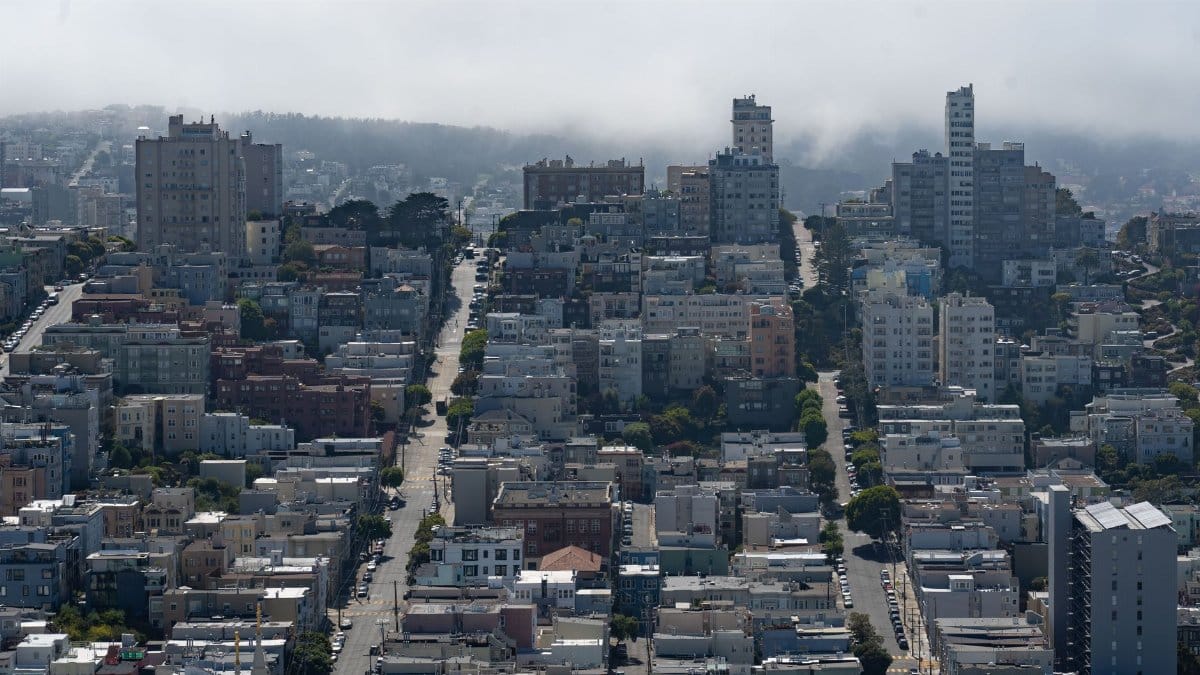
On a fogged Tuesday in the Richmond, a precinct captain taped a flyer to a laundromat window and stepped back as if the paper might argue with her. The name at the top was not the one San Francisco had circled for a generation. Nancy Pelosi had opened the door, and the city rushed through it with clipboards, group chats, and old grudges. In coffee lines and union halls the shorthand arrived almost at once: Pelosi seat Wiener Chan. Two Democrats, one district, and a party that had grown used to a single voice now had to practice disagreement in public.
A vacancy that reorders the map

California’s 11th Congressional District is not a blank slate. It is a dense civic argument compressed into hills, transit tunnels, and rent ledgers. For decades Pelosi carried that argument to Washington with a mix of discipline and national stature that local rivals rarely tested. Her decision to leave the seat did not create new factions so much as remove the person who had kept them in a workable truce.
Scott Wiener, the state senator known for housing bills that thrill builders and infuriate neighborhood associations, entered as the candidate with statewide name recognition and a long legislative paper trail. Connie Chan, the city supervisor rooted in the west side and in immigrant small business corridors, entered as the candidate who could say she had sat through the hearings, the protests, and the budget nights that actually touch a block. The early read from operatives, echoed in coverage by the Los Angeles Times, is that Wiener holds the lead. A lead in September is not a coronation. In this city a lead is an invitation to organize against it.
Two records, two theories of power

Wiener’s theory is scale. If the rent is the crisis, then the remedy is more homes, faster approvals, and laws that bind cities that would rather stall. His supporters talk about nurses who cannot live near the hospitals where they work, and about climate goals that fail if every new household must drive in from the exurbs. They treat Sacramento as proof that he can move a stubborn institution.
Chan’s theory is proximity. She argues that a member of Congress still answers to people who ride the bus, staff the dim sum kitchens, and watch a street change faster than their lease allows. Her backers say Wiener’s bills arrive as abstractions that land hardest on tenants and on neighborhoods already dense. They want a representative who will slow a project when the mitigation is thin, not one who treats delay itself as the villain.
Neither theory is a costume. Both candidates have voted, sponsored, and defended positions that will be quoted back at them for the length of the campaign. That is the gift and the hazard of a race between officeholders rather than newcomers.
What Pelosi seat Wiener Chan is really measuring

Strip away the mailers and the Pelosi seat Wiener Chan contest measures how San Francisco Democrats define loyalty after the matriarch steps aside. Loyalty to whom: to the national party brand, to tenant unions, to builders who fund the housing push, to Chinese American voters who have felt spoken about more than spoken with, to younger renters who treat YIMBY as a moral language?
Pelosi could hold several of those loyalties at once because her power in Washington gave each faction a reason to stay in the room. The successor will not inherit that leverage on day one. The successor will inherit the arguments. Voters seem to understand this more clearly than some consultants do. They are not auditioning a mascot. They are choosing which fights they want carried into committee rooms they will never see.
Housing as the permanent campaign
Ask ten voters what the race is about and eight will say housing before they say foreign policy or committee assignments. The district contains some of the most expensive blocks in the country and some of the most organized resistance to changing them. Wiener has spent years as the face of state preemption, the idea that California should override local vetoes when cities fail to plan for growth. Chan has spent years as a local counterweight, pressing for affordability rules, tenant protections, and skepticism toward projects that promise units and deliver luxury.
The disagreement is not a cartoon of greed versus compassion. Builders are not a single caste, and tenant lawyers are not a single mood. What voters can see is a difference in default instinct. When a parcel is contested, does the candidate start from the unit count or from the people already living next door? Campaigns will try to blur that instinct with endorsements and soft focus video. The voting record is less blurry.
The west side and the old coalitions
Chan’s base is often described as the west side, a phrase that flattens a set of neighborhoods with their own papers, churches, family associations, and political memories. Those voters have drifted from automatic Democratic enthusiasm when crime, schooling, and street conditions felt ignored by downtown progressives. Chan’s bet is that she can hold progressive labor allies and still speak credibly to shop owners who want enforcement as well as services.
Wiener’s bet is geographic in another way. He expects strong support from downtown professionals, from tenants in newer buildings, and from activists who see local control as the tool of exclusion. He also expects that statewide donors and national climate and housing groups will treat this seat as a proof point. Money is not the same thing as votes. In a low turnout municipal habit transplanted into a congressional primary, money can still buy the repetition that makes a name feel inevitable.
Labor, donors, and the quiet primary

Before a single ballot is cast there is a quieter primary among endorsers. Building trades want projects. Public employee unions want a friend in appropriations fights. Tenant organizations want a vote against weakening rent rules. Tech aligned donors want a member who will not treat the industry as a piñata, even as they quarrel among themselves about taxes and regulation.
Pelosi managed these interests with a phone list that no freshman will possess. The campaigns now perform a version of that management in public, collecting logos for palm cards. A voter who has lived here long enough knows to read the logos as a map of obligations. The question is which obligations will bind in Washington when a tough vote arrives at midnight and the district is asleep.
Identity without reducing the candidates to it

Chan would be a rare Chinese American voice in a delegation that represents a city where Chinese American history is not a sidebar. That fact matters to voters who watched a generation of leaders rise and still felt the congressional seat pass to someone else. It is not the whole of her case, and treating it as the whole would insult the work she has done on budgets, transit, and land use.
Wiener, a gay man who has been open about that life in a state that still remembers when such openness carried a cost, likewise refuses to be a symbol first. His supporters cite bills on health, housing, and criminal justice. His critics cite the same bills. Identity here is context, not a substitute for the policy fight. The district is too literate in its own diversity campaigns to accept a slogan where an answer is required.
The national party looking over the shoulder
Washington Democrats would prefer a quiet handoff. An open seat in a deep blue district should not become a story about ideological civil war, not in a cycle when House control may be thin. Yet the national party does not get to schedule San Francisco’s arguments. Outside groups will still spend, and their ads will still flatten a supervisor vote into a morality play.
That outside attention cuts both ways. It can nationalize a local grievance and drown the candidate who relies on door knocking. It can also expose a frontrunner to a standard of scrutiny that a state senator does not face every week. Wiener’s lead, if it holds, will be tested by whether voters decide his record is a promise or a warning. Chan’s task is to turn familiarity on the west side into a districtwide majority without being cast as the candidate of no.
How the Pelosi seat Wiener Chan frame can mislead

There is a risk in the Pelosi seat Wiener Chan compression itself. It implies a two person drama and a single inheritance. Other names may yet press into the field, and the jungle primary rules of California mean the fall ballot can pair two Democrats or scramble the spring narrative. A frame that treats the seat as a trophy passed from a speaker to a favorite also misses the voters who never felt the seat was theirs to begin with.
Still, the phrase sticks because it captures a real narrowing. The choice many activists describe is between Wiener’s insistence on building through resistance and Chan’s insistence that resistance sometimes knows the block better than the bill text. Readers outside the city should resist the urge to file this as a cartoon of left versus lefter. It is a fight about means inside a party that agrees on more ends than the ads will admit.
What undecided voters keep asking

In conversations on Clement, in the Mission, and along the waterfront, the undecided questions repeat. Who will pick up the phone when a federal agency stalls a transit grant? Who will defend tenants if a national housing deal trades protections for unit targets? Who can talk to a skeptical aunt about crime without sneering, and to a furious renter about supply without sneering back?
Those questions do not map cleanly onto a single ideology score. They map onto temperament. Pelosi’s temperament was combative in Washington and careful at home. The next member may not be able to copy that split. The campaign is, in part, an audition for which carefulness the district still wants.
A party practicing disagreement

San Francisco Democrats are not fragile. They have survived recalls, school board fights, and district attorney contests that drew national mockery. What feels new is the absence of a figure who could end an argument by embodying the party’s pride. Pride is not a platform. The open seat forces the platform into the open.
If Wiener converts his lead into a nomination, the housing movement will claim a congressional beachhead and will own the consequences when construction lags or displacement rises. If Chan overtakes him, neighborhood skeptics of preemption will claim that local knowledge still beats a legislative brand, and they will own the consequences if the housing shortage deepens. Either outcome is a choice, not a destiny. The city has spent years saying it wants grown debate. This race is that debate with a filing deadline.
The stake beyond one district
Other cities are watching because the dilemma is portable. How do Democrats govern scarce cities without either freezing the built environment or dismissing the people who already live in it? How do they pass power from a legendary incumbent without pretending the successor is a smaller copy? The Pelosi seat Wiener Chan race will not settle those questions for the country. It will show one influential city which answer it is willing to fund, walk precincts for, and defend when the ads get ugly.
That is enough stakes for a single congressional primary. The fog will burn off by noon on most of these campaign days. The choice will not. Voters still have time to demand specifics on appropriations, on tenant law, on immigration casework, and on how each candidate treats a constituent who did not vote for them. A seat this visible deserves that standard. The person who wins it will learn quickly that San Francisco remembers both the promise and the precinct.