
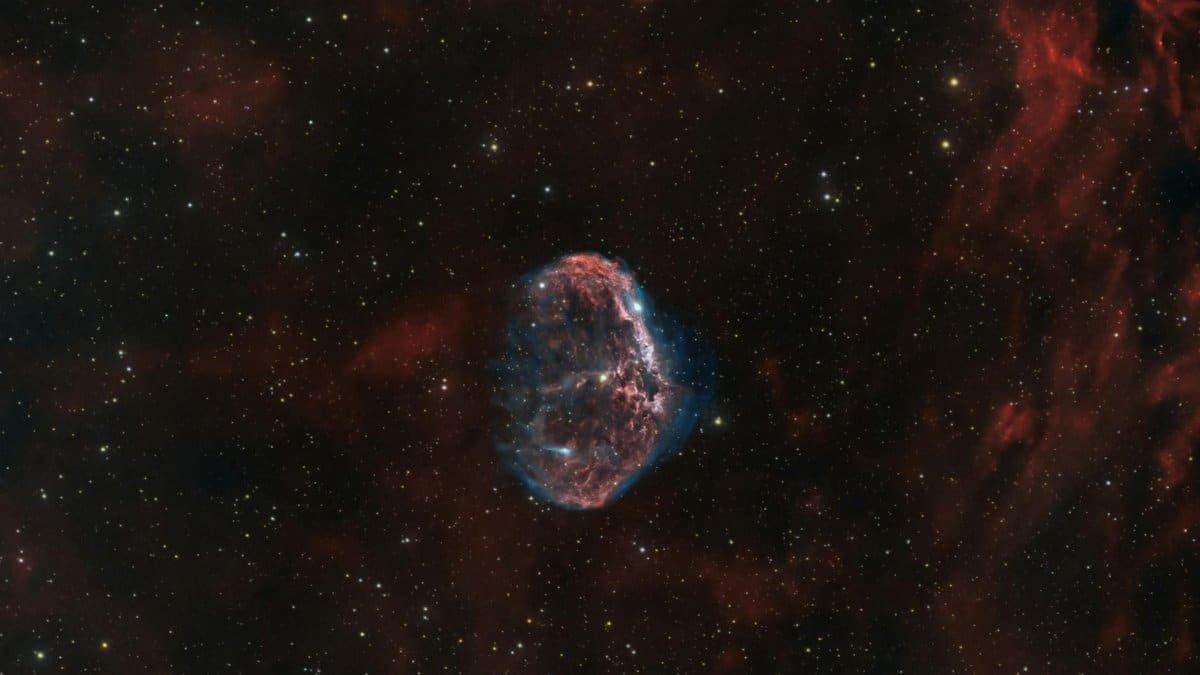
Astronomers have unlocked a clearer view of the universe’s hidden architecture, thanks to NASA’s James Webb Space Telescope. Scientists analyzing data from the observatory have crafted one of the highest-resolution maps of dark matter to date, illuminating how this elusive substance intertwines with everyday cosmic matter. Dubbed a game-changer in the study of james webb dark matter dynamics, the map is twice as sharp as prior efforts, exposing the invisible scaffolding that structures galaxy clusters and influences the birth of ancient stars. As reported by NASA’s Jet Propulsion Laboratory, these findings peel back layers of the cosmos long shrouded in mystery.
The Elusive Nature of Dark Matter

Dark matter remains one of cosmology’s greatest enigmas—an invisible force that doesn’t emit, absorb, or reflect light, yet exerts profound gravitational pull. This ghostly material, inferred through its effects on visible matter, has long challenged researchers. The new James Webb map brings unprecedented clarity, showing precisely how dark matter overlays and interacts with the luminous stuff of stars and gas. It’s not just a backdrop; it’s the universe’s structural backbone, dictating the grand choreography of celestial bodies.
James Webb’s Technological Edge

The James Webb Space Telescope, with its massive golden mirror and infrared vision, pierces cosmic dust clouds that once obscured deep-space views. Launched in 2021, it builds on Hubble’s legacy but surpasses it in sensitivity and detail. For the james webb dark matter project, its data has enabled scientists to trace faint gravitational distortions—subtle bends in spacetime caused by dark matter’s mass. This isn’t guesswork; it’s direct imaging of the invisible, twice as refined as earlier maps from ground-based or space observatories.
A Map Like No Other

Imagine charting a city skyline through fog: previous dark matter maps offered blurry outlines. Now, Webb’s observations deliver sharp contours, revealing intricate patterns where dark matter clumps and flows. According to the NASA JPL findings, this map stands out for its resolution, capturing details down to scales that hint at the universe’s foundational framework. It’s a visual feast for astronomers, transforming abstract theory into tangible cosmic geography.
Where Dark and Visible Matter Converge

The real revelation lies in the overlaps. Dark matter doesn’t float apart from galaxies; it envelops them, mingling with stars, gas, and dust in a delicate balance. Webb’s high-fidelity imaging shows these intersections with stunning precision, illustrating how the invisible guides the visible. In galaxy clusters—vast congregations of hundreds of galaxies—this interplay becomes a gravitational ballet, where dark matter’s pull keeps everything in harmony. Such details were mere hints before; now they’re vividly etched.
Twice the Sharpness, Worlds of Difference

What does “twice as sharp” truly mean? Earlier maps, limited by telescope apertures or atmospheric interference, smoothed over fine structures. Webb’s map resolves them, spotting wispy filaments and dense cores that previous efforts blurred. This leap in clarity, as highlighted in the JPL report, uncovers nuances in dark matter distribution that could refine models of cosmic evolution. It’s like upgrading from a pixelated photo to 4K video—suddenly, the universe’s hidden wiring snaps into focus.
The Invisible Scaffolding of the Cosmos

At its core, dark matter forms the universe’s scaffolding—a web of unseen threads stretching across voids. Webb’s map exposes this framework in exquisite detail, showing how it cradles galaxy clusters like a cosmic lattice. These clusters, among the largest structures known, owe their form to dark matter’s steady hand. Without it, galaxies would drift aimlessly; with it, they coalesce into the majestic spirals and ellipticals we observe. The imaging confirms dark matter as the architect, quietly shaping billions of years of expansion.
Shaping Galaxy Clusters
Galaxy clusters aren’t random gatherings; they’re sculpted by dark matter’s gravity. The new map illustrates this sculpting process, revealing how dark matter halos envelop clusters, funneling ordinary matter into dense centers. This gravitational orchestration prevents dispersal, fostering environments where galaxies collide and merge. Webb’s resolution highlights irregularities—subtle lumps and bridges—that speak to the dynamic history of these behemoths. For astronomers, it’s a front-row seat to the forces that bind the universe’s heavyweights.
Guiding Ancient Star Formation
Beyond clusters, dark matter influences the earliest stars. Its gravitational wells act as nurseries, drawing in primordial gas to ignite fusion. The james webb dark matter map traces these wells, showing how they seeded star birth in the universe’s infancy. This invisible guidance ensured stars didn’t form uniformly but clustered in patterns that evolved into today’s galaxies. Blended seamlessly with visible matter, dark matter’s role emerges as both protector and catalyst, a silent partner in cosmic creation.
Pathways to Deeper Understanding

This breakthrough sets the stage for bolder questions. With Webb’s ongoing observations, scientists anticipate even finer maps, potentially linking dark matter to exotic particles or modified gravity theories. While the current map—twice as sharp and richly detailed—doesn’t rewrite textbooks, it bolsters the standard model where dark matter dominates unseen mass. As NASA JPL notes, these insights into overlaps and scaffolding promise to illuminate the universe’s past and future, inviting a new era of discovery.