
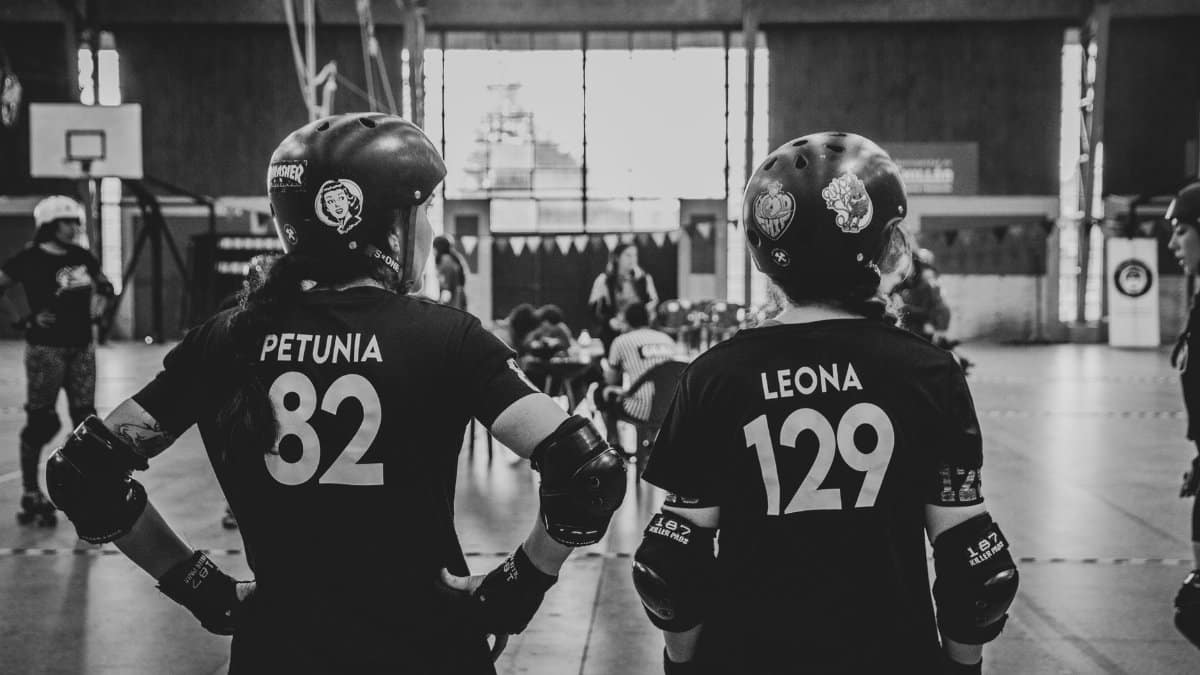
On a banked gym floor in the Philadelphia suburbs, the sound of wheels on polished wood can feel closer to a congregation than to a typical Saturday sport. That is the setting in which Black Derby Collective Sam Flowers has become a familiar name to readers following an unlikely path toward the biggest stage in flat track roller derby. Flowers, a Harleysville native, skates with a borderless team made up entirely of Black athletes, a group now preparing for the 2026 WFTDA Championships in Sweden. The story is about points and penalties, yes, but it is also about ritual, loyalty, and the strange grace of finding your people on eight wheels.
A Saturday that feels like church

Roller derby has always carried a theatrical charge. Skaters take names, crowds chant, and a jam can turn in a breath. For many who follow the Black Derby Collective, the deeper pull is not the costume. It is the gathering. People drive in from scattered cities, tape wrists, share food, and line up for a sport that still has to explain itself to neighbors who remember only the televised version from another era.
The Philadelphia Inquirer has reported on Flowers and the collective as they move toward those championships in Sweden, a rare international stage for a team that does not belong to a single hometown in the ordinary league sense. The reporting sits at inquirer.com. What the piece makes plain, even in outline, is that belonging here is built on purpose rather than on a convenient zip code.
Where the collective comes from
The Black Derby Collective is often described as borderless. Skaters are not waiting for one city charter to decide whether Black athletes get a full roster, a fair whistle, or a room that feels like theirs. They assemble across distances. They practice where they can. They travel when the calendar and the bank account allow. That model is awkward for traditional sports pages, which prefer a mascot, a municipality, and a single home rink. It is also honest about how community actually forms when institutions lag.
Women’s Flat Track Derby Association play, known widely as WFTDA, gives the sport a rules spine and a championship ladder. The collective’s rise inside that structure matters because it shows a borderless group can still meet the sport on its own terms: sanctioned bouts, rankings, and a trip that ends in Sweden rather than in a story that stays local forever.
Harleysville and the longer road
Harleysville sits in Montgomery County, a stretch of Pennsylvania that does not advertise itself as a derby capital. Flowers grew up there and found a sport that asks for bruised hips, quick feet, and a tolerance for being misunderstood. Local derby, including ties readers will see connected to Brandywine in the regional coverage, gave a place to learn the game. The collective gave a different kind of room: a roster organized around Black skaters who wanted to compete together without treating that choice as a footnote.
Small town origin stories are easy to sentimentalize. This one resists that. A skater from Harleysville helping an all Black, borderless team reach a world championship is not a fable about escape. It is a record of someone carrying home with them into a wider circle, then coming back to gyms where the lights hum and the floor tape curls at the edges.
What borderless actually means

Borderless sounds poetic until you count the miles. Practices do not magically align. Jobs do not pause. Child care, night shifts, and aging knees do not care about a ranking chart. A collective that draws skaters from many places has to treat logistics as part of the athletic craft. Who can travel. Who can host. Who can take a hit in the third period after a van ride that started before dawn.
That friction is also the point. A team that refuses a single border has to invent trust. Veterans teach newer skaters how to hold a line. People who might never have shared a league vote share a strategy instead. When Black Derby Collective Sam Flowers appears in previews of the Swedish championships, the name stands in for that whole improvised architecture, not only for one biography.
The sport underneath the spectacle
Flat track derby is a full contact race disguised as a scrum. Jammers score by passing opponents. Blockers build walls, open lanes, and absorb impact. A good team is less a collection of stars than a moving argument about space. Outsiders see elbows. Insiders see timing, communication, and the discipline to reset after a penalty that swings a jam.
An all Black roster does not change the rules. It changes the room in which those rules are learned. Skaters talk, in scenes like this across the sport, about walking into leagues where they were the only Black athlete on the track, then having to decide whether to educate, endure, or leave. A collective offers a fourth option: build the roster you needed and make it good enough that the rest of the association has to book you.
Preparing for Sweden
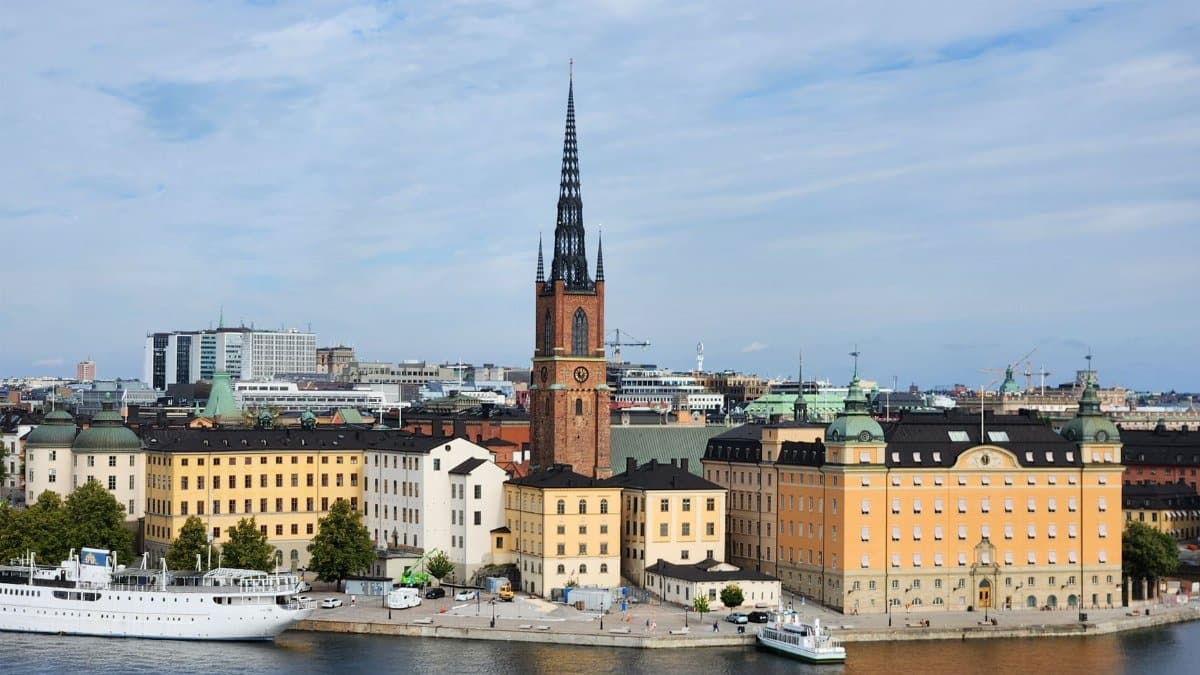
Championship week is a compression of everything a season asks in slow motion. Sleep, food, gear, film study, and the nervous humor that shows up when a dream becomes a flight itinerary. Sweden is not a metaphor. It is a country, a venue, a clock, and a crowd that may know the sport better than many American spectators who still picture banked track television from decades ago.
Preparation for a borderless team is doubled. Skaters arrive from separate training lives and have to become one unit in a short window. That is a coaching problem and a spiritual one, if the word is allowed to mean attention, sacrifice, and shared vow rather than a pulpit. The 2026 WFTDA Championships will test whether months of scattered work can lock into forty minutes of clean, brutal clarity. Flowers, as a Harleysville native inside that traveling circle, carries both a local pride and a collective duty onto that floor.
Why this team matters beyond the track
Sports pages sometimes isolate representation as a moral trophy, then move on. The more interesting question is what the roster changes in daily life. Younger skaters see bodies like theirs taking legal hits and scoring legal points at the highest tier. Parents in the stands hear a sport explained without apology. Leagues that once treated diversity as a poster have to treat it as competition.
There is also a quieter correction to the old image of derby as a novelty act. The athletes training for Sweden are not asking to be admired for existing. They are asking to be scouted, officiated fairly, and remembered for how they play. That demand is the grown version of inclusion. It has stats, travel receipts, and sore shoulders attached.
A different kind of belonging

Churches, union halls, and Saturday leagues have long done similar work in American towns. They give people a reason to show up when the week has been unkind. Derby does it with mouthguards. The collective adds a racial honesty that many mixed leagues still approach sideways. Naming Blackness in the team identity is not separation for its own sake. It is a response to years in which Black skaters were present but rarely centered, celebrated in outreach copy and scarce in leadership and on championship rosters.
Readers who come to this story from a spiritual desk rather than a sports desk may recognize the pattern. Communities form where official rooms fail. They write their own liturgy, which here includes handshakes after hard bouts and the decision to keep a skater on the roster when life, not talent, is the thing that wobbles.
What championship week asks of a skater
Elite amateur sport, which is what much of WFTDA still is, asks for professional sacrifice without professional pay. Flowers and teammates will be measured in jams, not in salaries. The honor is real. So is the cost. Time away from Harleysville, from jobs, from ordinary evenings, is the unseen entry fee for a game that photographs as pure joy.
A thoughtful fan can hold both facts. Celebrate the berth. Do not romanticize the grind into a lesson about hustle. The collective’s presence in Sweden is an achievement of skill and organization. It is also a reminder that American sports still rely on athletes who patch together excellence between shifts.
The quiet work between bouts
Between public games there is tape, ice, argument, and apology. Captains settle who speaks to officials. Veterans decide when a risky hit is courage and when it is ego. Newer skaters learn that confidence without position is just noise. None of that footage goes viral. All of it decides whether a borderless roster looks united when the whistle blows in a foreign arena.
If there is a devotional quality to this sport, it lives there, in repetition. Showing up when the crowd is small. Calling a teammate after a bad loss. Trusting a plan you did not invent. Black Derby Collective Sam Flowers is part of that unglamorous calendar, which is why the championship story has weight. Sweden is the visible peak of invisible Tuesdays.
How a region should watch

Philadelphia and its suburbs have enough sports noise to drown a derby story. That would be a loss. A Harleysville skater on an all Black roster headed to a world championship is exactly the kind of regional tale that makes a sports section feel like a place rather than a wire feed. Local rinks, local officials, and local sponsors have a stake in whether the next Flowers finds a floor before finding a flight.
Watching well means learning the sport well enough to argue about strategy, not only about symbolism. It means knowing a jam score from a moral score. The collective has already done the harder work of becoming unavoidable inside the rankings. The audience can meet that seriousness halfway.
After the anthem
Championships end. Flights return. Knees remind skaters what they spent. What should remain is infrastructure: more Black skaters in mixed leagues and in this collective, more coaches, more officials, more honest rooms. A single trip to Sweden cannot repair a culture. It can prove a standard. Once a borderless team has stood on that floor, excuses about pipeline and readiness get thinner.
For Flowers, the return to Montgomery County will likely look ordinary from the outside. Work. Training. The next bout. The meaning sits in the continuation. A native of Harleysville did not treat a rare roster as a costume for a season. The skater treated it as a team worth building toward the hardest event the sport offers.
Grace, grit, and a plane to Sweden

Call it sports. Call it community. Call it, if you must, a secular pilgrimage with elbow pads. The accurate description is simpler. A group of Black derby athletes built a collective without a single border, played well enough to reach the 2026 WFTDA Championships, and carried with them a Harleysville native whose name now travels with the roster. Black Derby Collective Sam Flowers is not a slogan. It is a person inside a project that asked for skill, miles, and faith in other people.
When the first whistle blows in Sweden, the theology, if any, will be brief. Skate your lane. Trust the wall. Get up. The rest of us, reading from kitchen tables far from the arena, can do something smaller and still useful. Learn the names. Follow the score. Remember that a championship berth began in gyms most maps ignore, among athletes who decided the room they needed did not yet exist, and then rolled until it did.