
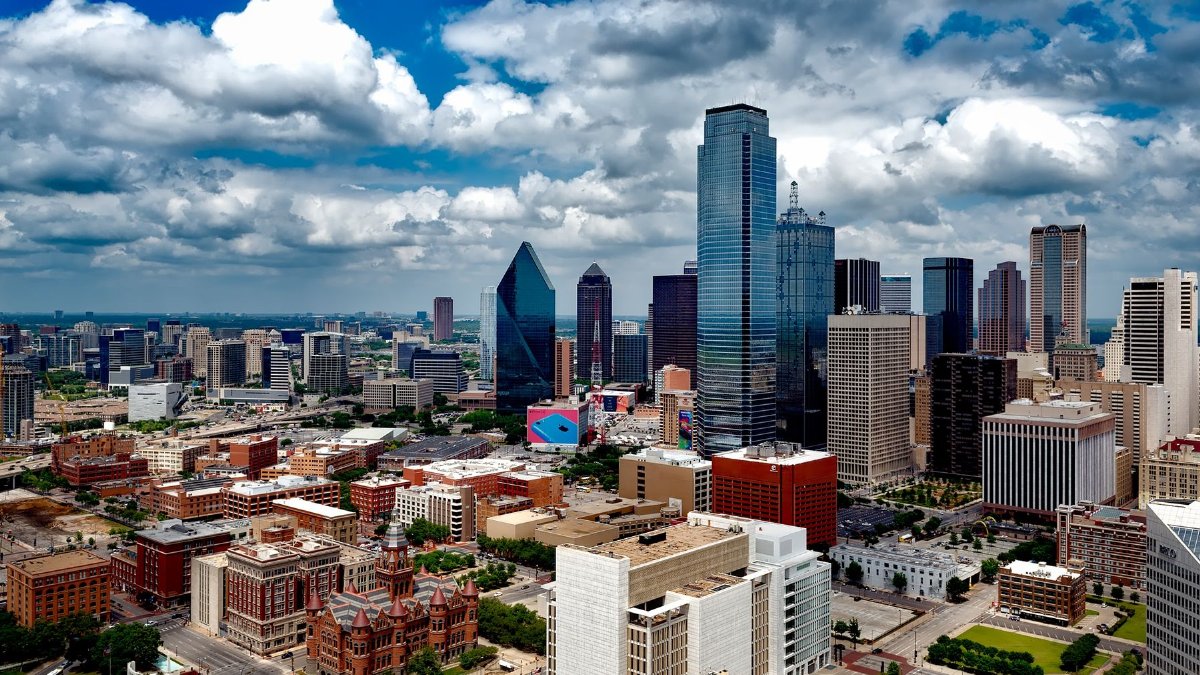
On a warm afternoon the concrete slope of Dallas City Hall still throws a hard shadow across the plaza, the same inverted pyramid I.M. Pei set down in the late 1970s. Inside that shadow, two former mayors are no longer speaking as partners in a single civic project. Laura Miller wants the building kept. Tom Leppert wants the ground under it opened to a different future. Their argument has become the Dallas City Hall debate, a fight about memory, land, and who gets to say what a city owes the place where it does its public business.
A building that never begged to be loved
Pei’s hall is not a gentle landmark. It leans forward, a cantilevered mass of concrete that some residents have called cold since the day it opened and that others defend as one of the few pieces of serious modern architecture the city still owns outright. The plaza in front is vast, often empty, and famously difficult in the Texas sun. None of that has stopped the building from becoming a shorthand for municipal Dallas. Films have used it. Protests have gathered under it. Generations of clerks, council members, and residents have learned the odd angles of its lobbies.
Affection was never the point of the design. Pei was asked to give a young, ambitious city a seat of government that looked sure of itself. The result is monumental rather than welcoming. That quality is exactly why the present argument feels so sharp. A structure built to announce permanence is now being treated, by some, as a placeholder on valuable dirt.
What Miller is trying to hold in place

Miller’s position is the preservationist one, stated without much apology. She wants Pei’s building to remain City Hall, not a relic fenced off while offices scatter to leased floors elsewhere. In her telling, the hall is not merely a style preference. It is the physical record of a decision Dallas already made, to gather its government in one unmistakable place rather than hide it in a tower that could belong to any bank.
Keeping the building does not mean pretending it is easy to run. Concrete of that era needs care. Systems age. Public space around a fortress like this one has to be redesigned if people are going to linger. Miller’s case is that those are problems of stewardship, not reasons to abandon the site. A city that cannot maintain its own capitol, she implies, will not become more confident by selling the capitol and calling the sale a strategy.
What Leppert wants done with the whole block
Leppert looks at the same parcel and sees a missed chance measured in acres. He has argued that the entire downtown site should be redeveloped, not trimmed at the edges or given a friendlier plaza while the pyramid stays put. The logic is fiscal and urban at once. A single purpose civic complex sits on land that, in a tighter downtown, could hold housing, offices, shops, and a smaller public building. Tax base, foot traffic, and a less isolated government campus are the promised returns.
That view treats architecture as one factor among several, not as a veto. A landmark can be admired and still be the wrong use of a block that the city controls outright. For Leppert, loyalty to Pei is not the same thing as loyalty to Dallas. The question is whether the next fifty years of downtown are better served by a preserved monument or by a site that earns its keep.
Land, money, and the quiet arithmetic
Strip away the speeches and the Dallas City Hall debate is also a spreadsheet. Downtown land with clear title is rare. Maintenance on a large, aging public complex is not optional, and deferred work has a way of arriving all at once. Supporters of a sale or a ground lease talk about private capital doing what bond elections struggle to do. Supporters of staying put talk about the cost of moving thousands of workers, rebuilding secure chambers, and then watching a developer decide, years later, what the old address becomes.
Neither side has a free option. Preservation requires money the public must approve and patience the public often lacks. Redevelopment requires a partner, a plan that survives elections, and a promise that civic space will not be the first thing cut when the pro forma tightens. Residents who have watched other downtown visions stall have reason to ask which risk is more familiar.
Where the former mayors still stand together
The clash is real, and it is easy to let it swallow the rest of the story. On a separate question the two have found common ground: Dallas would govern itself more clearly with a stronger mayor. Under the present council manager arrangement, executive power is shared in ways that can blur responsibility. A voter who dislikes a budget, a permitting failure, or a stalled project cannot always tell which desk owns the outcome.
Agreement on that structural point does not settle the building. It does suggest that both Miller and Leppert think the city’s trouble is not only architectural. They want a government that can decide and then be judged for the decision. A hall, however famous, cannot supply that clarity by itself. Nor can a new district built on the same block if the charter still scatters authority.
Daily life inside a monument
Any honest account has to include the people who use the building on ordinary Tuesdays. Council meetings, permit counters, court adjacent errands, and school tours all happen in a structure that was designed to impress before it was designed to guide. Wayfinding is poor. Some offices feel buried. Security, necessary as it is, adds another layer between resident and representative.
Preservation advocates answer that bad interiors can be rebuilt behind a protected exterior. A city can open the ground floor, add shade, improve transit links, and still keep the silhouette Pei drew. Redevelopment advocates answer that retrofit has limits, and that a government which asks the public to love an inconvenient building is asking for a kind of loyalty most people do not feel toward concrete. Both descriptions can be true on the same afternoon.
What redevelopment would actually disturb
Clearing the site would not be a tidy swap of one building for a better one. It would move the symbolic center of municipal life, even if the legal address stayed downtown. Employees would scatter during a transition that could last years. Records, council chambers, and the informal geography of who bumps into whom in a hallway would all have to be invented again. Cities underestimate that friction because it does not photograph well.
There is also the question of what replaces the hall if the market, not the public, finishes the thought. A plan announced as mixed use can arrive, after financing and redesign, as something narrower. Miller’s caution draws part of its force from that history. Leppert’s urgency draws its force from the opposite history, of public sites that sit unchanged while the blocks around them fill in and the city congratulates itself for having saved a view.
Memory is not the same as a master plan
Pei matters here because Dallas does not have an endless stock of buildings that the wider world recognizes. Letting the hall go would read, outside the city, as a choice to discard a known work by a major architect. Keeping it at any cost would read, inside the city, as a choice to let reputation outrank use. The Dallas City Hall debate sits in that gap between outside regard and inside need.
Civic memory is a real public good. So is the right of a living city to revise a decision made when downtown was a different place. The error is to treat those goods as opposites that cannot be ranked. They can. Ranking them requires someone to say, in public, which loss is acceptable. Former mayors can model that honesty. They cannot cast the vote.
A public that is not one public
Dallas does not experience this argument evenly. People who work downtown walk past the pyramid and already have a feeling about it, fond or weary. People in neighborhoods far from the core may see a distant fight about a building they enter once a decade, if ever. For them the relevant facts are service, cost, and whether a grand project downtown delays a road, a library, or a bond they actually use.
That distance is not apathy. It is a reminder that City Hall is both a symbol and a utility. A debate conducted only in the language of architecture will lose the utility voters. A debate conducted only in the language of yield will lose the people for whom the building is one of the few shared rooms the city still has. Any campaign that hopes to settle the question will have to speak both languages without sneering at either.
The decision will outlast the argument

Miller and Leppert are arguing as private citizens with public pasts. Their terms are over. The council, the manager, and eventually the voters will live with whatever follows. That is the uncomfortable usefulness of the clash. It forces a choice into the open before a developer, a bond proposal, or a quiet lease makes the choice by accumulation.
If the hall stays, Dallas will have to fund it like a commitment rather than a leftover. If the site is cleared, Dallas will have to define, in writing that survives a market cycle, what public rooms come back and who controls them. The Dallas City Hall debate is not really about whether concrete can be beautiful. It is about whether the city can say what it wants its center to do, and then pay for that sentence.
Pei’s slope will keep throwing its shadow either way, until someone with authority decides the shadow is worth keeping or worth ending. The former mayors have drawn the lines. The rest of the work belongs to people who still hold office, and to residents willing to treat a hard building as a hard question rather than a backdrop.