
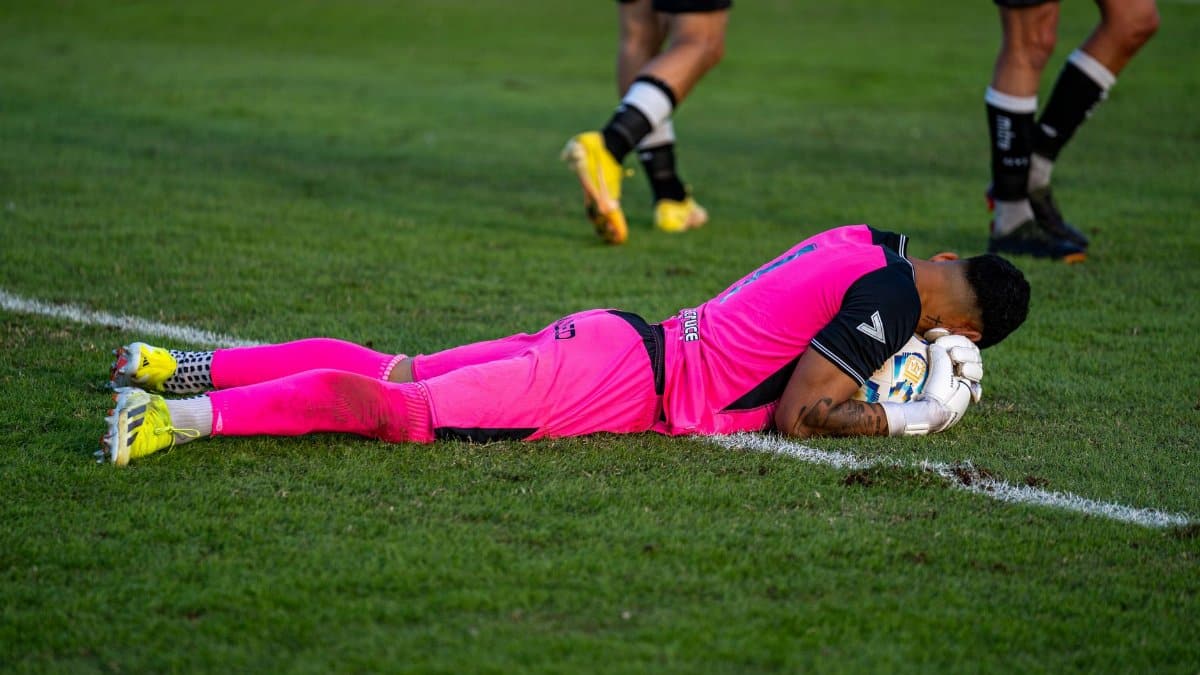
The lights at MetLife Stadium had already started to thin when the final horn sounded, and the Philadelphia sideline stood in a stillness that felt heavier than the scoreboard. On November 8, 2026, the Eagles Giants loss arrived as a 19 to 11 defeat, the seventh straight setback for a team that once treated November as a month of accumulation rather than erosion. Joe Milton could not lift an offense that spent most of the night searching for a clean sequence, and the Giants, imperfect and opportunistic, did enough to keep the visitors from finding one.
A night that never quite opened
Football games often announce themselves in the first series. This one refused. Philadelphia moved the ball in short, cautious pieces and then stalled. Drives that began with promise ended in punts or field goal range that never quite became points. The Giants did not dominate the line of scrimmage in any cinematic sense. They simply refused to give the Eagles a free breath, and in a season already bent by losses, that refusal was enough.
A 19 to 11 final is the kind of score that invites argument. Was it a defensive masterpiece or an offensive failure dressed up as a grind? From the Philadelphia side, the answer sat closer to the second reading. The defense kept the game within reach for long stretches. The offense never converted that reach into a lead the stadium had to respect.
What seven straight losses do to a room

A single loss can be explained. Weather, a turnover, a missed kick, a strange bounce. Seven in a row asks a harder question. It asks whether the habits that once produced wins have quietly left the building. Players still line up. Coaches still call. The choreography remains. What changes is the trust inside the choreography, the belief that the next play will repair the last one.
In Philadelphia, that question has a public life. Radio shows fill with it before the coffee cools. Group texts among season ticket holders turn sharper. A streak of this length does not merely subtract from the standings. It rearranges the emotional weather of a city that measures autumn by football as much as by temperature.
Joe Milton and an offense that would not catch

Joe Milton entered the night as the man asked to supply a spark. The request was not subtle. Philadelphia needed a quarterback who could push the ball downfield without surrendering the game on a reckless throw, and who could make third down feel less like a coin flip. The performance never found that balance. Completions arrived, then disappeared into the next stalled series. There were moments of arm talent, the kind that make a sideline lean forward, and then the familiar return to field position football.
It would be unfair to hang an entire losing streak on one passer. Offenses fail in layers: protection that arrives a half second late, routes that converge instead of separate, a run game that cannot force a defense to declare its intentions. Milton was the most visible piece of a machine that would not catch. Visibility, in a quarterback, is its own kind of verdict.
How the Giants made small advantages last

New York did not need a masterpiece. The Giants needed composure, a few explosive answers, and a refusal to hand Philadelphia the short field. They got enough of each. Their offense was not a parade. It was a series of calculated reaches, the sort that look modest on a highlight reel and decisive on a scoreboard. When Philadelphia tightened, New York did not panic into hero throws. When Philadelphia loosened, New York took the yards that were there.
That is how modest favorites and wounded visitors lose games they still believe they can steal. The opponent does not have to be brilliant. The opponent has to be slightly more organized for slightly longer. On this Sunday, organization belonged to the Giants.
A defense asked to win a game it could only borrow

Philadelphia’s defense spent the evening in a familiar bind. It could limit damage. It could not manufacture points. Stops that would have felt like turning points in September felt, by the fourth quarter, like delays. A defense can keep a team alive. It cannot, over seven weeks, substitute for an offense that fails to finish drives.
There is a particular fatigue in that role. Linebackers fly to the ball. The secondary squeezes windows. The front creates a hurry. Then the offense takes the field and returns the ball before the crowd has finished standing. Over a long streak, that cycle becomes its own injury, not to a knee or a shoulder, but to the shared sense that effort will be repaid.
The scoreboard as a quiet argument

Nineteen to eleven is not a blowout. That fact will comfort some and irritate others. Comfort, because the margin suggests the season has not fully collapsed into farce. Irritation, because close losses accumulate a special bitterness. A team that loses by thirty can blame a mismatch. A team that loses by eight, again and again, has to sit with execution.
The Eagles Giants loss fits that second category. It was close enough to replay in the mind on the ride home, and lopsided enough in spirit to confirm a trend. Moral victories are a currency Philadelphia has never liked to spend. This game did not even offer a clean one.
Coaching choices under a lengthening shadow
Every losing streak eventually turns the camera toward the sideline. Play calling becomes a public document. Fourth down decisions are litigated before the next commercial. Personnel groupings are treated as moral choices. Some of that scrutiny is fair. Some of it is the simple human need to locate a lever that still moves.
What can be said without inventing a secret meeting is this: an offense that cannot sustain drives forces coaches into a narrower menu. Aggressive calls look reckless when protection is shaky. Conservative calls look timid when the scoreboard refuses to move. The staff is not choosing between good and bad so much as between versions of incomplete. That is a miserable way to coach, and it is also an honest description of where Philadelphia sits.
Fans who have seen this movie and still stay

There is a myth that Philadelphia fans only know rage. Rage is part of the repertoire. So is attendance. So is the grim humor of people who keep buying tickets because leaving would feel like a larger surrender than losing. On nights like this, the anger is real and the loyalty is also real, and they occupy the same sentence without canceling each other.
The Eagles Giants loss will be retold in diners and on late trains, not because the game was beautiful, but because repetition has made the franchise feel unfamiliar. Supporters can forgive a bad Sunday. They struggle with a month that teaches them to expect one.
What the streak does to a season’s math

Seven losses in a row rearrange more than morale. They rearrange calendars. Tiebreakers that once felt like December problems become background noise. The path back to relevance does not vanish, but it narrows into a corridor that requires help from other teams and a sudden competence Philadelphia has not shown. Hope, in that corridor, is not forbidden. It is simply more expensive.
Younger players still have evenings that can become careers. Veterans still have afternoons that can restore a reputation. None of that erases the arithmetic. Each week without a win is a week the rest of the conference does not give back.
Memory, rivalry, and a result that will linger
Games against the Giants carry a private archive in Philadelphia. Some of those memories are triumphant. Some are petty. This one will sit in the petty column, not because New York humiliated anyone, but because the Eagles looked like a team negotiating with its own limitations in real time. Rivalries are supposed to sharpen both sides. On this night, the sharpening mostly revealed dull edges.
Historians of the sport will not linger on a 19 to 11 November game unless the streak around it becomes a chapter. For the people who watched, the chapter has already started. The Eagles Giants loss is one entry in it, specific in its score and general in its feeling: a capable roster, on paper, producing football that never quite assembled.
The week that begins after the horn

Practice will resume. Film will be cut into teachable pain. Someone will say the right professional things about execution and details. Those sentences are not lies. They are also not solutions by themselves. A streak ends only when a game ends differently, and the next opponent will not arrive as a courtesy.
Until that different ending, Philadelphia lives with the evidence of November 8. The Giants left with the win. The Eagles left with another entry in a run that has started to define the season more clearly than any single highlight from earlier months. Joe Milton still has time to become the spark he was asked to be. The offense still has time to remember how drives are finished. Time, in a seven game slide, is the one resource that keeps shrinking even when the talking never does.