
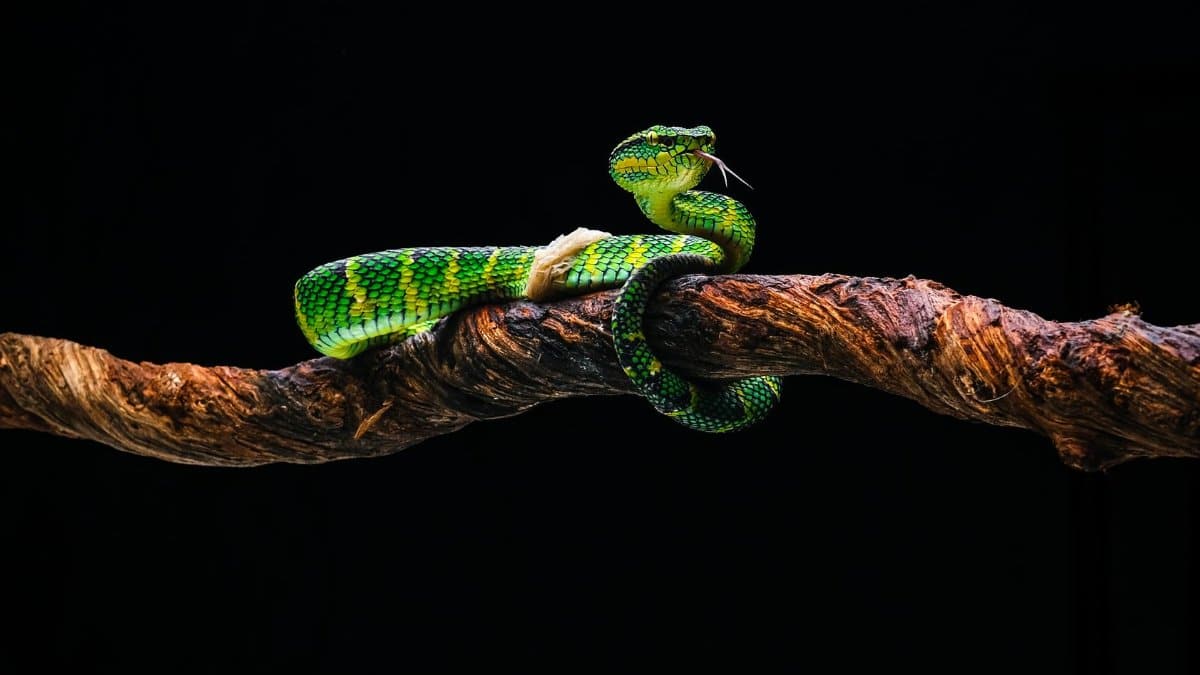
On a cool morning along the San Mateo coast, biologists carried cloth bags down a trail that smelled of wet willow and pond mud. Inside were animals most Californians will never see: turquoise, red, and black, small enough to rest across an open palm, and rare enough that a single sighting can still stop a field crew. San Francisco garter snakes, raised under careful hands and then set into wild cover, are among the most vivid reptiles on the continent. Their return is not a spectacle for its own sake. It is a test of whether a thin ribbon of coastal wetland can still hold a species that development, collecting, and drying ponds nearly erased.
A color that does not belong in ordinary grass
People who have seen one describe the same pause. The head is red. A pale turquoise stripe runs the length of the body, bordered by black, with red showing along the sides. In sun the colors look painted. In shade they break into the reeds and make the animal harder to find than the postcards suggest. That combination is not decoration. It is the field mark of a snake with a very small map.
The species lives in San Mateo County and a few neighboring pockets of the San Francisco Peninsula, close to freshwater ponds, slow creeks, and the damp edges where frogs gather. It is not a desert wanderer and not a mountain generalist. It needs water, cover, and prey in the same small landscape. When any one of those pieces fails, the snake does not simply move to the next county. For much of the modern era, the next county was already houses, roads, and golf turf.
How a peninsula snake became a federal emergency
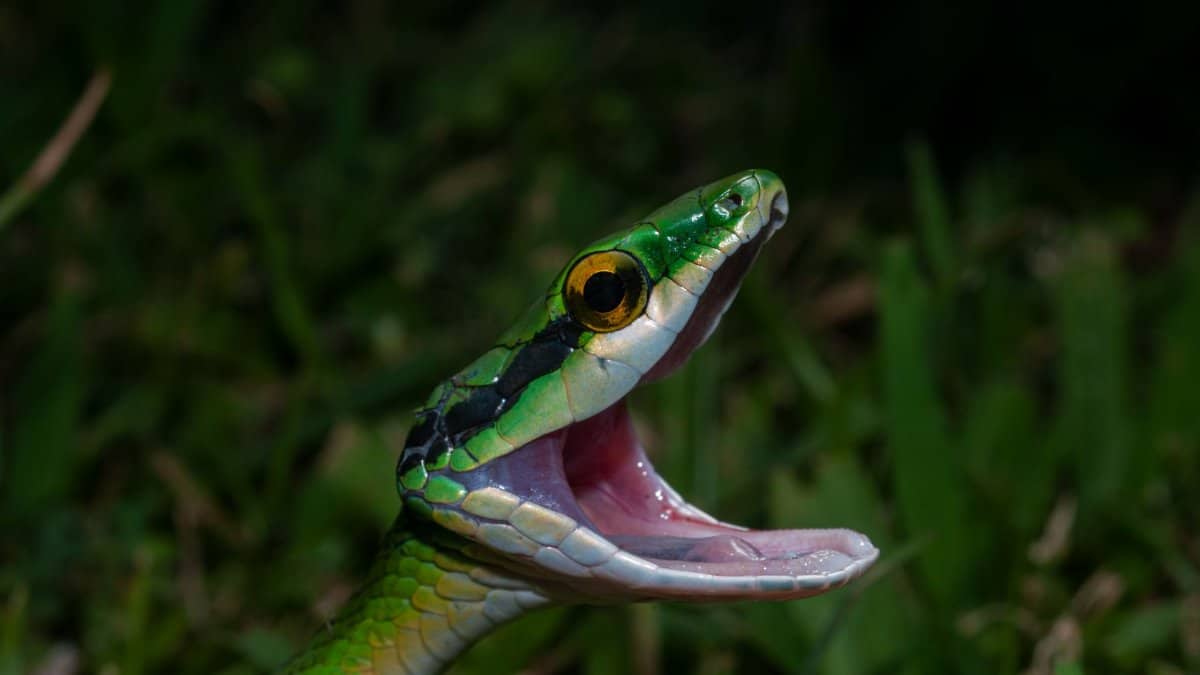
Federal wildlife officials listed the animal as endangered decades ago, a status reserved for species at serious risk of disappearing. The causes were not mysterious. Coastal San Mateo filled in with subdivisions. Marshes were drained. Ponds that once held frogs through a dry summer were lined, polluted, or abandoned. Collectors noticed the colors and paid for them. A snake this beautiful is a temptation in the illegal pet trade, and rarity raises the price.
Protection on paper slowed some of that harm. It did not rebuild ponds or teach a wild population how to recover from a few bad years. Counts are difficult because the snakes are secretive, and a missed animal is not the same as a lost one. What biologists could say with confidence was narrower and more worrying: suitable habitat had shrunk to fragments, and those fragments were not reliably producing enough young to feel safe.
The frog at the center of the story
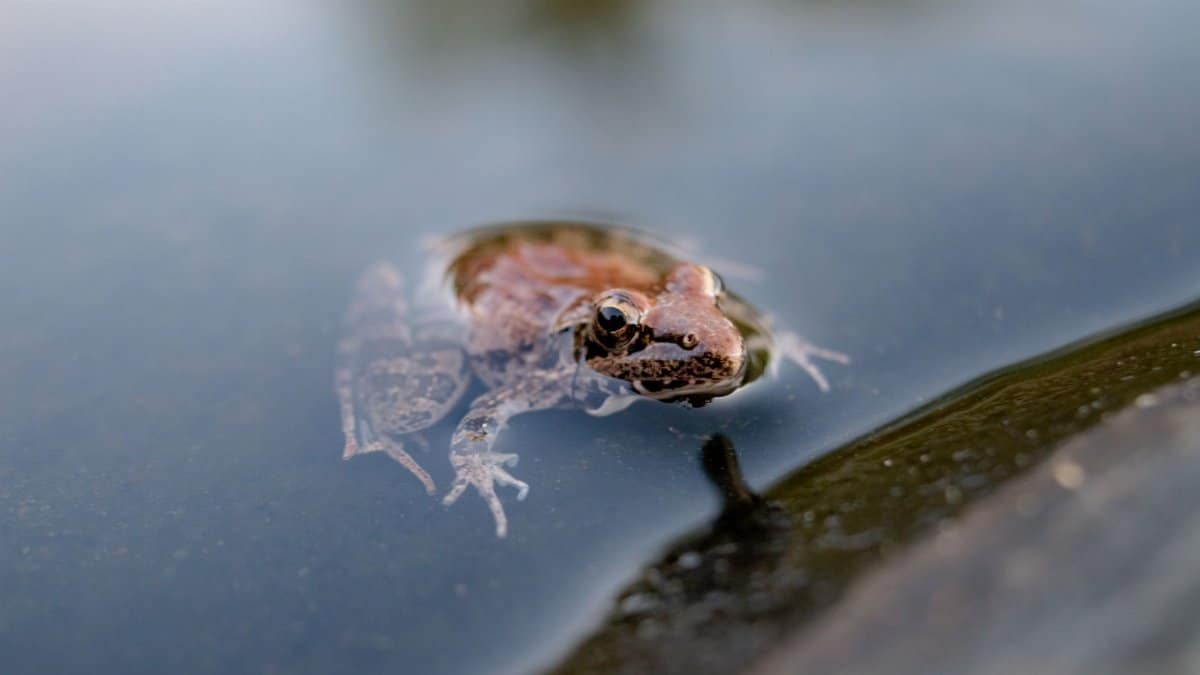
A garter snake of this kind is a hunter of amphibians. California red legged frogs and Pacific tree frogs matter as much as the reeds. Take away the frogs and the snake has a beautiful coat and an empty season. That dependence is why pond restoration is not a side project. It is the main plot.
Red legged frogs have their own troubled history on the California coast, pressed by habitat loss and by introduced bullfrogs that eat them and compete with them. A recovery plan that saves the snake while ignoring the frog is a plan that fails twice. Field crews who prepare a release site spend as much time on water depth, shoreline plants, and predator control as they do on the snakes themselves. The animal is the headline. The pond is the condition.
What captivity can and cannot teach
The San Francisco Zoo has kept a conservation breeding effort for this snake, a role that sits awkwardly beside the public image of a city zoo. Behind the exhibits, keepers manage temperature, diet, and breeding pairs with a caution that would bore a casual visitor and reassure a regulator. Young snakes must learn to feed. Adults must stay healthy without the low level parasites and seasonal cues of a wild bank.
Captivity solves one problem and creates others. It can produce animals when the wild cannot. It can also produce animals that hesitate at a live frog, or that have never felt a heron shadow. That is why a release is not a parade from a van to a photo line. Animals are conditioned, health checked, and matched to sites where cover is immediate. The goal is not a moment of freedom in the abstract. The goal is a snake that is still alive in the same wetland next spring.
Dozens go out, and the bags get lighter

This season, dozens of the rare snakes were carried into wild habitat in California and released, a first for animals raised in the zoo program and then returned to open ground. Staff described the work in the plain language of logistics: weather windows, transport times, sites already surveyed for frogs and for hiding places. There was no promise that every snake would thrive. There was a promise that each one had a reasonable chance, which is as close to certainty as this kind of work allows.
I have stood at the edge of similar releases for other scarce animals, and the feeling is always smaller than the headline. Someone opens a bag. An animal pauses, tongue flicking, and slides into grass that does not applaud. The people clap quietly or not at all. Then they write down a time and a place, because memory is not a monitoring plan.
More than a hundred still waiting

The larger number is still ahead. More than 130 young snakes are expected to leave protected care next year, if health checks and site conditions hold. That figure matters because a single release, however vivid, is a sample. A second year, and a third, begin to look like a population strategy rather than a ceremony.
Young snakes are also the vulnerable ones. They need prey small enough to take and cover thick enough to defeat raccoons, herons, and the simple bad luck of a cold week. Biologists will not know the result from the release morning. They will know it from surveys, shed skins, and the occasional animal found again with a mark that says it survived the first winter. Patience is not a slogan here. It is the method.
The old threat that never fully left
Protection has not ended demand. A snake this brightly marked still circulates in illegal trade, sometimes under vague names that hide the subspecies. One collected adult can be a breeding animal removed from a pond that had only a handful. Law enforcement and land managers treat locations as sensitive for that reason. Publishing a precise pond name can be an invitation.
Readers who love wildlife sometimes struggle with that secrecy. They want a map, a trail, a chance to see the turquoise stripe for themselves. The harder truth is that seeing is not owed. Some animals remain common enough for a boardwalk. This one does not. Wonder, if it is going to be useful, has to survive without a pinpoint.
Water, housing, and the same coastline
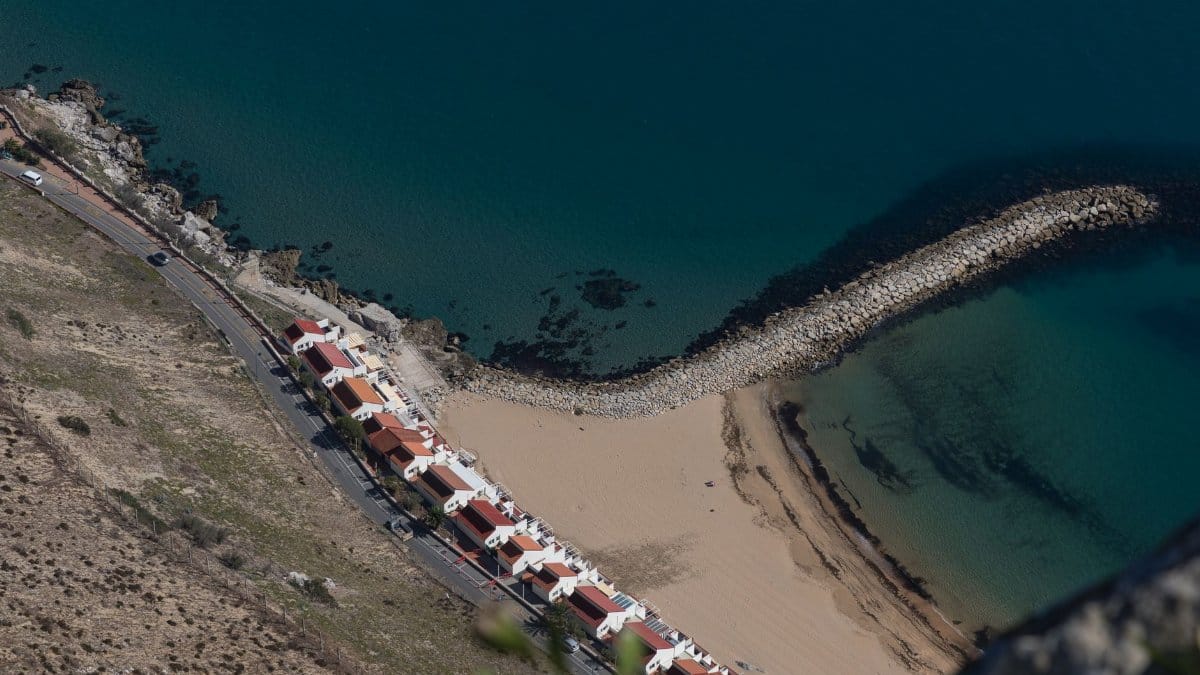
San Mateo County is not going to stop being valuable land. Housing pressure, road projects, and the slow conversion of seasonal wetlands into managed landscapes will continue. Climate adds a second pressure: longer dry seasons, ponds that fail earlier, and frogs that skip a breeding year. A snake tied to those ponds feels each of those changes in its stomach.
Conservation groups and public agencies have spent years buying easements, restoring banks, and arguing over water in places most commuters never notice. That work is unglamorous and often contested. A landowner may support rare wildlife in principle and still object to a pond that floods a path. The snake does not attend those meetings. Its prospects are decided there anyway.
How anyone will know if this worked

Success will not be a press release. It will be repeated detections at release sites, evidence of breeding that did not depend on a zoo incubator, and frogs still calling in the same basins. Failure will look quieter: empty cover boards, ponds without prey, animals that vanish within a season and are not replaced by wild born young.
Programs like this are often judged too early, either as miracles or as waste. Both judgments skip the biology. A garter snake can live for years. A population can take longer than a news cycle to answer a simple question: did the released animals join a wild community, or did they only visit it? The honest schedule is multi year, and it includes the possibility that some sites will be retired because they cannot hold water or frogs.
What the colors ask of a crowded coast
There is a spiritual habit, older than any wildlife statute, of treating beauty as a message. A snake striped in red and turquoise can be recruited into that habit too easily. The animal is not a sermon. It is a predator with a narrow home. Still, the encounter asks something of people who will never hold one: whether a crowded peninsula can leave a few wet corners alone, and whether rarity is a reason to look away or a reason to be careful.
San Francisco garter snakes will not save themselves by being lovely. They will persist if ponds persist, if frogs persist, and if the next cohort of young animals, the hundred and more still in human care, meets a landscape that has room for them. Dozens have already gone into the grass. The rest of the story is whether the grass, and the water under it, remain.