
The House floor emptied earlier than the published calendar had suggested, and the departure became the story. Suitcases rolled past closed hearing rooms while staff packed briefing books that would not be opened until members returned. Democrats treated the shortened week as more than a scheduling choice. They argued that voters were left without recorded votes on prices and on rules for powerful software. In that telling, House recess AI safety is not a technical footnote. It is a claim that lawmakers walked away from two anxieties that now sit side by side in American life: the cost of groceries and the speed of machines that write, rank, and decide.
A shortened week becomes a political argument
Congressional recesses are ordinary. Members return to districts, meet constituents, and raise money. What changed this time, Democrats say, is the timing and the unfinished list. They contend that the majority chose an early exit while families still feel squeezed and while companies race to deploy systems that can imitate human judgment. The opposition does not need a dramatic scandal to make that case. An empty chamber is easy to photograph and easy to explain.
Republicans answer that the House has already moved major bills and that district work is part of the job, not a vacation from it. They say committee work continues even when the floor is dark, and that rushing half formed language on complex technology would do more harm than waiting. Both sides are speaking to the same audience with opposite morals. One side says presence equals seriousness. The other says haste equals sloppy law.
Affordability as the first count in the indictment

The economic half of the Democratic message is familiar and, for that reason, potent. Rent, insurance, child care, and food remain stubbornly expensive in many places even as headline inflation has cooled from its peak. Voters do not experience the economy as a chart. They experience it as a receipt. When the House leaves without a vote that can be described as relief, opponents fill the silence with a simple sentence: they had time to go home and no time to help you.
That sentence is not a budget analysis. It is a campaign frame. It collapses housing finance, tax design, and regulatory fights into one feeling of neglect. Democrats have used versions of it whenever the majority controls the gavel and the minority controls the microphone. The early recess gives the frame a calendar. Absence has a date.
Economists would note that Congress cannot dial prices down by proclamation. Supply, interest rates, and global markets do much of the work. Political speech rarely pauses for that caveat. The useful question for readers is narrower. Which concrete measures were actually ready for a vote, and which were still talking points? A party that blurs those categories risks overpromising. A party that hides behind process risks looking indifferent.
Why artificial intelligence joined the price fight

The technology half of the argument is newer and less settled. Artificial intelligence has moved from lab demos into hiring screens, customer service, medical drafting, and political advertising. Lawmakers in both parties have held hearings. Few have agreed on a statute that could pass and still matter in two years. Democrats now fold that stall into the recess critique. They say guardrails on bias, deepfakes, and workplace displacement should not wait for a more convenient week.
House recess AI safety works as a slogan because it pairs a procedural complaint with a fear people already have. Many Americans have seen a synthetic voice or a generated image and wondered who is accountable when the fake causes harm. Parents worry about homework and scams. Workers worry about tasks disappearing. Campaigns worry about last minute fabrications that cannot be debunked before polls close. None of those worries produces an automatic bill. Together they produce pressure not to look idle.
Industry groups warn that a patchwork of state rules and a rushed federal text could freeze useful tools in medicine and logistics. Civil liberties advocates warn that vague safety language can become a pretext for surveillance or for protecting incumbents from smaller competitors. A serious debate would hold those tensions in view. A recess fight often does not. It asks only whether anyone was in the room when the question was called.
What a normal recess looks like

The House does not legislate every week of the year. Leadership publishes a calendar that balances floor time, committee markups, and district weeks. August has long been a traditional break. Shorter recesses punctuate the spring and fall. Staff use those days to draft, negotiate, and recover from overnight sessions. Members use them to show up at factories, schools, and county fairs.
Leaving early is different from a scheduled district work period only if something time sensitive was on the brink of a vote. That is the factual hinge. If a bill had the votes and the text, an early exit looks like avoidance. If the text was unfinished and the coalition was not there, staying in Washington can be theater. Reporters and voters can ask for the whip count and the draft. Those details matter more than the airport photos.
History offers little comfort to either side. Majorities have recessed before difficult votes when they lacked unity. Minorities have denounced recesses they would have taken in the same numbers. The institution rewards message discipline more than consistency. Readers who remember that pattern are harder to spin and better equipped to judge this week on its own facts.
The Republican case for going home

The majority’s defense rests on three claims. First, the House has already recorded votes on spending, border policy, and oversight that Republicans consider their mandate. Second, members learn more about prices by talking to grocers and landlords than by sitting through another procedural speech. Third, artificial intelligence policy is not ready for a floor fight that would lock in definitions before engineers and courts have tested them.
There is a substantive point inside the third claim. Safety rules written for last year’s models can miss next year’s capabilities or can ban tools that hospitals and schools already rely on. Definitions of high risk systems differ across agencies and across countries. A premature national standard could clash with state experiments that are only beginning to show results. Waiting is not always cowardice. Sometimes it is the only way to avoid a law that cannot be administered.
The political weakness in that defense is visibility. Voters cannot see the drafting that happens off the floor. They can see an adjournment. If Republicans want credit for caution, they need a public timetable: which committees will mark up which proposals, and when a vote will be allowed to fail or pass in the open. Caution without a date reads as delay.
Democrats and the uses of an empty chamber
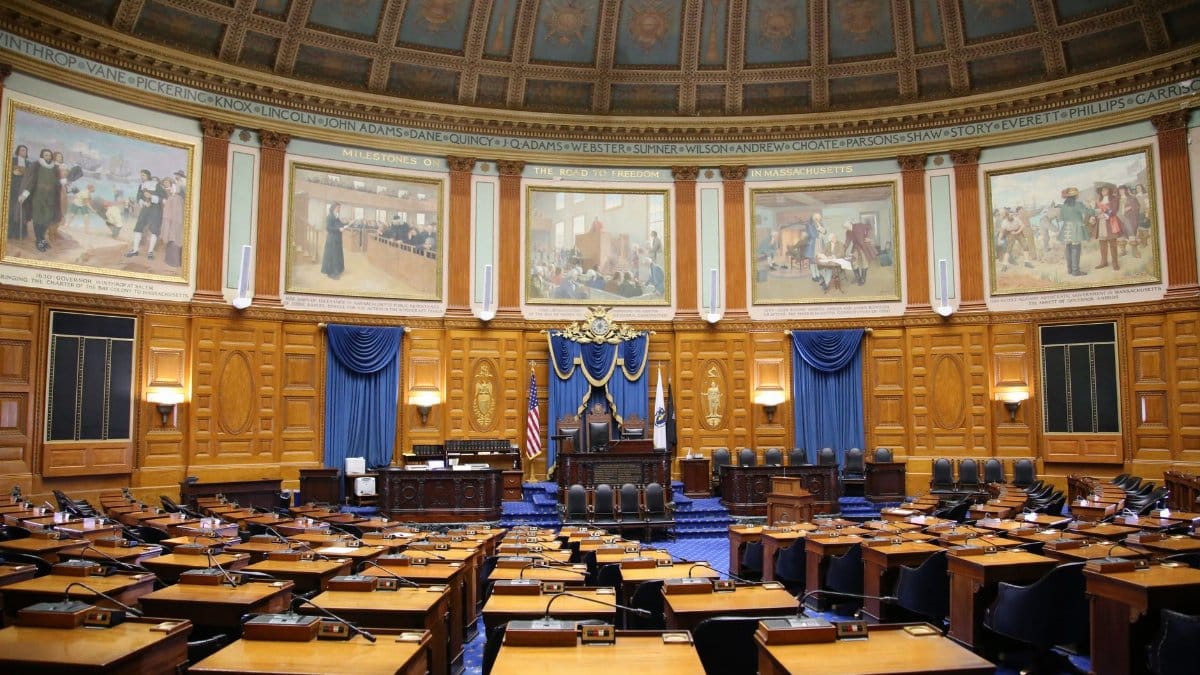
For the minority, an early recess is a gift that does not require them to win a roll call. They can hold news conferences, release letters, and visit the same district events with a contrasting script. They can say the majority had the power to schedule affordability votes and AI safety votes and chose not to. The claim is strongest when they name the measures, the sponsors, and the reason each measure lacked a slot.
It is weaker when it becomes a universal accusation that any break is negligence. Governing includes pacing. A party that treats every adjournment as abandonment will sound alarmist when it holds the gavel and needs a district week of its own. Credibility comes from specificity. Which housing bill, which drug pricing amendment, which disclosure rule for synthetic media was ready and blocked?
House recess AI safety, repeated without those particulars, can curdle into branding. Branding moves donors and base voters. It does less for readers who want to know whether a real statute was within reach. The most effective Democratic argument will attach the slogan to text, not only to tone.
Constituent weeks and the stories members will hear

Once members land, the recess becomes a listening tour whether they planned it that way or not. Town halls still draw questions about insulin, rent, and wages. They increasingly draw questions about chatbots in classrooms, automated denials in insurance, and videos that put a neighbor’s face on a stranger’s body. A member who spent the week in Washington might cite a hearing. A member at home must answer in plain language.
Those conversations can improve later bills. A teacher who describes a cheating panic, a nurse who describes a documentation tool that saves an hour, a small business owner who describes a scam call that sounded like a bank: each story is a constraint on sloppy lawmaking. Democrats are right that presence in the capital matters for votes. Republicans are right that presence at home matters for facts. The false choice is pretending only one location counts.
The risk of the district week is selective hearing. Members gravitate toward friendly rooms. They return with anecdotes that confirm the whip’s memo. A recess that is only a campaign swing will not solve the knowledge gap on either prices or software. A recess that includes critics, workers, and technical staff might.
Campaign calendars and the midterm shadow

Every scheduling fight now sits under an election clock. Narrow margins make absences costly and make message votes tempting. Leadership on both sides calculates not only whether a bill can pass but whether a failed vote helps or hurts vulnerable members. An early recess can protect incumbents from a tough recorded position. It can also hand opponents a week of ads about ducking.
Affordability polls well as a theme because almost everyone buys food and pays a bill. AI safety polls unevenly. Some voters want strict limits. Others want the United States to outpace rivals and fear that regulation means surrender. Parties that fuse the two issues must explain the link without implying that a grocery vote and a model evaluation standard are the same kind of act. They are not. One moves money. The other sets duties for builders and users of software. Lumping them together is rhetoric. Separating them is governance.
Still, the fusion is not absurd. Both concerns are about who holds power when ordinary people feel outmatched, by a landlord or by a system they cannot inspect. That emotional link is why House recess AI safety travels as a phrase. It names a suspicion that the people with the gavel left the hard questions for later.
What staff still do when the floor is dark

Adjourning the House does not freeze the Capitol. Legislative counsel continues to turn concepts into statutory language. Agencies answer letters. Inspectors and committee aides chase documents. Outside experts file comments that almost nobody reads until a markup is real. The quality of the next session depends on whether this quiet work is aimed at a vote or aimed at a press release.
On prices, the unfinished work is often arithmetic: who pays, who is exempt, how a benefit is phased, and how it interacts with existing programs. On artificial intelligence, the unfinished work is definitional: what counts as a covered system, what testing must be shown, what happens when a model causes harm through a downstream user, and how whistleblowers are protected. Those questions do not yield to a single afternoon of floor speeches. They do yield to deadlines. Without deadlines, expertise becomes a waiting room.
Readers should ask their representatives for the deadline, not only for the slogan. A date on a committee calendar is a better measure of intent than a statement about caring. If both parties claim urgency, the calendar will show which claim is operational.
Courts, states, and the vacuum Congress leaves
When Congress hesitates, other institutions move. State legislatures have passed disclosure rules, biometric limits, and procurement standards. Attorneys general have opened inquiries. Courts are sorting copyright, defamation, and product liability theories that were not written with generative tools in mind. Agencies interpret old statutes to cover new practices, and companies challenge those interpretations.
That activity is not a substitute for a national framework, but it is evidence that the subject is not waiting for Washington’s convenience. An early House recess does not pause statehouses. It does not pause product launches. Democrats use that mismatch to argue for federal action. Republicans use the same mismatch to argue for learning from state experiments before freezing a federal mistake. Both can be partly right. The cost of delay is uneven rules and forum shopping. The cost of speed is a statute that technology routes around in a year.
Affordability policy has a similar pattern. States experiment with housing supply changes and renter protections while Congress debates tax credits and zoning incentives it does not directly control. Leaving town does not stop those experiments. It does stop the House from endorsing, funding, or restraining them.
How to read the week without the slogans
A fair reading starts with the schedule that was posted and the schedule that was kept. It asks which bills had text, scores, and plausible vote counts. It separates campaign language from legislative language. It notices when House recess AI safety is used as a compact accusation and when it is backed by a named proposal. It gives the majority a chance to show that district work produced specific revisions, not only photographs.
It also resists the temptation to treat technology policy as a morality play and prices as a switch Congress can flip. Households are right to demand attention. They are poorly served by promises that a single week in session would have rewritten either the cost of living or the trajectory of machine learning. Attention is the start. Drafting, coalition building, and recorded votes are the rest.
Journalists can help by publishing the missed calendar entries beside the speeches. Editors can ask for the bill numbers. Readers can ask their own members what they will cosponsor when the lights come back on. That habit is slower than outrage and more useful than either party’s preferred clip.
The return and the test that follows

When the House reconvenes, the recess argument will either mature or expire. If leadership schedules votes on housing supply, drug costs, tax relief targeted at strained budgets, or disclosure rules for synthetic media, the charge of abandonment loses force. If the floor fills with symbolic resolutions while the harder items stay in drawers, the charge hardens. Democrats will have predicted the outcome. Republicans will have to explain why caution still has no date.
The public does not need to become expert in parliamentary procedure to judge that test. People already know whether their costs moved and whether the tools in their phones feel accountable. They can watch whether members who spent the break talking about those problems are willing to put their names on paper. House recess AI safety will fade as a catchphrase if the votes arrive. It will linger if the only product of the argument is another argument.
Absence is easy to denounce and sometimes justified. What matters next is not who left first. It is who is prepared, on the record, when the chamber is full again.