
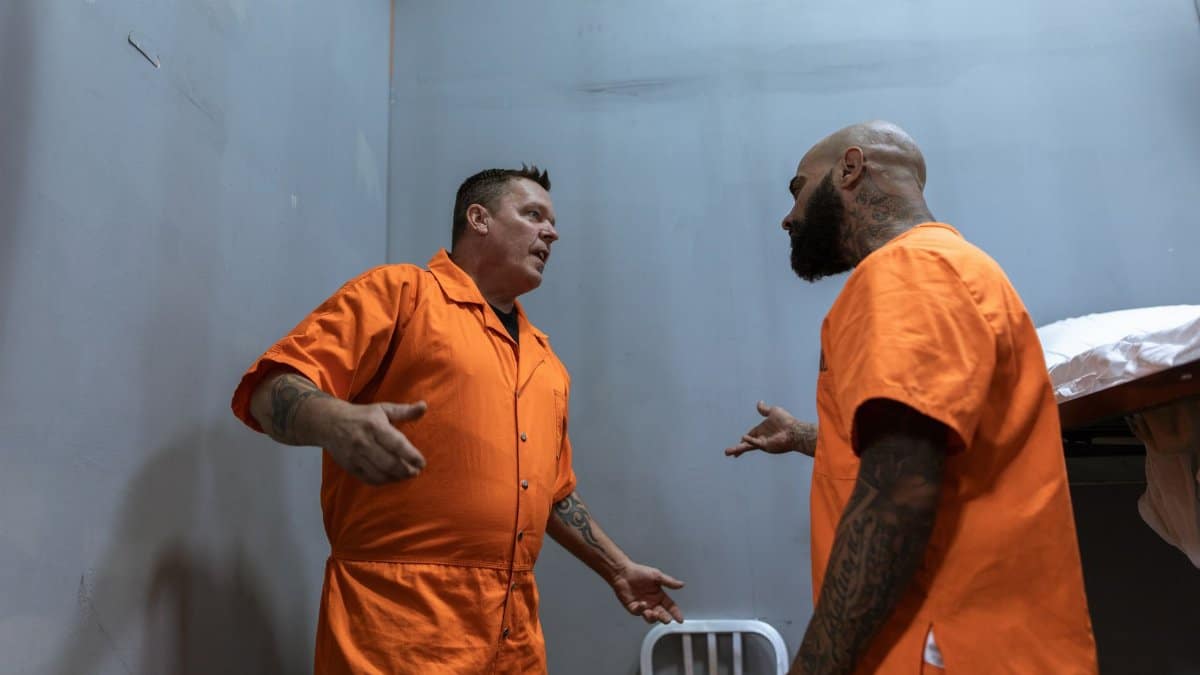
On a March day in 2019, Gov. Gavin Newsom told Californians that no one would be executed while he held office. The phrase Newsom death row clemency has traveled ever since through campaign mail, talk radio, and social feeds, often attached to a darker promise: that condemned killers are about to walk free. The legal record does not support that promise. A halt on executions, and even a commutation to life without the possibility of parole, is not a release order.
A halt is not a pardon

Newsom’s 2019 executive order granted reprieves to people then under sentence of death and closed the execution chamber at San Quentin. A reprieve suspends a punishment. It does not erase the judgment, rewrite the verdict, or create a parole date. The men and women covered by that order remained convicted of murder. They remained in state custody. What changed was the near term prospect of a lethal injection, not the fact of imprisonment.
That distinction is easy to lose in a headline. Clemency is a family of powers, not a single key. A governor may reprieve, commute, or pardon, and each word does different work. Critics who compress all three into one image of an open gate are describing a power the state constitution does not hand over in a press conference.
What clemency can and cannot do

Under the California Constitution, the governor may grant reprieves, pardons, and commutations. There is a hard limit that campaign rhetoric rarely mentions. For a person twice convicted of a felony, a pardon or commutation generally requires a recommendation from the state Supreme Court. Many people sentenced to death have prior felony records. A sweeping conversion of every death sentence by pen alone would collide with that rule.
When a commutation does occur, its terms matter. A death sentence changed to life without the possibility of parole still ends in prison unless a later court, a later law, or a later act of clemency says otherwise. Newsom death row clemency, in the cases where mercy has actually been individualized, has not functioned as a bus ticket. It has functioned, at most, as a change in the name of a permanent sentence.
A pardon is the rarest and broadest form, and it is not what the 2019 order was. Readers who hear pardon, reprieve, and commutation used as synonyms are hearing a political shorthand, not a statute.
The parole board is not a rubber stamp

California’s parole process is built for people whose sentences include a possibility of parole. Life without that possibility is a different legal object. The Board of Parole Hearings does not acquire jurisdiction because a governor opposes capital punishment. Eligibility is written into the judgment and the penal code.
Even for prisoners who are eligible, release is not automatic. Hearings weigh the commitment offense, prison conduct, victim statements, and risk. A grant can be reviewed by the governor in many murder cases. None of that machinery is switched on by a moratorium. Treating Newsom death row clemency as a secret parole program confuses a debate about execution with a debate about the front gate.
How a false claim travels

The release claim persists because it is simple and because it attaches to a real disagreement. Californians have argued about the death penalty for decades. Voters rejected repeal measures in 2012 and 2016. Prosecutors, defense lawyers, and governors have fought over delay, cost, and error. Into that fight, a shorter story is tempting: the governor is letting killers out.
Short stories move faster than orders. A clip of Newsom calling the death penalty a failure can be paired with a victim photograph and a caption about freedom. The caption does not have to quote the order. It only has to imply a consequence the order does not contain. Once that implication is repeated, correction sounds like spin, even when the correction is a sentence anyone can read.
There is also a grain of public confusion that is honest rather than cynical. People know clemency can free someone. They have seen pardons after exoneration, and commutations that move a number of years off a term. They apply that memory to death row and assume the same door. The memory is not foolish. It is incomplete.
Families who live with the sentence

None of this legal clarity removes the injury at the center of these cases. The people on California’s condemned row were convicted of killing. Families have sat through trials, appeals, and anniversaries. For some, an execution was not an abstraction. It was the ending the jury wrote and the state later promised. A moratorium can feel, to them, like a second loss of control.
Journalists owe those families precision rather than consolation dressed up as law. It is fair to say that Newsom denied them the punishment they were told to expect. It is not fair to say he ordered the convicted person home. The first statement is a moral and political conflict. The second is a factual error. Collapsing them insults the very people the harsher claim pretends to defend.
Other relatives, including some who have buried murdered children, have said publicly that they do not want another death in their name. Their view does not settle the law either. It does show that victim opinion is not a single bloc that critics can draft into every advertisement.
Mercy, faith, and the limits of both

The death penalty has always been a spiritual argument as well as a legal one. Newsom has spoken in the language of moral failure, racial disparity, and the risk of killing an innocent person. Religious communities in California do not speak with one voice. Catholic teaching under Pope Francis describes capital punishment as inadmissible. Many evangelical and other congregations still see a death sentence as a just answer to murder. Synagogues and mosques have landed on both sides of the same divide.
Mercy, in that older vocabulary, is not the same thing as forgetting. A commutation that leaves a person in prison for life is an attempt to refuse killing without pretending the crime did not happen. Whether that attempt is righteous is a question of conscience. Whether it opens the prison door is a question of text. Faith communities can argue the first without inventing the second. When pulpits or advocacy groups repeat the release claim, they trade moral witness for a slogan that will not survive a reading of the order.
Life inside after the death warrant goes quiet

A moratorium changes the atmosphere of a condemned unit without changing the locks. People still wake up in state custody. They still face the original conviction on every form a lawyer files. Appeals continue, because a reprieve is not an acquittal and a closed chamber is not a reversed verdict. Some sentences have moved through courts for reasons that predate any one governor: faulty instructions, new evidence, changes in homicide law, or individual plea agreements after decades of litigation.
Those court driven changes are easy to misfile under a governor’s name. If a death sentence becomes a life term because a judge finds legal error, that is not Newsom death row clemency. It is the appellate system doing, slowly and unevenly, what it was built to do. Lumping every such case into a single executive plot makes the system look both more personal and less lawful than it is.
Conditions of confinement are a separate fight. Where people sleep, whether a unit is labeled death row, and how staff manage an aging population are administrative facts. They matter to safety and to dignity. They are not release.
Voters, courts, and a governor with one pen

California’s structure splits power on purpose. Juries and judges impose death sentences under statutes the Legislature wrote and voters have repeatedly declined to repeal. Appellate courts review those sentences. The governor can stop an execution on his watch and can seek, within constitutional limits, to soften individual terms. He cannot, by dislike alone, repeal a sentencing law or order the parole board to ignore a no parole judgment.
That split explains both the anger and the exaggeration. Opponents of the moratorium are right that a governor has used executive power against a punishment the electorate left in place. They are wrong if they describe that use as a jailbreak. Supporters are right that the state has not carried out an execution since 2006 and that the system is costly and slow. They overreach if they treat a reprieve as a moral settlement the voters already endorsed.
Future governors can take a different view. A reprieve tied to one administration is not a constitutional amendment. Anyone evaluating Newsom death row clemency should ask what the paper does now, and what a successor could undo, rather than what a caption implies.
What a careful reader should remember

The false claim is sticky because it flatters two audiences at once. It tells opponents that the governor is lawless. It tells supporters that mercy has already won a larger victory than the documents show. Both readings skip the page where the state says these prisoners stay in prison.
A careful account sounds plainer. California still has a death penalty statute. A governor has refused to use it during his term and has granted reprieves that pause executions. Case by case mercy, where it exists, runs into constitutional limits and, even when granted as a commutation to life without parole, does not authorize release. Critics who say otherwise are not describing a hidden clause. They are describing a fear, and asking the public to treat that fear as law.