
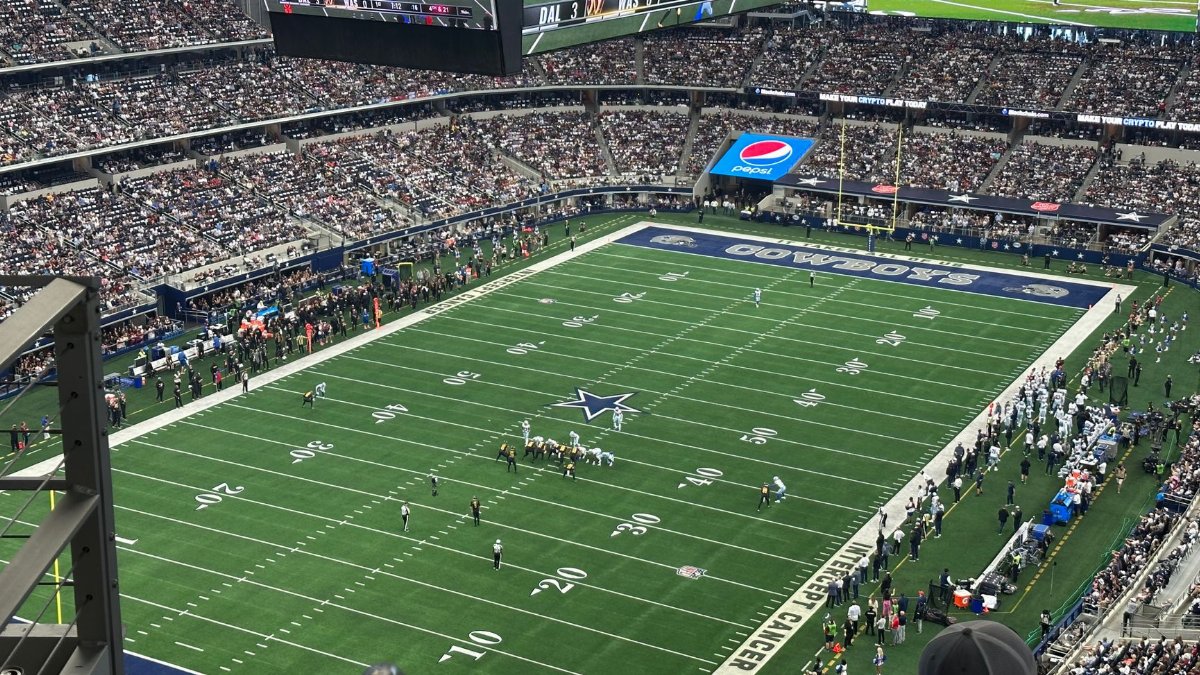
On a Sunday when Dallas expected rhythm more than drama, the injury report became the story before the final whistle. Trainers moved onto the field in the way that quiets a stadium faster than a missed kick. Tight end Jake Ferguson left the action, and safety P.J. Locke followed toward the sideline examination area. For a club that has spent the season negotiating depth charts and snap counts, Cowboys Colts injuries arrived as a blunt reminder that availability still decides more games than scheme. Fans watching from living rooms refreshed their phones, parsed body language, and tried to separate a bruise from a longer problem. The pictures were incomplete. The concern was not.
What the sideline actually showed

Coverage of the Dallas game against Indianapolis described two notable exits and very little medical certainty. Ferguson, the tight end the Cowboys use as a reliable target and a functional blocker, came out of the flow of the game. Locke, a safety whose value sits in communication as much as in tackling, came out as well. Viewers saw staff around both players. They did not see the conversation that followed, and they did not hear what an athletic trainer told the head coach. Football hides its most important sentences. The score keeps moving anyway. Treating a replay as a diagnosis is a habit the sport rewards and then punishes. A player can leave a contest and practice fully a few days later. A player can also leave and force a rewrite of the call sheet. Until the club speaks in the language of practice participation, outsiders are guessing.
Why Ferguson changes the math

Ferguson matters because Dallas builds pieces of its offense around a tight end who can stay on the field in every package. He is a receiver who can sit in zone, a blocker who can help on the edge, and a checkdown when the pocket collapses. Remove that player for a series and the coordinator asks whether a backup can hold the point of attack. Remove him for weeks and personnel groups change. Groupings that once felt routine become questions. Play action that sells because a tight end sells it becomes thinner. None of that is a verdict on this particular afternoon against the Colts. It is the reason his exit draws a louder murmur than a rotational scratch. The position is glamorous on Sundays and ordinary on Wednesdays, which is exactly when a staff learns whether the next man has been coached or merely listed.
Locke and the problem of voice

Locke occupies a different kind of value. Safeties in the modern NFL are translators. They align the front, pass the call, and decide whether a run fit or a pass drop comes first. A missed assignment at that spot is not always a missed tackle. It is a busted fit that turns a modest gain into a chunk of field. Dallas has rotated bodies at safety across recent seasons, which means the room is rarely as settled as a broadcast graphic suggests. If Locke is limited, the next man must learn the calls at full speed, against an opponent ready to test a new voice. That is the unromantic part of Cowboys Colts injuries. The image is the player on the ground. The consequence is the player who must speak in his place, with less margin for a late word.
The Colts as setting, not villain

It is tempting to treat the opponent as the cause. Indianapolis presented a specific front, a specific coverage look, and a specific tempo. Injuries are rarely a morality play about one defense. They are collisions accumulated over months, plus one collision that happens to be filmed. A cut, a pile near the goal line, an awkward plant, a teammate falling across a leg: any of those can end a day. Assigning blame to the Colts because the game happened to be scheduled is poor analysis. The fair question is narrower. Which jobs on the Dallas roster have a ready replacement, and which jobs are held by a single trusted body? Ferguson and Locke sit in that second conversation more often than casual viewers realize. The matchup explains the calendar. It does not explain the tissue.
How coaches talk when they do not yet know

Coaches speak in a code after afternoons like this, and the code is not always evasive. Sometimes they truly do not know. Swelling has not peaked. Strength tests come later. A player feels stable in the locker room and unstable on Monday. Even a talkative franchise cannot outrun biology with a podium answer. The useful reports are the ones tied to practice: full, limited, or out. Until those words appear, social media fills the gap with certainty it has not earned. I have watched enough of these Sundays to distrust the first caption under a replay. The body is slower and more honest than the clip. A cautious sentence from a coach can be respect for that lag, not a hint of catastrophe. Readers who want a cleaner story than medicine allows will be disappointed, and they should be.
Depth on paper and depth in noise

Depth is a word teams love in July and fear in November. On paper, every club has a tight end behind the starter and a safety who took first team reps before the season. Paper does not block a linebacker who is coming clean. Paper does not sort a disguised coverage in a two minute drill. When Cowboys Colts injuries remove a starter, coaches discover whether the backup has lived in real snaps. Some replacements are ready because they have played. Others are ready in walkthroughs and lost once the noise arrives. That difference does not show up in a roster transaction. It shows up on the second possession after the injury, when the call sheet still has the missing name written in the margin. Dallas will be judged on that possession more fairly than on any rumor that bloomed during the broadcast.
Small edits on offense
On offense, the adjustment is visible if you know where to look. Routes that once ended with Ferguson settling between linebackers may be handed to a wide receiver in the slot. Protection calls may shift so a running back chips instead of releasing. Play callers sometimes become more conservative, not from a lack of courage, but from a lack of a count they trust. A tight end who identifies the mike linebacker is doing quiet work every snap. Remove him and the quarterback talks more at the line, which burns clock and invites pressure. None of this requires a dramatic schematic overhaul. It requires a dozen small edits. Those edits are how competent staffs survive a Sunday that did not go as drawn. Fans often want a new identity after one absence. Good coordinators want the same offense with fewer moving parts.
What the secondary has to absorb

On defense the edit is about voice. If Locke is unavailable, someone else wears the helmet speaker or simply becomes the loudest correct player in the secondary. Communication errors look like effort errors on television. A corner bites inside. A linebacker fits the wrong gap. Commentators say the tackling was poor. Sometimes the tackling was late because the call was late. Dallas can survive a single missed game at safety if the remaining veterans keep the structure. A cluster of absences is harder. The Colts game matters as a stress test of that structure, not as a referendum on the whole season. One afternoon can warn a staff. It should not be asked to prophesy December. The back end is a choir. Lose a lead voice and the song can continue, but only if the others already know the part.
Keeping the story smaller than the rumor

There is a discipline in sports writing that is easy to abandon when the search term is already hot. Cowboys Colts injuries will travel faster than any correction. A starter who walks toward the locker room becomes, online, a player lost for the year within an hour. The correction, if it comes, arrives midweek in a paragraph many people will not read. Ferguson and Locke deserve the slower version. So do the teammates who may have to replace them, and so do readers who want analysis rather than a jolt. The game against Indianapolis supplied the facts in hand: two players went down, the positions they play are hard to replace cleanly, and Dallas must now show what the depth chart is worth. Practice will narrow the range. Everything past that is projection, and projection is a weak way to judge a roster.