
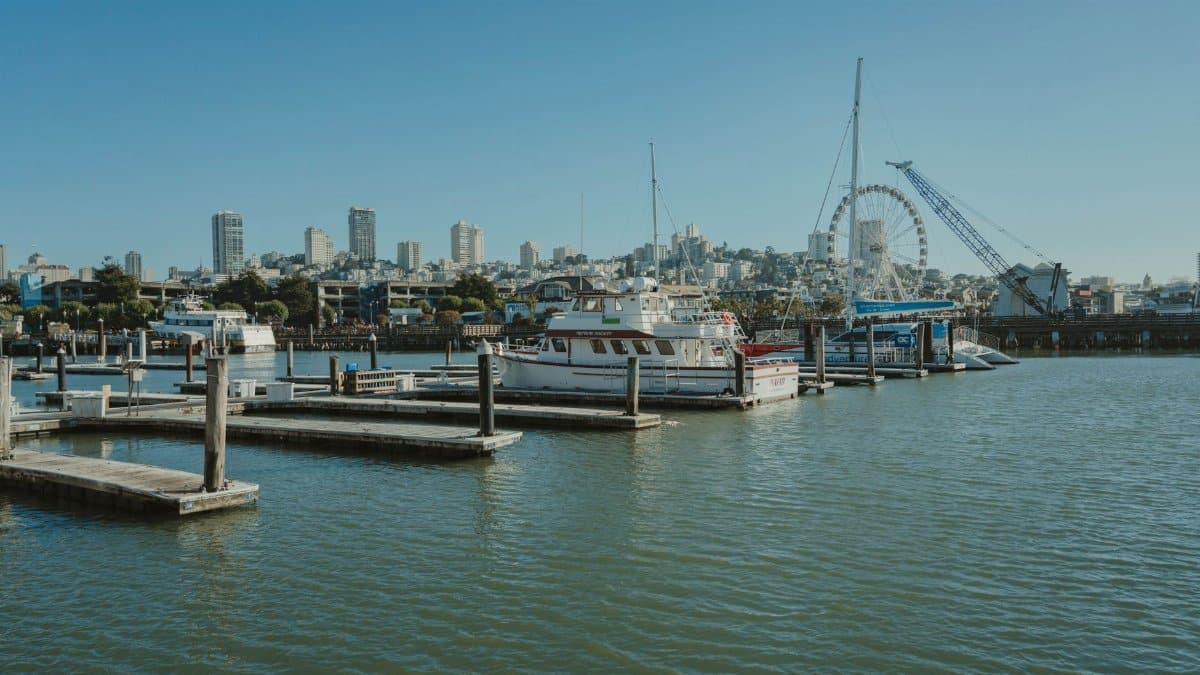
On a bright afternoon along the northern waterfront, shoppers still wheel carts out of a low grocery building that has served the Marina for decades. That ordinary ritual now sits inside a much larger civic argument. San Francisco has approved the Marina Safeway project, a plan to replace the familiar store with a denser mixed use complex after a yearlong fight that drew neighbors, housing advocates, and city officials into the same tense room. The decision does not erase the unease. It does mark a turn from protest toward construction, and it forces a wealthy, low rise district to reckon with the housing shortage that has defined the city for years.
What the city decided to allow

The approved plan calls for two towers, a new grocery store, and 848 homes on the Marina Safeway site. In a city where large projects can stall for a decade, that package is substantial. It pairs daily commerce with a volume of housing that advocates have long said the waterfront neighborhoods must share. Approval means the concept has cleared a political hurdle, not that concrete will pour next week. Design details, permits, financing, and construction logistics still stand between a vote and a finished building.
For readers outside San Francisco, the scale may sound modest. Two towers and fewer than a thousand homes would barely register in many American downtowns. Here, on a parcel known for a parking lot and a supermarket, the same numbers feel seismic. The Marina has long been a district of low buildings, bay views, and a strong sense that change should arrive slowly, if at all.
A grocery corner that became a symbol

The existing store is not a landmark in the architectural sense. It is a landmark in the practical sense. People know the aisles, the lot, the walk from nearby apartments, and the way the building sits against the grid. When a developer proposes to rebuild a place like that, the argument is never only about square footage. It is about whether a neighborhood still recognizes itself after the cranes leave.
That is why the Marina Safeway project drew such sustained attention. Grocery redevelopment has become a familiar strategy in expensive cities: keep the store, stack homes above or beside it, and treat a commercial site as a chance to add housing without wiping out a whole block of houses. Supporters call that common sense. Critics call it a Trojan horse for towers that would never win approval on a quiet residential street.
Why the fight lasted a year

The yearlong battle followed a pattern San Francisco knows well. Early renderings sparked alarm about height, shadows, traffic, and the loss of an open lot that functions as informal open space even if it is paved. Community meetings filled with people who live within walking distance and with people who do not, including renters from other neighborhoods who see every rejected project as another closed door.
Neither side had a monopoly on sincerity. Longtime residents spoke about light, wind, and the particular calm of a district built close to the water. Housing advocates spoke about teachers, nurses, and grown children who cannot afford to stay. City officials, caught between state pressure to approve more homes and local demands for discretion, spent months trying to show that a revised plan could answer both fears. The calendar lengthened because the stakes felt personal, not because the paperwork was exotic.
Height, views, and the Marina identity

Height was the sharpest edge of the debate. The Marina’s identity is visual as much as social. From certain corners, the bay, the bridge, and the low skyline still read as a single composition. Two towers interrupt that reading for some neighbors, even if the towers are not skyscrapers by downtown standards. View protection in San Francisco is both a planning tool and a cultural reflex. People treat a sightline as a kind of property, whether or not the law agrees.
Opponents argued that the waterfront edge should remain a place of modest scale, especially given the district’s history with soft soil and earthquake risk. Supporters answered that refusing height on one of the city’s more affluent commercial sites simply pushes growth somewhere poorer, or pushes it nowhere at all. The approval suggests that city leaders, at least for this parcel, chose the second fear over the first.
848 homes in a city that keeps saying no

The housing number deserves plain language. 848 homes will not end the shortage. They will not rewind decades of underbuilding, nor will they guarantee that the people who most need shelter can pay the rents that result. What they can do is add supply in a location with stores, transit options, and jobs nearby, which is the geography planners prefer when they are honest about climate and commuting.
San Francisco has spent years hearing that it must approve more housing and then discovering, project by project, how hard that sentence is to live with. State law has narrowed local veto power. Lawsuits still slow timelines. Neighborhood politics still matter. Against that backdrop, a yes vote on a controversial site is less a triumph than a test of whether the city can follow through. Homes on paper do not count until keys change hands.
The store that has to keep working
A new grocery store is not a decorative promise. It is the reason many neighbors tolerated the conversation at all. If construction shutters the market for years, daily life frays. Older residents who walk for food, families who shop after work, and workers who grab a meal on a break all feel a closure more quickly than they feel a future tower. Any serious reading of the Marina Safeway project has to ask how the store survives the transition, not only how many units appear in the final rendering.
Retail in new buildings often looks generous on a site plan and thin in practice. Ceiling heights, loading docks, parking for suppliers, and the economics of a full service grocer can slip during value engineering. Residents who supported the plan on the condition that a real store returns will be right to watch those details. A lobby cafe is not a substitute for a market that stocks the week.
Traffic, parking, and the waterfront edge

Transportation objections were predictable and not trivial. The Marina already strains on weekend afternoons, when visitors hunt for parking near the green and the bay. Adding hundreds of homes, even with less parking per unit than older buildings provided, changes drop offs, deliveries, and the rhythm of the surrounding streets. Critics worry about congestion spilling onto roads that also serve as evacuation routes. Supporters argue that locating homes beside a grocery store and relatively close to transit is exactly how a city reduces car dependence over time.
Both claims can be true in different years. Early on, construction trucks and displaced shoppers will make the blocks feel worse. Later, if the homes fill and some residents walk for errands, the project may look more like urban planning and less like a traffic study gone wrong. The honest position is to measure, not to pretend the first months will be graceful.
Who speaks for the people not yet there

Public hearings privilege the people who can attend them. That is not a moral failing so much as a structural one. Homeowners with flexible afternoons, organized associations, and long memories of prior fights show up. The future tenants of 848 homes do not have a microphone yet. Renters who might move from overcrowded apartments elsewhere in the city are an abstraction until a lease is signed.
I have sat through enough of these meetings, in this city and others, to recognize the imbalance. The voices in the room are real. The absence is also real. A fair process does not silence neighbors who fear shadow and traffic. It also refuses to treat unbuilt residents as a statistical trick. The Marina Safeway project became controversial partly because it forced that tension into public view, on a site people thought they already understood.
What approval settles and what it leaves open

Approval ends one chapter and opens several others. Design review can still reshape massing. Financing can delay a start. A lawsuit can reopen questions the vote appeared to close. Construction, if it proceeds, will test promises about the store, the streetscape, and the quality of the homes. A project can win on the merits of a staff report and still fail the quieter test of whether the finished place feels habitable.
There is also a political afterlife. Other commercial sites will watch this outcome. If the towers rise and the neighborhood absorbs them, the precedent may soften the next fight. If the process drags, or if the store falters, opponents will carry the example into the following hearing. San Francisco rarely treats a single approval as a closed case. It treats it as evidence.
Living with a decision that still feels unfinished
Cities change by accumulation, not by revelation. A supermarket lot becomes a construction site. A construction site becomes a pair of towers and a new entrance to the grocery. Some neighbors will never forgive the skyline. Others will shop there and barely remember the argument. The people who move in will have their own stake, one that current debates can only imagine.
The Marina Safeway project is now an approved fact of San Francisco politics, born of a prolonged community debate and still dependent on the unglamorous work of building well. Whether it becomes a cautionary tale or a workable compromise will not be settled by the last speech in the hearing room. It will be settled on the sidewalk, years from now, when someone walks out with a bag of groceries and looks up.