

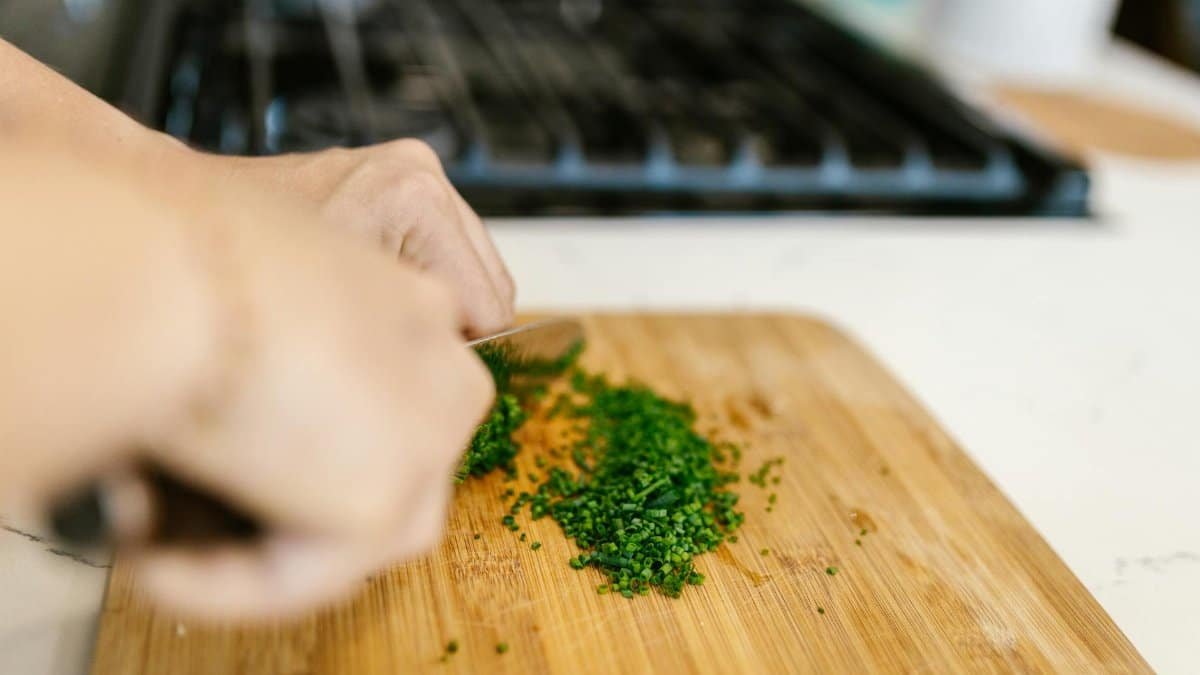
In many kitchens across the country these days one can find people engaging in a curious new ritual. They stand over cutting boards with an unusual level of concentration. The task at hand is to chop chives or other herbs with exacting precision. This emerging practice has a name. It is called chive maxxing mindfulness. Far from a gimmick it offers participants a way to slow down and focus entirely on the present moment through the repetitive motion of knife work. What began as a niche habit among food enthusiasts has quietly spread to suburban homes and urban apartments alike where individuals seek small pockets of calm amid demanding careers and family obligations.
The Origins Of This Kitchen Practice

The idea of treating ordinary food preparation as meditation did not appear overnight. It draws from a long history of chefs who have prized impeccable knife skills as both craft and discipline. A recent report from The Guardian traced the trend back to professional kitchens where perfect herb garnishes became status symbols among top cooks. Home cooks soon adopted the approach after seeing videos of chefs creating uniform chive pieces that looked almost machine made. As these clips circulated on social media platforms people began to notice how the focused cutting brought them an unexpected sense of tranquility. The practice gained the name chive maxxing mindfulness when online communities started sharing their experiences of using the technique to manage daily stress.
Understanding The Technique Involved

At its core the method requires more than simple chopping. Practitioners select the freshest herbs possible and use a sharp knife to create pieces of consistent size. The goal is uniformity rather than speed. Each stroke demands full attention to angle pressure and rhythm. Many compare the motion to breathing exercises in yoga where the repetition creates a natural flow state. Beginners often start with chives because their hollow stalks provide clear feedback when cuts are imprecise. Over time participants report that the physical act trains the mind to remain anchored in the immediate task instead of wandering toward worries about work or personal matters.
Mental Health Advantages Of Precise Cutting
Those who regularly engage in this form of kitchen focus describe noticeable changes in their overall outlook. The practice appears to function as an accessible entry point to mindfulness for people who struggle with traditional seated meditation. By directing complete attention to the texture and scent of the herbs the mind receives a break from constant mental chatter. Several therapists have begun recommending similar grounded activities to clients dealing with anxiety. The measurable outcome is often a reduction in cortisol levels after twenty minutes of concentrated prep work. Participants frequently mention improved patience that extends beyond the kitchen into other areas of life.
How Chefs Have Influenced The Trend

Professional cooks have played a central role in popularizing the movement. Many prominent chefs have spoken openly about the meditative quality of mise en place the French term for preparing ingredients before cooking. Their influence reached home kitchens through cooking channels and interviews where they demonstrated the satisfaction of perfectly executed knife work. One well known New York restaurateur described the act of chopping herbs as his daily reset button after hectic service. These endorsements helped shift the perception of kitchen tasks from chores to meaningful rituals. The trend now includes not only chives but also parsley cilantro and even garlic for those seeking to expand their practice.
Incorporating It Into Busy Schedules

One of the most appealing aspects of this approach is its seamless fit into existing routines. Unlike attending a yoga class or scheduling therapy the practice uses time already spent on meal preparation. A busy parent might transform the evening salad making into ten minutes of intentional focus. Office workers have reported preparing herbs for the week ahead on Sunday afternoons as a way to transition from weekend to workweek with greater ease. The accessibility makes chive maxxing mindfulness particularly attractive to middle aged adults who often feel caught between professional demands and family responsibilities. No special equipment or membership is required only a decent knife and fresh ingredients.
What The Experts Have To Say

Psychologists studying attention and presence have taken interest in the phenomenon. Dr. Elena Ramirez at the University of California published research showing that repetitive fine motor tasks combined with sensory engagement can produce brain patterns similar to those observed during mindfulness meditation. Her team measured participant focus levels before and after herb preparation sessions. The results indicated improved concentration that lasted for several hours afterward. Other researchers caution that while the practice offers real benefits it should complement rather than replace professional mental health care when needed. Culinary historians have also weighed in noting that many cultures have long treated food preparation as a form of moving meditation.
Possible Limitations Of The Approach

Despite its growing popularity the trend is not without critics. Some argue that turning every kitchen task into a performance of perfection could add unnecessary pressure to already stressful meal times. Others point out that not everyone has access to high quality fresh herbs or the luxury of unhurried cooking. There is also the question of whether the practice might become another form of productivity optimization rather than genuine presence. A few experienced meditators suggest that true mindfulness does not require perfect outcomes and that obsessing over uniform pieces could actually work against the intended spirit of letting go.
Connections To Traditional Meditation Methods

This modern kitchen trend shares surprising similarities with ancient practices. Zen Buddhist monks have long engaged in mindful food preparation as part of their training. Japanese tea ceremonies emphasize precise movements and full presence. The repetitive nature of chopping mirrors the focused attention found in mantra repetition or walking meditation. What sets chive maxxing mindfulness apart is its integration into ordinary Western domestic life. It removes the barrier of needing special knowledge or religious context making contemplative practice available to those who might otherwise never encounter it. The herbs become both the object of focus and a bridge to something larger.
Appeal To A Specific Demographic

The trend resonates strongly with Americans in their forties and fifties who are navigating career peaks family changes and growing awareness of their own mortality. Many in this group report feeling mentally exhausted by constant digital demands and information overload. The tactile experience of working with real physical ingredients provides a welcome contrast to screen based activities. For some it represents a return to simpler pleasures after years of striving and accumulation. The practice allows them to achieve a sense of mastery and control in a small domain when larger aspects of life feel unpredictable. This explains why cooking stores have seen increased sales of high quality knives and herb scissors in recent months.
Practical Tips For Beginners

Those interested in trying the practice can begin with modest expectations. Start by purchasing one bunch of chives and setting aside fifteen uninterrupted minutes. Focus first on consistency of length rather than speed. Notice the smell the sound of the knife and the changing texture of the herbs. Keep the cuts simple and resist the urge to judge the results too harshly. Over multiple sessions the mind naturally settles into the rhythm. Some find it helpful to play soft instrumental music while others prefer complete silence. The key is approaching the task with curiosity rather than the need for perfection. Many discover that the benefits appear gradually rather than immediately.
As more people experiment with this approach it raises interesting questions about where we find peace in modern life. The kitchen has always been a place of nourishment but now it serves an additional purpose as a sanctuary for the mind. Chive maxxing mindfulness reminds us that profound shifts can emerge from the most ordinary activities when we bring full attention to them. Whether the trend will endure or fade remains uncertain yet for now it offers a simple tool for those seeking greater presence in their daily existence. The next time you reach for fresh herbs consider slowing down and discovering what focused attention might reveal.