
On a Peninsula block where people still remember waiting for a clerk and a stamp, a dining room has opened inside a former federal building and put the bottle list at the center of the welcome. The phrase Burlingame Old Post Office wine now names something more particular than a postal address with a bar. A cellar of about 3,500 bottles is arranged by the person who made the wine, not by valley, country, or the grape printed on the label. Guests who expect to flip first to California, then to pinot noir, are asked to read the page as a set of names. That small change in order is the whole argument of the room.
A public building that learned a new job

Post offices were built to be ordinary and durable. They held lines, notices, and the small drama of mail that did or did not arrive. When a restaurant inherits that shell, it inherits a memory of civic use. The counters are gone. The sorting cases are gone. What remains is scale: high ceilings, a floor meant for traffic, a sense that the room once belonged to everyone who walked in with a letter.
Restaurants often chase intimacy by shrinking the room. This one starts from the opposite inheritance. The building already knew how to hold strangers in the same space without requiring them to know one another. A wine list of this size can either sharpen that public feeling or bury it under expertise. The test is whether a guest can enter without a password.
What the Chronicle reported about the list

Reporting in the San Francisco Chronicle describes the new restaurant in the historic post office as organizing those 3,500 bottles by winemaker rather than by region. That is a structural choice, not a garnish. Region is the map most American lists still use, because it matches how people were taught to shop. Producer order throws out the map and keeps the author.
I have stood in dining rooms where the list functioned as a geography quiz. Burgundy here, the Loire there, a shy page for Greece if the buyer was feeling brave. The buyer was still present, but hidden behind place names. A producer first list, if the phrase can be said without a slogan attached, admits that the interesting unit is often a person and a cellar, not a border.
Why region became the default

Region won the twentieth century argument for understandable reasons. It travels. A guest from another city can find Barolo without knowing who bottled it. It also flatters a certain kind of literacy. Knowing that nebbiolo belongs in a particular set of hills feels like membership. Wine education, from classes to apps, still drills place before it drills biography.
There is nothing false in that habit. Soil, weather, and law shape what ends up in the glass. The trouble starts when place becomes the only shelf. Two neighbors can make wines that share a zip code and share almost nothing else: one precise and severe, one ripe and eager to please. Sorting only by map puts those bottles in the same neighborhood and pretends the argument is settled.
Reading a list as a set of names

A name on a list is a promise of continuity. It says this person, or this family, or this small company, stood behind more than one bottle. It invites comparison inside a body of work. You can ask what this producer does with chardonnay and what the same hands do with a red that needs time. You can notice a house style the way you notice a novelist who keeps returning to the same moral weather.
That is harder work for the guest and for the floor. A regional index lets a server say, if you like this valley, try the next page. A producer index asks the server to know why two bottles share a page and why a third bottle, from the same hills, lives somewhere else. Burlingame Old Post Office wine, in this telling, is less a trophy cellar than a filing system with consequences for how dinner is explained.
The guest who does not want a seminar

Most people on a weeknight are not hunting a thesis. They want a glass that will not fight the food, a bottle that will not embarrass the table, and a person who can translate without performing. A large list organized in an unfamiliar way can feel like a closed club, even when the intent is the opposite. Three thousand five hundred bottles is not a menu. It is a library. Libraries need a desk.
The humane version of this idea keeps a short path for the undecided. A few pours by the glass. A few bottles a server can describe in one breath. A willingness to say, if you tell me what you drank last month and liked, I can find a cousin. Without that path, producer order becomes a private language. With it, the long list stays available for the guest who wants to wander, and optional for the guest who does not.
What producers gain when the list leads with them

Importers and winemakers spend years trying to be more than a grape and a price. A list that leads with their names grants a kind of authorship that shelf talkers in a shop rarely manage. It also creates pressure. If your name is the heading, thin bottles cannot hide inside a famous appellation. The page is a small stage, and the work has to hold it.
There is a commercial honesty in that, too. Restaurants often buy for a theme: coastal whites, natural reds, a page that photographs well. Producer order makes the theme a person. It can favor estates with range, because range fills a heading. It can slight a superb one wine maker whose entire life is a single cuvée. A fair cellar has to leave room for that solitary bottle, even if it sits awkwardly under a short heading.
Service as translation, not performance

The romance of the sommelier is a performance of memory. The useful version is translation. Someone at the table says they want something bright, not sweet, able to stand up to olive oil and lemon, and not so famous that the price is a joke. The list, however it is sorted, is only as good as the person who can cross from that sentence to a bottle.
Producer order may actually help that translation, once the staff has lived with it. Instead of reciting regions, a server can say, this grower picks early and keeps the wine tight, and this other grower, two valleys away, works in a similar key. The comparison crosses the map. That is closer to how cooks talk about ingredients than to how travel guides talk about countries. It treats taste as kinship, not as tourism.
A cellar this large is a storage problem with manners
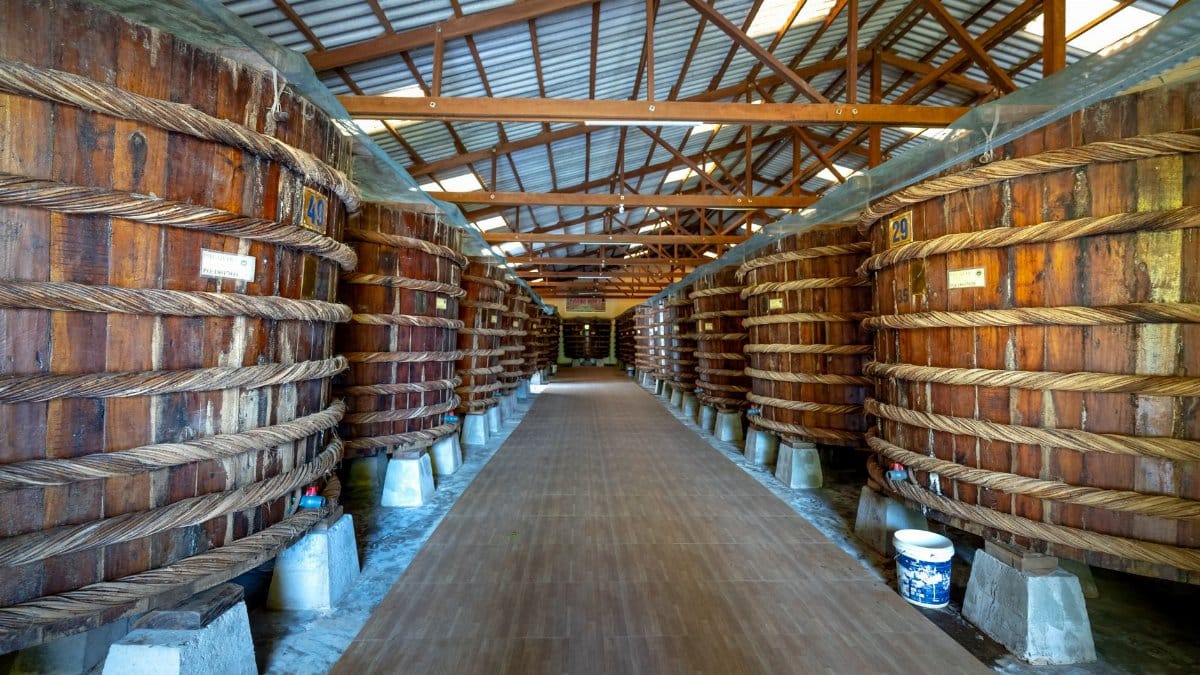
Three thousand five hundred bottles are not an abstraction. They are temperature, insurance, turnover, and the quiet grief of wine that ages past the moment anyone will order it. A historic room has to solve a modern logistics puzzle: where the cold lives, how the floor team finds a bottle without a scavenger hunt, how the list stays current when a producer sells out.
Diners rarely see that machinery, and they should not have to. What they feel is whether the list is alive. Dead lists are monuments. Living lists have gaps, new arrivals, and the occasional apology that a beloved bottle left last night. If Burlingame Old Post Office wine is going to mean a producer led cellar rather than a stunt, the omissions will matter as much as the headings. A missing name is also an editorial choice.
Food has to answer the same question
A list with this ambition can bully the kitchen. Plates become neutral so the bottles can speak, or they become so loud that only a few styles survive. The better partnership is specific. A roast with enough fat for a firm red. A vegetable dish with acid that does not require a sweet wine to apologize for it. Seafood that can meet a white with texture, not only a white with citrus perfume.
None of that requires a manifesto on the menu. It requires cooks who know which bottles the floor is actually selling, and a floor that knows which dishes will make a delicate producer look stingy. The building used to move paper. The restaurant has to move flavor between two crafts that do not automatically agree.
The Peninsula context

Burlingame sits in a corridor of commuters, old money, new money, and weekends aimed at the coast or the city. Dining there has long included hotel dining rooms, neighborhood Italians, and places that treat wine as a markup rather than a point of view. A post office conversion with a cellar of this scale is a bid to be a destination without pretending the town is Napa.
That bid will be judged on Tuesdays, not on opening photographs. Can a table of four, one of whom drinks, leave feeling looked after? Can a guest order a modest bottle without being steered toward a trophy? Destination lists fail when they confuse rarity with hospitality. The Peninsula already has enough rooms that confuse the two.
Memory, mail, and what a room is for
There is a temptation to mythologize the mail. Letters as intimacy, stamps as ritual, the lobby as a secular chapel. Some of that is nostalgia with good lighting. Still, the function was real. People came because they had to complete an errand, and they shared a room while doing it. A restaurant cannot reproduce obligation. It can reproduce the idea that a well made public room does not require you to perform your taste in order to belong.
Wine culture sometimes forgets that. The glass becomes a badge. The list becomes a test. Producer order could go either way. It could be a deeper test, available only to people who already collect names. Or it could be a clearer story: here is who made this, here is what they tend to do, here is a bottle that fits the table you actually have. The second version is the one worth hoping for.
How to read the experiment
It is too early, in a piece like this, to grade a service I have not sat through or a bottle I have not been poured. What can be graded is the idea, and the idea is serious. Organizing thousands of bottles by winemaker refuses the easiest index in American dining. It asks staff to carry more knowledge and guests to tolerate a moment of not knowing where to look. That is a cost. It is also a form of respect, aimed at the people who farmed, fermented, and signed the work.
If the room keeps a human bridge across that cost, Burlingame Old Post Office wine will mean a way of reading rather than a pile of inventory in a handsome building. If it does not, the headings will be clever and the night will still feel like homework. The mail window is gone. What replaces it has to be someone willing to explain, without hurry, which name belongs with this plate and this table.
A standard worth keeping

Cities keep score of openings by design, chef, and the first week of noise. A quieter standard is available here. Does the list tell the truth about who made the wine. Does the staff treat ignorance as a starting point rather than a flaw. Does the historic room still feel like a place a stranger can enter. Those questions outlast a trend in how pages are sorted.
The old post office did not ask whether you understood the postal service before it took your letter. A restaurant is not a public utility, and pretending otherwise is sentimental. But the comparison is useful as a check on vanity. Burlingame Old Post Office wine can be a collector’s map or a civic habit with better glasses. The bottles are already sorted by the people who made them. The rest is whether the room sorts its guests with the same care.