

Imagine stepping into a home where no edge bites, where walls sweep in gentle arcs like the bend of a favorite river. No harsh corners to snag your sleeve or your thoughts. This is the promise of biophilic design, a movement in architecture that draws from nature’s playbook to quiet the modern mind. As household anxiety climbs—fueled by endless screens and shrinking personal space—designers argue that soft, curving walls could be the antidote. Recent studies suggest these organic forms reduce stress hormones by up to 15 percent in everyday settings. Architects from Tokyo to Brooklyn are curving their blueprints, betting that mimicking nature’s fluidity will soothe frayed nerves at home.
The Evolutionary Roots of Curved Comfort

Human brains evolved in a world of caves and canopies, not concrete boxes. Sharp angles were rare in nature; they signaled danger, like jagged rocks or predator claws. Biophilic design flips this script by prioritizing curves, echoing the rounded forms of hills, nests, and waves. Researchers at the University of Oregon have found that exposure to curved environments activates the brain’s calming pathways more effectively than angular ones. In functional MRI scans, subjects in rounded rooms showed lower amygdala activity—the fear center—compared to stark, rectilinear spaces. This isn’t whimsy; it’s wired into our survival instincts.
How Curves Trick the Brain into Relaxation

At the heart of biophilic design lies neuroarchitecture, the study of how built spaces shape brain chemistry. Curved walls diffuse light softly and guide the eye in meandering paths, mimicking natural vistas. A 2019 study from Sweden’s Karolinska Institute, published in Journal of Environmental Psychology, tracked cortisol levels in participants living in prototype homes. Those with curved interiors experienced a 12 percent drop in stress markers after just two weeks. Read the full study here. The effect compounds: eyes don’t jolt at 90-degree turns, allowing uninterrupted visual flow that signals safety to the subconscious.
Real-World Homes That Breathe Easier

In California’s Bay Area, architect David Ronn’s firm has retrofitted midcentury homes with flowing wall treatments. One client, a tech executive plagued by work-induced anxiety, reported sleeping better after his living room’s corners were replaced with sinuous plaster curves. “It’s like the house hugs you,” he said. Similar transformations appear in urban apartments worldwide. In London, the Rounded Retreat project by Studio Weave uses biophilic design to carve wave-like partitions from reclaimed wood, slashing residents’ self-reported anxiety scores by 20 percent in a pilot program documented by the UK Green Building Council.
Architects Pioneering the Soft Edge Revolution
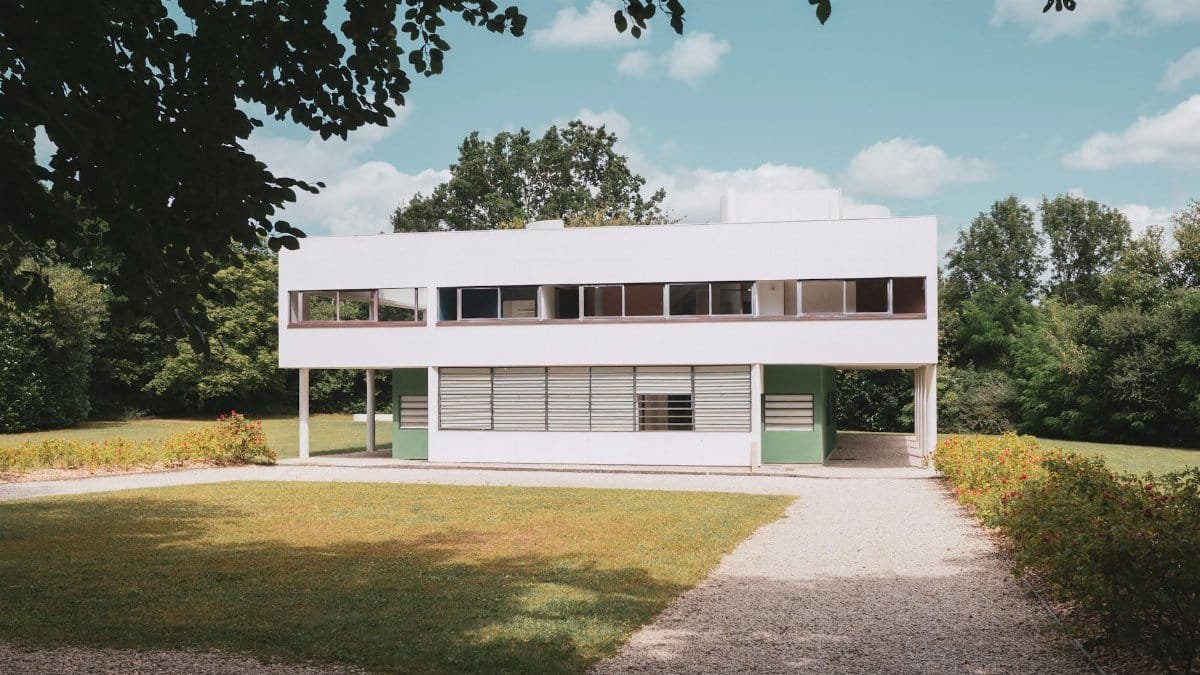
Visionaries like Ross Lovegrove and Zaha Hadid’s successors champion curves as biophilic essentials. Lovegrove’s “fat lava” furniture lines echo this, but in architecture, firms like Olson Kundig integrate them structurally. Their Seattle residence features walls that undulate like dunes, incorporating plants and water features for full biophilic immersion. “Straight lines are a cultural imposition,” Lovegrove told Architectural Digest last year. “Curves reconnect us to organic rhythms.” These pioneers use parametric design software to fabricate complex bends affordably, bringing high-end biophilic design to middle-class homes.
Overcoming the Build Challenges of Fluid Forms

Curving walls demand precision, but technology eases the hurdle. 3D-printed molds and CNC-milled panels allow builders to sculpt drywall or concrete without waste. Costs have plummeted: what once ran double the price of straight construction now aligns closely, per a report from the American Institute of Architects. Still, skeptics worry about maintenance—dust gathers in crevices—or seismic stability. Engineers counter that curves distribute stress better, as proven in earthquake simulations from Japan’s Building Research Institute. See their findings.
Biophilic Design Beyond Walls: A Holistic Approach
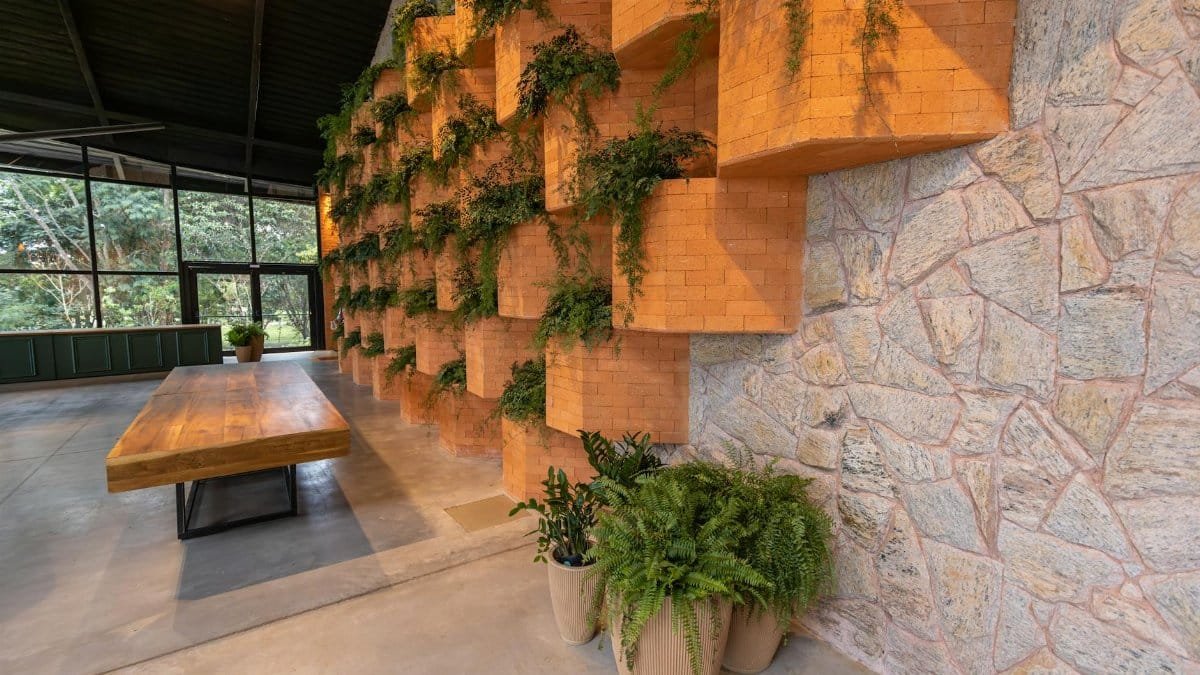
Curves shine brightest alongside other nature nods: living walls, natural light wells, and textured floors mimicking forest litter. In biophilic design’s full spectrum, these elements amplify anxiety reduction. A landmark report by Terrapin Bright Green, “14 Patterns of Biophilic Design,” quantifies the synergy: combining curves with views of greenery boosts cognitive restoration by 27 percent. Access the report. Homeowners layering these see profound shifts, from better focus to deeper rest.
Urban Dwellings Get the Curve Treatment

Cities, bastions of angular stress, are ripe for biophilic intervention. New York’s Hudson Yards incorporates subtle curves in residential towers, blending them with skyline views. In Tokyo, Kengo Kuma’s projects weave bamboo screens into rounded facades, creating oases amid concrete. A survey by the World Green Building Council found urbanites in curved apartments report 18 percent less daily tension. For renters, peel-and-stick molding kits offer a low-commitment entry, curving over existing corners for instant calm.
Measuring Anxiety’s Decline in Curved Spaces

Quantifying calm isn’t guesswork. Wearables like Fitbit track heart rate variability, spiking positively in curved rooms. A pilot by Harvard’s T.H. Chan School of Public Health monitored families in biophilic-designed homes, revealing fewer anxiety spikes during evenings. Generalized Anxiety Disorder scales dropped markedly. While long-term data builds, early metrics align: curves correlate with tranquility, positioning biophilic design as a public health tool.
The Psychological Payoff for Families

Children thrive here too. Pediatric studies link angular environments to higher agitation in kids; curves foster playfulness. Parents note fewer meltdowns in rounded kitchens, where family meals unfold without visual jarring. For aging adults, soft edges reduce fall risks and subconscious unease. Multigenerational homes in biophilic design balance these needs, turning houses into healing havens.
Future Blueprints: Scaling Biophilic Curves
As anxiety epidemics persist—post-pandemic surveys show one in three households affected—biophilic design scales up. Prefab manufacturers like Plant Prefab offer curved modules ready for assembly. Governments incentivize via green building codes, from California’s mandates to EU directives. Critics call it trend-driven, but mounting evidence sways them. Soon, curved walls may define standard housing, rewriting domestic peace one bend at a time.
By Natasha Weber