
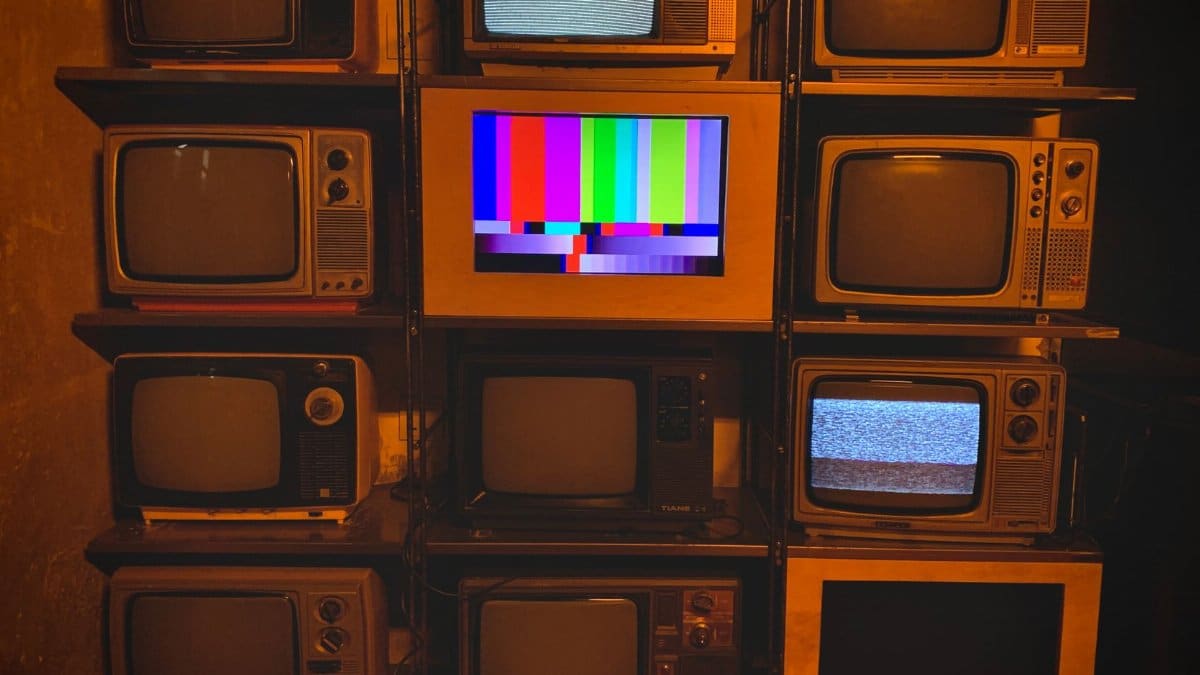
On an ordinary Tuesday afternoon in the Bay Area, a cooking show may freeze mid sentence, a ballgame may vanish, and a traffic report on the radio may be replaced by a flat official tone. That interruption is not a glitch and it is not a local emergency. It is a nationwide alert test, a short exercise run by the Federal Emergency Management Agency and the Federal Communications Commission to confirm that television and radio can still carry a warning if something truly urgent happens. For most households the moment will last about a minute. Then the program returns, often with an awkward little apology from the anchor and a shrug from anyone who happened to be watching.
What the interruption will look and sound like

Viewers should expect a sudden break in regular programming. The picture may switch to a plain text screen. A tone, sometimes described as a harsh electronic attention signal, will play. A short message will identify the event as a test of the national warning system and will tell people that no action is required. Radio listeners will hear the same kind of announcement, without the visual crawl that television stations add.
The pause is brief by design. National exercises of this kind are built to last roughly one minute, long enough for engineers to confirm that the signal passed through the chain of stations, and short enough that a soap opera, a news hour, or a baseball broadcast can resume without losing the afternoon. Stations are not free to skip it. Participation is part of the license to use the public airwaves.
People who record shows or stream local channels through a cable box, a satellite dish, or an antenna are the ones most likely to notice. A pure streaming service that does not carry a local broadcast station may not interrupt at all. That distinction matters in a region where many households have abandoned traditional television and still keep one radio in the kitchen.
Why federal officials still run a broadcast drill
The nationwide alert test exists because warnings fail in ordinary ways. A transmitter can be offline. A relay can drop a signal. A station can misconfigure the equipment that is supposed to seize the air automatically. Officials cannot discover those weak links during a real wildfire, earthquake, or dam failure. They discover them when the system is asked, on a quiet afternoon, to do the one job it was built to do.
The Emergency Alert System is the broadcast half of that job. It is older than smartphones and was designed for a country in which television and radio were the fastest way to reach nearly everyone at once. FEMA originates the national test. The FCC sets the rules that stations must follow. Local engineers, often working in small control rooms far from Washington, are the people who make the last mile work.
A successful test does not mean the country is fully prepared. It means the pathway from a federal origination point to participating stations functioned on that day. Failures, when they occur, are logged and repaired. That unglamorous loop of test, note, and fix is the actual product of the exercise.
How the signal moves from Washington to a Bay Area living room

The path is less mystical than the tone makes it seem. FEMA sends the test through the Integrated Public Alert and Warning System, the federal platform that feeds both broadcast alerts and, on other days, wireless alerts to phones. Designated stations, sometimes called primary entry points, receive the message first. They relay it to other stations. Those stations relay it again. Within seconds, a station in Oakland, San Jose, or Santa Rosa is supposed to interrupt its own feed.
Each handoff is a chance for something to go wrong. A clock can be off. A filter can reject a test code. An automation system can be set to protect a commercial break and, in doing so, block the alert. The nationwide alert test is useful precisely because it stresses that chain under controlled conditions. Engineers watch logs. They compare what left Washington with what arrived on air.
For the public, none of that machinery is visible. What is visible is the interruption itself, which can feel abrupt, even rude, if you do not know it is coming. Knowing the reason does not make the tone pleasant. It does make the minute intelligible.
Why your phone is expected to stay silent
This particular exercise is aimed at television and radio, not at the wireless emergency alerts that buzz in a pocket. Those phone messages are a separate channel. They use cell towers, a different technical standard, and a different set of rules about when a device may override silence. Federal agencies sometimes test both channels on the same day. They do not have to. When they choose a broadcast only drill, phones should not light up with a national test banner.
That distinction will confuse some people, and the confusion is reasonable. In recent years the phone alert has become the warning most Americans actually remember. A test that reaches the television and skips the phone can feel incomplete, as if half the country was left out. It is not incomplete. It is a check of a specific pipe. The pipe that still matters when cellular networks are congested, when a battery is dead, or when a person is listening to a car radio on a highway with no reliable signal.
If a phone does buzz, the sensible response is to read the message rather than assume a mix up. Local authorities can still send their own alerts for storms, missing children, or other urgent events. A national broadcast drill does not freeze every other warning.
What the message is trying to say
The wording is deliberately plain. It identifies the sender, labels the event as a test, and tells the audience that no action is required. There is no secret code and no second meaning. The harsh tone is not information. It is a tool meant to cut through conversation, traffic noise, and a loud television in the next room.
Stations may add a brief explanation before or after the required text, especially on local news. Anchors often reassure viewers that the interruption was scheduled. That extra sentence is useful. The required text alone can sound colder than the situation deserves, and cold language is easy to misread as danger.
People who do not speak English as a first language may find the minute especially opaque. National tests have improved their attention to language over time, but a one minute broadcast cannot carry a full explanation in every language spoken in the Bay Area. Community stations, neighborhood groups, and family conversations do some of that work before the tone ever sounds.
How newsrooms and engineers spend the morning

Inside a station, the test is a scheduled operational event, closer to a fire drill than to breaking news. Engineers confirm that the alert equipment is powered, that the test code is not being filtered out, and that the automation system will yield the air. Producers warn anchors. Sales staff are told that a commercial may be cut. Someone is assigned to watch the log.
The Bay Area’s media map makes this more complicated than it looks from a couch. A single household may receive a San Francisco station, a San Jose station, a Sacramento station, and a cable insert that technically originates somewhere else. Each of those outlets has its own equipment and its own staff. A clean test in one place does not guarantee a clean test in the next zip code.
Public radio and small independent stations carry the same duty as large network affiliates. Their control rooms are often thinner. A successful national exercise depends on those smaller rooms as much as it depends on the federal origination point. That is easy to forget when the only thing a viewer sees is a full screen message with a government seal.
What to do during the minute, and what not to do
The instruction is the least dramatic part of the event. Stay calm. Read or listen. Do not call 911 to ask whether the test is real. Emergency lines are for emergencies, and a scheduled drill is not one. Do not assume that a friend who did not see the message missed a danger. They may have been on a streaming app, in a meeting, or on a train between stations.
If you are driving, keep your eyes on the road. The radio version does not require you to pull over. If you are in a workplace with a television in a lobby, the interruption may startle a room of people who were only half watching. A simple sentence from whoever is nearest the screen is usually enough: this is a scheduled test, and it will end quickly.
Parents may want a shorter version for children. The tone can sound like an alarm. Saying in advance that televisions and radios may talk in a strange voice for a minute, and that the strange voice is practicing, prevents a small fright from becoming a story the child repeats at school.
A collective pause in a region that rarely pauses

There is a quieter dimension to a forced interruption, one that sits beside the engineering. For a minute, unrelated households hear the same voice. Commuters in different cars share the same break in the music. The Bay Area is not famous for shared stillness. Work, traffic, and the glow of separate screens pull attention apart. A nationwide alert test does not heal that. It does, briefly, put the same sentence into many rooms at once.
Some people will experience that shared sentence as irritation. Others will feel a small jolt of dread, because any official tone now carries the memory of real disasters. Both reactions are human. The test asks for neither gratitude nor panic. It asks for a minute of attention and then returns the afternoon to whoever was using it.
That emotional residue is worth naming. Warning systems are technical objects, but they land in bodies. A person who lived through a fire evacuation may hear the tone differently from a person who has only ever heard tests. Stations cannot tailor the sound to those histories. Neighbors can. A calm explanation after the fact is a modest civic act.
The questions people ask every time

Will the test happen if I am watching a game on a national network? If that feed is coming through a local station or a provider that carries the local alert, yes. If you are watching a pure national stream with no local insertion, maybe not. Will it repeat all afternoon? No. A national exercise is a single scheduled pass, not a loop. Can I opt out? Not on broadcast television and radio. The system is built to reach people who did not sign up for anything.
Is a failed test a scandal? It is a finding. The point of the nationwide alert test is to surface failures while the cost of failure is embarrassment rather than harm. A station that misses the relay has a repair to make. A public that never hears about small failures may wrongly assume the system is either perfect or useless. It is neither. It is a chain of machines and people that works only if it is checked.
Should you change your emergency plans because of one drill? No. A test is not a forecast. It does not signal that officials expect an event on Tuesday. It signals that they expect the machinery to be ready on some future day they cannot name.
Where broadcast alerts still matter

Phones are faster for many warnings now, especially for geographically precise messages about a storm cell or a shelter order. Broadcast remains the wide net. It reaches people who do not own a smartphone, people whose phones are off, and people in places where a tower is overloaded. In an earthquake, both channels can matter, and neither is a substitute for the other.
The Bay Area already lives with that layered reality. Earthquake early warning may arrive as a phone buzz. A wildfire evacuation may arrive as a wireless alert, a sheriff’s message, and a crawl on local news. The federal broadcast test does not replace those local tools. It checks the oldest layer, the one that can still speak when newer layers stumble.
Keeping that layer honest requires public patience as much as public money. A minute of interrupted television is a small price for a system that, on a bad day, needs to be believed immediately. Belief is easier when people have already heard the voice and learned that it sometimes speaks only to practice.
After the tone ends
When the program returns, most people will go back to whatever they were doing. That is the correct outcome. The test worked, in the public sense, if the interruption was recognizable, brief, and unaccompanied by panic. Engineers will spend longer with the logs than viewers will spend with the memory.
If your station never broke in, that is worth a note to the station, not a theory about a hidden message. Equipment fails. Feeds differ. A household on one provider can have a different experience from a household next door. Reporting the miss helps the next test. Ignoring it helps no one.
Tuesday’s pause will not make the region safer by itself. It will tell the people who maintain the warning system whether the broadcast path still holds. For everyone else, it is a minute of strange quiet in the middle of an ordinary afternoon, and then the game, the recipe, or the traffic report picks up where it left off.