
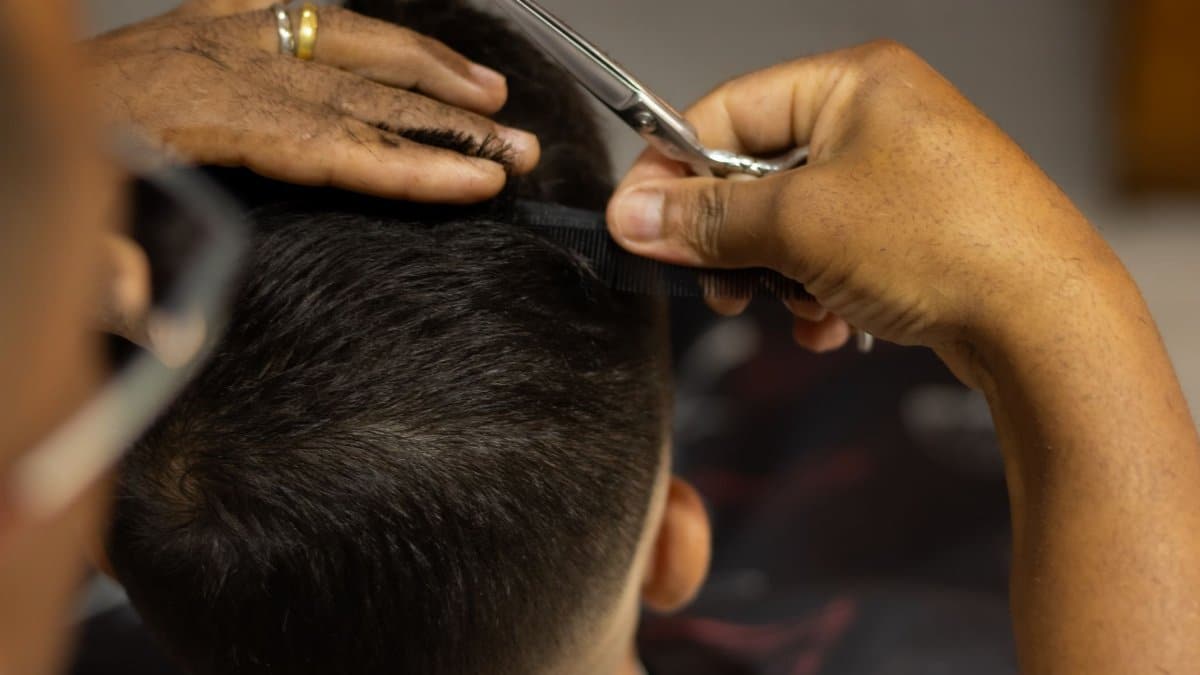
For six years a Texas school district and a former student fought in court over a question that sounds small until it decides who may cross a graduation stage. Administrators at Barbers Hill, east of Houston, said male students had to keep their hair above a set length. DeAndre Arnold, a Black senior whose locs fell past that line, was kept from walking with his class in 2020. Civil rights lawyers called the rule discriminatory. The district called it neutral discipline. This season the case closed not with a final verdict from the bench but with the Barbers Hill hair settlement, an agreement that ends the litigation while leaving schools across the country to reckon with what a grooming code is really for.
A rule written as if hair had no history

Barbers Hill Independent School District serves Mont Belvieu and nearby communities in Chambers County, a corridor of refineries, new subdivisions, and small town loyalty east of Houston. Its student handbook told boys that hair could not extend below the eyebrows, the ear lobes, or the collar of a standard shirt. Girls were not held to the same length limit. District leaders described the standard as a tool for discipline, safety, and a shared appearance. Parents who challenged it answered that a measuring tape is never neutral when the students who fail it are disproportionately Black and wearing styles thick with cultural meaning.
On paper the rule did not name race. In practice, Arnold and his family said, it landed on a young man who had worn locs for years, in keeping with a family tradition tied to his father’s roots in Trinidad. Cutting them was not a routine stop at a barber. It was a demand to set aside something he understood as inheritance. That distinction, between a style chosen on a Saturday and a practice carried across generations, sat at the center of the conflict long before any judge opened a file.
The spring he could not walk

Spring 2020 was already a broken season. Schools were closing, and ceremonies were uncertain. For Arnold the uncertainty had a sharper edge. Administrators told him he would not walk with his class, and would not take part in the graduation rite, unless the locs came off. He refused. Images of the student moved far beyond Chambers County. National coverage cast the standoff as a test of whether a public school may police Black hair in the name of order.
I remember thinking, when those images first spread, that commencement is a civic ritual as much as a school event. A district can say it is enforcing a handbook. A family hears that their child has been removed from the picture the town will keep. The punishment was not a detention. It was absence, staged in front of everyone who had expected to see him there.
A cousin still inside the building

Arnold was not the only student in the family living under the rule. His cousin Kaden Bradford, younger and still enrolled, faced the same demand. When the district moved to enforce the length limit against him, the dispute shifted from a missed ceremony to an active threat of exclusion from class. Federal court became the door that might reopen an ordinary school day.
The two cases traveled together in the public mind even when their legal needs differed. One young man had already been barred from the rite that marks the end of high school. The other needed an order so he could sit in a classroom without first cutting his hair. Together they made the policy difficult to dismiss as a single misunderstanding between one family and one principal. A handbook is a system. Systems show their character when a second student walks into the same wall.
What the federal court was willing to say
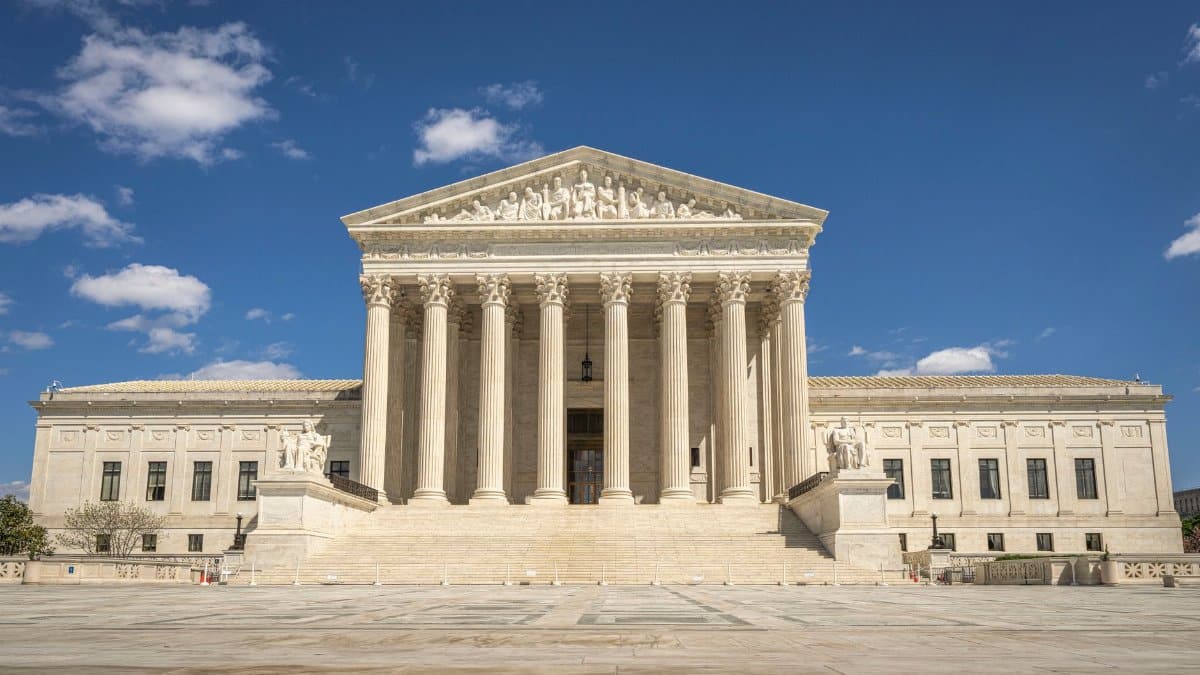
In August 2020, U.S. District Judge George C. Hanks Jr. granted a preliminary injunction. He did not issue a final verdict on every claim. Preliminary relief asks a narrower question. Is the student likely to win, and will he be harmed if the rule stays in force while the case proceeds? The judge concluded that the cousins were likely to succeed, including on arguments that the policy discriminated on the basis of sex and race, and that the harm of exclusion was real and immediate.
That order reached past two households. A federal judge had read a suburban handbook and treated equal protection as a present duty, not a technicality to be saved for a later semester. The district appealed and continued the fight. Years accumulated. Motions replaced headlines. The students became adults. The argument over who may set the length of a young man’s hair did not retire with them.
Race, sex, and a claim of neutrality

School lawyers often defend grooming rules by saying they apply to everyone inside a stated category. Boys must do this. Girls may do that. The categories sound administrative. Courts have grown more skeptical when those lines echo older ideas about whose bodies need controlling. A length limit that binds only male students invites a sex discrimination claim under the equal protection guarantee and under federal civil rights law that reaches public schools.
The racial claim is harder to compress, and more consequential. Locs, braids, and twists are not ornaments detached from history. They are protective styles with particular meaning in Black communities, including families shaped by Caribbean migration. A rule that never prints the word Black can still operate as a racial barrier if the students who cannot comply without cultural loss are Black students. Civil rights advocates, among them lawyers with the NAACP Legal Defense Fund, pressed that point from the first filings. The district answered that discipline requires clear lines and that exceptions would dissolve order. Between those sentences lies the real case: whether order is allowed to mean assimilation.
A statute that did not end the argument

While the lawsuit continued, Texas politics shifted. In 2023 lawmakers enacted a state version of the CROWN Act, a statute meant to stop race based hair discrimination in schools and workplaces. The law speaks to texture and to protective styles, including locs. It does not vaporize every dress code in the state. A board can still insist that a length limit is about uniformity rather than about texture. A family can still reply that uniformity, enforced this way, rebuilds the old exclusion with cleaner stationery.
That gap is why one agreement in Chambers County cannot be mistaken for a statewide ending. Other boards will study what this district concedes, what it declines to say aloud, and whether neighboring superintendents treat the outcome as a warning. Insurers notice long cases. Voters notice them too, especially when legal bills compete with teachers and buses. A handbook line that once looked free can become the most expensive sentence in the building.
What an agreement can and cannot do

A settlement is not a Supreme Court opinion. It is a bargain. Parties trade the risk of losing for terms they can accept. Those terms may include money, a revision of the handbook, language about student records, or a promise not to revive a punishment against young people who have already left campus. The Barbers Hill hair settlement, as described in regional reporting, closes the docket. It does not automatically rewrite every grooming rule in Texas, and it does not return the years Arnold spent as a public symbol rather than simply as a graduate.
There is a particular cost to that kind of time. Litigation is slow by design. Evidence is tested. Appeals multiply. For a district, delay can resemble prudence. For a student, delay consumes the years the school was supposed to serve. By the time signatures replace hearings, the commencement music has already been played for someone else. An agreement can stop the harm from continuing. It cannot rewind a spring.
Families watching from the bleachers

Parents in conflicts like this are often cast as organizers. Many are trying to move a child through a public institution without being told that his body is a violation. Arnold’s relatives described the locs as continuity, not costume. Bradford’s place in school hung on a judge’s calendar. Neighbors divided in familiar patterns. Some saw a teenager testing authority. Others saw a district so attached to a tape measure that it would spend public funds, year after year, to defend it.
The Barbers Hill hair settlement will not reconcile those neighbors. It can, at most, stop the clock on legal fees and signal to the next family that the old certainty has cracked. Towns remember who was permitted to belong when the cameras arrived, and who had to sue for a seat. Memory of that sort outlasts any press release a district issues on the day the case ends.
Dress codes after the cameras leave

Superintendents reading from other states may want to file this story under Texas politics, far from their own manuals. That would miss the point. Length rules, hat bans, and policies against distracting styles still sit in handbooks from New England to the Pacific coast. The word distracting performs quiet labor. It lets adults place their discomfort on students and then punish the students for carrying it.
The Barbers Hill hair settlement is a local document with a national echo. A sturdier standard is easier to state than to run. Rules should answer a real need of safety or instruction, apply without regard to race or sex, and leave cultural and religious practice intact unless a concrete harm requires otherwise. If a style creates no risk in a laboratory and no obstacle to teaching, the burden belongs with the district that wants it gone. Courts are clumsy authors of student handbooks. They pick up the pen when boards refuse the narrower work.
Dignity and the lesson no one prints

This file sits beside questions people often reserve for houses of worship. What does a community hold as sacred. What does it ask the young to surrender. Is belonging conditional on resemblance. Graduation is not a sacrament, but it behaves like a public rite. Families dress, travel, and weep. Names are spoken aloud. To remove a student from that hour because of his hair is to announce that compliance outranks recognition.
I do not think every grooming rule is a moral failure. Schools may restrict clothing that hides a weapon, or require hair to be tied back near machinery. The dividing line is purpose. When purpose thins into preference, and preference tracks race, the rule stops keeping order and starts ranking people. Students absorb that instruction faster than any code posted in a hallway.
After six years, a narrower kind of ending

The legal battle that began with a senior in Mont Belvieu now ends in agreement rather than in a published opinion that other courts must follow. That is a genuine conclusion and a limited one. Arnold does not recover the spring of 2020. Bradford does not receive a quieter high school in exchange. The district does not receive a judicial blessing of the old handbook. What the parties receive, through the Barbers Hill hair settlement, is an end to mutual combat and a public record that later boards would be unwise to ignore.
Somewhere a teenager is still measuring his reflection against a sentence in a student handbook. The useful inheritance of this fight is not outrage sustained for its own sake. It is a plainer habit. Read the rule. Ask whom it burdens. Decide whether that burden is worth the dignity it spends. Schools exist to widen a life. A policy that shrinks a child in order to preserve a line in a manual has already failed the assignment it claims to serve.