

On a gray morning after the midterms, the talk among Democrats was less about celebration than about who should set the pace when the new Congress opens. Senator Edward J. Markey of Massachusetts, buoyed by another statewide win, has been unusually direct about the size of the agenda he wants his party to attempt. That candor has revived an old argument in a new register, the argument over Markey Senate leadership and over whether the senator who currently runs the floor still fits the moment the caucus claims to want.
A morning after that felt like a reckoning

Victories rarely settle a party. They expose the bills that were postponed, the promises that were hedged, and the habits that survived because no one wanted a fight in public. Democrats improved their position, yet the Senate remains a place where a handful of votes can stall a year of speeches. In that narrow corridor, personality and procedure matter as much as platform.
Markey has never been a quiet institutionalist. He came up in the House as a specialist, the member who read the statute, sat through the markup, and treated a hearing as a chance to build a record rather than a clip. Colleagues who admire him say that temperament is exactly what a restless caucus needs. Colleagues who hesitate say the Senate rewards coalition managers more than missionaries, and that missionary energy can harden into a demand the votes will not meet.
The reckoning is not only about one office. It is about whether a party that just asked voters for patience can look, in January, like a party that knows what it will spend that patience on.
The agenda Markey keeps putting on the table

Listen to Markey in recent weeks and the list is familiar, which is part of its force. He wants faster movement on climate, stronger rules for the companies that mediate daily life, and a foreign policy that treats arms control as strategy rather than nostalgia. He talks about household costs without pretending that a slogan is a statute. The through line is urgency married to legislative craft, a combination he has practiced for decades.
Supporters describe that list as the practical content of Markey Senate leadership, not a personality cult and not a revenge plot against the current floor leader. They argue that a caucus freshly reminded of its electoral ceiling should choose priorities that can be explained in a kitchen, financed in a budget, and defended in a court. Critics answer that ambition without a whip count is theater, and that theater has already cost the party trust.
What is hard to dismiss is the consistency. Markey was pressing climate legislation when it was fashionable to call the issue a luxury. He was warning about consolidated tech power before every senator had a prepared line on algorithms. Consistency is not the same as wisdom, but it gives his intervention a weight that a sudden convert would lack.
Why Chuck Schumer is suddenly the subject

Charles E. Schumer has survived more than one season of grumbling. He is a vote counter by vocation, a New York politician who treats the caucus as a puzzle of egos, regions, and fragile margins. That skill kept difficult bills alive when the alternative was collapse. It also produced a style some younger and more progressive members experience as delay dressed up as prudence.
The question hanging over the winter meetings is not whether Schumer can count. It is whether counting has become the whole theory of leadership. Members who want a harder public line on climate, on corporate power, and on the use of the floor say the leader’s caution has started to look like a ceiling. Members who remember failed confrontations say the ceiling is the Constitution plus arithmetic, and that blaming the leader for arithmetic is a comfort, not a plan.
Markey has not staged a theatrical challenge in the manner of a primary insurgent. The pressure is subtler. By describing an agenda that would require a different use of time, messaging, and committee energy, he invites the caucus to ask whether the present arrangement can carry that load. In that sense the conversation about Markey Senate leadership is also a conversation about Schumer, even when Schumer’s name is left out of the sentence.
Climate law as a test of nerve

No issue organizes Markey’s public life more clearly than the climate. He has argued for years that delay is itself a policy, one that shifts costs onto younger workers, coastal towns, and communities already living with heat, flood, and dirty air. After an election in which voters also demanded relief on prices, the political translation is delicate. A climate agenda that sounds like austerity will lose. A climate agenda that sounds like construction, grids, transit, and cheaper power has a chance.
Here the leadership question becomes concrete. Who decides which climate provisions are worth a fight this session, and which are reserved for a press conference? Who tells a reluctant colleague that a parochial objection cannot veto a national buildout? Who is willing to lose a news cycle in order to keep a standard intact? Those are leadership acts, whether or not they come with a new title.
Massachusetts gives Markey a certain freedom. His voters have long accepted climate action as a local interest, not only a moral one, because the coast, the fishing economy, and the research corridor all have skin in the outcome. Freedom at home does not automatically become authority in a caucus that includes senators from energy states and from places where the word transition still sounds like a threat to a paycheck.
Technology, privacy, and the next economy

Markey’s other enduring subject is the architecture of the digital economy. He has pressed for privacy rules with real enforcement, for limits on the surveillance habits of large platforms, and for a network that does not sort citizens into fast lanes and slow ones. In a Senate crowded with members who discover technology only when a scandal arrives, that continuity matters.
A leadership fight, if it comes, will not be won on privacy white papers. It will be won on whether colleagues believe a leader can turn specialized knowledge into a calendar. The Senate’s failure on basic digital rules is not a mystery of ideology alone. It is also a failure of sequencing. Industry lobbyists are patient. Committees are territorial. Leaders who treat the issue as a sidebar will always find a more urgent vote.
Voters in middle age, the people raising children and managing parents and paying for both, experience this neglect as something ordinary and corrosive. Their data moves. Their news narrows. Their bills arrive from companies they cannot reach. A party that speaks to that experience without a legislative path will sound fluent and powerless at the same time.
Massachusetts as both base and caution
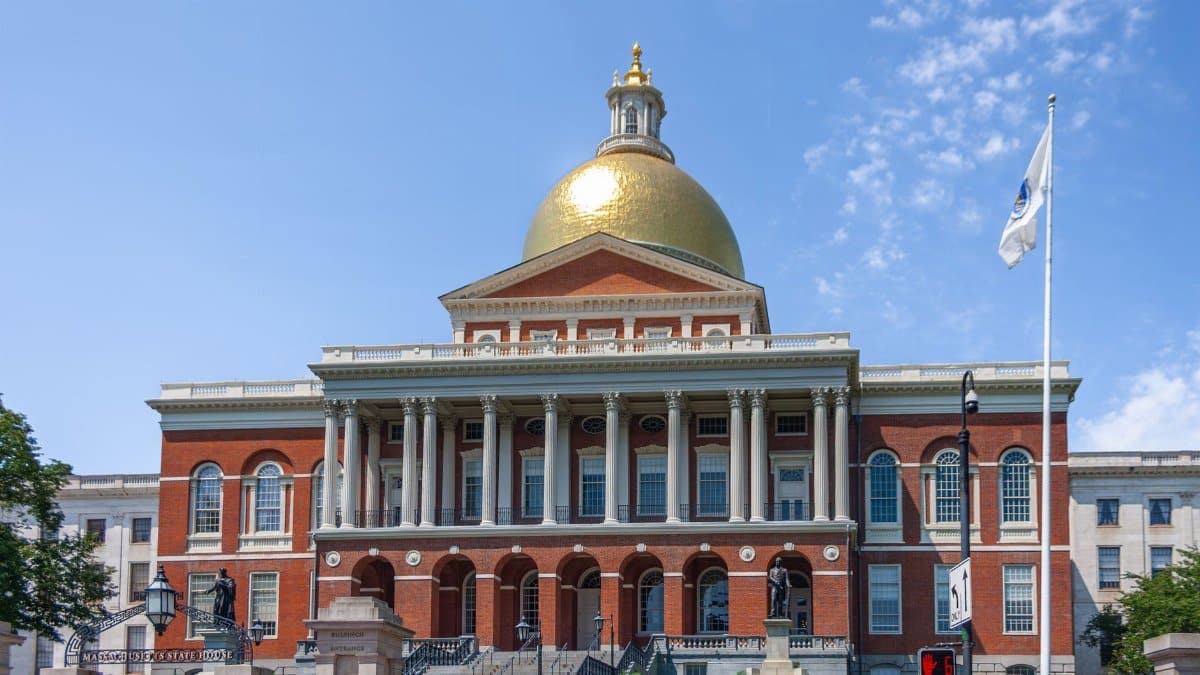
Every national ambition begins as a local permission. Markey has that permission again. Reelection is not a mandate to reorder the Senate, but it is evidence that a long record can still beat the fashion for novelty. In a cycle that punished some incumbents for seeming remote, his win suggests that relentless focus can read as presence.
The caution is equally local. Massachusetts Democrats are not the national median. A message that thrills a Boston audience can land as a lecture in a state where the party is defending a seat by a few thousand votes. Schumer’s defenders make this point without apology. They say a floor leader’s job is to protect the members who are not safe, not to flatter the members who are. Any serious claim on leadership has to answer that duty, not wave it away as timidity.
Markey’s allies reply that protection and ambition are not opposites. A party that only protects its most anxious members eventually has nothing distinctive to protect. The argument is old. The election merely made it urgent again.
Generational friction inside the caucus

Age is the subject everyone discusses and few want to own. Markey is not a young insurgent. He is a veteran who has aligned himself, often, with younger progressives on climate and corporate power. That combination unsettles the easy story in which youth equals change and tenure equals caution. It also unsettles the easy attack that paints every leadership critic as impatient and inexperienced.
Inside the caucus, generational friction shows up in small ways. Who gets the Sunday shows. Who is asked to carry a difficult amendment. Who is told to wait. Younger senators want visible responsibility, not a promise that their time will come after another cycle of deference. Older senators want evidence that visibility will not become a habit of lonely votes. A leader who cannot manage that tension will spend the session mediating hurt feelings instead of moving bills.
Markey Senate leadership, as his supporters sketch it, would not mean a purge of experience. It would mean a different distribution of trust. Specialists would be asked to lead in public, not only in side rooms. The risk is obvious. Specialists can fall in love with the perfect bill. The Senate punishes perfect bills.
What a leadership fight would actually change

It is worth being plain about the machinery. A change at the top does not rewrite the filibuster. It does not create votes that were not elected. It does not silence industry, or regional interest, or the House, or the courts. Anyone selling a new leader as a magic key is selling a disappointment on a delay.
What a change can alter is emphasis. The leader decides which fights are named, which compromises are floated early, which members are protected from hard votes, and which messages the caucus repeats until they sound inevitable. Those choices shape what the public thinks the party is for. Over a session, they also shape what staffs draft and what committees bother to mark up.
Schumer’s record on that score is mixed in the way long records usually are. He has delivered when the votes existed and the White House was aligned. He has also absorbed criticism for bargains that progressives regarded as surrender. Replacing him without a shared theory of the next two years would be motion without direction. Keeping him without a renegotiated theory would be stability without momentum. The caucus has to choose which failure it fears more.
The limits of ambition in a narrow Senate
Journalists like a palace drama because it has characters. Voters live with outcomes. If the winter argument produces only sharper quotes, it will have failed the people who just cast ballots. The useful version of this debate is a negotiation over sequence. What can pass. What should be fought and lost in order to clarify the stakes. What must wait without being abandoned.
Markey is well suited to that negotiation if he treats colleagues as partners rather than obstacles. His career shows he can do the slow work. The question is whether the spotlight of a leadership conversation will tempt him, or his allies, toward a purity test that shrinks the very coalition a bold agenda needs. The Senate does not grade on intent. It grades on text that survives.
There is also a civic limit that no caucus strategy erases. Trust in institutions is thin. A party that speaks of transformation while governing by continuing resolution teaches the opposite lesson. Leadership, in that climate, is partly a discipline of keeping promises small enough to be kept and large enough to matter.
A vocation larger than one title

Public service, at its best, is a vocation rather than a brand. Markey has often talked that way, as if the job were a long obedience to problems that outlast any news cycle. That language can sound old fashioned in a capital addicted to personality. It can also be the only language that makes a long career coherent. A senator who stays with climate, with privacy, with the hard mechanics of bills, is making a moral claim whether or not he uses moral words.
The claim does not entitle him to the top job. It does entitle the caucus to a serious hearing. Democrats can decide that Schumer remains the right manager for a narrow majority, and they can still borrow Markey’s insistence that the calendar reflect the emergencies they describe in campaigns. They can decide the opposite, and they will still need Schumer’s talent for holding fragile votes together, whether or not he holds the title.
Are Markey and a restive slice of the party down on their Chuck? Some are, and they are not whispering as softly as they once did. The more interesting question is what they would build if the grumbling ended in a decision. A Senate leader is not a prophet. A Senate leader is a person who can turn a scattered conviction into a week of work, and then into another week, until the conviction has a chance to become law. On that standard, Markey Senate leadership is an argument worth having, and an argument that will be settled by colleagues who must live with the result, not by the satisfaction of a sharper headline.