
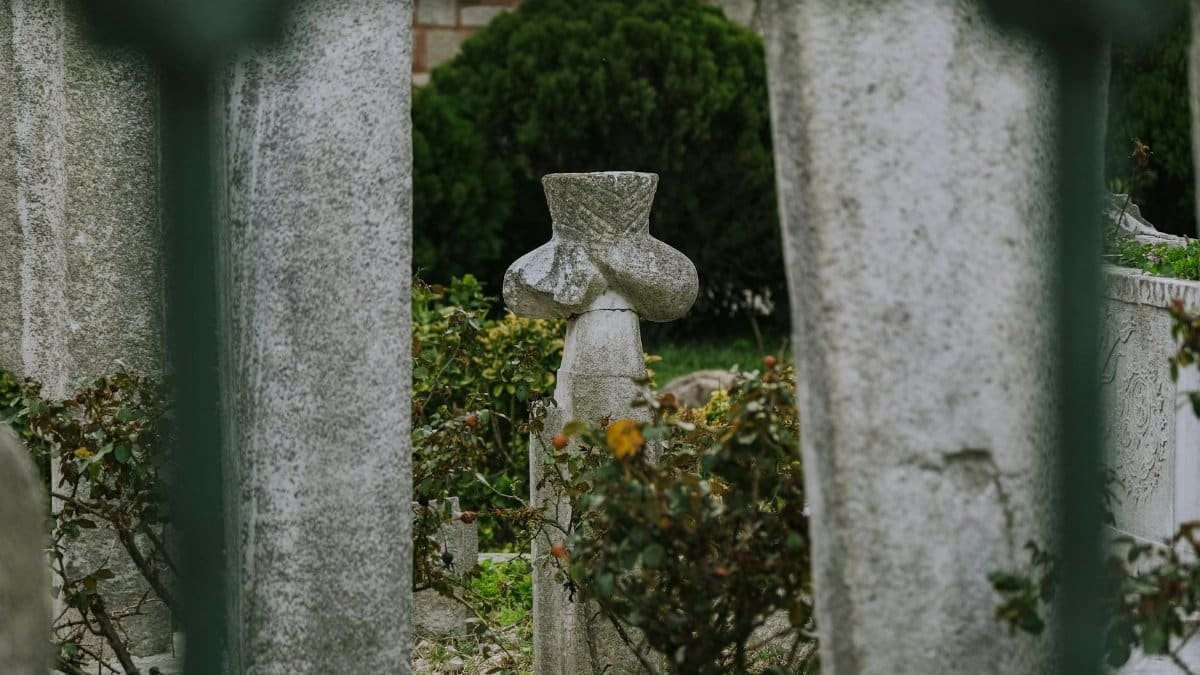
In a revelation that’s rewriting the story of our prehistoric past, ancient genetic DNA from a Stone Age burial site in Sweden has exposed the surprisingly intricate social webs of communities that thrived more than 5,500 years ago. Long assumed to be tight-knit bands of immediate family, these early societies were far more expansive and connected, according to a comprehensive new study. Researchers found that individuals interred side by side in the cemetery weren’t close kin but second- or third-degree cousins, pointing to vast, interwoven communal structures that challenge everything we thought we knew about Stone Age life. This Sweden ancient DNA breakthrough, as reported by ScienceDaily, underscores how genetic analysis is peeling back layers of time to reveal hidden complexities in human history.
The Stone Age Cemetery That Sparked a Revolution
Nestled in the Swedish landscape, this ancient burial ground has long intrigued archaeologists with its cluster of graves from over 5,500 years ago. What made it stand out was the proximity of the burials—bodies laid to rest close together, suggesting a deep communal bond. But conventional wisdom held that Stone Age groups were small, isolated hunter-gatherer families, moving in tight units of immediate relatives. The extraction of ancient DNA from these remains flipped that narrative on its head. Instead of nuclear families, the genetic profiles revealed a tapestry of distant relations, hinting at larger social units where second- and third-degree cousins shared space in death as they likely did in life. This discovery from the Sweden ancient DNA project illuminates a level of organization previously unimaginable for the era.
Decoding the Genetic Secrets
Ancient DNA analysis has become a game-changer in archaeology, allowing scientists to reconstruct kinship with precision that bones alone could never provide. In this Swedish site, researchers meticulously sequenced DNA from multiple individuals, mapping out their relationships down to the degree of cousinship. The results were striking: those buried in closest proximity weren’t parents, siblings, or even first cousins, but more removed relations—second or third cousins. This pattern repeated across the cemetery, painting a picture of a community bound not by the narrowest blood ties but by broader familial networks. Such findings expand our grasp of prehistoric social dynamics, showing how these early Europeans maintained connections that fostered resilience and cooperation on a scale beyond simple clans.
Beyond Immediate Family: A Web of Cousins
Imagine a graveyard where your neighbors in eternity are cousins once or twice removed— that’s the reality uncovered here. The study’s genetic data showed no dominance of direct parent-child or sibling pairs among the closely buried. Instead, the prevalence of second- and third-degree cousins suggests that burial practices reflected ongoing communal ties rather than just the most intimate family units. This implies that social roles, rituals, and daily interactions wove people from extended lineages into a cohesive whole. For those studying Sweden ancient DNA, this shifts the focus from isolated groups to interconnected ones, where marriage, alliances, or shared resources likely knit distant relatives into a functioning society.
Social Complexity Redefined

Prehistorians have long debated the sophistication of Stone Age societies, often picturing them as nomadic bands with minimal hierarchy. Yet this evidence of massive, interconnected communities upends that view. Over 5,500 years ago, these Swedes weren’t just surviving; they were thriving in structures that supported larger populations through extended kinship. The burial patterns indicate that second- and third-degree cousins were significant enough to be interred together, perhaps honoring shared ancestry or collective memory. This social complexity—evident in the DNA—suggests mechanisms for conflict resolution, resource sharing, and cultural transmission that rival later societies, all gleaned from the silent testimony of ancient bones.
Implications for Prehistoric Community Life
What does it mean for daily life in these ancient Swedish communities? The DNA reveals that living arrangements likely mirrored the burials: expansive groups where second- and third-degree cousins interacted regularly, pooling knowledge for hunting, foraging, or crafting. Such interconnectedness could have buffered against hardships, like famines or raids, by distributing risks across a wider net of relations. Researchers note that this level of social embedding challenges models of prehistoric isolation, proposing instead dynamic networks that evolved to meet growing needs. As Sweden ancient DNA continues to yield insights, it humanizes these ancestors, showing them as socially astute builders of community long before recorded history.
Challenging Long-Held Assumptions
For decades, the prevailing theory painted Stone Age Europe as a patchwork of small, kin-based bands, with little room for broader ties. But this study’s findings, rooted in rigorous genetic mapping, dismantle that simplicity. The cemetery’s layout—clusters of non-immediate relatives—points to deliberate choices in burial that celebrated extended family bonds. Blended seamlessly with prior work on ancient genomes, which has shown migrations linking distant groups, this evidence bolsters the idea of fluid, expansive social units. It’s a reminder that our ancestors’ worlds were richer and more nuanced than skeletal remains alone might suggest, with Sweden ancient DNA at the forefront of this paradigm shift.
The Broader Archaeological Ripple Effect

This discovery doesn’t stand alone; it ripples through the field, prompting reexamination of similar sites worldwide. If a Swedish Stone Age cemetery housed such interconnected communities, what about others? The study’s methodology—combining DNA with spatial analysis—offers a blueprint for future digs, potentially revealing more about how prehistoric peoples scaled up their social lives. By highlighting second- and third-degree cousins as central to burial practices, it underscores the value of genetics in decoding unwritten histories. As reported in the archaeological updates from ScienceDaily, these insights from Sweden ancient DNA are poised to redefine our understanding of human evolution’s social chapter.
Looking Forward: More Secrets from the Past
As technology advances, expect more from Sweden ancient DNA to surface, perhaps detailing how these communal structures influenced cultural practices or migrations. For now, the cemetery stands as a testament to the ingenuity of early humans, whose lives were sustained by bonds stretching across generations of cousins. This isn’t just about bones and genes; it’s about recognizing the foundations of society in the dim light of prehistory. The study invites us to ponder: in our hyper-connected modern world, how much do we echo these ancient networks of extended kin?