

On a weeknight in Fishtown, ward politics usually means a church basement, a stack of walk lists, and neighbors arguing over which corner still needs a poll worker. Lauren Rinaldi has spent years in that room. Now the progressive ward leader wants a larger stage. She is running for Philadelphia city commissioner, the little watched office that decides how easily the city actually votes. Her announcement lands as Democrats argue over turnout, trust, and whether the party machinery still knows how to reach people who skip Election Day. For readers outside the ward system, the job can sound clerical. In Philadelphia it is anything but.
What the office quietly controls
The three city commissioners administer elections for a city of more than a million and a half people. They oversee voter registration, polling places, mail ballots, and the public count that tells a neighborhood who won. A Philadelphia city commissioner does not set tax rates or negotiate union contracts. The office still touches every other contest on the ballot, from president to state representative to a row office most people discover only when a sample ballot arrives. The board is partisan by design, with two seats for the majority party and one for the minority. That structure is meant to keep one side from running the count alone. It also means internal argument is part of the job, not a failure of it.
Voters tend to notice the office only when something goes wrong. A long line in the rain. A mail ballot returned too late. A result that takes days to settle. The rest of the year the work is training, hiring, language access, and the unglamorous labor of keeping rolls accurate without knocking eligible people off them. Campaigns that treat the seat as a stepping stone usually underestimate that grind. Campaigns that treat it as pure paperwork underestimate the politics.
Why a ward leader is making the jump

Rinaldi enters as a progressive leader in the city Democratic Party, not as an outsider throwing rocks from the sidewalk. A ward leader already lives inside the organization that recruits committee people, fills polling places, and decides which names get a friendly push on primary day. That proximity is both credential and burden. She can claim she has seen, block by block, where the party fails to show up. She also has to explain why a person formed by that system should be trusted to run it more openly than the people already in the room.
Fishtown is a useful origin story and an incomplete one. The neighborhood has become a shorthand for new money, new restaurants, and new voters who did not grow up inside ward politics. It is also still a place of renters, longtime residents, and people who feel the city changing under their feet. A candidate who learned politics there has heard both complaints: that the party is a closed club, and that newcomers treat civic life like a pop up. Neither complaint, by itself, wins a citywide race.
The case she is making on turnout
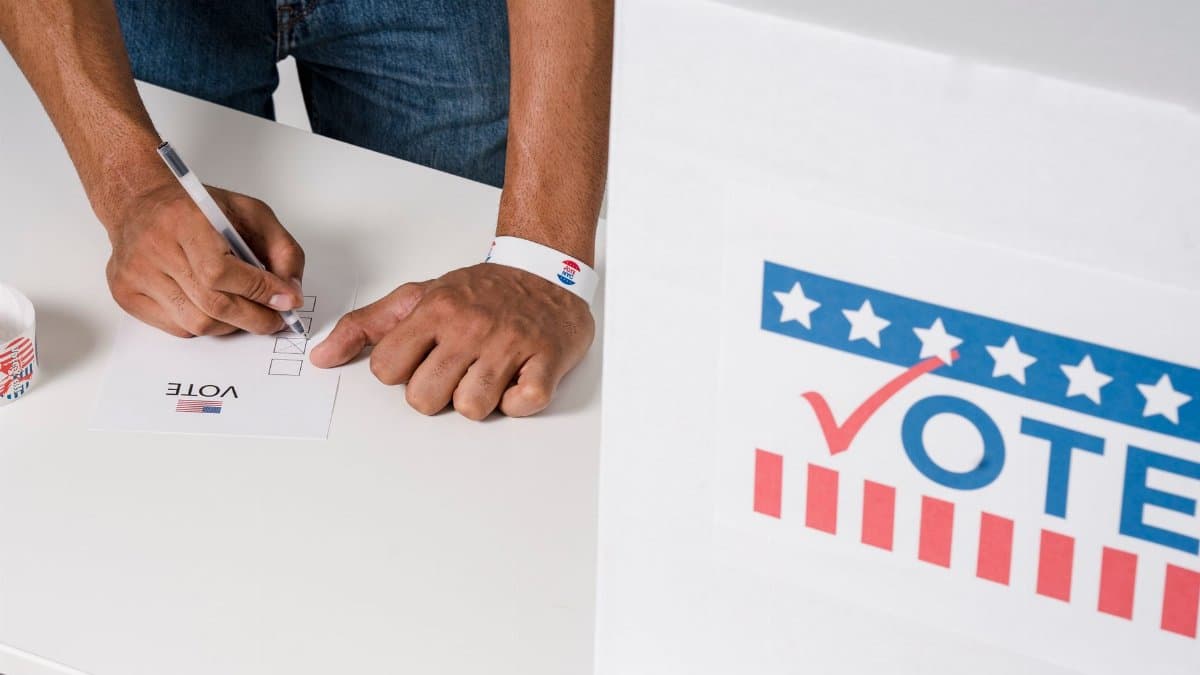
The pitch attached to her launch is straightforward. Boost voter turnout. Widen outreach. Do not assume that the people who always vote are the only people who count. In a city where municipal contests routinely draw a fraction of the presidential electorate, that argument has an obvious surface appeal. The harder part is operational. Turnout is not a slogan a commissioner can order into existence. It depends on deadlines people can understand, ballots people can complete, polling places people can reach, and a count people believe.
Philadelphia Democrats have spent several cycles talking about the missing voter. Young renters who move every year. Shift workers who cannot spare a Tuesday morning. Older residents who want a person, not a portal. New citizens still learning the calendar. A commissioner campaign built on outreach has to say which of those groups it will actually serve, and with what tools. A prettier website will not move a line at a crowded division. A speech about engagement will not fix a ballot instruction written for lawyers.
Incumbency in a party city

Challenging incumbents for a Philadelphia city commissioner seat is a bet against habit. Sitting members have name recognition among the committee people who dominate low turnout primaries. They have relationships with ward leaders, labor allies, and the lawyers who live inside election fights. They can point to elections that were administered, storms that were endured, and lawsuits that were answered. In Philadelphia, that record often beats a promise, even when the promise is popular in progressive circles.
It is also true that incumbency can calcify. An office that answers mainly to the party actors who already vote can drift away from the people who do not. Rinaldi’s run tests whether a progressive lane inside the Democratic Party is wide enough to unsettle that arrangement. She is not asking Republicans to hand her the minority seat. She is asking her own party to prefer a new manager of the machinery. That is a family argument, and family arguments in this city are rarely polite.
Fishtown as a political classroom

Ward leadership is an education in small humiliations and small victories. You learn which block captain actually knocks and which one only collects a ballot. You learn that a missing interpreter can suppress a street more effectively than a speech. You learn that people forgive a late result faster than they forgive a feeling of being talked down to. If Rinaldi carries that classroom into a citywide campaign, it could distinguish her from candidates who discover election administration only when they need a platform.
The risk is parochialism. Fishtown is not North Philadelphia, not the Northeast, not Southwest. A commissioner answers to all of them, including voters who have never heard of her ward and do not share its political fashion. Progressive branding travels unevenly across the city. In some divisions it signals attention to renters, criminal justice, and a party that should knock on more doors. In others it signals a candidate who may not know the senior center, the church, or the union hall. She will be judged on whether her outreach plan sounds like those rooms, not only like her own.
The aftertaste of chaotic counts

Anyone who has watched Philadelphia elections over the past several years carries a memory of waiting. Mail ballots changed the rhythm of the count. State law, county capacity, and partisan litigation all pulled on the same rope. I have sat through enough election nights to know that the drama people remember often begins in an office they cannot name. The public sees a percentage stuck on a screen. Behind it are staffing plans, scanner capacity, observation rules, and communication that either calms a city or feeds a rumor.
A challenger does not need to relitigate every lawsuit to take the lesson. Voters want speed where the law allows it, accuracy where speed would lie, and explanations that do not treat confusion as a personal failing. They also want the office to resist becoming a stage for national theater. Philadelphia already draws that spotlight. The commissioner who performs for it can neglect the division that opened late because nobody had the key.
Outreach that is more than a mailer

Rinaldi’s stated emphasis on outreach will rise or fall on boring specifics. Where are the satellite offices, and in which languages do they actually help? How early does the city recruit poll workers, and does it pay them enough to keep them? How does a renter update a registration without losing a week to a form that bounces? How are drop box hours published so a person leaving a night shift can use them? These are not glamorous questions. They are the questions that separate an election administrator from a party messenger.
Outreach also has a trust problem that no single candidate invented. Some Philadelphians have been told, for years, that their vote will not matter or will not be counted. Some have had the opposite experience and resent being treated as a turnout project. A serious campaign talks to both. It does not promise that a commissioner can conjure civic faith. It promises competent notices, reachable humans, and rules applied the same way in every neighborhood. That is a modest promise. It is also the one the office can keep.
Questions a serious campaign should answer

Before primary voters sort the field, a few tests are fair. How will she handle disagreement with the other members of the board when the law is unsettled and the cameras are on? How will she staff a count that now includes a large mail ballot pile without turning temporary workers into an afterthought? How will she speak to voters who are not Democrats, given that the office serves the whole city even when the majority seats are chosen in a Democratic primary? And how will she measure success if turnout does not jump in a single cycle?
Incumbents deserve the same questions, not a free pass for having survived the last storm. Experience is an asset only if it produces clearer ballots, shorter avoidable lines, and fewer people learning the rules after their vote is already at risk. A Philadelphia city commissioner campaign that cannot talk in those terms is asking for a title, not a job.
How a low attention race still matters

Most readers will not build their week around this contest. That is precisely why it matters. The rules of voting are set in public, then lived in private, one form and one polling place at a time. When those rules are administered well, other debates can proceed on a result people accept. When they are administered poorly, every later argument inherits the doubt. Rinaldi is asking Democrats to treat that stewardship as a progressive priority rather than a clerical leftover.
Whether she is the right person for the seat is a question her record, her opponents, and the city’s voters will answer. What her candidacy already clarifies is the standard. A Philadelphia city commissioner should be judged less by volume at a ward meeting than by whether a stranger, on a Tuesday in November, can cast a ballot that counts. If the campaign stays on that ground, it will have done something useful even before the first vote is tallied. If it drifts into personality and faction, the office will remain what too many Philadelphians already assume it is: important, invisible, and someone else’s problem.