
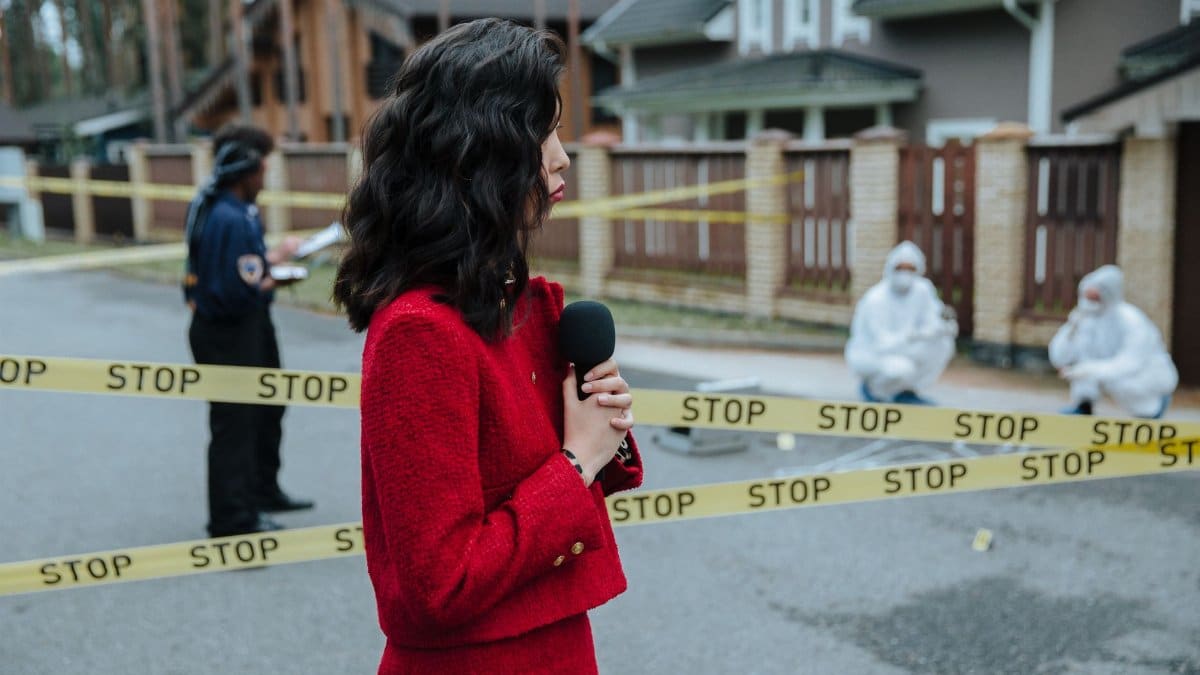
On a gray morning in Crown Point, a file that was supposed to settle a question of identity did the opposite. A rape prosecution in Lake County came apart after officials acknowledged that a clerical mistake, not a new scientific revelation, had distorted what jurors and lawyers thought the evidence showed. The phrase DNA report error Indiana now sits at the center of a quieter argument about trust: what a laboratory owes the public when a single wrong entry can erase months of work and leave two lives in suspension.
A file that looked finished
Forensic reports carry a kind of authority that ordinary paperwork rarely earns. They arrive with logos, chain of custody notes, and language that sounds final. In this case, local accounts describe a report from the Indiana State Police laboratory that was treated as ready for court. Prosecutors built a timeline around it. Defense counsel prepared to challenge it. The woman who reported the assault waited for a process she had been told would be careful.
Then the document failed in a way that had little to do with the chemistry of testing. A clerical error, the kind that lives in names, sample numbers, or a mismatched line of text, undermined the report. Once that flaw was plain, the case could not proceed on the record the state had offered. Charges were dismissed. The science of DNA did not collapse. The human system around it did.
What dismissal does and does not mean

A dismissal is a legal event, not a verdict on anyone’s character. It means the state, as of that day, could not or would not go forward on the evidence it had presented. It does not automatically declare that no crime occurred. It does not automatically declare that the accused person did what was alleged. Those distinctions matter, and they are easy to lose when a headline moves faster than a docket.
In Lake County, the practical result was stark. A prosecution that had depended on a laboratory narrative lost its footing. The DNA report error Indiana officials have had to explain did not arrive as a dramatic laboratory explosion. It arrived as a correction, late enough to matter and early enough to stop a trial that might have rested on a faulty page.
The narrow path between sample and sentence

DNA testing, when done well, is among the most powerful tools American courts possess. A profile can include or exclude a person with a clarity that eyewitness memory seldom matches. That power depends on a chain that is only as strong as its dullest link: collection, labeling, extraction, interpretation, review, and the sentence that tells a lawyer what the numbers mean.
Crime lab veterans often say the dramatic errors are rare and the quiet ones are the ones that scare them. A transposed identifier. A report pasted from the wrong worksheet. A reviewer who signs because the queue is long and the language looks familiar. None of that requires a corrupt scientist. It requires a tired system that treats documentation as clerical rather than as evidence.
The woman who reported the assault

People who report sexual assault already carry a burden that courts struggle to name. They are asked to repeat details, to wait, to trust strangers with the most private facts of a night they did not choose. When a case ends because a report was wrong, the harm is not abstract. It is the sense that the institution promised care and delivered a mistake.
Accountability, from that side of the courtroom, is not a demand for a predetermined conviction. It is a demand that the file be worthy of the courage it took to open it. A victim should not have to wonder whether a sample number was checked twice. She should not learn, after months, that the document everyone treated as solid was not. Repair starts with an explanation that is specific, public enough to be tested, and free of the fog that agencies use when they are embarrassed.
The man who lived under the allegation
The other injury is easier for some audiences to skip past, and it should not be. An accusation of rape can reorder a life before any jury is seated. Work, family, housing, and reputation all shift. If the report that kept that weight in place was faulty, the accused person has a claim on the same laboratory that the complaining witness does. Different claims, same standard: tell the truth about what went wrong, and do it in time for the truth to matter.
Defense lawyers in Indiana have long argued that defendants see finished reports more often than they see the worksheets behind them. A clerical mistake is precisely the sort of flaw that hides until someone compares the narrative page with the underlying record. When that comparison happens late, both liberty and dignity have already paid a price.
How a laboratory is supposed to catch this

Accredited forensic labs are expected to use second reads, administrative review, and technical review. Those layers exist because people mistype. A good system assumes error and builds a net under it. The question after a failure is not whether humans are imperfect. The question is which net failed, who noticed, and why the notice came when it did.
Quality managers talk about root cause in plain terms. Was the wrong template used? Did two samples share a number that software did not flag? Did a reviewer check the conclusion without checking the identifier? Each answer points to a different fix: software locks, slower queues, a rule that no report leaves without a side by side comparison of name, case number, and profile. None of those fixes is glamorous. All of them are cheaper than a collapsed prosecution.
Indiana State Police and the public record

A statewide laboratory is not a neighborhood office. Its reports travel into counties that do not employ the analysts who wrote them. That distance creates a duty to speak clearly when something breaks. Local police, prosecutors, and judges cannot audit a bench they never see. They can only trust the page, or stop trusting it.
Public explanation does not require the release of private medical detail or the name of a complaining witness. It does require a description of the error class, the cases reviewed afterward, and the date when leaders knew. Silence invites the worst inference. A short, precise account invites a better one: that the agency can correct itself without being dragged.
Prosecutors who built on a page they did not write

Line prosecutors are not DNA analysts. They are trained to test witnesses and to know the elements of a charge. When a lab report arrives, many of them treat it as a specialized product, the way a pilot treats an instrument panel. That deference is reasonable until it is not. After a clerical failure, the ethical duty shifts. The state must tell the defense, tell the court, and decide whether any remaining evidence can stand on its own.
Dismissing a case can be the honest choice. It can also be the choice that avoids a hearing in which the laboratory’s habits would be cross examined at length. Observers in Lake County will watch which path the institutions take next: a narrow correction, or a wider look at how reports are checked before they are sworn to.
What defense access actually changes
Discovery rules exist so that the accused can test the state’s proof. In forensic cases, that means more than a PDF of the final opinion. It means worksheets, communications about retesting, and the audit trail of who touched the file. When those materials are late or incomplete, a clerical mistake can survive until the eve of trial, or beyond it.
Independent review is not an insult to a public lab. It is how high consequence work stays honest. A second analyst, hired by the defense or appointed by the court, can confirm a profile or catch a mismatch that internal culture has learned to skim. Funding that review is part of funding justice, not a luxury for people who can already afford a fight.
Patterns beyond one county

Forensic reformers have warned for years that the courtroom aura of science can outrun the paperwork underneath it. Wrongful conviction registries include cases in which serology, hair comparison, or DNA interpretation was overstated. Clerical error is a cousin of those failures. It is less theoretical and more banal, which is why it persists. Nobody writes a thriller about a mislabeled vial. People still go to jail, or walk free, because of one.
The lesson is not that DNA should be doubted in every case. The lesson is that a result is only as credible as the record that ties a swab to a name. Communities that treat the laboratory as an oracle will keep being surprised. Communities that treat it as a workshop will ask ordinary questions: Who checked this? When? What happens if the checker is wrong?
Calls for accountability from both sides

It is rare, and instructive, when the person who reported a crime and the person who was accused want overlapping things from the same agency. Both can ask for a written account of the mistake. Both can ask which other files were pulled for review. Both can ask whether anyone outside the lab will see the audit. Those requests are not partisan. They are the minimum price of using a person’s body, or a person’s name, in a state process.
The DNA report error Indiana residents are now discussing should not become a slogan that means whatever the loudest voice needs. For the woman, accountability may mean a clear path if the state believes it can recharge on evidence that does not depend on the tainted page. For the man, it may mean a record that does not leave a dismissed charge looking like a quiet conviction. For the lab, it means accepting that trust is a renewable resource, not a permanent grant.
What lawmakers can actually fix
Legislatures like dramatic bills and dislike the budget lines that prevent dull disasters. The useful reforms here are concrete. Require that final reports include the unique identifiers a reviewer compared. Require prompt written notice to both parties when a report is amended. Fund enough analysts that review is a real read, not a signature at the bottom of a stack. Publish annual counts of amended reports, without private facts, so the public can see whether corrections are rising or being hidden.
None of that retraces a single night in Lake County. All of it changes the odds that the next night will be handled by a system that can find its own typos before a judge has to.
The spiritual weight of a factual mistake

There is a moral dimension to clerical work that religious traditions have always understood better than bureaucracies do. To name someone falsely, even by a tired keystroke, is a kind of bearing false witness. To leave a harmed person without a trustworthy process is a failure of care. Institutions do not have souls, but the people inside them do, and the habits they keep become a public ethic.
Repair, in that older language, is not a press release. It is restitution of truth: say what happened, make whole what can be made whole, and change the practice so the same wound is harder to inflict. A crime lab that can do that has not become perfect. It has become answerable, which is the form of goodness available to offices.
What happens next

Next is not a single hearing. It is a set of decisions that will show whether this episode was treated as an embarrassment or as information. The laboratory can review a defined set of recent reports and say what it found. Prosecutors can state, on the record, whether any part of the allegation can be pursued without the faulty document. Defense counsel can seek the underlying file so the correction itself can be tested. The woman at the center can be told, in plain words, what the state will and will not do.
If those steps are skipped, the story will harden into cynicism: that paperwork is theater, that neither accuser nor accused can rely on the page, that Indiana asked people to trust a system and then shrugged. If those steps are taken, the same story can become a narrower and better claim. A DNA report error Indiana cannot erase will at least be followed by adults who refuse to let a clerical failure be the last word.
Courts will keep needing laboratories. Laboratories will keep employing people who can mistype. The measure of the coming months is whether anyone with power treats that fact as a design problem rather than as bad luck. The two people already living with the consequences should not have to wait alone for that answer.