

As four astronauts circled the moon aboard the Orion spacecraft our planet appeared as a distant speck against the infinite black. This voyage has rewritten what is possible for human spaceflight. By venturing so far the crew set the artemis ii human distance record surpassing the mark set during the Apollo era more than fifty years ago. The mission took them approximately two hundred forty eight thousand six hundred fifty five miles from our planet at its farthest point. For many observers this achievement transcends mere technical success. It touches on deeper questions about our purpose and our yearning to connect with something larger than ourselves. In an age of earthly concerns the sight of humans reaching such distances offers a moment of collective inspiration and a reminder of our shared spirit of discovery. The experience speaks to a spiritual hunger that many feel in todays fast paced world a desire to see beyond the ordinary and touch the extraordinary.
The Path To This Momentous Achievement

The development of the Artemis program has been a long term effort involving thousands of dedicated professionals from NASA and its international partners. Initial concepts were refined over time to focus on sustainable exploration along with scientific discovery. Budget allocations and policy decisions played crucial roles in moving the project forward despite various challenges. Test flights without crew provided valuable data that informed the design of this crewed mission in important ways. The decision to send humans on this trajectory was not taken lightly given the risks involved. It required confidence in the systems as well as a clear vision for what the journey could accomplish both scientifically and culturally. When the rocket lifted off successfully the world watched with bated breath and a sense of unity. The smooth progression through each phase demonstrated the reliability of the technology and the thoroughness of the planning that went into it. This success sets a strong foundation for subsequent missions that will one day land on the lunar surface and establish a permanent presence there.
Public engagement has been remarkable with educational programs inspiring students across the country to pursue careers in science technology engineering and mathematics. The narrative of returning to the moon after such a long hiatus captures the imagination and fosters a sense of national pride that many had not felt in recent years. For middle aged readers who witnessed the space shuttle era or even the later stages of Apollo this development feels like a full circle moment filled with nostalgia and hope. It revives memories of past glories while pointing toward an exciting future filled with possibilities that were once confined to science fiction.
Understanding The Artemis Ii Human Distance Record

The artemis ii human distance record is more than a statistic. It captures the essence of human curiosity and our relentless drive to push boundaries. During the mission the Orion spacecraft followed a path that took it into a distant retrograde orbit around the moon. This maneuver allowed the crew to travel farther from Earth than any humans in history. The previous record was set by the Apollo thirteen mission which encountered an unexpected situation that sent it on a longer trajectory. In contrast the Artemis II flight was planned from the beginning to achieve this extended distance. Confirming the artemis ii human distance record involved precise measurements using advanced tracking systems located around the globe. The data collected will help refine models for future deep space operations and improve our understanding of gravitational influences in the Earth moon system.
Experts suggest that breaking this barrier has psychological benefits as well. It expands the mental map of what humans consider reachable. As one expert observed in a recent analysis available at the NASA website this accomplishment paves the way for even more ambitious goals ahead. For a generation that has grown up with the internet and instant communication the idea of being so isolated yet so connected through technology offers a fascinating paradox. This record will likely stand for some time until missions to Mars or beyond take humans even farther away from their origin point.
A Spiritual Perspective On Deep Space Travel
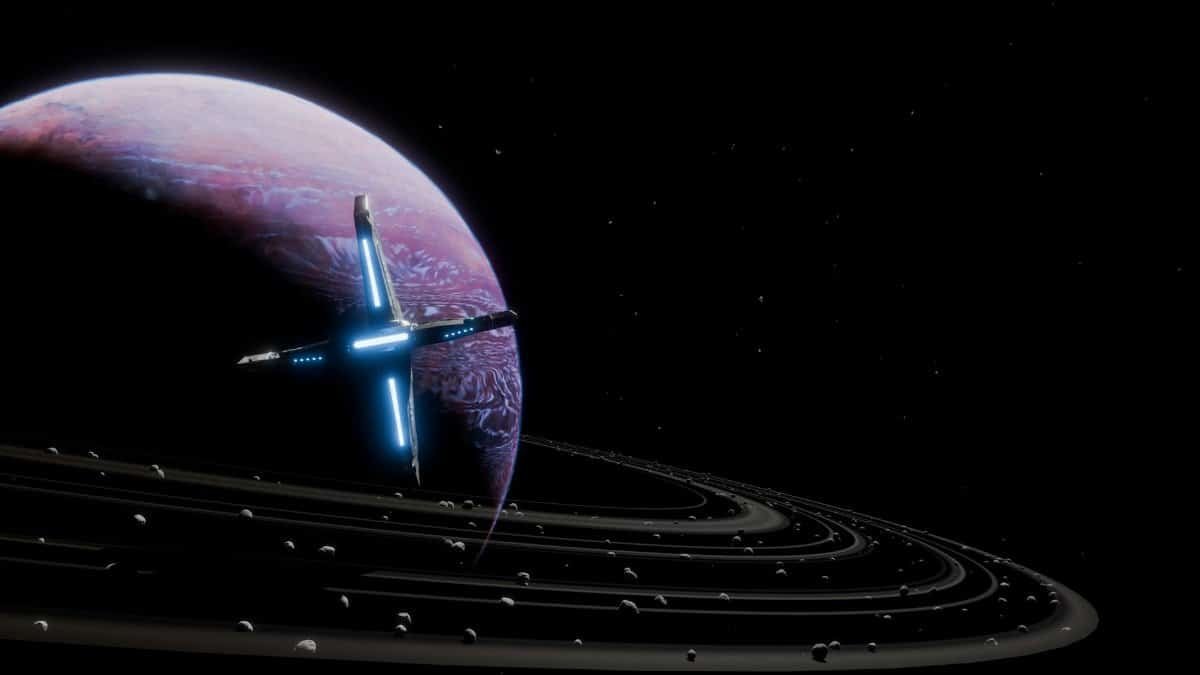
Venturing far from Earth inevitably leads to philosophical and spiritual contemplation. Many astronauts throughout history have spoken of the overview effect a cognitive shift that occurs when viewing our planet from space. The crew of this mission likely experienced an intensified version of that phenomenon given their greater distance. The vast emptiness surrounding them serves as a mirror reflecting back the fragility and beauty of life on Earth. In spiritual news and trends this type of experience is increasingly discussed as a catalyst for personal transformation and global consciousness. Religious leaders from various traditions have commented on the mission drawing parallels between the journey and ancient pilgrimages that tested the body and soul in search of enlightenment.
The silence of space contrasted with the constant noise of modern life allows for a unique form of introspection. Crew members may return with new insights about what it means to be human and how we relate to the universe. This aspect of the mission resonates particularly with middle aged audiences who often find themselves at a stage of life where questions of meaning and legacy become more prominent. The artemis ii human distance record thus becomes not only a scientific benchmark but also a spiritual one encouraging all of us to consider our place in the grand scheme of existence.
Introducing The Astronauts Aboard Orion
The four member crew represents a diverse mix of backgrounds and expertise carefully selected for this historic flight. Each brings years of experience from previous missions or rigorous training programs designed to simulate the conditions they would face. Their stories highlight the human element of space exploration often overshadowed by the machinery and mathematics. One crew member is a veteran of the International Space Station with multiple spacewalks to their credit. Another is a geologist whose knowledge will be invaluable in observing the lunar surface from orbit. The inclusion of an international partner underscores the collaborative nature of the endeavor and the shared aspirations of different nations.
Training for such a mission involves not only technical skills but also mental preparation for the isolation and the profound views they would encounter. Families back on Earth played a supportive role providing emotional grounding. Interviews conducted before the launch revealed a common theme of humility in the face of the universe vastness. These individuals carry the dreams of millions with them as they travel through space. Their safe return will be met with widespread celebration and their accounts of the journey will be studied for years to come.
Innovations That Enabled Such A Distant Voyage

Advanced propulsion systems heat shields and life support technologies were critical to achieving the artemis ii human distance record. The Orion spacecraft features state of the art navigation tools that allow for precise course corrections without constant input from ground control. Communication delays become more significant at such distances making autonomy an essential feature. Materials used in the construction had to withstand extreme temperature variations and radiation levels far higher than those in low Earth orbit. NASA engineers worked closely with private sector companies to incorporate cutting edge developments in artificial intelligence and robotics that support the crew.
Power generation through solar arrays had to be optimized for periods when the spacecraft would be in shadow. Water recycling systems and air purification methods have reached new levels of efficiency ensuring the astronauts remained healthy throughout the approximately ten day mission. These innovations will have applications beyond space travel potentially benefiting medical and environmental efforts here on Earth. The investment in these technologies reflects a belief in the long term value of space exploration for all humankind.
Lessons From Past Lunar Missions Revisited

The Apollo program provided a wealth of knowledge that has been revisited and expanded upon in preparation for Artemis II. While those missions were brief sorties to the moon the current approach emphasizes learning how to live and work in deep space for longer periods. The artemis ii human distance record builds directly on the foundation laid by those pioneering astronauts. Differences in technology and scientific objectives are stark yet the fundamental human drive remains the same. Archival footage and documents from the nineteen sixties and seventies have been reviewed to extract insights on crew dynamics and problem solving under pressure.
One key difference is the level of public access to the mission through live streams and social media. This transparency creates a more intimate connection between the astronauts and those following from home. It transforms the experience from a distant spectacle to a shared human adventure. By studying both the successes and the near disasters of the past engineers have mitigated many risks allowing for a safer and more productive journey. According to reporting from the Washington Post the mission has already begun to influence planning for the next steps in lunar exploration.
Global Reactions To The Historic Flight

News of the successful establishment of the new distance record spread rapidly across continents sparking conversations in diverse cultural contexts. Governments issued statements of congratulations emphasizing the universal nature of the achievement. Schoolchildren in remote villages watched highlights on shared devices their eyes wide with amazement at the possibilities before them. Scientists in laboratories around the world began requesting access to the data collected during the flight hoping to advance their own research projects.
In spiritual communities the event prompted sermons and discussions about creation and the responsibility that comes with knowledge. Social media platforms buzzed with personal stories of how the images from the mission affected viewers on an emotional level. This global engagement highlights how space exploration can serve as a unifying force in a divided world bringing people together around a common sense of awe and curiosity.
The Emotional Impact On Those Watching From Earth

For many who followed the mission the images transmitted back from deep space evoked strong emotions. The sight of Earth so small and seemingly alone in the blackness prompted reflections on unity and the need to protect our planetary home. Families gathered around screens sharing the experience and discussing its meaning. Older generations recalled their own memories of watching moon landings and felt a sense of continuity in human progress.
Psychologists have noted increased reports of heightened awareness and even shifts in personal priorities among those deeply engaged with the coverage. The spiritual dimension becomes apparent as individuals report feelings of connectedness despite physical separation. This emotional resonance ensures that the mission will have a lasting impact beyond the immediate scientific gains. It invites each of us to pause and reflect on the deeper currents that guide human endeavor.
Why This Record Matters For Humanitys Future

The artemis ii human distance record is a stepping stone toward more ambitious goals including crewed missions to Mars. It demonstrates that we possess the capability to send people safely into deep space and bring them back with new knowledge and perspectives. As climate challenges and resource limitations press upon us here on Earth the ability to live successfully away from our planet could become increasingly relevant. Yet the true value may lie in the inspiration it provides to innovate and to dream on a grand scale.
By expanding the realm of human experience this mission encourages us to think differently about our challenges and opportunities. It fosters a spirit of cooperation that transcends national borders and cultural differences. For readers in their middle years who may be contemplating the world they will leave for future generations this achievement offers hope and a call to action. The stars have always guided humanity and now they beckon us once more to venture forth with courage and wonder. In the end the greatest legacy of this journey may be the quiet realization that we are all travelers together on a small blue world adrift in an immense and mysterious cosmos.