
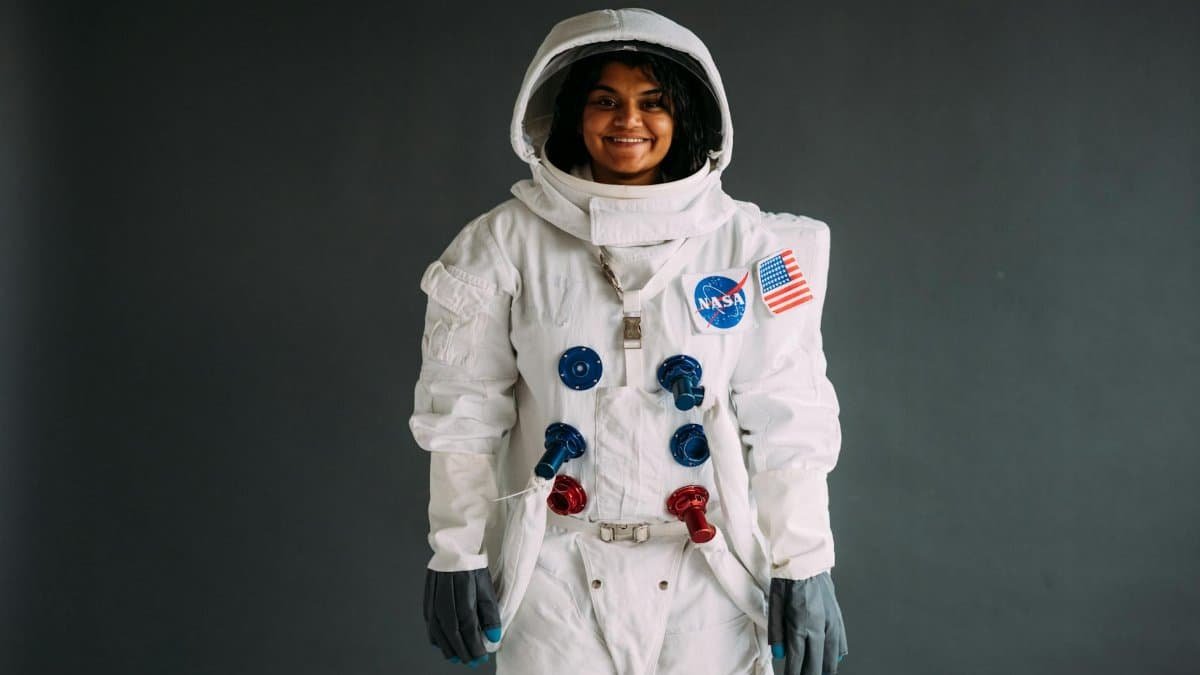
As the sun rose over Florida’s Space Coast on a crisp March morning in 2026, a thunderous roar shook the ground, propelling NASA’s Artemis II spacecraft into the heavens. This marked the triumphant launch of the Artemis II crewed moon mission, the first time humans would venture beyond low Earth orbit since Apollo 17 more than half a century ago. Four astronauts—Commander Reid Wiseman, Pilot Victor Glover, Mission Specialist Christina Koch, and Mission Specialist Jeremy Hansen from the Canadian Space Agency—embarked on a 10-day journey circling the moon without landing. The mission’s success reignited global wonder, bridging generations of dreamers who once watched grainy black-and-white footage of lunar footsteps. For a nation grappling with division, this feat felt like a unifying beacon, reminding us of humanity’s boundless potential.
The Crew: Diverse Pioneers Leading the Way

Reid Wiseman, a Navy test pilot with a penchant for capturing Earth’s beauty through photography, took command with steady resolve. Victor Glover, the pilot and a father of four, brought his experience from the International Space Station, where he logged 168 days in orbit. Christina Koch set records during her 328-day ISS stay, including the first all-woman spacewalk. Jeremy Hansen, Canada’s first Artemis astronaut, added international flair, his calm demeanor anchoring the team.
Together, they represented a mosaic of backgrounds—military veterans, engineers, parents—embodying NASA’s push for inclusivity. Their training regimen, spanning years at Johnson Space Center, included zero-gravity simulations and wilderness survival drills. As the spacecraft hurtled toward the moon at 24,000 miles per hour, live broadcasts captured their first words: “Houston, Artemis II is go for lunar flyby.”
Mission Blueprint: Circling the Moon’s Shadow

Unlike Apollo’s landings, Artemis II focused on a lunar orbit, testing systems for future missions. The trajectory took the Orion capsule 1.3 million miles round trip, skimming 50 miles above the lunar surface. Key objectives included verifying life support, navigation, and reentry capabilities under deep-space conditions.
NASA engineers monitored from mission control, where screens displayed real-time data on radiation exposure and thermal shielding. The crew conducted experiments, from photographing Earthrise to deploying small satellites. This dry run paves the way for Artemis III’s planned 2027 landing near the moon’s south pole.
SLS Rocket: The Behemoth That Roared

The Space Launch System, or SLS, stood 322 feet tall, its core stage fueled by 733,000 gallons of liquid hydrogen and oxygen. Four RS-25 engines, repurposed from the space shuttle era, ignited first, followed by solid rocket boosters generating 8.8 million pounds of thrust—more powerful than 40 jumbo jets at takeoff.
Built by Boeing with contributions from United Launch Alliance, the SLS separated flawlessly 8 minutes post-liftoff, sending Orion on its path. This $4 billion rocket, delayed by years of development, proved its worth, quieting critics who questioned its cost amid commercial competitors like SpaceX.
Orion Capsule: A Fortress for Deep Space
Orion, Lockheed Martin’s sleek capsule, shielded the crew with a heat shield enduring 5,000 degrees Fahrenheit during reentry. Equipped with solar arrays spanning 58 feet when deployed, it relied on batteries and fuel cells for power. Advanced avionics allowed autonomous course corrections, crucial in the communication lag with Earth—up to 1.3 seconds one way.
Inside, the crew navigated a compact habitat with touchscreens, sleeping bags, and food pouches. European Service Module, provided by Airbus, handled propulsion and environmental controls, highlighting transatlantic teamwork.
Historical Echoes: From Apollo to Artemis

Apollo 17 in 1972 left the moon with Gene Cernan promising a return “before this decade is out.” Fifty-four years later, Artemis II fulfilled that vow in spirit, though technology had evolved dramatically. Where Apollo used slide rules, Artemis leverages AI-driven systems and 4K cameras streaming to millions.
Yet parallels persist: the tension of launch day, the awe of lunar vistas. President Kennedy’s 1961 challenge—”before this decade is out”—galvanized a generation; today’s mission honors that legacy while addressing modern imperatives like climate monitoring from lunar orbit.
Technical Triumphs Over Adversity

Artemis II overcame setbacks, including hydrogen leaks and battery issues that scrubbed prior attempts. A 2022 stack-up mishap at Kennedy required meticulous repairs. Ground teams worked around the clock, integrating lessons from uncrewed Artemis I in 2022, which splashed down after 25 days.
Radiation proved a wildcard; the moon’s Van Allen belts demanded precise timing. Orion’s storm shelter, a shielded nook, protected against solar flares. Post-mission analysis will refine these for longer stays.
International Collaboration Fuels Ambition

Jeremy Hansen’s role underscores NASA’s partnerships via the Artemis Accords, signed by 40 nations. Europe supplies Orion’s service module; Japan contributes a pressurized rover for future landers. Canada’s Canadarm3 will aid Gateway station assembly.
This coalition counters China’s lunar ambitions, including their 2026 far-side landing. Shared goals foster goodwill, with live events uniting schoolchildren from Houston to Hyderabad in stargazing vigils.
The Spiritual Lift: Humanity’s Quest Beyond

In an era of earthly strife, Artemis II evoked profound reflection. Astronauts described the “overview effect”—that transformative vista of fragile Earth against cosmic vastness, first noted by Apollo crews. Koch, reflecting post-splashdown, spoke of unity: “From here, borders vanish.”
For middle-aged viewers raised on shuttle disasters, the mission stirred nostalgia laced with hope. Churches streamed launches; spiritual leaders drew parallels to ancient stargazers charting divine paths. It reaffirmed exploration as a soul-stirring endeavor.
Public Pulse: A Nation Watches in Awe

Viewership topped 100 million, surpassing recent Olympics. Cape Canaveral brimmed with tourists; social media exploded with #ArtemisII memes and fan art. Skeptics debated budgets—$93 billion projected for Artemis through 2025—but polls showed 70% support for lunar return.
Celebrities like Tom Hanks, narrator of Apollo 13, tweeted congratulations. Schools hosted watch parties, inspiring the next generation of engineers.
Splashdown and Beyond: Securing the Future

On day 10, parachutes bloomed over the Pacific as Orion splashed down near Baja California, recovered by USS St. Christopher. The crew emerged unscathed, grinning under Hawaiian shirts, echoing Apollo traditions.
Data from the flight will accelerate Artemis III, targeting diverse astronauts for the first lunar landing since 1972. Gateway station beckons next, a lunar-orbit outpost. As NASA Administrator Bill Nelson declared, “This is just the beginning.”
For more on the mission’s prelude, see this U.S. News overview. Artemis II not only orbited the moon but orbited our collective imagination, propelling humanity toward Mars and stars unknown.