
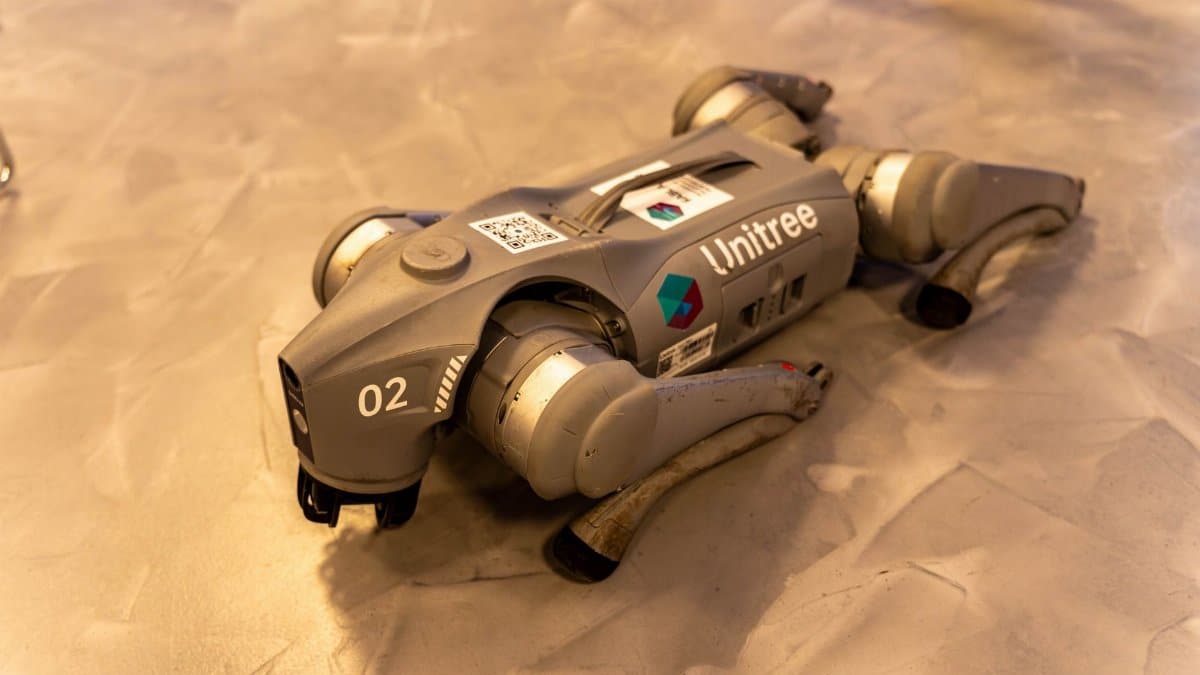
The loading dock does not look like the future. It looks like a lot of other industrial lots outside Philadelphia, with painted lines, a chain link fence, and a sky that turns the color of tin by late afternoon. What is different is the inventory. Inside, engineers are teaching machines to walk a perimeter and to fly a route, then to report what they see. The Norristown robotics company at the center of that work, Asylon, has been turning robot dogs and drones into guards and inspectors, including for the Air Force, and it is now talking about mass production and a larger payroll.
A familiar town, an unfamiliar product
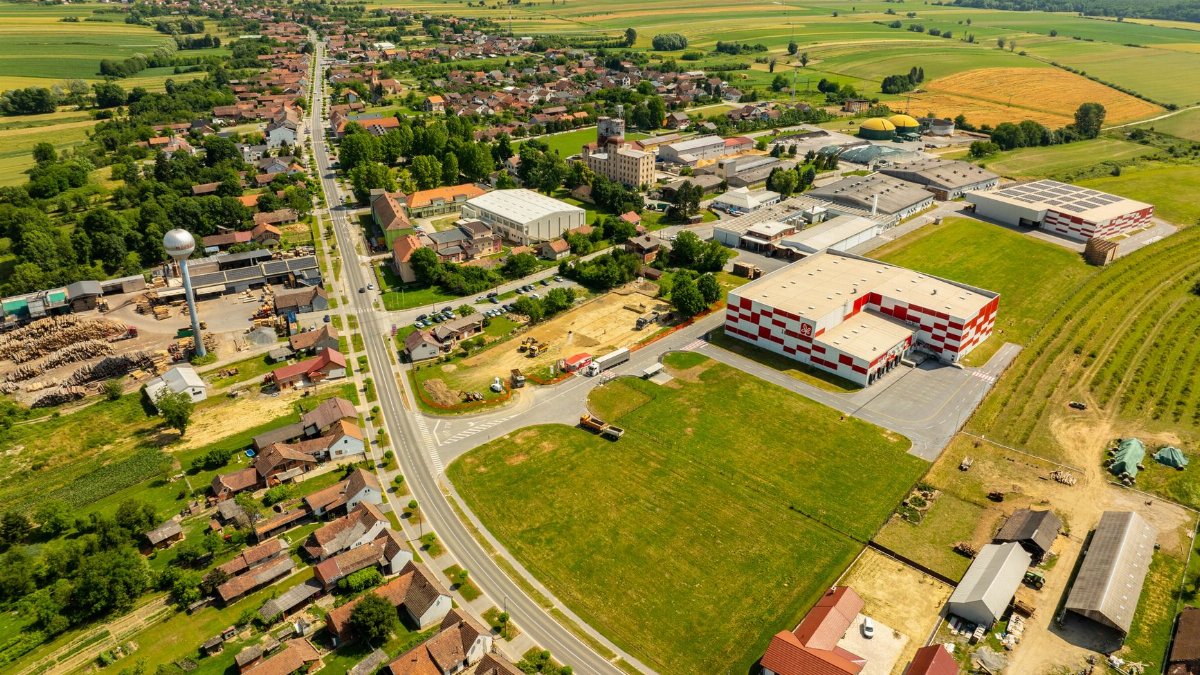
Norristown has long been a place where people make things, fix things, and commute toward bigger job centers along the Schuylkill. Robotics does not erase that history. It sits on top of it. Visitors who expect a glass campus and a lobby sculpture will be disappointed, and that disappointment is useful. Advanced machines are increasingly built in ordinary buildings by people who also worry about rent, traffic, and whether the night shift can find parking.
Asylon’s pitch is simple enough to explain at a diner counter. A robot dog can patrol ground that is dull, repetitive, or mildly hazardous. A drone can look from above at roofs, fences, tanks, and airfield edges. Software stitches those views into alerts a human can accept, ignore, or investigate. The company is not selling a science fair trick. It is selling hours of watching that a tired person would rather not spend alone in the dark.
What the machines are actually asked to do
Guard work, in this telling, is mostly attention. The dog walks a loop. The drone flies a planned path. Cameras and other sensors note a door that should be shut, a vehicle that should not be there, or a heat signature that does not match the last pass. An inspector version of the same idea looks for cracks, leaks, corrosion, and clutter that can become a safety problem before it becomes an accident.
None of that removes people from the picture. A remote operator still decides whether an alert deserves a response. A technician still charges batteries, swaps parts, and explains to a skeptical facilities manager why the machine stopped at a curb. The romance of autonomy fades quickly once a robot meets gravel, rain, and a gate that sticks.
Why a military customer changes the stakes
A contract with the Air Force is not the same as a pilot at a warehouse. Bases are large, regulated, and full of rules about who may see what. They also have perimeters that never really sleep. If a service is willing to test robot dogs and drones as guards and inspectors, civilian buyers tend to listen, even when their own sites are far less strict. The stamp of a demanding customer can matter as much as the check itself.
That attention cuts both ways. Military interest invites questions about surveillance, about what data leaves a site, and about whether a tool built for a fence line could be pointed somewhere it does not belong. A company that wants public trust has to talk about limits with the same energy it uses to talk about range and battery life. Silence reads as a plan.
From custom builds to something like a product
Early robotics firms often live on bespoke jobs. Each site wants a special mount, a special report, a special exception. That work pays the bills and teaches hard lessons, but it does not scale. Mass production, if it is real, means fewer one off miracles and more repeatable machines, spare parts, training manuals, and service contracts that a procurement officer can understand.
The shift is cultural as much as mechanical. Engineers who love a clever prototype have to accept that a boring, reliable unit is the victory. Buyers do not want a pet. They want something that starts on Monday and is still starting on Friday. For the Norristown robotics company, gearing up for that kind of output is a bet that security and inspection are not niche demos but a market with volume.
Hiring when the skill mix is awkward
The jobs that follow are not all coder jobs, and they are not all factory jobs. Someone has to assemble. Someone has to write software that fails gracefully. Someone has to talk to a base commander without promising magic. Someone has to sit with field logs and notice that the same joint fails after the same number of miles. Those roles rarely live in one degree program.
A hiring push in Montgomery County will compete with hospitals, logistics firms, and Philadelphia tech employers for the same capable people. Wages matter. So does the chance to see a machine leave the building and do a job that is easy to describe to a parent. Regions that keep advanced manufacturing often win on that combination of pay, purpose, and a commute that does not swallow the evening.
The human job that does not disappear
It is tempting to narrate this story as replacement. A robot takes the night walk, so a guard loses the shift. Sometimes that fear is justified, and companies should not dodge it with slogans. More often the first change is rearrangement. The dull loop moves to the machine. The judgment, the knock on a door, the decision to call police or a supervisor, stays with a person who is no longer pacing the same fence for eight hours.
That rearrangement can be a mercy or a loss, depending on the wage and the dignity attached to what remains. Inspection work has a similar split. A drone can photograph a roof. It cannot yet negotiate with a contractor, explain a budget, or notice that the person on the ladder looks unwell. Tools widen the gap between looking and deciding. They do not close it.
Trust, neighbors, and the sound of rotors
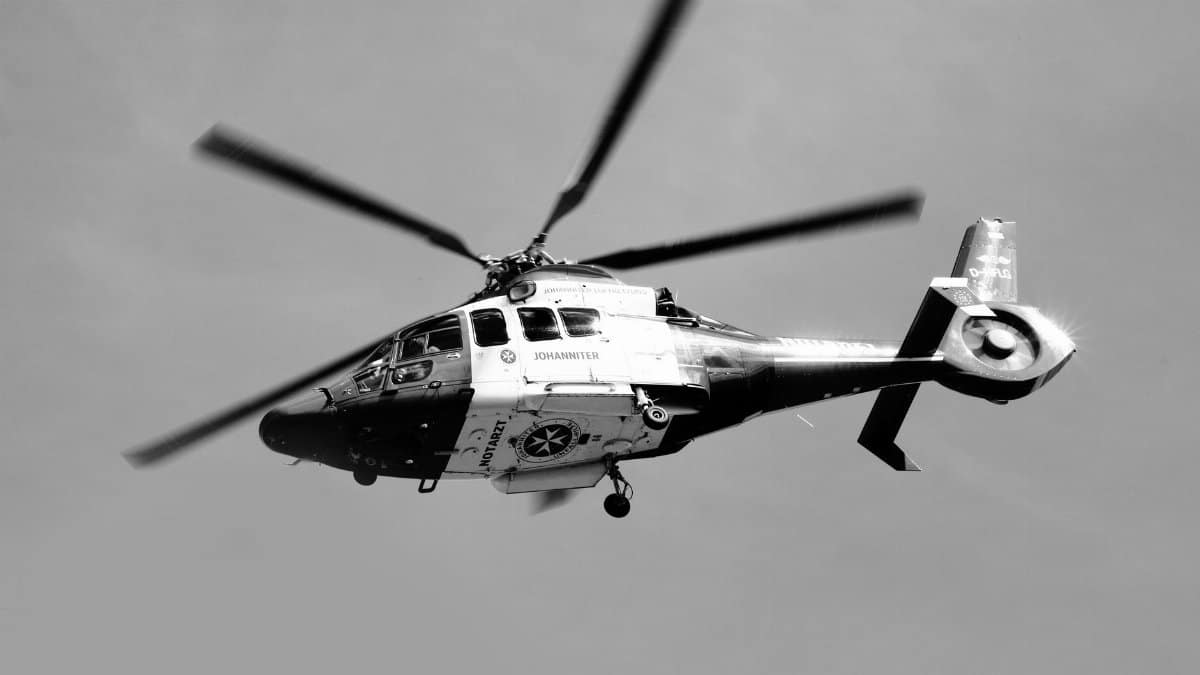
Industrial towns notice new noise. A drone is not only a sensor. It is a presence over a fence that may border homes, ball fields, or a river path. A robot dog on a sidewalk, even on private property, reads as uncanny to people who did not opt into the experiment. Companies that treat community reaction as a public relations afterthought tend to learn the cost later, in hearings and headlines.
Clear rules help. Where do the aircraft fly. How long is video kept. Who can pull a recording. What happens if a machine leaves its route. These are not abstract ethics seminar questions. They are the conditions under which a neighbor decides the firm down the road is a good employer or a bad guest. The Norristown robotics company will be judged on those answers as much as on flight time.
What production would mean for the region
If the ramp is more than a press release, suppliers follow. Machine shops, battery handlers, shipping firms, and training providers all get a thinner or thicker slice. That is how a single product becomes a local economy rather than a lone success story. It is also how a failure spreads. A delayed contract or a design change can idle people who never set foot in the original lab.
Pennsylvania has spent years arguing that it can still build complex goods, not only host offices that design them elsewhere. A robotics line in Norristown is a small piece of that argument, but small pieces are how the argument is won or lost. The test is not a ribbon cutting. The test is whether the second and third shifts are still staffed after the first burst of attention fades.
Limits the brochures tend to skip
Weather still wins some days. Mud, ice, radio clutter, and a map that was wrong by a few feet can turn a confident demo into a retrieval job. Cybersecurity is not a slide at the end of the deck. A connected guard is also a connected target, and buyers in defense and energy already know that. Insurance, liability, and airspace permission can slow a sale longer than any engineering sprint.
There is also the plain problem of overclaiming. A robot that detects an open gate is not a complete security system. A drone that spots corrosion is not a certified inspector by itself. Honest firms draw that boundary in the contract. Less honest ones discover it in the first incident report. Readers should treat soaring language about autonomy as a prompt to ask what the human still signs.
A quieter question underneath the hardware
Watchfulness used to be a human burden with a human face. Someone stayed awake so others could sleep. Outsourcing part of that burden to a machine does not make the moral weight vanish. It relocates it into design choices, data policies, and the pay of the person who still answers the alert. That is a spiritual question in ordinary clothes. What do we owe the people we ask to remain responsible when the looking has been automated.
I do not think the answer is to reject the machines. Dull danger and dull vigilance have injured plenty of workers. I do think the answer includes refusing the fantasy that a dog shaped robot or a small aircraft can carry judgment for us. Judgment stays here, in offices, guard shacks, and town meetings, where someone can still be asked why.
What to watch as the payroll grows

The next chapter is less cinematic than a robot crossing a yard. It is purchase orders, training classes, and whether Air Force work becomes a reference that other agencies and private sites will trust. It is also whether production stays local when volume rises and cheaper assembly beckons. Communities have heard the first half of that story many times.
For now, the public facts are straightforward. A Norristown robotics company is building robot dogs and drones for guard and inspection duty, counting the Air Force among its customers, and preparing to hire as it talks about making more machines, not just more prototypes. The rest will show up in job postings, in flight paths, and in whether the people who live nearby feel informed rather than managed.
A measured kind of optimism
Optimism is earned when a firm ships, services, and tells the truth about what failed last month. Norristown does not need another myth about disruption. It needs employers who stay, train, and treat security technology as a civic object, not only a product. If Asylon does that, the strange sight of a mechanical dog at the edge of a lot may come to seem as ordinary as a forklift. Ordinary, in this line of work, would be the real achievement.