
On a weeknight in Doral, the kind of errand that usually ends at a pharmacy or a school pickup turned into a question about who speaks for a whole slice of Miami Dade County. A local voter has gone to court because a state Senate seat covering her community has stayed empty, and the governor has not set a date for voters to fill it. The DeSantis special election lawsuit asks a judge to require an election in Senate District 39, which includes Hialeah, Doral, Sweetwater and Miami Lakes. Those cities still collect taxes, still send children to public schools and still absorb the cost of insurance and housing. What they do not have, the complaint says, is a senator casting votes in Tallahassee. For people who measure government by whether someone answers the phone, that silence is the story.
How a vacancy became a court case
The suit is straightforward in its demand and unsettled in its politics. A Miami Dade voter, represented with the ACLU of Florida, contends that Gov. Ron DeSantis has failed to call a special election for Senate District 39 after the seat became vacant. The filing does not ask the court to pick a candidate or to redraw a map. It asks for a vote. In a state where special elections are a routine piece of constitutional housekeeping, the argument is that routine has stalled.
Lawsuits over election calendars rarely feel urgent until a chamber is in session and a district is missing. Then the absence shows up in committee rooms, in unanswered constituent mail and in the arithmetic of close votes. The plaintiff is not claiming a novel right to a preferred party or a preferred timeline measured in hours. She is claiming that a vacant legislative office cannot be left in limbo while the rest of the state continues to legislate.
The cities inside Senate District 39
Senate District 39 is not a single neighborhood with a single mood. Hialeah is one of the largest cities in Florida, dense with small businesses, churches and multigenerational households. Doral grew fast around warehouses, international firms and planned subdivisions. Sweetwater and Miami Lakes add their own city halls, police budgets and arguments about development. Together they form a district where Spanish and English share the sidewalk, and where local officials already juggle growth that the state capitol only sometimes notices.
A senator from that district would be expected to translate those local pressures into amendments, budget requests and objections. Without one, mayors and city commissioners can still lobby. They cannot cast the vote. Residents can still write letters. They cannot replace the member who would have sat through the hearing. The geography matters because the lawsuit is not an abstract fight about executive power. It is pinned to a map that thousands of people can drive across in an afternoon.
What state law already contemplates
Florida has long treated certain vacancies as events that trigger a special election rather than a long appointment or a shrug. The statutory list of reasons for a special election includes a vacancy in office, a point set out in Florida Statutes section 100.101. The governor’s role, in the ordinary telling of that system, is to issue the writ that starts the calendar: qualifying, primaries if needed, and a general election. Counties then print ballots, book polling places and hire workers. None of that machinery starts itself.
Supporters of the suit read that structure as a duty with a clock, even if the clock is not printed in bold numerals. Critics of judicial intervention will say the statute names the occasion without freezing the governor’s scheduling judgment. That is the live argument. A court can recognize that the law expects an election and still struggle over how soon is soon enough. The complaint tries to close that gap by treating continued inaction as the injury.
Discretion is not the same thing as silence

Every governor inherits messy calendars. Hurricanes move elections. Lawsuits over maps delay qualifying. Candidate deaths force restarts. A reasonable official can point to those histories and argue that calling an election is an act of judgment, not a reflex. The DeSantis special election lawsuit does not deny that judgment exists. It denies that judgment can swallow the election altogether.
There is a difference between choosing a Tuesday and choosing not to choose. If the seat stays vacant through a regular session, the district loses a voice on bills that will not wait for a convenient political month. If it stays vacant through budget negotiations, it loses a vote on projects that other districts will happily claim. Delay can be logistics. It can also be advantage. Courts are often reluctant to assign motive, and this case may never require them to. A judge can order an election date without writing a paragraph about why the date was missing.
The ACLU of Florida and the shape of the claim
The ACLU of Florida is not a local campaign committee, and its presence signals that the lawyers see a rights question, not only a scheduling quarrel. Voting rights groups tend to enter when they believe a structural rule is being bent in a way that will recur. Here the structure is simple: a district without a senator is a district whose residents are governed by laws they had no current member to shape.
That framing will attract allies who care less about party labels than about the habit of filling offices. It will also attract skeptics who see national civil liberties groups as eager litigants. Both reactions can be true at once and still miss the narrower pleading. The voter at the center of the case has a residence inside the district. That residence is what gives the suit its standing argument: she is not a spectator from another county asking a judge to manage Tallahassee. She is someone whose senator is missing.
Representation while the chamber keeps working
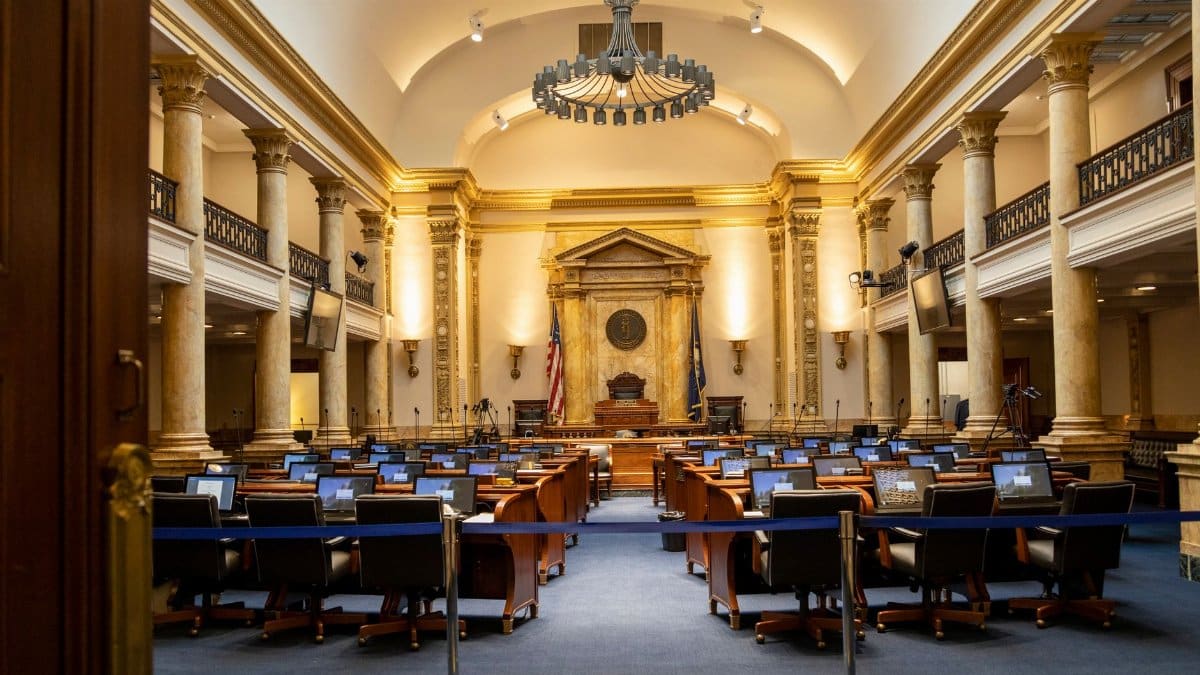
Legislatures do not pause for one empty chair. Committees meet. Bills move. Leadership counts votes with the members who showed up because they still hold office. In a closely divided chamber, one absence can change the margin. In a lopsided chamber, it can still change whether a district’s amendment gets a hearing. The people of Hialeah do not become less subject to state insurance rules because their senator’s office is dark. They become less able to bargain inside the rules.
I have watched local officials describe this kind of gap in plain language. They do not talk about doctrines. They talk about who will return a call when a school district needs a sponsor for a funding line. The lawsuit is an attempt to turn that practical complaint into a legal one. Whether a judge agrees will depend less on sympathy than on text, precedent and the record of what the governor has or has not done since the vacancy opened.
Budgets, insurance and the issues that do not wait

South Florida’s arguments with the state are rarely abstract. Property insurance, condo safety, transportation funding, immigration enforcement and the cost of housing all land on legislative calendars with real dollar signs attached. A senator from District 39 would be expected to know which streets flood, which warehouses employ the night shift and which city is fighting the county over a project. Staff can assemble those facts. Only a member can trade them in a negotiation.
Waiting for the next regular election, if that is the practical effect of inaction, means waiting through votes that will already have happened. That is the injury the plaintiff must make concrete. Courts dislike hypothetical harm. They are more receptive when the plaintiff can point to a session, a deadline or a continued failure to issue a writ. The strength of the case will rise or fall on that record, not on the volume of press statements.
How judges usually approach election calendars
State courts have been asked, in Florida and elsewhere, to hurry elections, to pause them and to untangle botched qualifying periods. Judges tend to say two things at once. Elections are for voters, not for officials who would rather avoid them. And courts should not seize the administrative details of ballot design unless the law leaves them no choice. Ordering a governor to call an election sits near that line. It is more intrusive than dismissing a case, and less intrusive than choosing a winner.
A careful opinion would likely stick to duty and timing. It might set a deadline for a writ rather than dictating every precinct detail. It might leave the supervisor of elections room to run the mechanics. What it would not need to do is referee the coming campaign. The DeSantis special election lawsuit, if it succeeds, would open a contest. It would not decide one.
Party interest without pretending this is only procedure

Anyone who follows Florida politics knows that an open Senate seat is not a neutral object. Parties calculate turnout, special election costs and the risk of a surprise. Governors think about friendly successors and awkward primaries. Those calculations are human. They are not, by themselves, a legal defense. The danger for the public is that strategy gets dressed up as scheduling prudence until the vacancy looks normal.
Readers should be wary of both performances. A lawsuit can be correct on the law and still be useful to one party. A delay can be unlawful and still be explained as caution. The adult question is whether the explanation matches the statute and the calendar. If the seat can be filled, and the law expects it to be filled, then political convenience is a weak answer to people who have had no senator while their neighbors in other districts have had one.
What an order would actually set in motion

A judgment for the voter would not seat anyone the next morning. It would start a sequence that county election offices already know how to run. The governor would issue a writ. Candidates would qualify. Parties might hold primaries. Supervisors would test machines, train poll workers and mail ballots to voters who requested them. Campaigns would rent storefronts in Hialeah and Doral and argue, in two languages, about insurance and schools.
That sequence costs money and time. Special elections are never cheap, and turnout is often lower than in November. Those are reasons to run them cleanly, not reasons to skip them. Low turnout is a problem of persuasion and habit. It is not a finding that the district no longer deserves a member. If a court orders the election, the burden shifts back to candidates and voters, which is where a republic is supposed to put it.
The governor’s answer, still untested in this telling

As of the filing described by the plaintiffs, the core accusation is failure to call the election, not a published manifesto about why the seat should stay empty. DeSantis and his lawyers will have a chance to answer. They may argue that the vacancy timeline differs from the story the complaint tells. They may argue that a proclamation is imminent, which sometimes ends these cases before a judge writes an opinion. They may argue that the court lacks power to command the executive on this point.
A serious reader should wait for that response before treating every allegation as a settled fact. Journalism can report the claim, the district and the relief sought without pretending the docket has already spoken. It should also refuse the habit of treating “soon” as a date. Soon is not a writ. Soon does not book a polling place in Sweetwater or Miami Lakes.
What residents can do while the docket moves

Court cases are slow by neighborhood standards. People still have city halls, county commissioners and members of Congress. They can ask those offices what legislation is moving and which senator from a neighboring district, if any, has been asked to carry local requests in the interim. They can register, check their vote by mail status and talk to neighbors about the seat so that a court ordered calendar, if it comes, does not arrive to an unprepared electorate.
None of that substitutes for a senator. It does keep the district from treating the lawsuit as a spectator sport. The healthiest outcome is boring. A date is set. Candidates qualify. Voters choose. The legal argument then becomes a footnote about a delay that did not harden into a precedent. The worst outcome is a shrug that other vacancies can be parked the same way, until representation depends on whether the governor finds the politics convenient.
A narrow fight with a wide implication

The DeSantis special election lawsuit will be briefed, and perhaps dismissed, settled or won, on a thin set of questions. Was the seat vacant in the way the law recognizes? Has the governor failed to call the election the statute contemplates? Does this voter have the right to ask a court to compel that call? Those questions do not require a theory of the whole governorship. They require a record.
Still, the implication reaches past District 39. If executive delay can outlast a session, then every future vacancy becomes a choice about whose voice can wait. Hialeah, Doral, Sweetwater and Miami Lakes are asking not to be the example. They are asking for a ballot. In a state that prints plenty of them, that request should not sound radical. It should sound like the minimum a district is owed when its seat in the Senate goes empty and the rest of the government keeps moving.