
On a weekday when most people moving through the airport south of Seattle were thinking about boarding passes and tight connections, a father and his daughter were stopped by federal immigration officers. Their lawyer says they were not running from a criminal case. They were traveling to a baptism in Los Angeles, a family religious ceremony that, in ordinary life, would never become news. The Sea-Tac ICE arrests turned that private plan into a public argument about enforcement in a civic space, the weight of an asylum claim, and how quickly a terminal can fill with protest.
A journey meant for a church, not a holding room

Baptism is one of the oldest public acts in Christian life. Families cross cities and sometimes countries for it. Godparents stand up. A child is named into a community. The lawyer representing the pair has described the trip in those terms: a father and daughter headed to Los Angeles for a baptism, not for a court date and not for a meeting with investigators. That detail matters because it frames the arrest as an interruption of ordinary devotion rather than the climax of a criminal pursuit.
Airports already compress emotion. People cry at gates for reasons that have nothing to do with the law. When immigration officers take two travelers out of that flow, the scene carries a different charge. Fellow passengers become witnesses. Staff become bystanders. A sacrament planned for another city becomes, at least in the telling of advocates, the reason two people were in the building at all.
What the lawyer is willing to say

The account now circulating comes first from counsel, not from a full public docket. The lawyer says the father and daughter are seeking asylum and have no criminal record. Those are specific claims, and they should be treated as claims until agencies or courts confirm them. They are also the claims that gave the Sea-Tac ICE arrests their moral outline in local conversation: not a fugitive pair, in this version, but an asylum seeking family on a faith errand.
Lawyers in immigration cases often speak because their clients cannot. Detention limits phone calls. Fear limits candor. A careful reader will notice what is still missing. We do not have, in the public telling available here, a detailed timeline of the stop, the exact legal authority cited at the curb or in the terminal, or a verbatim response from Immigration and Customs Enforcement. That gap is not a reason to invent one. It is a reason to keep the story tethered to what has actually been asserted.
An airport terminal turns into a civic square

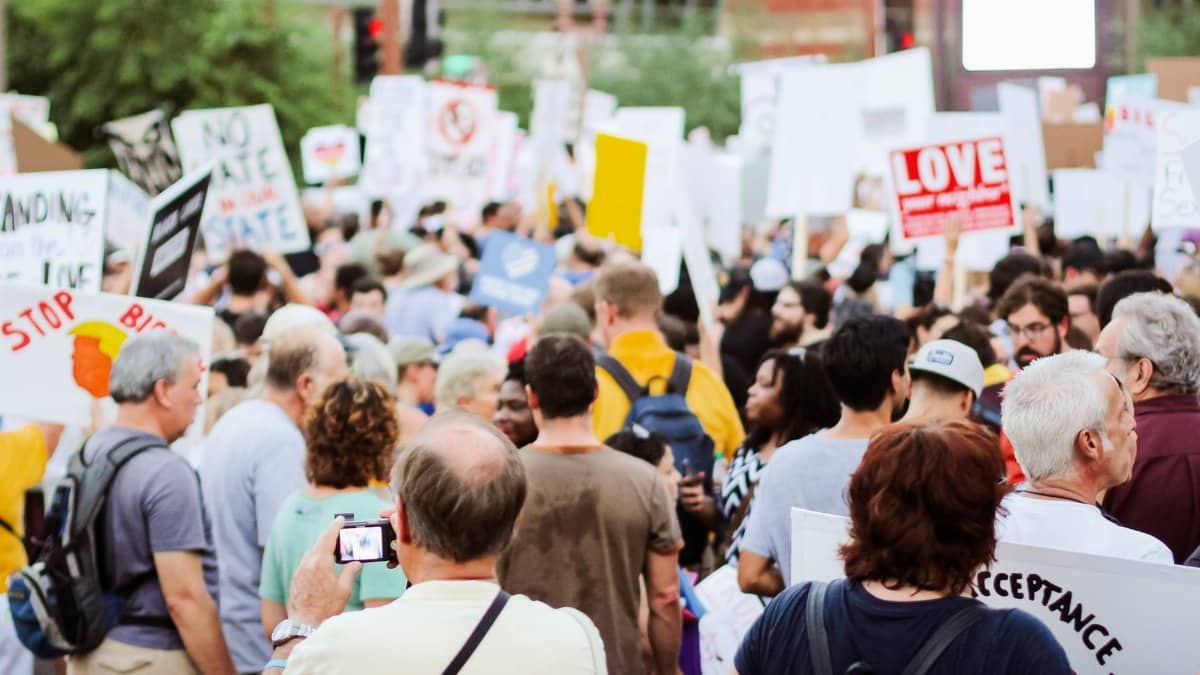
Word of the arrests moved quickly enough to draw demonstrators to the airport. Local news, including the Seattle Times, reported a protest against immigration enforcement there. Airports are awkward places for dissent. Security rules are tight. Roadways are designed for cars, not crowds. Yet terminals have become recurring stages for arguments about who may fly, who may be questioned, and who may be removed from a line that everyone else is allowed to finish.
The protest did not resolve the legal status of the father and daughter. Protests rarely do. What it did was refuse the idea that an arrest inside a public building is a private administrative event. People held signs where other people were trying to make flights. That friction is the point. It forces travelers to decide whether they will look away.
Faith as fact, not decoration

Because the stated destination was a baptism, the story sits in a category that news desks sometimes treat as color. It should not. Religious practice is a fact pattern. It explains timing, tickets, and intent. It also explains why some readers who rarely follow immigration court found themselves paying attention. A baptism is legible across denominations and, for many nonbelievers, still legible as a family promise.
In churches around the region, hospitality is not a slogan. It is a practice of meals, rides, legal referrals, and sitting with people who are afraid. When congregants hear that a baptism trip ended in federal custody, they hear a challenge to that practice. The Sea-Tac ICE arrests became, for some clergy and lay leaders, less a distant policy fight than a question about whether a sacrament can be kept.
Asylum seeking is not a crime in itself

United States law allows people to request asylum. Asking for protection is not, by itself, a criminal offense. That legal truth often gets lost in airport imagery, where uniforms and barriers suggest wrongdoing even when the underlying process is civil. If the lawyer is right that this father and daughter have no criminal record, the enforcement action belongs in the civil immigration system, with its own powers and its own harsh consequences, including detention and the risk of removal.
Civil does not mean gentle. People in immigration detention can be moved far from family and counsel. Children experience that separation in ways adults struggle to measure. A case can be lawful under current rules and still feel, to a watching public, out of proportion to the moment that triggered it. Holding both ideas at once is the work of serious coverage. One does not cancel the other.
How enforcement reaches a departure hall
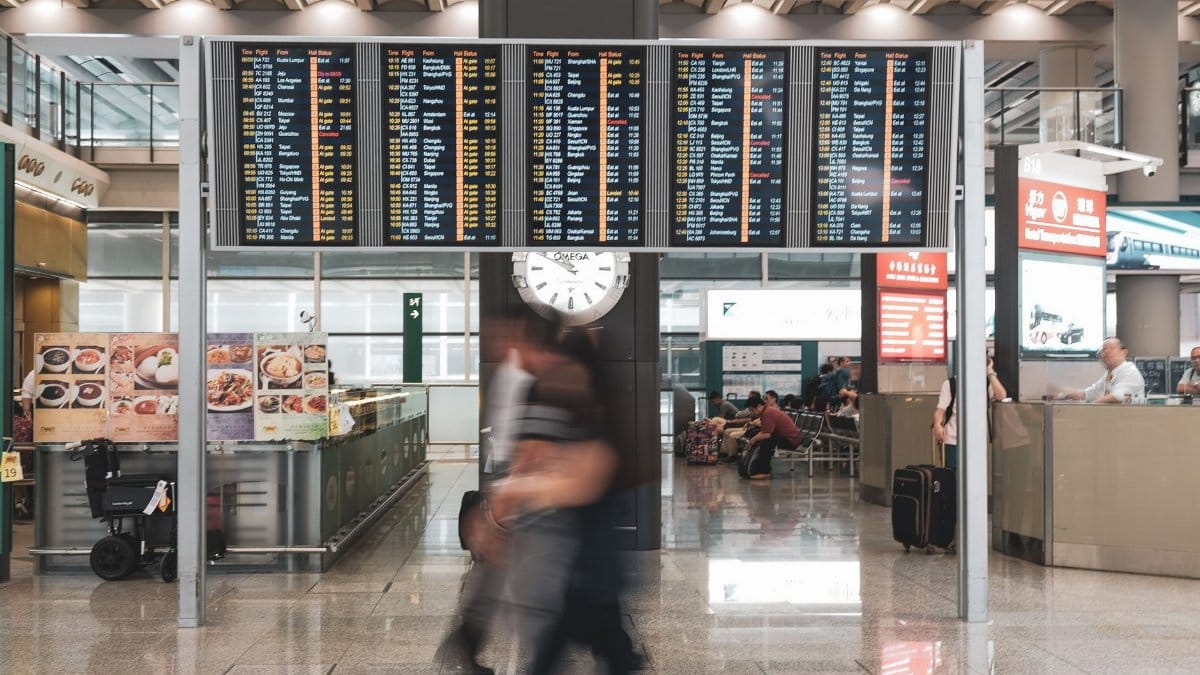
Federal immigration officers have long operated in and around transportation hubs. Databases, prior contacts, and targeted operations can bring agents to a terminal without a random sweep of every traveler. The public often learns the method only after the fact, if at all. In this case, the visible fact is the outcome: a father and daughter did not continue to Los Angeles.
Readers should be wary of filling that silence with rumor. It is possible to describe the setting, the lawyer’s account, and the protest without pretending to know which database query, which prior filing, or which operational plan put officers in their path. Precision is a form of respect for the people involved and for the officers whose names are not in the headline.
The daughter in the story

Any arrest that includes a child asks more of the public than an arrest that does not. Childhood does not erase immigration law. It does change the moral arithmetic. A daughter on the way to a baptism is not an abstraction called a minor alien. She is a person with a family role, a destination, and, if the lawyer is correct, no criminal history of her own to explain the stop.
Journalists have to be careful here. Naming a child, describing her age in detail, or speculating about her fear can do harm that outlasts the news cycle. The responsible path is to keep the focus on the official action, the adult representation, and the public response, while refusing to treat her presence as incidental. She is half of why the Sea-Tac ICE arrests landed with such force.
What protest can and cannot do
Demonstrators at an airport can witness, delay a narrative, and pressure elected officials. They cannot adjudicate an asylum claim. That work belongs to asylum officers, immigration judges, and, in some postures, federal appeals courts. Confusing those roles produces bad activism and bad journalism. A crowd can say this stop offends us. A judge has to say whether the law allows it.
Still, protest has a record in this region of changing what officials are willing to say out loud. Silence from an agency is harder to maintain when cameras are in the arrivals drive. The demonstration did not need a perfect legal theory to matter. It needed enough people to decide that a baptism trip ending in custody was not something to scroll past.
A spiritual question inside a legal one

Spiritual news is sometimes parked far from the courthouse. This story refuses the parking spot. The question underneath the statute is old: what do we owe the stranger, and what do we owe the child who is not a stranger to the adult beside her? Religious traditions answer in different keys. Many of them, including the Christian tradition that practices baptism, treat welcome as a duty rather than a mood.
That duty does not write the Immigration and Nationality Act. Voters and Congress do. But when a sacrament is the reason two people bought tickets, faith communities are not interlopers in the debate. They are part of the fact pattern. The Sea-Tac ICE arrests ask those communities whether their language about family and mercy survives contact with a federal badge.
The local argument, without the caricature
Seattle and its suburbs are often flattened into a single political posture. The reality is more mixed. Some residents want stricter interior enforcement and see airport arrests as proof that the system still functions. Others see the same arrests as theater that punishes people who are trying to comply with a process. Both camps showed up, in one form or another, in the reaction to this case, even if the cameras found the protesters first.
A useful account does not launder either view into sneering. People who fear disorder are not cartoon villains. People who fear a government that seizes parents on the way to church are not naive by definition. The argument is about means, evidence, and proportion. Those are adult subjects. They deserve adult sentences.
What we still do not know

Good reporting leaves a margin for correction. As of the accounts that brought this case to a wide audience, important questions remain open. Has ICE publicly explained the basis for the stop? Where are the father and daughter being held? Has a judge reviewed any request for release? Did they have a pending asylum application, a prior order, or some other status their lawyer has not detailed in public? Until those answers exist in a record, repetition should not harden rumor into fact.
Readers can hold the lawyer’s statement without treating it as a verdict. No criminal record, if true, narrows the story. It does not end it. Asylum cases turn on fear of persecution, credibility, and legal categories that a headline cannot carry. The baptism explains why they were traveling. It does not, by itself, decide whether they will be allowed to stay.
Why the image lingers

Some enforcement actions fade because they look like paperwork. This one lingers because the picture is easy to hold in the mind: a father, a daughter, a flight toward a baptism, a stop, a protest in a place built for departures. The Sea-Tac ICE arrests joined a short list of local scenes that people retell because the setting is familiar. Almost everyone has stood in that airport with a suitcase and a plan.
I keep returning to the mismatch in scale. A sacrament is small on purpose. Water, a name, a promise. Federal custody is large on purpose. Badges, vehicles, databases, distance. When the small thing is what put two people in the path of the large thing, the public is right to ask whether the law was applied with the care a child and a religious obligation deserve. Asking is not the same as knowing. It is the start of covering the story without looking away.