

On a winter afternoon in Madison, Minnesota, a room full of neighbors watched two men race a plate of pale fish that most of the country would not finish. The lutefisk eating contest is not a novelty cooked up for cameras. It is a local defense of a food that smells like a dare and tastes, to the faithful, like Christmas. By the end, Jerry Osteraas, 80 years old, had taken down 11 bowls, kept his title, and left rival Mark Blekestad with a face as streaked as his own.
A small city with a stubborn reputation

Madison calls itself the lutefisk capital of the country, and the claim is not modest. In a town of a few hundred people on the prairie west of Montevideo, identity has to be specific or it disappears into the long grid of county roads. Other places sell lefse, host polka, or hang a Norwegian flag over a cafe window. Madison built a public argument around a single dish: dried cod soaked in lye, rinsed, and boiled until it quivers.
That argument draws people who grew up with the smell in a church kitchen and people who come only to watch someone else suffer. The contest sits inside a larger weekend of food, sales, and reunion. Outsiders treat the fish as a punch line. Residents treat the punch line as a kind of civic property. If the joke is going to be told, they would rather tell it themselves, with bowls, a clock, and a winner.
What the fish is, and why it endures
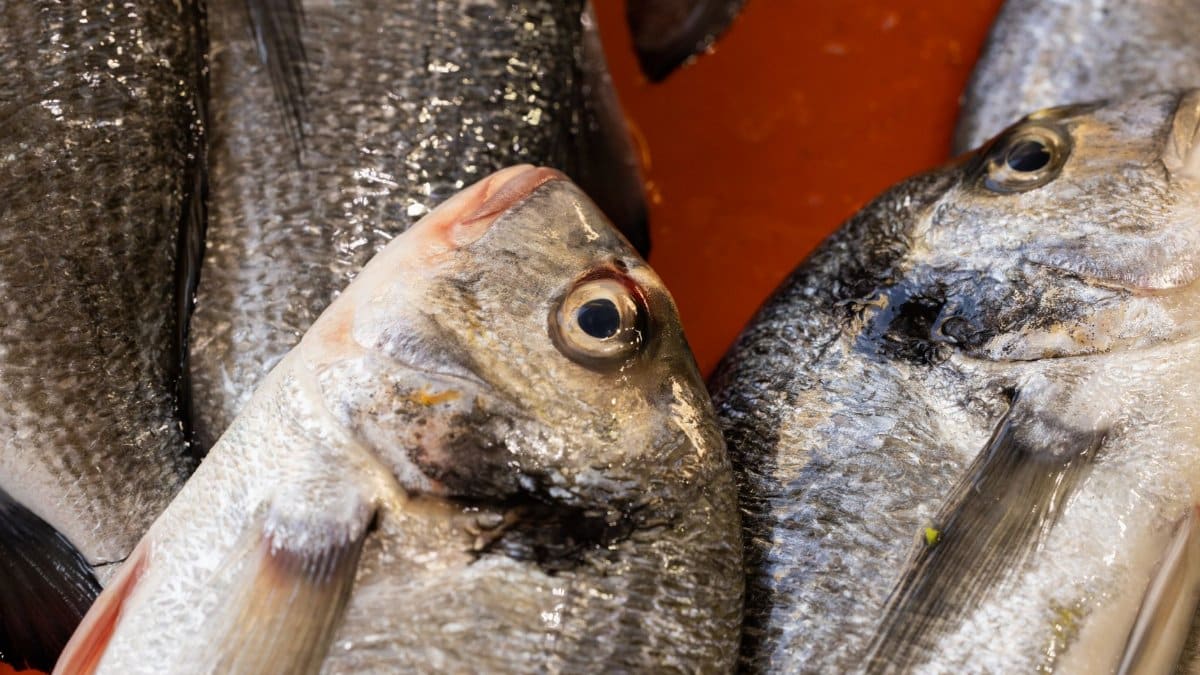
Lutefisk begins as stockfish, cod dried until it is hard as kindling. Lye swells it back toward something edible. Careful rinsing is supposed to leave the caustic bite behind. What remains is mild, slippery, and dependent on butter, salt, cream sauce, or a strong opinion. Families argue about pepper. Churches argue about portions. Almost nobody argues that it is easy to love on first meeting.
The endurance is historical as much as culinary. Scandinavian immigrants carried preserved fish into a climate that punished fresh food in winter. The dish became a marker of origin when English, factory work, and new towns were sanding down older languages. Eating it at a holiday table was a way of saying the crossing had not erased everything. Refusing it, in some households, was a way of saying the next generation had other plans.
How a contest turns custom into spectacle

A holiday plate is private. A lutefisk eating contest is public, timed, and a little cruel in the way all eating contests are cruel. The fish does not crunch. It does not offer the salty reward of a hot dog or the sugar of a pie. Each bowl is weight and texture. Eleven pounds, the figure attached to Osteraas this year, is not a metaphor. It is a quantity a person has to keep swallowing while a room counts.
Rules in these events tend to be plain. Bowls arrive. A start is called. What stays down counts. What comes back does not. Judges watch hands, plates, and the moment a competitor stops reaching. The drama is not athletic grace. It is endurance against a food that resists hurry. Lutefisk slides. It clings to a fork and then abandons it. A face full of chunks is not decoration. It is evidence that speed and dignity have parted company.
Jerry Osteraas at 80

Age is the detail that makes the result travel beyond Lac qui Parle County. An 80 year old man defending a title against a named rival is a better story than a young eater with an iron stomach. Osteraas did not merely enter. He won again, 11 bowls to the field, in the event Madison stages each year as part of its claim on the dish.
Readers outside the Upper Midwest may hear only the oddity. Inside it, the age reads as continuity. The people most likely to know lutefisk are not college students hunting a viral stunt. They are elders who met the fish at funerals, Christmas Eve, and lodge suppers. When one of them wins, the contest stops looking like a gag and starts looking like a lineage with a scoreboard.
None of that erases the physical fact. Eleven bowls is a strain on anyone. Winning at 80 does not make the strain wise. It makes the local choice visible: this town would rather crown a familiar champion than pretend the old food belongs only in a museum case.
The rival across the table
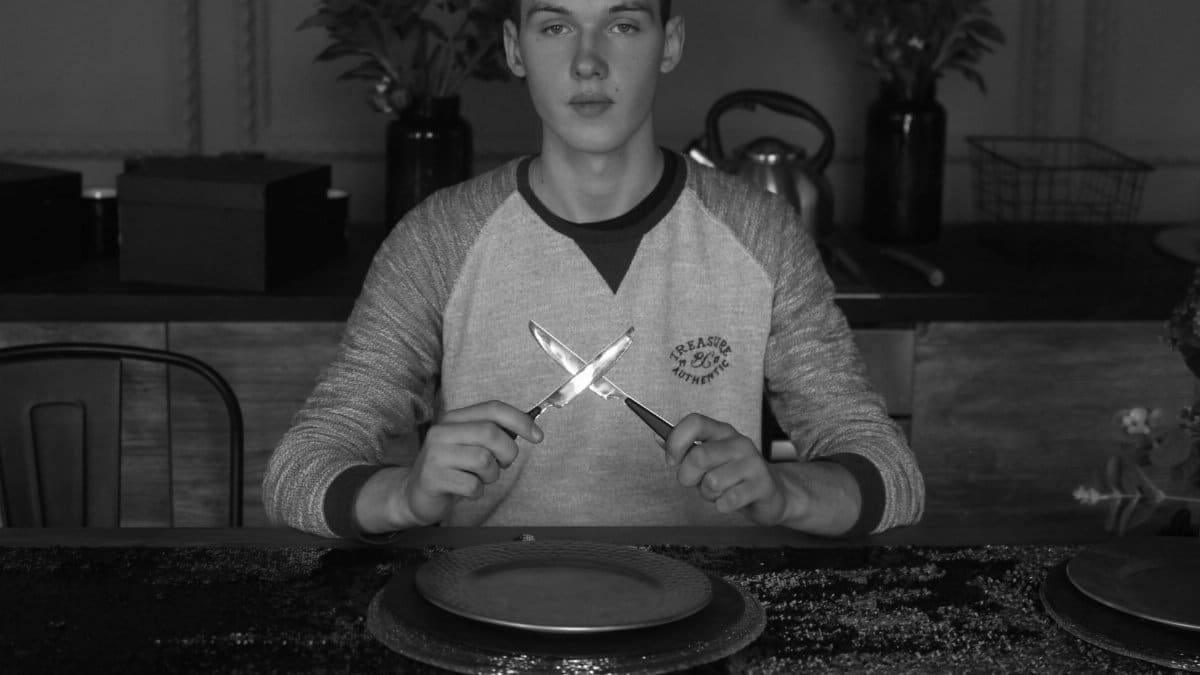
Mark Blekestad’s name matters because a contest without a rival is just a man eating alone. Reports from the event put him in the other chair, close enough that the finish was personal. Two faces ended up mapped with lutefisk. That image, more than any speech, explains the tone of the day. This was not a tasting. It was a race conducted with forks and will.
Rivalry here is neighborly in the rural sense. The people at the table may share a zip code, a church directory, or a long memory of who won last time. Beating someone you will see at the grocery store next week is different from beating a stranger on a television set. The handshake, if it comes, has to last longer than the applause.
The theater of chunks and cheers

Eating contests are visual by nature. A clean plate is boring. A smeared chin is a plot point. Lutefisk, pale and soft, photographs as a mess even when the eater is precise. Chunks on a cheek become the caption. The crowd gets permission to laugh without deciding whether the food itself is a joke.
That laughter can be affectionate or cheap. In Madison it is usually both, braided together. Visitors laugh because the fish looks improbable. Locals laugh because they have heard the same complaint from cousins who left for the Cities and came home only for weddings. The contest lets the town perform its own stereotype before anyone else can sell it back to them.
Church basements and the winter table

Before there was a championship, there were suppers. Lutefisk belongs to a circuit of winter meals in Lutheran halls and family dining rooms across Minnesota, Wisconsin, and the Dakotas. Volunteers boil pots. Someone assigns the butter. Children are encouraged, then excused. A few adults eat with genuine hunger. Others eat with duty, which is its own kind of appetite.
Those rooms are where the spiritual life of the dish, if the word fits, actually lives. Not in doctrine, and not in a slogan about heritage, but in repetition. People show up in the dark months. They sit on folding chairs. They pass plates. The food is a reason to gather when the fields are frozen and the news from elsewhere feels far away. A contest on a festival weekend is louder than a church supper, yet it borrows the same instinct: eat what we have always eaten, and do it where other people can see you.
Pride, embarrassment, and the immigrant menu
Every immigrant kitchen eventually meets a generation that wants distance. Lutefisk has been mocked in print for decades, often by writers who share the surname of the people serving it. The mockery is a form of belonging too. You are allowed to insult the family fish if you had to face it as a child. Outsiders who only know the smell from a caption are on thinner ice.
Madison’s answer has been to enlarge the joke until it becomes an invitation. Come taste it. Come watch someone eat more of it than sense would suggest. Buy a T shirt. Argue about whether the lye years were harder than the sauce years. The lutefisk eating contest turns private ambivalence into a public calendar item. Embarrassment, handled in the open, starts to look like confidence.
What winning actually settles
A title does not prove that lutefisk is delicious. It proves that someone was willing to keep going after pleasure had left the table. Osteraas’s 11 bowls settle a local question for one year: who can bear the most of the town’s signature food under the eyes of the town. Next year the question opens again. Blekestad, or someone younger, or someone who has been waiting in the second row, can try to move the number.
That narrowness is the point. National food media likes redemption arcs, secret ingredients, and chefs who reinvent a peasant dish with a tweezer. Madison offers a champion, a rival, a weight, and a mess on two faces. The story ends when the bowls stop. There is no rebrand. The fish remains what it was in the pot.
Bodies, limits, and the line a crowd ignores

Any eating contest asks a body to ignore the signals that normally end a meal. Lutefisk adds slickness and sheer mass. Eleven pounds is a headline because it sounds impossible and because it was, on this day, possible for one man. It is also a reminder that spectacle has a cost even when everyone is smiling.
Communities that love these events rarely pause for a lecture in the middle of the cheering. They might still ask, on the drive home, whether a title defense at 80 is bravery or a habit that outran caution. Both readings can sit in the same car. The public record of the day is simpler: he finished, he won, the rival did not catch him.
Why the rest of the country keeps looking

Lutefisk is useful to national audiences because it is extreme without being violent. It lets readers feel sophisticated and nostalgic at once. They can recoil from lye cured cod and still admire a small town that refuses to update its myth. The danger is that looking becomes collecting. A contest becomes content. The people in the chairs become characters in someone else’s essay about the heartland.
The corrective is scale. Madison is not performing the Midwest. It is filling a room on a weekend when winter has already started its argument with the light. The winner goes home. The leftover fish has to be dealt with. Someone washes the bowls. The reputation of the town rests on whether they do it again, not on whether a distant reader approves.
After the crown

A champ was crowned, which is the sentence festivals are built to produce. Osteraas leaves with the title he came to defend. Blekestad leaves with a result he can replay all year. The town leaves with proof that its oddest export still has takers, including an elder willing to put eleven pounds of it on the line.
What lingers is less the number than the willingness. In a country that constantly refreshes its appetites, a lutefisk eating contest insists on an old one. It asks a crowd to watch a difficult food be taken seriously, then absurdly, then seriously again. Two faces full of chunks are funny. They are also a record of people who stayed in the chair. In Madison, that is enough to call a year complete.