
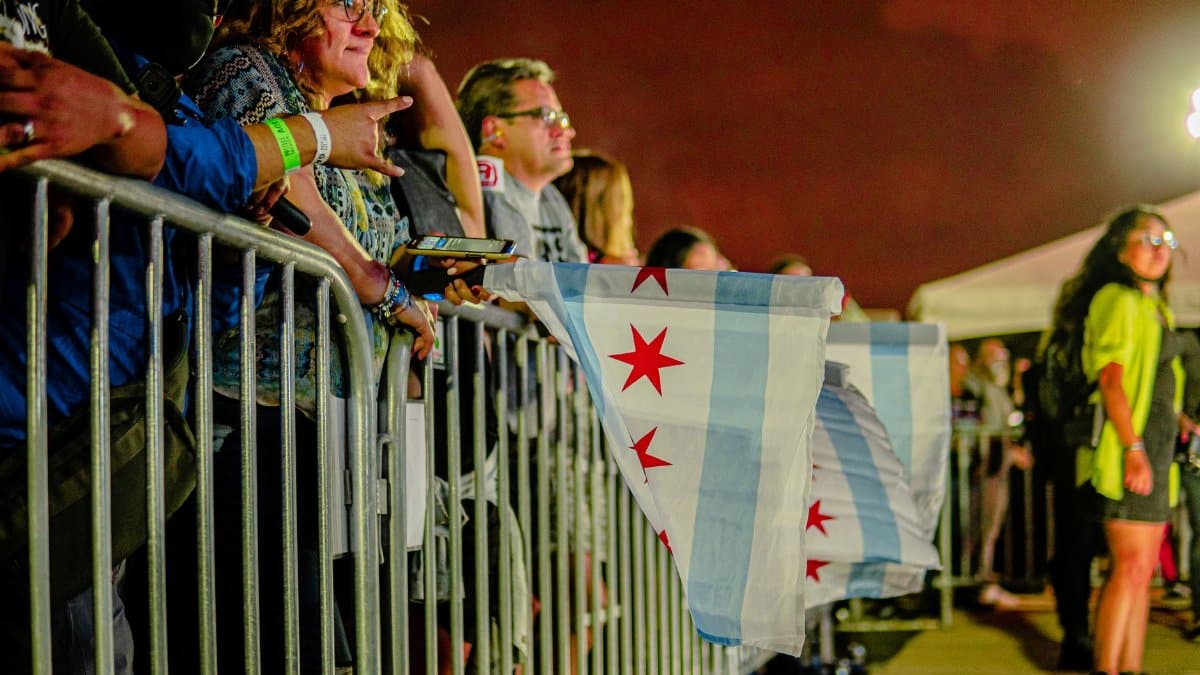
On a cold November evening the trains still empty onto corners where a bass line leaks from a doorway and a small crowd argues about whether to stay for the second set. That argument is the real calendar of Chicago live music. From Nov. 18 to Nov. 24 the city stretches from a basketball arena lit for a legend to a club where the drums sit close enough to change your pulse. The week does not demand one taste. It asks you to notice how a song changes when the ceiling drops and the street noise falls away.
Why this week feels unusually wide

Most weeks in the city reward a single neighborhood and a single habit. You go where your friends already have a table, or you follow one band until the room feels like a second kitchen. This stretch is different because the distances between the headline rooms are also distances between ways of listening. An arena asks for spectacle and memory. A shed by the river asks for volume and a shared chorus. A bottle shaped club on the Near West Side asks for attention so close that a brushed cymbal can feel like a private remark.
That spread matters for listeners who are no longer trying to collect every show in town. Middle aged schedules are full. The useful question is not which bill is trendiest. It is which room will still be in your head on the ride home. A good week of Chicago live music gives you more than one honest answer.
Stevie Wonder at the United Center
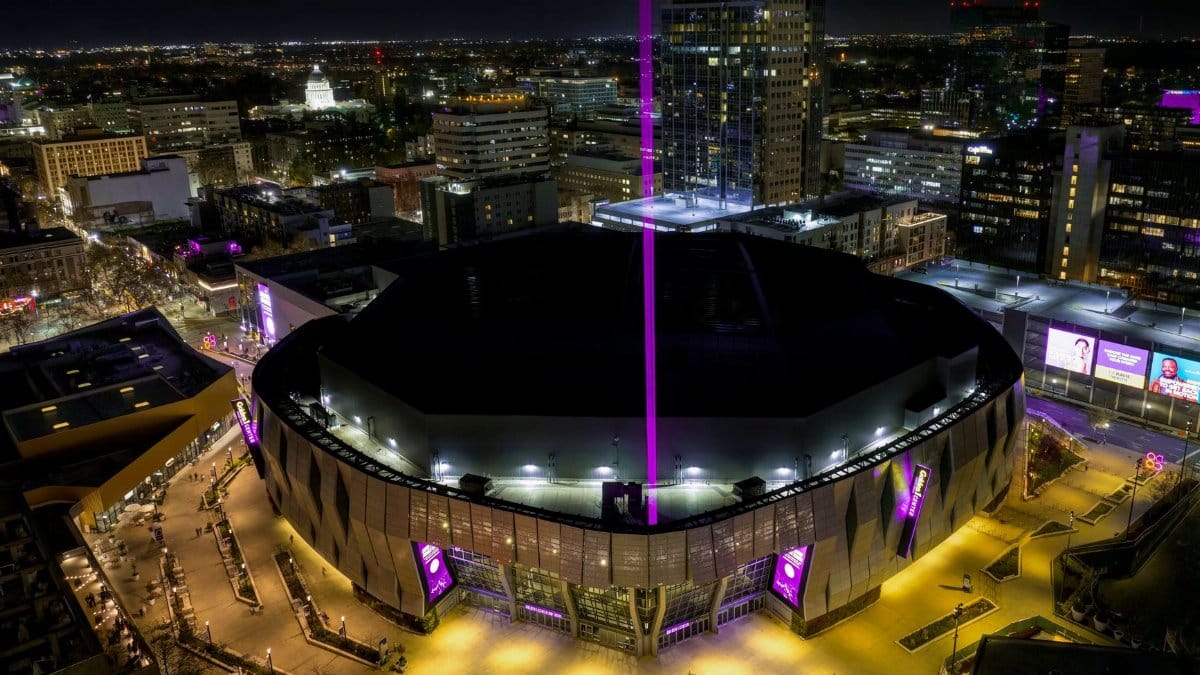
Stevie Wonder at the United Center is the gravitational show of the week, and not only because of the size of the building. Wonder’s catalog is a public language. People who have not bought a ticket in years can still sing the bridges. In a room that large, the risk is distance: a legend becomes a screen, and the night becomes a checklist of hits. The reward, when the band is locked and the house is generous, is something rarer. Thousands of strangers remember the same kitchen, the same car, the same summer, at the same time.
Go for the songs you think you know too well, and then listen for the band. Wonder’s records taught a generation how harmony, humor, and social witness can live in one groove. Live, the test is whether that groove still breathes. Arrive early enough to settle. Arena concerts punish the person who treats the first twenty minutes as optional. If you want one night that explains why Chicago live music still pulls families into the same row, this is the one.
Death Cab for Cutie at the Salt Shed

Death Cab for Cutie at the Salt Shed sits in a different emotional weather. The songs are literate, melancholy, and built for people who once played them in bedrooms and now hear them with a spouse or an old friend at their shoulder. The Salt Shed has become one of the city’s most important midsize rooms, close enough for a chorus to feel communal and large enough that a career band does not look misplaced.
What to listen for is not nostalgia alone. Ben Gibbard’s writing has always been precise about ordinary time: buses, apartments, the moment a relationship changes temperature. In a riverfront shed, those details can either shrink or sharpen. If the mix favors guitars and voice over spectacle, the night will feel like a long letter read aloud. If you loved the records in your twenties, do not go expecting to be that person again. Go to hear which lines have aged into fact.
Makaya McCraven at Empty Bottle

Makaya McCraven at Empty Bottle is the show I would protect on the calendar if I could only keep one. McCraven, a drummer and composer rooted in Chicago, treats the stage as a workshop and a séance at once. His music pulls from jazz, hip hop, and the city’s experimental rooms, then edits the result until a live moment sounds both spontaneous and inevitable. Empty Bottle remains the right scale for that work. You can see the stick on the drumhead. You can hear the room push back.
This is also where the week stops being a tour itinerary and becomes a local argument. McCraven’s projects have helped define how Chicago live music talks to itself: players from different circles, records built from nights rather than from a single frozen take, a crowd that includes musicians off duty. If Wonder is memory at scale and Death Cab is memory at narrative distance, McCraven is memory being made while you stand there.
Three rooms, three kinds of attention
It helps to name the kind of attention each room requires. At the United Center you manage logistics: trains, gates, the long walk from your seat to anything resembling quiet. The music has to clear a high bar of spectacle, and the best moments are the ones that feel intimate anyway. At the Salt Shed you manage sound and company. The room invites singing, and singing can either lift a ballad or sand it down. Choose your spot with care if the lyric matters more to you than the chant.
At Empty Bottle you manage your own restlessness. There is no jumbotron to tell you when the important part starts. The important part may be a pattern that takes four minutes to declare itself. Phone screens are not just rude there. They are a way of leaving. If you want a practical plan, pair the arena night with an early dinner and a clear exit, give the Salt Shed a full evening, and keep the Bottle night free of an early morning.
How to move through the city without rushing the music

Chicago rewards people who treat transit as part of the show. The United Center sits in a pocket of the Near West Side that fills and empties in waves. Leave time, and leave a margin for the fact that everyone else had the same idea. The Salt Shed pulls crowds toward the river and the industrial streets around it. Rideshares stack up. A short walk to a clearer corner is often faster than the pin on your phone. Empty Bottle is a neighborhood club in the old sense: you can be late and still catch the music that matters, but you should not assume the room will hold a space for you out of courtesy.
Dress for standing even if you hope to sit. November wind off the lake and the river is not a metaphor. A coat you can hold, rather than a coat you must pile on a chair, will make you a better neighbor. Eat before the Bottle. Eat whenever you can before an arena. None of this is glamorous advice. It is how a week of shows stays pleasurable after the first encore.
What a listener in midlife can still hear

There is a lazy story about live music after forty. It says you want comfort, assigned seats, and songs you already own. Some of that is true, and none of it is a failing. Comfort is a legitimate reason to buy a ticket. The more interesting truth is that experience changes the ear. You hear arrangement. You hear when a singer is saving breath for a last chorus. You hear when a young band is imitating a record and when a veteran band is finally free of it.
Wonder’s ballads will test whether sweetness can still sound like intelligence. Death Cab will test whether sadness can sound like accuracy rather than costume. McCraven will test whether you can enjoy a piece before you can name its genre. If a friend asks why these three belong in one week, the answer is that they refuse a single definition of a good night. That refusal is healthy. A city with only arena tours, or only experimental clubs, is a city talking to itself in one voice.
Courtesy, phones, and the people beside you
The smallest ethics of a show are also the most visible. Keep the aisle clear when you are not using it. If you must record a song, record one song, then put the phone away. A rectangle of light in the front of a small club is a theft from the person behind you, and it rarely produces a memory better than the one you would have had by watching. At the United Center the problem is scale: a forest of screens can make a human being on stage look like content. You do not have to be severe about this. You do have to decide whose night you are protecting.
Talk during the loud songs if you must, and stop when the room goes quiet. Tip the bartenders who are working a Wednesday as hard as a Saturday. If you are bringing someone who does not follow the artist, tell them one true thing about why you are going, not a lecture. Shared context is a gift. A syllabus is not.
A modest way to build the rest of the week
The three named shows can anchor the calendar without exhausting it. Use the open nights to wander rather than to chase a fictional obligation to see everything. Check the boards at clubs you already trust. Listen to a record from the artist you are about to see, then stop an hour before you leave the house so the live version has room to differ. If a smaller bill appears in a room you can reach on foot, take it. The point of a recommendations week is not completeness. It is a few decisions made with care.
Readers sometimes want a ranking. I will not pretend the arena outranks the club, or the reverse. Rankings flatten the only fact that matters: you are a body in a room, and the room is doing something time cannot do later. A stream will still exist on Nov. 25. The particular cymbal, the particular crack in a voice, the particular stranger who knew the harmony, will not.
Leaving with the song still unfinished
The best exits are unhurried. Let the last chord finish. Let the house lights come up before you turn the night into logistics. On the way out of the United Center you will hear people arguing about which song should have been longer. On the way out of the Salt Shed you will hear people quoting lines they had forgotten they remembered. On the way out of Empty Bottle you may hear almost nothing, because the people who were listening are still inside the pattern.
That is a good week. Not a perfect one, and not a complete map of the city. A good week of Chicago live music is a sequence of rooms that disagree with one another and still belong to the same place. If you can hold Wonder’s joy, Death Cab’s precise ache, and McCraven’s living pulse in the same seven days, you have done more than fill a calendar. You have remembered what a city sounds like when it is awake.