
On a windy afternoon along Atlantic Avenue, a locked glass door still carries a faded open sign and a phone number that rings nowhere. The windows were supposed to advertise flower, vapes, and a welcome mat for weekend crowds leaving the casinos. Instead the space sits dark between a pawn shop and a shuttered cafe. That quiet storefront is one small piece of a larger disappointment: Atlantic City cannabis was sold as a revival strategy, and it has so far produced more empty leases than a new economic engine.
A Shore City Looking for Its Next Bet
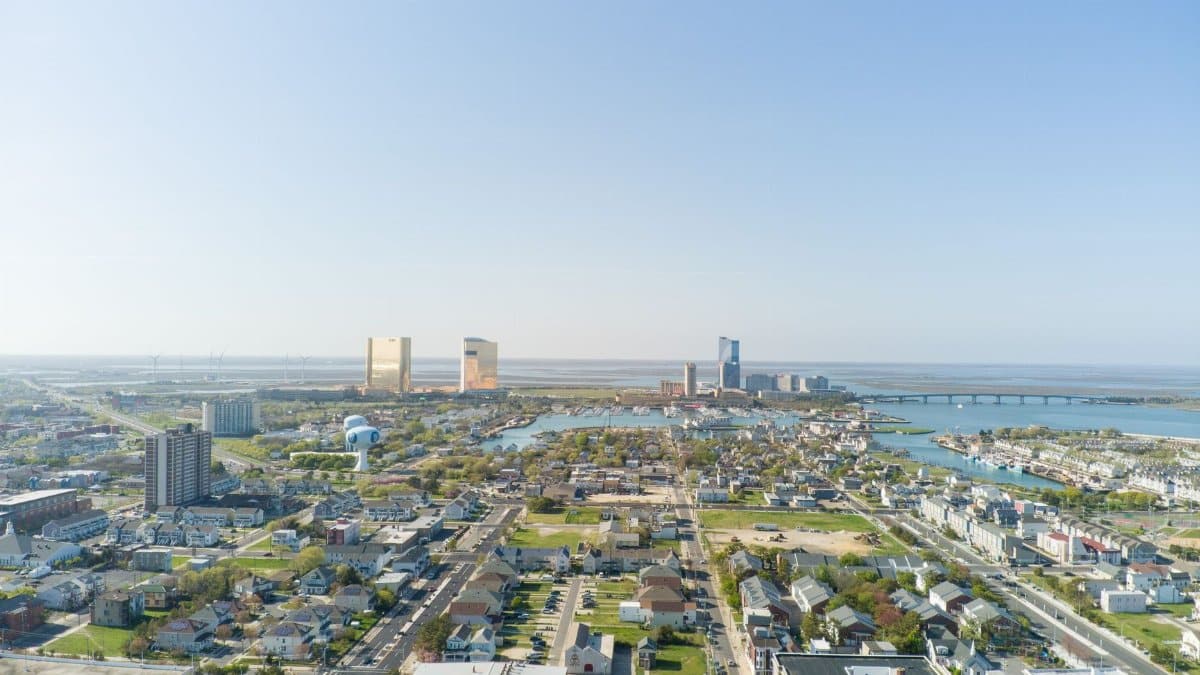
Atlantic City has never been shy about reinvention. The boardwalk, the casinos, the convention pitches, the promises of jobs that would finally stick. When New Jersey opened a legal adult use market, local leaders saw another chance to turn visitors into customers and vacant retail into tax revenue. The idea was simple enough to put on a slide. People already came for gambling, concerts, and the ocean. They might stay for a regulated shop, a lounge, and a purchase they could not make as easily at home.
Investors heard the same story. A tourism city with heavy foot traffic, a brand known far beyond South Jersey, and a product that other towns were still arguing about. On paper, the shore looked like a natural hub for the southern half of the state. On the ground, rent, security, banking limits, and a short high season told a harder story.
What the Licenses Actually Promised

A cannabis license is not a guarantee of customers. It is permission to operate inside a thicket of rules: local approval, state review, camera systems, limited advertising, and a ban on the ordinary banking relationships that other retailers take for granted. Many operators still deal mostly in cash. That raises insurance costs and makes every closing hour a security problem.
Applicants in Atlantic City talked about equity, local hiring, and storefronts that would look nothing like the old unregulated market. Some of that language was sincere. Some of it was what a scoring rubric rewarded. The distance between a winning application and a shop that can pay its landlord is where a lot of these plans died.
Vacancies Where the Lights Were Supposed to Stay On

Walk certain blocks now and the evidence is architectural. Papered windows. Leasing signs taped at eye level. A dispensary that opened with a ribbon and a playlist, then cut hours, then stopped answering the door. Neighbors remember the build out more clearly than the business: contractors, new floors, a bright sign, then silence.
Vacancies are not only a cannabis story in this city. Atlantic City has long struggled to keep street level retail alive outside the casino footprint. A dispensary can look like a solution until the rent comes due in January, when the boardwalk is quiet and the weekend traffic belongs to someone else. Seasonal demand punishes any shop that priced its lease for a July Saturday.
The Customer Who Never Quite Arrived

Tourists are a fickle base. Some will not cross a strange city to buy a product they can get closer to home. Others want a low profile and will not linger on a block that feels unmanaged. Locals, meanwhile, already know the price gaps, the parking headaches, and which shops feel worth the trip. A market can be legal and still fail to become a habit.
Competition from other New Jersey towns made the math worse. Once dispensaries opened in suburbs with easier parking and steadier weekday traffic, the shore lost some of its novelty. Atlantic City cannabis could not live on curiosity alone. It needed repeat buyers, and repeat buyers are ruthless about price, wait times, and whether the staff seems to know the product.
An Office Meant to Keep the Program Clean

Cities that move fast on a new industry often invent a point person. Call the role a coordinator, a regulator, a fixer, or, in the local shorthand, a cannabis czar. The job is to translate state rules into local practice, to tell applicants what the council will tolerate, and to keep the process from looking like a private club.
That job is also where trust either holds or cracks. Applicants want speed. Neighbors want limits. Officials want credit if the storefronts fill and distance if they do not. When one person becomes the gate, every delay starts to look like favoritism, and every approval starts to look like a deal. Perception matters here because the industry still carries the scent of the illegal market it replaced.
A Bribery Charge and the Cloud It Casts

The sharpest turn in the story is legal, not commercial. Prosecutors have brought a bribery charge against the official who shepherded the city’s cannabis portfolio, alleging that access and favorable treatment were for sale. A charge is not a conviction. Court calendars move slowly, and defense lawyers will have their own account of meetings, messages, and money. Still, the accusation lands with special force in a city that has spent decades trying to prove it can run a clean public business.
For operators who followed the written rules, the charge is a kind of tax they did not budget for. Lenders get nervous. Landlords ask new questions. Customers who already felt ambivalent about walking into a dispensary now have a reason to stay home. The market does not wait for a verdict to render one of its own.
Federal Subpoenas and an Old Familiar Chill

Alongside the charge have come FBI subpoenas, the paperwork that tells a city hall the inquiry is no longer local gossip. Subpoenas seek records. They do not, by themselves, map the full shape of a case. They do freeze people. Staff stop speaking casually. Emails get reread. Consultants who were happy to take a fee suddenly remember other clients.
Atlantic City knows this weather. Federal attention has visited the casino era, the redevelopment deals, and more than one political office. Residents can recite the pattern without a law degree: headlines, denials, a long quiet, then either a plea or a case that thins out. The harm is not only to the accused. It is to every legitimate business that has to explain, again, why this city is worth the risk.
Closed Dispensaries and the Story They Tell
A closed shop is a blunt narrator. It says the rent outran the receipts, or the license never converted into a stable supply, or the owners ran out of patience with rules that changed under their feet. Some closures are ordinary business failure. In a young market, ordinary failure is common. What distinguishes this moment is the pileup: empty rooms, a criminal allegation at the center of local oversight, and federal paper moving through the same offices that issued the welcome.
Workers feel that pileup first. Budtenders and managers do not write the zoning memos. They learn the menu, the ID rules, the way to talk to a nervous first time buyer. When a store goes dark, those jobs vanish without a press conference. The promise of local hiring is only as real as the payroll that survives month six.
Faith, Ritual, and a Market That Is Not Only Commerce

Not every customer came looking for a party favor. Some treat the plant as part of a spiritual practice, a way to pray, to sit with grief, or to mark a evening that would otherwise be all noise. That demand rarely shows up in a city’s revenue forecast, and it does not rescue a bad lease. It does explain why the fight over storefronts feels personal to people who never set foot in a casino.
A city that wants this trade has to decide whether it is hosting a vice, a medicine, a sacrament, or a taxable hobby. Atlantic City tried to answer with all of the above. The mix pleased no one completely. Congregations worried about normalization. Patients wanted consistency. Tourists wanted convenience. The spiritual customer, quiet and irregular, was never going to fill a flagship on the avenue.
What the Numbers Cannot Capture

Tax projections love a hub narrative. They assume every visitor spends, every license opens, and every adjacent shop benefits from the spillover. Reality subtracts. Security guards, compliance lawyers, wasted build outs, and months of waiting for a state inspection all come out of the same thin margin. When a location fails, the city does not get the sales tax it modeled, and it inherits another dark window on a block it was trying to revive.
There is also a reputation number that no spreadsheet shows. A visitor who associates the town with a federal inquiry is less likely to treat a new industry as a reason to book a room. That is an unfair burden if the case later narrows. Unfair burdens still move hotel bookings and investor memos.
Neighbors Who Wanted Limits, Not a Scandal

Many residents never asked to be a regional capital of anything. They asked for fewer nuisance complaints, clearer closing times, and a promise that dispensaries would not cluster on the blocks where families already felt overlooked. Those are reasonable civic demands. They become harder to honor when the official process itself is under suspicion.
The scandal narrative can also flatten real disagreements. Some closures reflect community pushback that was always going to shrink the map. Some reflect operators who overpaid for a corner because a consultant said the shore was the next big thing. Sorting those causes requires patience, which is in short supply once the letters FBI appear in a headline.
Lessons Other Towns Are Already Using
Municipalities watching this unfold have a practical syllabus. Do not concentrate discretion in one office without a public log of meetings. Do not treat a tourism brand as a substitute for weekday demand. Do not let application essays outrun proof of capital. And do not assume that legalization ends the old incentives for side deals. A regulated market creates new permissions, and permissions are what people try to buy.
None of that requires cynicism about the plant or about the workers who sell it. It requires the dull machinery of government: minutes, recusals, rotating reviewers, and leases that a modest shop can survive. Glamour was never the missing ingredient.
A Hub That Became a Caution

The early pitch was regional ambition. Be the place South Jersey and weekend travelers think of first. That pitch now reads as a warning label for the next city tempted to brand its way past the basics. Atlantic City cannabis still exists as a legal category, as a handful of surviving businesses, and as a argument in council chambers. It does not exist, yet, as the east coast hub its boosters described.
What remains is a narrower task. Keep the shops that follow the rules open. Let the courts test the bribery allegation without turning every employee into a suspect. Fill the vacancies with tenants who can pay January rent, whether or not they sell anything smokable. A city does not restore trust with another slogan. It restores trust when the lights stay on for reasons that do not require a subpoena to explain.