
On a quiet Saturday when most of the country was thinking about Thanksgiving tables rather than cargo cranes, a small but essential group of dockworkers in Southern California chose a contract over a walkout. The phrase that traveled fastest through shipping offices was simple: port strike averted. It landed just as the old agreement expired, and it kept the gates of the nation’s busiest port complex open for the holiday rush.
A Saturday deal at the edge of the calendar

The International Longshore and Warehouse Union Local 26 represents security officers, often called watchmen, at the ports of Los Angeles and Long Beach. Their contract was set to end on Saturday. Instead of a picket line, the local and the employer side reached a tentative agreement that same day. That timing matters. A lapsed contract does not automatically mean a strike, but it removes the legal and practical cushion that keeps daily work routine. When both sides settle on the day the document expires, they are choosing continuity under pressure.
Tentative is the correct word. Members still have to read the language, debate it, and vote. Until that vote is counted, the peace is provisional. Even so, the immediate threat of a stoppage receded, and terminal operators could plan the next shifts without assuming closed gates.
What watchmen actually do on the docks

Watchmen are easy to overlook beside the giant cranes and the longshore crews who move containers. Their job is access, safety, and order. They check credentials, watch gates, and help keep restricted areas from becoming open ground. A modern container terminal is a workplace full of heavy equipment, hazardous materials, and tight schedules. Security is not a side task. It is part of how cargo moves without injury or theft.
Because their work sits at the entrance to every other job on the dock, a dispute involving watchmen can stall operations even if crane operators are ready to work. That is why a relatively small bargaining unit can hold leverage far beyond its head count. Shippers learned that lesson again this weekend, when a port strike averted outcome depended on people the public rarely sees.
Holiday freight already committed to the water
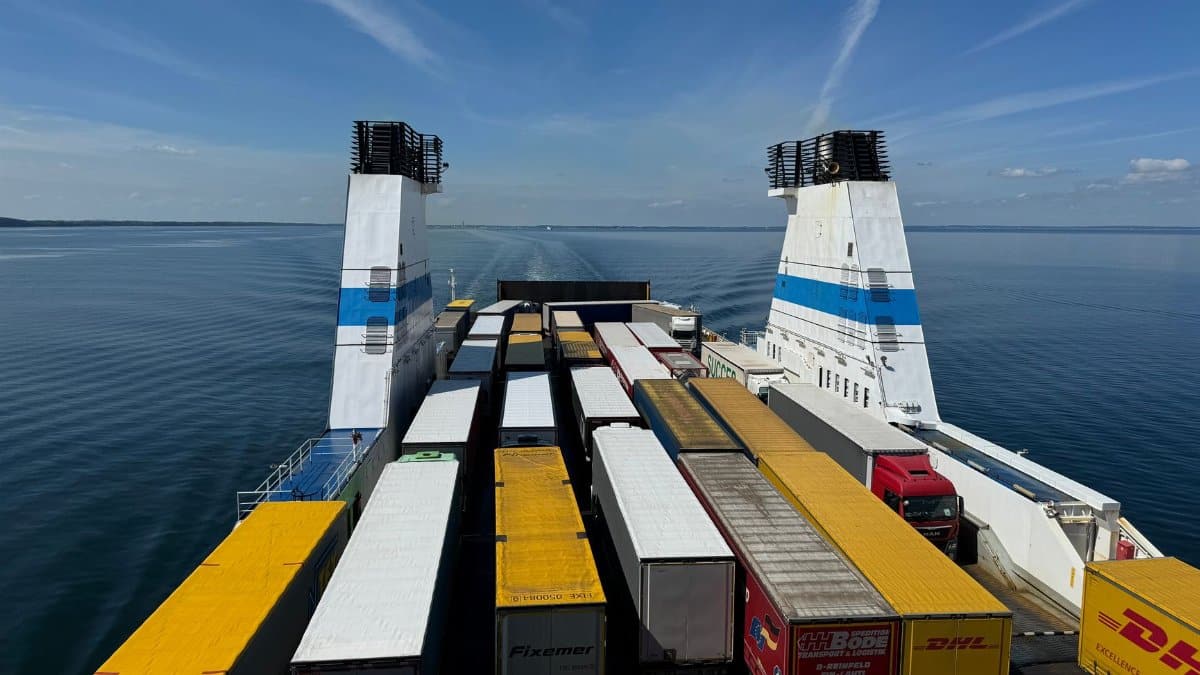
Retailers do not wait until December to move Christmas goods. Much of that freight is booked weeks earlier, loaded in Asia, and timed to arrive on the West Coast before store shelves thin out. Once a vessel is at sea, the destination is not a suggestion. It is a plan with fuel, labor, and truck appointments attached.
A stoppage at Los Angeles and Long Beach would not have erased those ships. It would have parked them, or pushed them toward other gateways that may not have spare berths, spare chassis, or spare drivers. Diversion sounds simple on a map. In practice it means new fees, new delays, and goods that miss the week they were meant to sell. The Saturday settlement did not solve every bottleneck in American logistics. It did remove one sudden break in a season that has little slack.
How a closed gate travels inland
The ports of Los Angeles and Long Beach handle a huge share of the container trade that enters the United States from across the Pacific. What leaves those terminals does not stay in harbor cities. It moves by truck to inland warehouses, by rail to distribution centers in the Midwest and the South, and eventually to stores, factories, and hospitals.
A few days of silence at the gate can echo for weeks. Containers stack up. Appointment systems jam. Truckers lose turns they cannot easily replace. Rail ramps fill. Warehouses that planned a steady drip of arrivals suddenly face a flood, or a drought, depending on which side of the stoppage they sit. Economists like to describe this as a supply chain shock. On the ground it looks like overtime, spoiled delivery promises, and managers rewriting schedules at midnight.
That is the practical meaning of a port strike averted headline. It is not only a labor story. It is a story about whether a toaster, a medication shipment, or a pallet of produce keeps its date with a loading dock hundreds of miles away.
What the public still does not know

Details of the tentative deal were not fully public as the news broke. Wage tables, staffing rules, health coverage, and scheduling language usually stay inside the bargaining room until members see them. That secrecy is ordinary in union negotiations, and it is also a source of anxiety. Workers want to know whether the raise matches the cost of living in Southern California. Employers want predictability on overtime and jurisdiction. Both sides know that a deal announced on Saturday can still fail in a union hall the following week.
Journalists should be careful here. A handshake is not a ratified contract. Celebrating too early has embarrassed ports before. The responsible reading is narrower: the immediate strike threat eased, and the next test is democratic, inside the local.
Memory on the waterfront

West Coast dock labor carries a long memory. The 2002 lockout, later contract fights, and the congestion crisis during the pandemic all left marks on how shippers think about Southern California. Some importers shifted a portion of their cargo to East Coast and Gulf Coast ports, or to routes through Mexico and Canada, precisely because they feared another disruption. Those shifts are incomplete. Geography still favors Los Angeles and Long Beach for a great deal of Asian trade. The ports remain central, which is why labor peace there remains national news.
Watchmen disputes do not always receive the same attention as coastwide longshore contracts negotiated by the larger ILWU leadership. They should. Local agreements can still stop a terminal. The Saturday outcome shows that smaller units, negotiating on their own calendar, can force the industry to pay attention on a holiday weekend.
Retailers, railroads, and a thinner margin for error

For retailers, the question is not whether one union local likes its raise. The question is whether inventory lands before promotional weeks that cannot be moved. For railroads, the question is whether on dock volume stays smooth enough to keep trains full without creating yard congestion. For trucking companies, the question is whether gate hours stay predictable enough that drivers are not burning hours of service while they wait.
None of those parties sat at the Local 26 table, yet all of them had a stake in the result. That imbalance is built into port economics. A contract covering security officers can shape the week for companies that never meet the negotiators. When observers say a port strike averted result calmed the market, they mean those outside parties could stop rewriting contingency plans, at least for now.
Labor power without a shutdown

It is tempting to treat every averted strike as a story of tension dissolved. That misses the point of bargaining. The power to stop work is what gives a union weight at the table. Using that power, or declining to use it after winning acceptable terms, is a strategic choice. Workers who vote yes are not surrendering. They are deciding that the written gains outweigh the cost of a fight. Workers who vote no are saying the offer is not enough, even if a walkout would be hard on the public.
Middle aged readers who remember factory towns know this pattern. Ports are simply the factory towns of global trade, with better views and heavier machinery. The dignity of the job, the danger of the job, and the price of housing near the job all belong in the same sentence. Southern California’s cost of living makes wage talks especially sharp. A contract that looked ample a decade ago can feel thin when rent and groceries have climbed.
What ratification will decide
The next chapter is procedural and human. Union meetings will walk members through the language. Questions will focus on pay progression, health care, staffing levels at the gates, and how disputes get resolved if the new contract frays. Employer representatives will brief terminal managers on what they can promise customers.
If members approve the deal, the ports move into the holiday peak with one less uncertainty. If they reject it, the Saturday relief could evaporate, and the phrase port strike averted would describe a pause rather than a conclusion. Responsible coverage should hold both possibilities without pretending to know the vote in advance.
A gateway that still sets the national tempo

Los Angeles and Long Beach are not just local employers. They are a gateway that sets the tempo for a large share of American imports. When they run smoothly, the rest of the country barely notices. When they stumble, living rooms fill with talk of empty shelves, even when the real effect is delay rather than disappearance. That gap between fear and fact is part of the media’s job to narrow.
The weekend’s news deserves a measured tone. A real risk receded. A real vote remains. Workers whose names will not appear in headlines kept a complex running by reaching terms before the contract died. Shippers gained time. The public gained a reminder that the goods in a shopping cart depend on people standing at a gate in the dark, checking badges, and deciding, together with their employer, whether the next shift begins on time.
The calm that still needs a signature

There is a difference between a crisis avoided and a problem solved. Chassis shortages, rail dwell, driver availability, and the long project of cleaner port equipment will outlast this contract. So will the strategic contest between coasts for cargo. None of that diminishes what happened on Saturday. It places it in scale.
For now, the accurate sentence is the one shipping desks already sent around: a port strike averted at Los Angeles and Long Beach, by a last minute tentative deal covering ILWU Local 26 watchmen, on the day their contract expired, with holiday cargo still moving toward the berths. The rest depends on a vote, a signature, and the ordinary discipline of people who keep a gate.