

In a Miami radio studio, the past does not arrive as nostalgia. It arrives as a stack of stories a child can hold. Ruth Behar has spent a life moving between islands, cities, and disciplines, and she now writes for readers who are still learning what a border feels like. The scholar who once made vulnerability a method in anthropology has turned that same attention toward young people. History, in her hands, is not a lecture. It is a letter, a hospital room, a kitchen, a prayer said in more than one language.
A scholar who refuses the distant voice
Behar built her reputation by arguing that the observer is never invisible. In anthropology, distance was long treated as a kind of virtue. She asked what happens when the writer admits fear, grief, and love. That question did not stay inside the university. It reshaped the way she speaks to children. A young reader, she suggests, can tell when an adult is performing certainty. Her books allow doubt to remain in the room. They trust that a child can sit with complexity if the sentences are clear and the feeling is honest.
The result is not a simplified version of academic work. It is a different ethics of attention. She listens the way a good fieldworker listens, then writes the way a relative might write across a kitchen table. The authority comes from memory tested against other people’s lives, not from a podium.
The accident that became a first book for young readers

Lucky Broken Girl grows from a childhood catastrophe. After her family left Havana and settled in New York, a car crash left her immobilized in a body cast. Months of stillness taught her how a room can become a country. Friends visited. Teachers appeared and disappeared. The body, which children are told will always carry them forward, suddenly refused. Out of that confinement came a story about art, immigrant neighbors, and the slow work of standing again.
What makes the novel endure is its refusal to treat recovery as a neat reward. Healing is clumsy. Pride and shame share a bed. A girl watches the world continue without her and must invent a self that is not only the girl who could run. Readers who have known illness, or who have watched a parent translate fear into competence, recognize the temperature of those pages.
Letters from Cuba and the grammar of exile
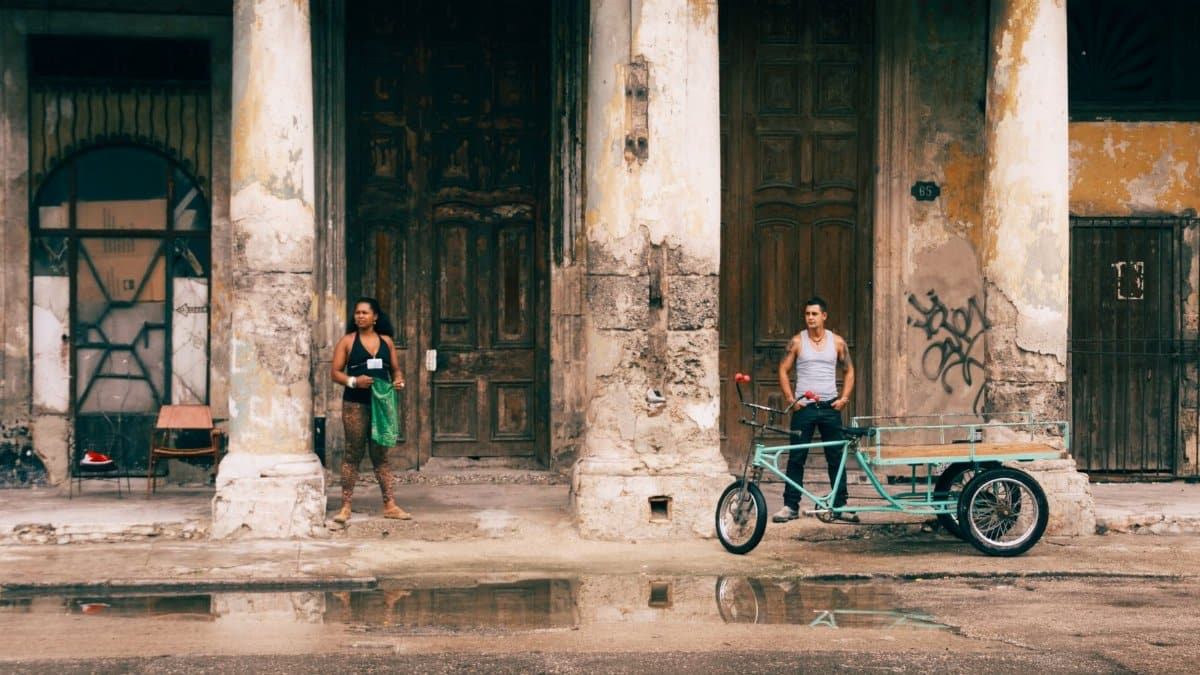
Letters from Cuba reaches further back, into the journey that made a Cuban Jewish family possible. A girl leaves Poland in the years before catastrophe in Europe and writes to the sister she has left behind. The island is not a postcard. It is work, weather, language learned under pressure, and the hope that a family can be reassembled before history closes the door. Behar draws on her grandmother’s passage, and on the letters that kept kinship alive when ships and politics did not.
The form matters. A letter is intimate and incomplete. It cannot know what the reader on the other side will suffer. That gap is the moral center of the book. Children learn that love often travels as paper, and that paper can fail. They also learn that a life can be built in a place one did not choose, among neighbors whose holidays and street songs are new.
Jewish memory without a glass case

Faith in these stories is domestic before it is doctrinal. Candles, names of the dead, a reluctance to waste bread, a grandmother’s caution about the evil eye: these are not decorations. They are ways a scattered people keeps time. Behar does not ask young readers to admire Judaism from a respectful distance. She lets them overhear it. The spiritual life here is argument, gratitude, superstition, and ethics braided together, the way they actually live in families that have moved too often to trust institutions alone.
That approach fits a moment when many adults want children’s books to deliver a lesson and then leave. Her work lingers in ritual rather than slogan. A blessing said over a difficult day can matter as much as a speech about tolerance. Exile becomes a spiritual condition as well as a political one: the sense that home is a practice, repeated until it holds.
Cuba as inheritance, not souvenir
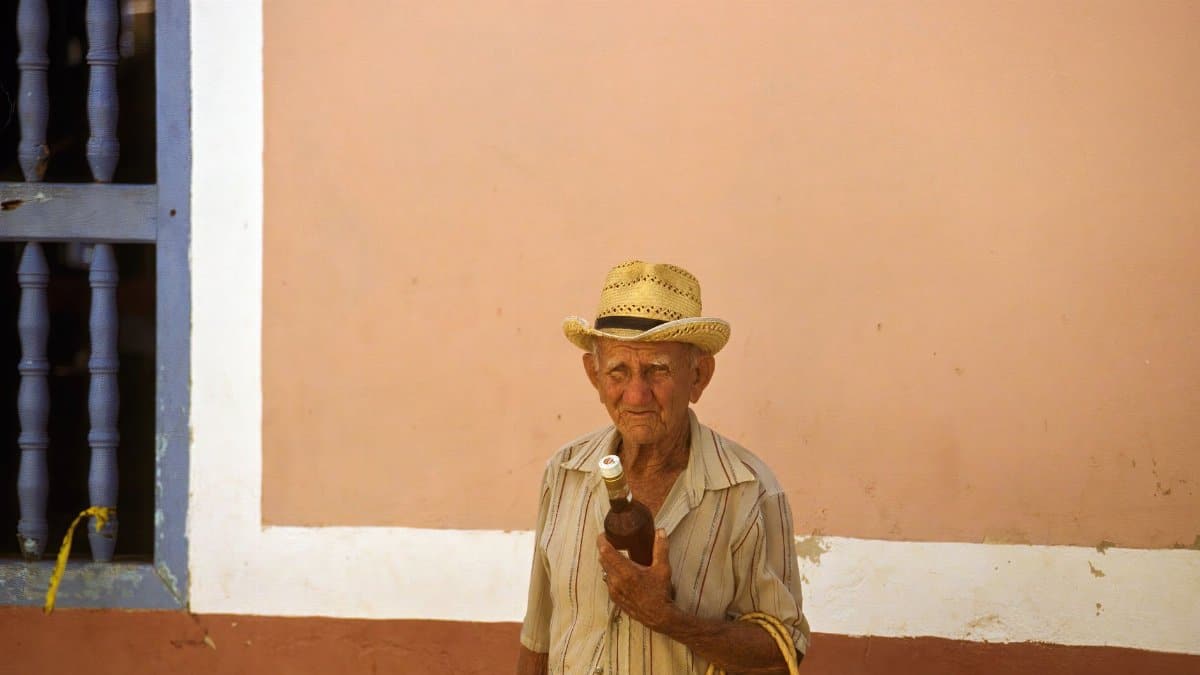
For Cuban families in Florida, the island is never only a chapter in a textbook. It is a relative’s pronunciation, a recipe adjusted to a supermarket, a silence when certain years are mentioned. Behar writes Cuba as a place of Jewish arrival as well as departure, which complicates the simpler stories Americans like to tell. Ashkenazi refugees found work and weather there. Sephardic memory moved through other routes. The island held more than one diaspora at once.
Young readers in Miami, Tampa, or Orlando may feel the nearness of that history in a way a classroom map cannot convey. The books do not recruit them into a single politics. They offer the texture of leaving: what is packed, what is abandoned, what is reinvented so a child will not feel only loss. That texture is a kind of civic education, though it never announces itself as such.
From the vulnerable observer to the vulnerable child

Readers of her anthropological writing will hear an old commitment in a new register. The Vulnerable Observer asked scholars to stop pretending that emotion contaminates knowledge. Lucky Broken Girl and Letters from Cuba ask children to notice the same truth in their own lives. A girl in a cast is an observer who cannot leave the field. A sister waiting for letters is a historian without an archive. Knowledge begins when someone admits, I was afraid, and I still looked.
This is why the books feel adult in their moral weather and childlike in their pace. They do not rush past humiliation. They do not mock longing. They assume that a ten year old already knows something about injustice, even if she lacks the vocabulary adults prefer. Giving her that vocabulary, without stealing the mystery, is the writer’s task.
A picture book made across a generation

The newest turn in this public conversation is a picture book written with her son. Collaboration of that kind is rarer than acknowledgments suggest. A parent who is also a celebrated writer can easily become the only voice in the room. Sharing authorship asks both people to surrender a little vanity. It also admits that childhood is not a resource to be mined by the adult alone. The child, now grown, gets to answer back.
Picture books live or die by what they leave unsaid. A single image can carry the weight that a chapter once carried: a suitcase, a window, a hand that does not let go at the curb. If the longer novels teach readers to stay with a feeling, the shorter form teaches them to recognize it in a glance. Families who read aloud will hear two generations negotiating what is worth keeping.
Language, translation, and the child as interpreter

Immigrant children often become translators before they become confident speakers. They carry notes to landlords. They soften a parent’s anger so a teacher will not take offense. Behar knows that role from life and from fieldwork, where she has moved among Spanish, English, and the intimacies that never fully cross. Her fiction honors the child interpreter without romanticizing the burden. Being needed is not the same as being safe.
There is a spiritual dimension to translation that sermons rarely name. To carry a sentence from one tongue to another is to decide what may be lost. Children make those decisions daily, then go to recess. Books that notice this labor give them dignity. They also warn adults who praise the cute bilingual child and ignore the exhaustion underneath the performance.
What Florida readers are positioned to hear

A station like WLRN sits in a city where Cuban, Jewish, Caribbean, and Latin American histories share bus routes and school cafeterias. An interview there is not a distant book tour stop. It is a conversation among neighbors who may already know the surnames, the bakeries, the arguments about who left and who stayed. When Behar talks about letters and hospital rooms, some listeners will hear their own kitchens.
That proximity changes the stakes of children’s literature. A book read in Iowa about a girl sailing toward Havana is an encounter with elsewhere. The same book read in South Florida may be a mirror, or a dispute. Families will disagree about which details feel true. That disagreement is healthy. Literature that cannot survive an argument with its own community is decoration.
Repair as a practice, not a promise

Across the novels and the newer work with her son, a single motion repeats. Something breaks: a body, a family route, a country, a certainty about God or luck. The story does not pretend the break was a gift in disguise. It asks what can be made beside the break. Art lessons in a sickroom. A shop on an unfamiliar street. A letter that may not arrive. Repair, in this sense, is not the erasure of damage. It is the decision to keep addressing the people one loves, even when the address has changed.
Adults sometimes want children’s stories to end in triumph so bedtime will be easy. Behar offers a sterner kindness. The child is allowed to be lucky and broken in the same afternoon. Faith is allowed to be imperfect. Cuba is allowed to be both refuge and loss. Readers leave not with a moral stamped on the last page, but with the sense that their own unfinished stories are worth telling carefully.
Why these books belong in the present argument

Debates about what children should read often collapse into inventories of permitted identities. Her work slips that trap. It is specific enough to resist being used as a generic lesson in diversity, and open enough that a child with no Cuban grandmother can still feel the ache of waiting for news. The Jewish details are not a sidebar to a universal plot. They are the plot’s way of knowing time. The immigrant details are not a problem the American child solves. They are the American child’s actual life, in millions of households.
Ruth Behar remains, in public, an anthropologist who writes, a Cuban who remembers, a Jew who treats memory as an obligation rather than a brand. The children’s books do not abandon those callings. They translate them into a register where a young person can talk back. That may be the most demanding form of scholarship she has attempted: to be accurate, to be tender, and to stop before the adult explanation smothers the child’s discovery.
The letter still waiting to be answered

Stories of exile can harden into myth, repeated until no one feels them. The discipline in these pages is freshness. A cast itches. A stamp costs something. A son disagrees with his mother about which picture should carry the final silence. None of that is grand, and all of it is how culture actually moves from one generation to the next. Readers who come to Ruth Behar through a radio conversation, a classroom set, or a picture book at bedtime are being invited into that movement.
The invitation is quiet. Write back, it says, even if you do not know whether the letter will land. Keep the name of the place you left, and the name of the place that received you. Tell the truth about what hurt, and do not hurry the ending. In a culture impatient for verdicts, that patience is its own form of faith, and it is the reason her stories for children continue to feel, to adults and to the young alike, like news from a real life.