

On a bright suburban morning in Maple Grove, a line formed outside a store that will not exist next week. Shoppers checked their phones, compared outfit photos, and waited for a door that leads into a brand most of them already know by heart. The Shein Maple Grove popup turned a familiar mall corridor into a temporary stage for a company built on screens, carts, and overnight shipping.
A line where the algorithm meets the carpet
The Shoppes at Arbor Lakes is not usually a place associated with internet spectacle. It is a polished retail campus north of Minneapolis, with parking lots, chain restaurants, and the steady rhythm of weekend errands. Yet about 100 people showed up as the temporary shop opened, a modest crowd by stadium standards and a telling one for a store with a short lease and a long online reputation.
What they wanted was not mystery. Shein already sells to them. The appeal was presence. A dress that looks one way in a product photo can look another way under mall lighting. A blazer that seems tailored on a model can hang differently on a real shoulder. For a generation accused of living entirely online, the first instinct at this opening was remarkably old fashioned. They wanted to see the clothes.
Why a digital giant borrows a storefront
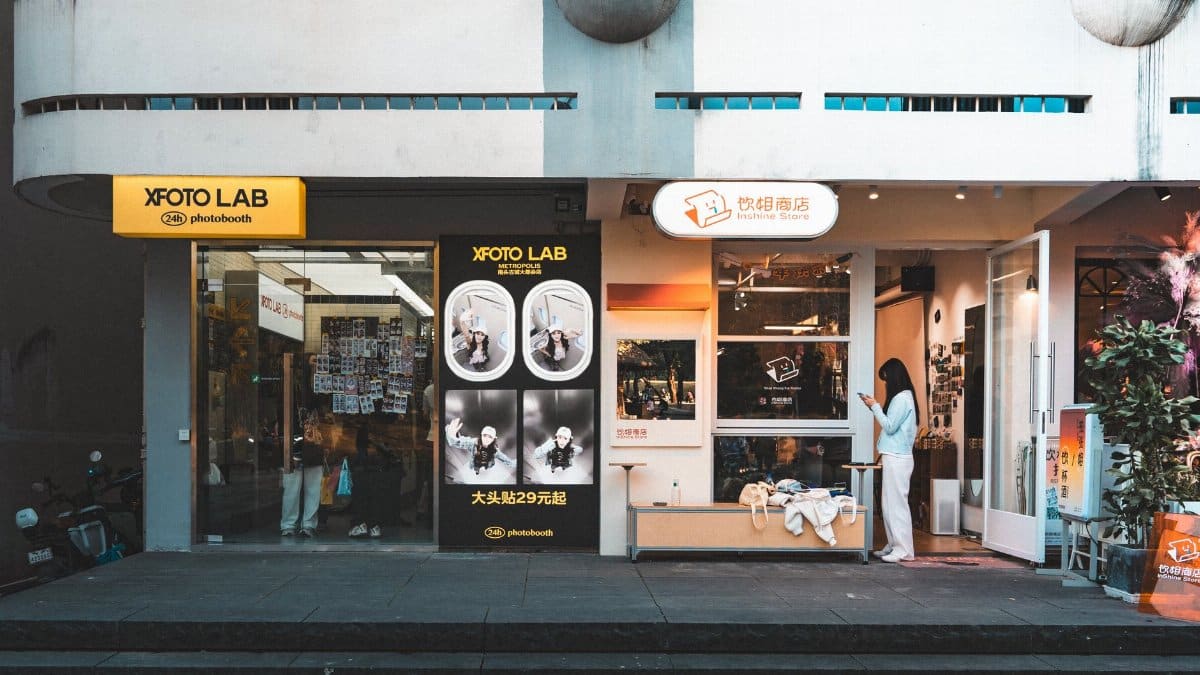
Shein grew by removing the store from the equation. Small batches, relentless newness, and prices that undercut traditional apparel chains made the company a fixture in the feeds of teenagers and young adults. A physical shop reverses part of that logic. Rent, staffing, fixtures, and a closing date all cost money that an app does not obviously require.
The calculation is not about replacing the website. It is about making the website feel less abstract. A popup lets a brand collect something harder to scrape from a click: hesitation at a mirror, a laugh between friends, a decision to put an item back. Those moments do not show up cleanly in a conversion rate. They do show up in whether a shopper trusts the next order.
Retailers have chased that trust for years. Department stores once did it with personal service. Specialty chains did it with playlists and scent. Shein is attempting a compressed version, a few days of touch and talk inside a building designed for longer commitments.
What people came to handle

Fast fashion lives or dies on immediacy. The racks in a temporary shop compress that promise into a walkable space. Shoppers can compare colors without opening twelve tabs. They can check a hem against a shoe they already own. They can decide, in a few minutes, whether a trend still looks like a trend once it leaves the grid.
That is a different pleasure from unboxing. Delivery has its own theater, the rip of a mailer and the small gamble of fit. A store removes the wait and adds an audience. Friends become critics. Strangers become accidental stylists. The purchase, if it happens, feels social rather than solitary.
Parents in the crowd occupied a familiar role. Some were drivers. Some were skeptics with credit cards. A few looked amused by the intensity surrounding garments that cost less than a sit down lunch. Their presence matters. Much of Shein’s cultural power runs through households where adults pay the bills and younger shoppers set the taste.
Gen Z and the return to rooms with other people

For several years, the story of young consumers was told as a retreat. Lockdowns, delivery apps, and social video made it easy to argue that stores had lost their point. Recent foot traffic at malls and specialty shops has complicated that obituary. Young shoppers still buy online. They also want somewhere to go.
The motives are practical and social at once. Returns are easier when a size can be checked first. Photos look better when a friend is holding the phone. A mall visit can be a plan that does not require a ticket or a reservation. In that light, a short run Shein shop is less a contradiction than a concession to how people actually spend Saturdays.
I have watched versions of this shift in other Twin Cities retail corridors. The teenagers are not rejecting their phones. They are using the phones as maps to a physical place, then putting them away long enough to argue about a jacket. The device starts the trip. The room finishes it.
Maple Grove as a measuring stick
Choosing Maple Grove says something about where national brands think attention lives. This is not a downtown flagship with marble floors and a skyline view. It is a prosperous suburb with strong household incomes, a large youth population, and a mall that already knows how to host a crowd. If a concept works here, a company can imagine it working in similar markets across the country.
The Shein Maple Grove popup also tests whether novelty still cuts through in a landscape full of sales and seasonal events. A closing date creates urgency without a permanent sign on the highway. Shoppers know the racks will vanish. That knowledge can move a maybe into a yes, which is the oldest trick in temporary retail and still an effective one.
Local stores feel the side effects. A popup can pull people who then wander into neighboring shops, or it can siphon a Saturday that might have gone to a Minnesota based retailer. Mall operators tend to welcome the traffic and worry later about what a revolving door of viral brands does to tenant mix. Both reactions can be true in the same afternoon.
Price, volume, and the fitting room conscience
No honest account of Shein can stop at the line outside the door. The company’s model depends on enormous volume and very low prices. Critics have raised persistent concerns about labor conditions in supplier factories, the environmental cost of disposable clothing, and designs that smaller creators say were copied. Those debates do not pause because a mall in Minnesota has a new tenant for a few days.
Shoppers are not unaware. Conversations in fitting rooms now include questions that a price tag cannot answer. Who made this? How long will it last? Is the thrill of a new top worth the knowledge that it may be worn twice and forgotten? Some buyers settle those questions by purchasing less. Others separate the moral argument from the afternoon they already planned. A journalist can record both responses without pretending they are equal in consequence.
The popup makes the tension visible. Online, a cart is private. In a store, the volume of merchandise is harder to ignore. Racks imply a system. A system implies workers, ships, warehouses, and waste. Standing among the garments does not resolve the ethics. It does make abstraction more difficult.
What a short lease reveals about longer retail bets

Permanent stores demand a thesis. A brand must believe that a neighborhood will return, that staffing can be sustained, that inventory will not languish. A popup demands a weaker promise. It says, come now. It does not say, we will be here in November.
That weakness is also a form of research. If the Shein Maple Grove popup draws steady traffic through its final day, executives can argue that physical retail is a marketing channel worth repeating. If the energy fades after opening morning, the lesson is cheaper than a ten year lease. Either result is information, which is part of what these shops are built to collect.
Traditional apparel chains learned related lessons the hard way. Some expanded square footage just as customers learned to browse on phones. Others cut stores so aggressively that they lost the places where people still like to wander. Shein, arriving from the opposite direction, is trying to borrow the wander without inheriting the full cost.
The social life of a temporary shop

Watch a popup long enough and the merchandise becomes only half the story. The other half is choreography. Friends meet at a fountain. A group splits up and reconvenes with opinions. Someone films a try on for people who are not in Minnesota at all. The store functions as a set, and the mall functions as a lobby.
This is why attendance figures, including that opening crowd of about 100, only hint at impact. A single visitor may post images seen by hundreds of classmates. A parent may mention the shop in a group text that sends three more cars toward Arbor Lakes. Physical retail has always had this multiplier. Social platforms made it measurable and, for brands, irresistible.
There is a quieter version too. Not every shopper is performing. Some are simply cold, or early, or killing time before a movie. A retail story that includes only the enthusiasts misses the ordinary traffic that keeps malls alive. The Shein experiment needs both the spectacle and the errand.
Labor on the sales floor

Behind the racks are workers who did not design the global supply chain and still have to manage its local expression. A temporary store means temporary jobs, quick training, and a crush of questions about sizes, returns, and whether an item can be held. Those tasks are familiar to anyone who has worked a holiday weekend. They are no less real for being brief.
Fair scheduling, clear pay, and basic respect ought to be the minimum, even when a brand is in town for days rather than years. Shoppers rarely see the closing shift, when fixtures come down and the corridor returns to its usual tenants. If physical retail is having a modest revival, the people folding the clothes deserve to be part of the accounting, not a footnote to youth culture.
A Sunday horizon

The shop runs through Sunday. After that, the address goes back to whatever the mall planned next, and Shein returns to the form that made it huge. The clothes people bought will enter closets, group photos, and, in some cases, donation bins with uncomfortable speed. The photos of the line will age even faster.
What may last is the evidence that young shoppers still grant attention to a room. They will travel for a brand they could have opened in bed. They will wait. They will touch. They will ask a friend whether something works. None of that cancels the serious questions attached to ultra cheap apparel. It does complicate the claim that stores are finished.
Maple Grove offered a small, well lit proof. A company born in the feed asked for a few days of carpet and fluorescent calm, and people came. The Shein Maple Grove popup will be gone soon enough. The habit it tried to tap, the desire to shop among other people, is older than the app and not yet ready to retire.