
In a Chicago federal courtroom this month, a request that might have slowed a contentious prosecution instead ran into a flat no. Justice Department lawyers had asked the judge to appoint a special mediator before a hearing set for December 2. The judge refused. That refusal keeps the questioning of prosecutors on the calendar and leaves the court, not an outside figure, in charge of a dispute that has drawn unusual public attention. Anyone tracking the Broadview Six case will recognize the moment for what it is: not a verdict on guilt, but a choice about process at a time when process itself has become the fight.
A short order with a long shadow

Federal judges issue procedural rulings every week that never travel beyond the lawyers who argued them. This one is different because of what it unlocks. By rejecting the bid for a special mediator, the court declined to insert a third party between the prosecution and the defense at the very moment when prosecutors themselves may have to answer questions under oath. The hearing remains set for December 2 in Chicago. The people who will walk into that room now know that the judge, not a designated outsider, will decide how far the questioning goes and which objections hold.
Orders of this kind rarely announce a winner. They announce a method. Here the method is ordinary adversarial litigation, conducted in open court, with the usual tools of examination, cross examination, and judicial supervision. For a public that has grown used to sealed filings and delayed calendars, the plainness of that method is part of the news.
What the government wanted and did not get
A special mediator, in the sense urged by the Justice Department, would have been an outside professional asked to help the parties narrow a fight before the judge took testimony. Mediators listen, test positions, and look for agreements that save time. They do not replace the court. They do not decide guilt. In many civil cases they are routine. In a criminal matter, especially one already marked for a high profile hearing, the request carries a different weight.
Prosecutors often argue that an outside facilitator can keep a hearing from sprawling. They may say that sensitive investigative details need a calmer room before they are aired. Defense lawyers often answer that calm can become concealment, and that facts about how a case was built belong in the record a judge controls. The denial suggests the court was not persuaded that the dispute was too tangled, too delicate, or too likely to collapse without help from beyond the bench.
Readers should not treat that suggestion as a finding of misconduct. A judge can believe the government is acting in good faith and still decide that the courtroom is the right place for the next round of questions. The denial is a judgment about tools, not a speech about motive.
Why mediators appear in criminal fights at all

Most people meet the word mediator in divorce court, in a labor dispute, or in a lawsuit over a contract. Criminal cases are built on a different promise: the state must prove its charges, the accused may remain silent, and a judge or jury decides. Still, pieces of criminal litigation look a lot like civil skirmishes. Fights over discovery, over the scope of a hearing, over whether certain testimony is relevant, can consume months. Lawyers on both sides sometimes ask for help narrowing those fights so the main event can proceed.
The risk is real on both sides. An outside mediator can save a crowded docket from a hearing that lasts longer than it should. An outside mediator can also blur responsibility. If an agreement is reached in a private room, the public may never see which concessions were made or why. Judges who care about open courts tend to be cautious about farming out the hard parts, even when both sides, or only one side, say it would be efficient.
That caution is not hostility to settlement. Plea discussions and narrowing stipulations happen every day. The question is who supervises them when the subject is the conduct of prosecutors and the shape of a hearing the public has been told to watch.
The December hearing and the prosecutors on the stand
The immediate consequence is calendar, not climax. Prosecutors are now expected to testify at the December 2 hearing. Testimony from government lawyers is uncommon but not unheard of when a court needs facts about how evidence was gathered, how decisions were made, or whether a prior representation to the court was complete. Putting a prosecutor in the witness chair changes the temperature of a room. The person who usually asks the questions must answer them. Colleagues who usually sit at the same table must decide who will examine and who will defend.
None of that proves that the testimony will be explosive. Hearings disappoint spectators as often as they reward them. A lawyer may confirm a timeline, identify a memo, and step down. Or a lawyer may be pressed on inconsistencies that matter to a motion still pending. The point of the judge’s denial is that those possibilities will be tested in court, on the date already set, rather than filtered first through a mediator’s private conversations.
For the Broadview Six case, that sequencing matters. Delay is not neutral when six people are living under charges, when lawyers are preparing witnesses, and when a city is trying to understand what the prosecution claims and what the defense disputes. A mediator might have bought time. The court chose speed of a particular kind: not a rushed trial, but a refusal to add another layer before testimony the judge already planned to hear.
How a judge keeps the record clean
Once prosecutors take the stand, the ordinary rules do the work a mediator might have been asked to do in softer form. The judge decides relevance. The judge decides whether a question seeks privileged material. The judge decides whether a witness may consult notes, whether a sidebar is needed, and whether an answer must be given in open court or under a narrower protective arrangement. Those are not glamorous powers. They are the reason the public can later read a transcript and know what was asked.
A special mediator would not have erased those powers. The worry, from the court’s perspective, may simply have been duplication. Two processes running at once, one private and one public, can produce mismatched accounts of what was agreed. A single process is slower in the moment and clearer afterward. Clarity is a judicial value even when it frustrates the side that wanted a buffer.
I have sat through enough routine hearings to know that clarity is rarely cinematic. It looks like a judge saying sustained, a lawyer rephrasing, a clerk marking an exhibit. That plainness is easy to mock and hard to replace. When the alternative is an outside facilitator with no duty to publish a word, plainness starts to look like a public good.
The six people the caption names

Procedure is not abstract to the people charged. A denied request for a mediator does not shorten a possible sentence and does not erase a count in an indictment. It does tell six defendants, and the lawyers who represent them, that the next important facts will be developed in a hearing they can attend, challenge, and later cite. That is a modest promise. In a system where so much happens in emails between counsel, modest promises about open testimony are worth stating aloud.
It also tells them what the denial does not do. It does not decide whether the government’s evidence will hold. It does not decide whether any motion to limit testimony will succeed on December 2. It does not tell the public who is right about the underlying accusations. Anyone who treats a scheduling order as a moral verdict is reading a genre the court did not write.
Families and coworkers living with a case like this often experience the calendar as the real antagonist. Dates move. Hearings are reset. A denial that keeps a date can feel, oddly, like relief, even to people who expect the testimony to be hard. Waiting without a plan is its own penalty. A plan, even a stern one, lets people arrange work, travel, and the simple fact of being present.
Chicago, a crowded docket, and a watchful city
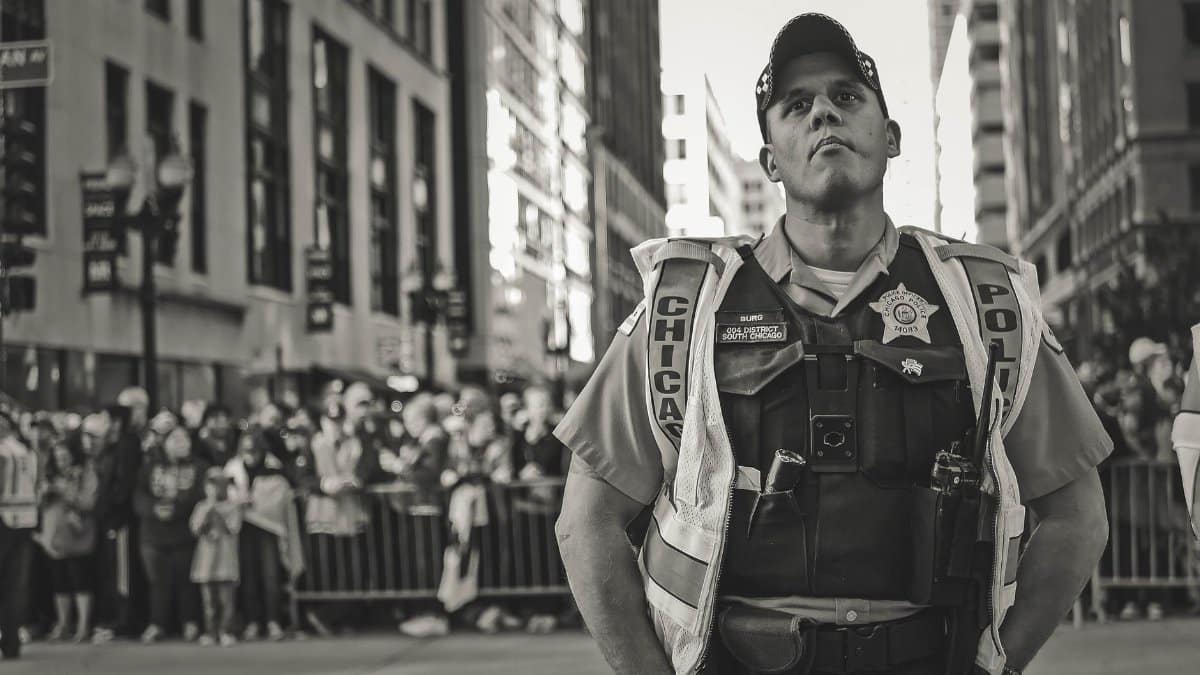
Chicago’s federal court carries a heavy mix of cases, from fraud and guns to disputes that touch immigration enforcement and local protest. Whatever brought these six defendants into that building, the building itself is used to spectacle and to boredom in the same week. A high stakes hearing can fill a gallery in the morning and empty it by the afternoon recess. Reporters will look for a sentence they can carry back to a newsroom. The more durable story may be the one in the minute entries: request made, request denied, hearing to proceed.
Local readers have reason to care beyond curiosity. When federal prosecutors ask to be questioned, the answers can illuminate how a case was assembled in this district, which agencies contributed, and how charging decisions were explained to the court. Those answers, if they come, will not belong only to the parties. They become part of the way the city understands federal power exercised in its name. A mediator might have narrowed that public lesson. The judge chose not to narrow it in advance.
Trust, patience, and the moral weather around a case

Courts ask for a kind of civic patience that does not come naturally. People want to know, quickly, whether a prosecution is fair. They want a face, a quote, a winner. The Broadview Six case, at this stage, offers a thinner diet: a rejected request, a date, and a promise that prosecutors may have to speak for themselves. That diet is unsatisfying. It is also closer to how justice usually moves than the version in which every filing is a revelation.
There is a moral question hiding in the procedure, and it is not resolved by calling one side righteous. The question is whether the state, when it accuses, will submit its own lawyers to the same disciplined inquiry it asks of others. A hearing is not a confession and not a cleansing ritual. It is a place where claims meet resistance under rules both sides can see. Communities that care about fairness, including congregations and neighborhood groups that have followed this matter from a distance, often say they want exactly that: not a spectacle, a record.
Patience is not passivity. It is the decision to wait for testimony rather than to treat a leaked theory as a verdict. The court’s refusal to appoint a mediator makes that wait shorter in one respect and more demanding in another. There will be less private sorting and more public questioning. People who show up, in person or by reading the transcript later, will have to do the work of distinguishing heat from proof.
What the denial does not settle

It is worth listing the open questions without pretending they have answers. The court has not said how long the December 2 hearing will last. It has not said whether every prosecutor the defense hopes to call will in fact be called. It has not said whether parts of the testimony will be narrowed to protect an ongoing investigation, a privilege, or the safety of a witness. Those choices remain with the judge, to be made on the papers already filed and on the arguments still to come.
The government can ask again if circumstances change, though a fresh request would need a fresh reason. The defense can ask the court to compel answers the prosecution would rather not give. Either side can seek a delay if a witness is unavailable or if a late filing changes the map. Denial of a mediator is not a lock on the calendar. It is a refusal to outsource the next argument.
Appeals are unlikely to turn on this kind of case management, at least not immediately. Appellate courts are reluctant to second guess a trial judge’s handling of a hearing before the hearing occurs. That practical reality is why the December date matters so much. What is said there, and what the judge allows to be said, will shape whatever record a higher court might someday review.
How to read the next two weeks
Between now and December 2, the useful reading is not prediction. It is preparation. Watch for any order that sets time limits, identifies topics, or resolves whether certain documents must be produced before prosecutors testify. Watch for whether the parties file a joint statement of issues or continue to disagree in separate briefs. Watch for whether the hearing remains open to the public in full. Those documents, more than courthouse rumors, will tell you what the judge thinks the day is for.
Avoid the temptation to treat silence as strategy you can decode. Lawyers go quiet before a hearing because they are writing outlines, not because they have agreed to a secret ending. The Justice Department lost a procedural ask. It did not lose the case. The defense won a forum. It did not win an acquittal. Holding both thoughts at once is the adult way to follow a prosecution that has already generated more heat than most dockets ever see.
A hearing, not a parable
There will be pressure, once testimony starts, to turn the Broadview Six case into a parable about federal power, about protest, about Chicago, about trust in prosecutors. Some of that pressure is fair. Cases tried in a city’s federal court always carry meanings larger than the caption. But parables flatten. They pick a hero before the exhibits are marked. The judge’s denial of a special mediator is a smaller and sturdier fact. It says the court will hear the next chapter itself.
That is the fact worth carrying out of November. A request for outside help was made. It was refused. Prosecutors are set to testify in Chicago on December 2. Six defendants will meet that date with their lawyers, their families, and an unfinished argument about what the government can prove and how it built the proof. The rest is still testimony, still objection, still a judge deciding in real time. Anyone who wants a verdict will have to wait. Anyone who wants to understand the Broadview Six case as it actually stands can start with the simpler sentence: the mediator will not be coming, and the hearing will.