
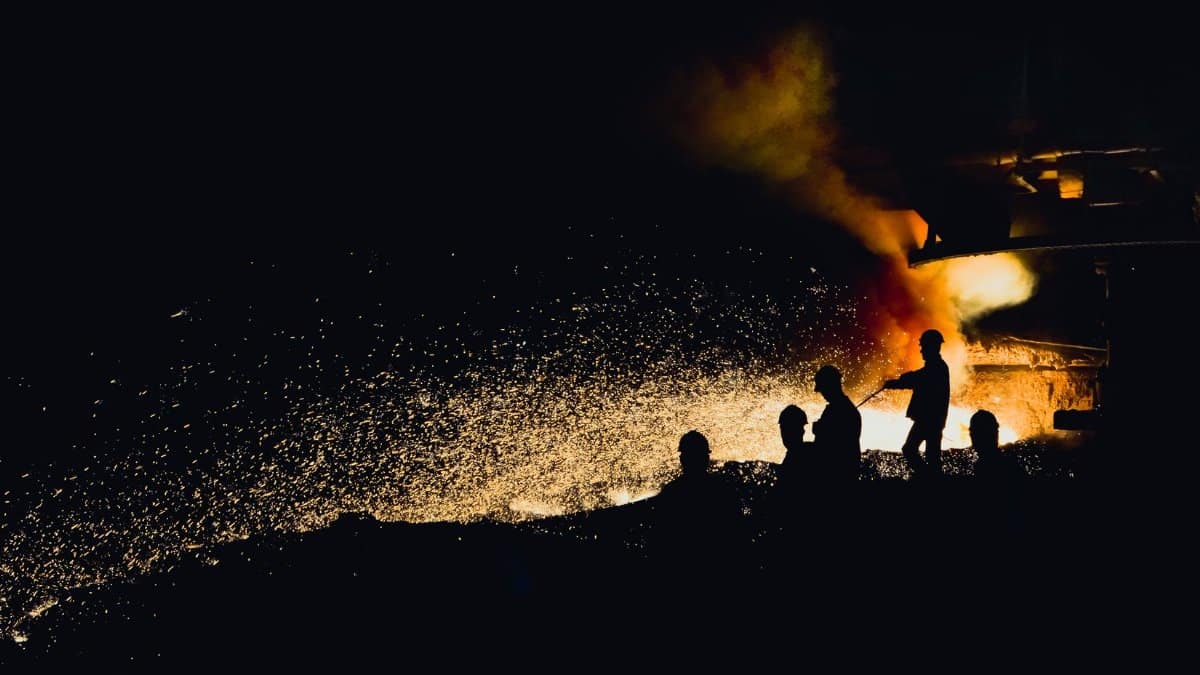
In Longview, where the Columbia River still sets the rhythm of paychecks and shift changes, people date their memory from the morning a tank failed and eleven workers did not come home. The investigations that followed produced a public reckoning measured in dollars as well as in grief. At the center of that reckoning is a Nippon Dynawave fine of 9 million dollars tied to 75 violations, a record figure that now sits beside separate penalties from the Department of Ecology described as topping 10 million dollars. The sums are large enough to command a boardroom. They are not large enough to finish the story.
What the headline number actually contains

A fine of this size is easy to treat as a single blow. It is not. Reporting on the Longview mill case, including coverage in The Seattle Times, separates a labor enforcement action from environmental penalties that run on their own track. The Nippon Dynawave fine addresses 75 violations connected to the tank failure. Ecology penalties, topping 10 million dollars in the public accounting of the case, speak to harm that does not stop at the fence line. Together they explain why the mill is described as facing sanctions of more than 10 million dollars, even when readers first meet only one of the figures.
That split matters. Workplace rules ask whether people were protected while they worked. Environmental rules ask what left the site, what entered water or soil, and whether the company told the truth about risk. A town can care about both without pretending they are the same injury. Families want to know why a vessel failed with a crew beside it. Neighbors want to know what the collapse sent into the air and the river. Regulators, if they are doing the job the law assigns, have to answer both questions with documents, not with sympathy alone.
The shift that did not end

Eleven deaths in one industrial accident is a rupture, not a statistic that settles into a quarterly report. Mills along this river have always been dangerous places. Heat, pressure, chemicals, height, and heavy moving equipment are the ordinary terms of the work. Ordinary danger is not the same as an accepted death toll. The difference is maintenance, training, supervision, and the willingness to stop a job when a tank, a valve, or a gauge does not make sense.
Public accounts describe a tank collapse, not a mystery storm or an act no one could have foreseen in principle. Collapse implies a structure that was asked to hold something and did not. In a pulp and paper complex, tanks are not scenery. They hold process liquids, residuals, and materials that can burn, suffocate, or crush. When one fails, the physics is brief and the aftermath is long. Rescue, identification, notification of families, and the sealing of a scene all happen before any lawyer drafts a penalty. The fine comes later, after interviews and photographs and a paper trail that tries to reconstruct decisions made on ordinary weekdays.
Seventy five violations and the habit behind them

Seventy five violations is not a clerical excess. It is a portrait of a system that drifted. A single missed inspection can be a bad day. Dozens of findings suggest routines that treated limits as suggestions. Investigators in cases like this typically look at whether equipment was rated for its service, whether corrosion or overfill was known, whether alarms worked, whether contractors and mill employees shared the same picture of the hazard, and whether someone with authority had a real path to shut the job down.
Readers should be careful not to invent a diagram the public record has not fully opened. The moral outline does not require a blueprint. If a company can be cited 75 times in connection with a failure that killed eleven people, the citations are a map of neglected duties. Each one is a place where a rule existed because someone, somewhere, had already been hurt. Rules are memorials written in the passive voice. They exist so the next crew does not have to learn the same lesson in a hospital or a funeral home.
Why Ecology is in the story

The Department of Ecology enters because a mill is never only a workplace. It is a neighbor to a river that carries salmon, drinking water concerns, tribal treaty interests, and the ordinary life of towns down current. When a tank fails, the question of worker death and the question of release are tangled in the same minute. They are then untangled by different statutes, different inspectors, and different penalty math.
Ecology penalties topping 10 million dollars tell the public that the state saw environmental violations serious enough to leave the realm of routine tickets. Those penalties do not replace wrongful death claims, and they do not restore a shoreline. They do put a price on the idea that process safety and environmental duty are optional costs to be managed after profit. In a region that has spent decades arguing about mills, dams, and the health of the Columbia, that price is legible. People who never set foot in the plant can still understand a river put at risk by a failure inside a fence.
A mill town does its own accounting

Longview has lived with industrial risk for as long as it has had a skyline of stacks and conveyors. Pride in the work is real. So is the knowledge that the work can take a father, a daughter, a new hire still learning the gates. When sanctions reach the tens of millions, the local conversation splits in a way outsiders sometimes miss. One part of town hears accountability. Another hears a threat to payroll, to the vendor who sells boots, to the cafe that fills before dawn. Both reactions can be honest. Neither cancels the eleven empty places at kitchen tables.
I have watched other industrial cities try to hold those truths at once, and the strain shows in small ways: a quieter high school game, a union hall that becomes a chapel for an afternoon, a city council meeting where the agenda cannot carry the weight of the public comment. Money from a fine does not arrive as groceries. It arrives as a signal that the state was willing to say, in the only language corporations are required to hear, that this was not an acceptable cost of doing business.
What a penalty can force, and what it cannot

Deterrence is the theory. A Nippon Dynawave fine large enough to be called a record is supposed to change the next budget meeting, not only the last one. Insurance, shareholders, lenders, and customers all read enforcement the way they read a credit report. Repeat findings become more expensive. Delaying a repair becomes harder to explain to a board that has already seen what delay can cost in human life and in public penalty.
Theory meets limit quickly. A fine does not rewind a shift. It does not teach a new supervisor how to recognize thinning steel if the company treats training as a poster. It does not guarantee that a contractor, working a shutdown on a clock, will be heard when he says a tank does not look right. The useful part of enforcement is the order that rides with the dollar figure: fix this, monitor that, prove it, and submit to inspection by people who do not draw a paycheck from the mill. Without that follow through, a headline number is a toll paid for a road that stays broken.
Aging vessels and the quiet arithmetic of delay
Tanks fail for reasons that are usually boring until they are not. Corrosion, improper alteration, overpressure, foundation movement, a level instrument that lied, a vent that clogged, a weld that was never what the drawing promised. None of those causes requires a villain in a movie sense. They require time, moisture, chemistry, and a maintenance program that lost an argument to production. The boring causes are exactly why rules are specific. Specificity is how a state tells a company that hope is not an inspection method.
Communities rarely see the inspection interval, the thickness reading, the deferred work order. They see the plume, the road closure, the list of names. That gap in visibility is why independent regulators exist. A mill marking its own homework will always feel the pull of throughput. An outside inspector, armed with the record of 75 violations and the memory of eleven deaths, is supposed to feel a different pull. The public has a right to ask whether that second pull is strong enough, and whether the next tank on the next site is being read with the same seriousness this disaster finally forced.
Families, ritual, and a city still listening

There is a spiritual dimension to this story that has nothing to do with slogans and everything to do with how the living keep faith with the dead. Longview, like many river towns, already knows the rituals: the benefit dinner, the folded shirt, the moment of silence before a game, the awkward kindness of a neighbor who does not know what to say and shows up anyway. Those rituals do not compete with lawsuits or with agency penalties. They do different work. They insist that a worker was a person with a laugh, a debt, a truck, a pew or a fishing spot, not a line on an incident form.
Faith communities and secular ones alike tend to ask the same hard question after a mass workplace death. Were we careless with one another. The question is not only for executives. It is for every institution that normalized risk because the mill had always been there and the worst had not happened yet. Grief does not write regulations. It does remind a city that regulations are a form of love for people we have not met, including the next hire who trusts that a tank will hold.
The record and the standard it sets
Calling the Nippon Dynawave fine a record is a way of saying the state reached for the top of its available tools. Records are ambiguous achievements. They mark seriousness, and they also mark how far practice had to fall before seriousness arrived. A penalty topping what came before should reset expectations for every similar vessel in the region, not only for the company named in the order. If peers treat the case as someone else’s bad luck, the record is a tombstone rather than a turning point.
Workers and their unions, where they have a voice, will measure the aftermath in practical changes: who can stop work, how shutdowns are staffed, whether thickness data is real, whether new crews hear the history of this tank before they are asked to trust another one. Residents will measure it in monitoring, in plain language notices, and in whether Ecology stays on the case after the cameras leave. Those are modest demands. They are also the demands that separate a fine paid and forgotten from a fine that alters the next morning shift.
What remains after the numbers fade

News moves on. A figure of 9 million dollars, a count of 75 violations, Ecology penalties topping 10 million dollars, a title that says the mill was fined more than 10 million dollars: these will compress, in memory, into a single hard fact. Eleven people died at a Longview mill because a tank failed. The rest is argument about how a society prices that fact and whether the price changes behavior.
The honest conclusion is austere. Sanctions can punish, expose, and compel repair. They cannot proportion themselves to a life. The Nippon Dynawave fine belongs in the public record because the public was owed an accounting, and because the people who still walk into that plant each morning are owed a worksite that has learned. Longview will keep the names. The state will keep the case file. Between those two archives is the only standard that matters now: that no crew is again asked to stand beside a vessel that should already have been emptied, rebuilt, or retired.