
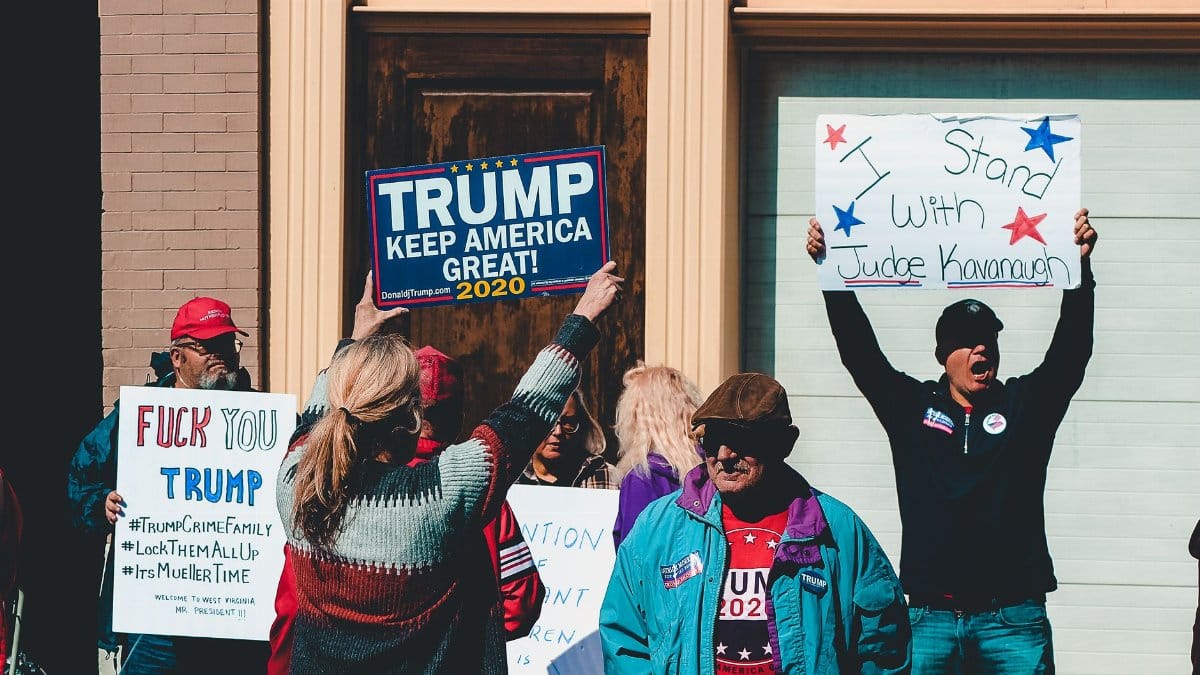
On a gray November morning in Springfield, the phones in Republican offices rang less with fresh strategy than with old grievance. Staffers traded screenshots of county maps, donors asked why calls for money had gone quiet, and a few veterans of past campaigns said the mood felt familiar in the worst way. The Nov. 3 election left Illinois Republicans staring at another statewide rout, and the argument that followed was less about the voters who had just spoken than about which insiders had failed to hear them. Former party chair Pat Brady put the loss in language few sitting leaders would match, saying Donald Trump absolutely crushed the ticket. Inside the rooms where blame was being assigned, that sentence was treated as a provocation rather than a starting point.
A party arguing with itself

The first days after the count were not a seminar on persuasion. They were a series of private score settling sessions that leaked into public view through texts, social posts, and carefully worded statements that named no one and implicated everyone. County chairs blamed consultants. Consultants blamed candidate recruitment. Legislators in safer districts blamed colleagues who had treated the top of the ticket as someone else’s problem. The pattern is old in losing parties, but it lands harder when the losses are not surprises. People who have watched Illinois politics for decades say the party has a habit of treating defeat as a personnel issue rather than a coalition issue. That habit saves face in the short run and postpones the harder conversation about who the party is willing to be in a state that has not elected a Republican governor in a generation of cycles that younger staffers can barely remember.
What the Nov. 3 map actually showed

The headline numbers were brutal enough. Statewide offices stayed in Democratic hands, and several legislative seats that strategists had circled in spring as possible pickups moved the other way or failed to tighten. Suburban collars around Chicago, once the place where statewide math could still be negotiated, delivered margins that made late money look decorative. Downstate counties that remain deeply Republican delivered the loyalty they always deliver, and it was not enough. Turnout stories varied by county, which is how turnout stories always vary, but the shape of the loss did not depend on a single rainy precinct or a single late scandal. Voters who split tickets in earlier eras were harder to find. Voters who had drifted away after 2016 and 2020 did not drift back because a local mailer asked them to separate the man at the top from the person on the county board.
The name few leaders will say
Brady’s line traveled because it was specific. He did not blame a vague national mood or a bad news cycle. He named Donald Trump as the weight on the ticket, the figure whose unpopularity in much of the state turned winnable arguments about taxes, crime, and schools into referendums on a brand many suburban voters have already rejected. Current leaders, by contrast, reached for a softer vocabulary. They spoke of messaging, of turnout operations, of the other side’s money. Some acknowledged that the national environment was difficult without saying whose environment it was. That gap between a former chair and the people still holding titles is the real story of the aftermath. It is not that everyone privately agrees and only Brady is rude. It is that a faction still believes the path back runs through closer alignment with Trump, and another faction believes that alignment is the reason the path keeps ending in the same ditch. Neither faction has the votes inside the party to silence the other, so the public line becomes a compromise that explains nothing.
Pat Brady and the old argument
Brady is not a neutral narrator. He has been a critic of Trump era politics inside the state party for years, and his critics treat his comments as the latest verse in a song they stopped listening to. Supporters treat him as one of the few people willing to describe the electorate as it is rather than as a rally crowd wishes it to be. Both reactions miss a useful point. A former chair can say what a sitting chair often cannot, because the sitting chair still needs the activists who show up to slating meetings, the donors who like proximity to national figures, and the county organizations that measure loyalty in public praise. The cost of that silence is paid later, when candidates who need suburban votes discover that the party brand has already spoken for them. Brady’s phrase, absolutely crushed us, is harsh. It is also a description of a math problem, not a moral lecture. Campaigns can survive a controversial ally in places where that ally is popular. They struggle in places where that ally is the reason undecided voters stop listening before the second paragraph of a mail piece.
Suburban erosion that never really paused
For Illinois Republicans, the suburban story is not a single election. It is a long erosion that accelerated when national politics became a personality contest and local politics could not opt out. DuPage, Lake, Kane, Will, and the closer Cook suburbs are not uniform, and treating them as a single bloc is how both parties fool themselves. Still, the direction has been consistent enough that strategists on both sides plan around it. Republican candidates who run as competent managers of taxes and public safety still meet voters who ask, first, where they stand on Trump, on election denial, on the tone of national conservative media. Some answer cleanly and still lose. Some hedge and lose by more. The hedge is understandable in a primary. It is expensive in a general election in these counties. Democrats have noticed, and they do not need poetic messaging to exploit it. They need to keep the association visible, which the national news does for them at no cost.
Downstate loyalty and statewide math
None of this erases the strength of Republican vote in large parts of southern and central Illinois. Those communities are not confused about their preferences, and lecturing them about branding insults people who have reasons, economic and cultural, for the way they vote. The problem for a statewide party is arithmetic. Loyalty in counties with smaller populations cannot offset deep deficits in the dense suburbs and in Chicago, where Republican candidates are not competitive in most wards and do not pretend to be. A healthy party can hold both realities at once: respect for downstate voters, and honesty about what a governor, a senator, or a statewide constitutional officer must assemble. The postelection fight often collapses that distinction. Downstate activists hear suburban postmortems as contempt. Suburban strategists hear downstate demands as a refusal to face numbers. Both can be partly right, which is why the argument regenerates every November.
Money, message, and who was on the ballot

Blame also landed on the unglamorous parts of campaigning, and some of that blame is fair. Recruitment in a state this blue is genuinely hard. Talented Republicans in business and local government look at the primary, look at the general election, and decide the years of scrutiny are not worth a likely loss. Those who do run sometimes arrive with thin organizations and messages borrowed from national talking points that test well on cable and poorly on a Naperville doorstep. Money followed the familiar pattern: late checks for races already slipping, early thrift in races that needed definition before Labor Day. Consultants will defend their ads. Candidates will defend their instincts. Voters rarely experience any of that as a coherent argument about their property taxes or their kids’ schools. They experience a party that seems to be talking to someone else. When the someone else is a national figure they already dislike, the local brochure does not get a fair reading.
What Democrats did while the other side fought
Democratic campaigns in Illinois did not need to invent a new theory of the electorate this fall. They defended incumbency where they had it, spent to nationalize races where it helped, and let Republican infighting supply free contrast. That is not genius. It is the advantage of a party that is not currently at war with its own last decade. Unions, abortion rights groups, and suburban civic networks that moved left after 2016 remained organized. Republican allied groups were present too, especially on crime and spending, but they could not separate their issues from the face of the party in the minds of the voters who decide close districts. A rout is not only a failure of the losers. It is also evidence that the winners still know how to bank votes they already have. Pretending the map moved only because Republicans bickered flatters the bickering and understates Democratic strength in this state.
The thinner bench and the next filing period

The practical consequence shows up in who is willing to run next. Losses thin a bench that was not deep. State legislators who survived will be asked to consider statewide bids they do not want. Business figures who flirted with politics will flirt less. County officials with real records will ask whether the party label is an asset or a ceiling. Party chairs can promise autonomy and a focus on kitchen table issues. Candidates will ask whether that promise survives the first primary debate, the first Trump endorsement rumor, the first social media pile on. If the answer is no, the filing period will look thin again, and the cycle will repeat with newer names and the same structure. Illinois Republicans who want a different outcome need more than a new slogan. They need a truce about the national brand that is explicit enough for voters to believe, or a decision to live inside that brand and stop pretending statewide wins are one good recruit away.
County chairs and the view from the ground

Away from Chicago television, county chairs describe a simpler frustration. They knocked on doors for candidates who then got buried under national headlines they could not control. They watched volunteers burn out. They heard neighbors say they might vote Republican for sheriff and not for anything else. Those chairs are not a monolith. Some want the state party to embrace Trump more openly and stop apologizing. Some want distance and are tired of being told that distance is disloyal. What they share is a sense that Springfield and the donor class argue in abstractions while local tickets absorb the damage. Any rebuild that ignores them will produce another round of statements and another round of the same maps. Any rebuild that only echoes the loudest chairs will lock in the suburban deficit. The unsatisfying truth is that a state party is a negotiation among people who do not share a diagnosis.
Reckoning without a ritual

Parties sometimes talk about defeat in the language of reckoning, as if a loss were a moral event that could be purified by the right confession. Politics is cruder than that. Voters are not waiting for Illinois Republicans to perform contrition. They are waiting to see whether the party offers candidates whose public commitments match the communities those candidates need. Brady offered a confession of a kind, aimed inward. Most leaders offered a process critique, aimed sideways. Neither is a platform. A platform would say, in plain words, what the party will defend on taxes, schools, public safety, and the conduct of its national allies, and what it will no longer ask voters to ignore. Until that exists, the internal war is content for reporters and cold comfort for candidates. The Nov. 3 rout did not create the split. It removed the excuse that the split was theoretical.
What would count as a different next year
A different year would be visible in small choices before it was visible in poll numbers. Recruitment calls that tell the truth about the brand. Primary rules and informal pressure that do not punish candidates for refusing election conspiracies. Donor conversations that fund definition early in suburban media markets rather than rescue fantasies in October. A state party message that can be repeated by a county board candidate without a wince. None of that requires a dramatic expulsion or a loyalty oath in the other direction. It requires leaders who will tolerate anger from activists in order to be heard by voters who have left. Few of those leaders are pointing at Trump in public this month. The voters already did. The open question is whether the people who want to win statewide are willing to treat that pointing as information, or whether they will spend another cycle treating it as an insult and calling the result a surprise.