
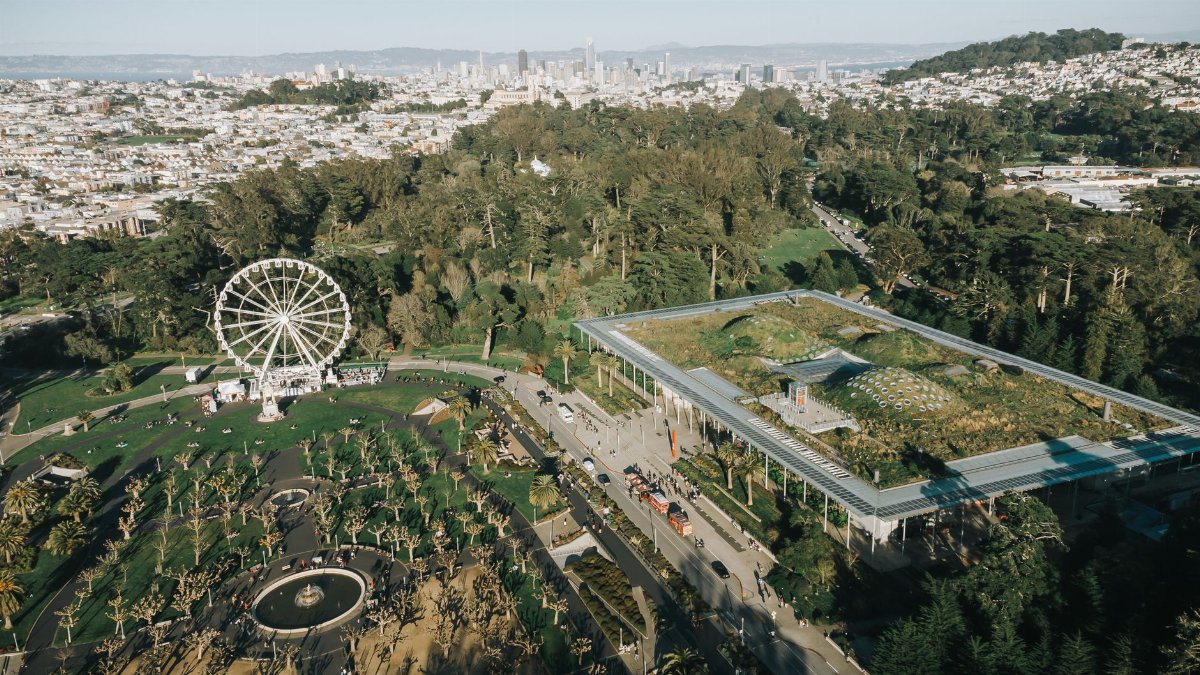
On a bright Saturday the lawns near the Music Concourse fill before the museums open. Parents unload strollers, elders claim a bench, and teenagers claim a patch of grass. For generations that arrival has started in a free stall along JFK Drive or a side loop near the meadows. This winter that habit collides with a new city policy. Golden Gate Park parking will carry an hourly charge, and the argument over who the park is for has moved from neighborhood meetings into the daily math of a family outing.
A weekend ritual under new pressure

Golden Gate Park is not a destination people visit for twenty minutes. It is where San Franciscans mark birthdays, walk off a hard week, and let children run until the light changes. A single trip often stretches across a picnic, a playground, a museum gallery, and a slow loop back to the car. Free stalls made that looseness possible. Paid stalls turn the clock into a companion. Residents who wrote to supervisors and filled public comment say the fee will not ruin a wealthy visitor’s afternoon. They say it will trim the visits of people who already count every dollar before they leave the house.
The anger is not abstract. It shows up in the way neighbors describe the park as an extension of a small apartment. In a city where private yards are rare, the lawns function as a shared backyard. Charging for the approach to that backyard feels, to many, like a toll on ordinary life.
What the hourly rates will ask of drivers
City materials describe a range of $1.25 to $4 an hour, with the higher end aimed at the busiest lots and the busiest hours. The charges are set to begin on Jan. 1. Officials frame the spread as a way to match price to demand, the same logic used on commercial streets where a stall should turn over rather than sit occupied all day. In a park, turnover is a stranger idea. People do not come to dash in and dash out. They come to stay.
A family that remains for four hours at the top rate is looking at $16 before anyone buys a sandwich or a museum ticket. Stack that onto a monthly budget already stretched by rent, transit fares, and groceries, and the number stops looking small. Opponents argue that Golden Gate Park parking should not be priced like a downtown garage, because the activity at the end of the walk is public recreation, not a private errand.
Families who measure the day in hours

Parents describe a particular kind of visit. The car seats come out. The cooler comes out. Someone remembers sunscreen and someone forgets it. The group settles, then resettles, then stays because the children are finally calm. That kind of day is incompatible with a meter that punishes lingering. Several residents have said they will simply come less often, or skip the park when a grandparent is visiting and the group is too large for a bus.
The fear is not only about money. It is about friction. A parent who must leave a picnic to feed a meter, or who must guess the length of a nap in a stroller, is no longer fully in the afternoon. Critics say the city is asking families to manage a transaction in the one place they came to stop managing transactions.
The case officials make for the meters
Supporters inside city government describe a different problem. On peak weekends, drivers circle the concourse and the meadow edges, blocking crosswalks and idling while they hunt for a stall. That search is its own tax, paid in time and exhaust. A price, they argue, can shorten the hunt, steer some people toward lots with space, and raise money for gardens, paths, and restrooms that everyone uses.
They also note that the park is not only a neighborhood yard. It draws visitors from across the region who park for free and leave wear on roads the city maintains. From that view, a modest fee is a user charge, closer to a pool admission than to a punishment. The dispute is over whether a park approach should ever be treated as a user service, and over who counts as the user.
Equity arguments that will not fade
The sharpest objections center on equity. Households without a garage already pay for street parking near home. Households without a car pay fares to reach the same lawn. A new charge on Golden Gate Park parking, critics say, lands hardest on people who drive because transit with children, instruments, or coolers is slow or impossible, and who cannot treat $16 as a rounding error.
Disability advocates have raised a related point. A person who needs a car to reach a flat path or a quiet bench is not choosing convenience over virtue. If accessible stalls sit inside a paid zone, the fee becomes a condition of entry to a public landscape. Officials have promised accommodations, but residents want those rules written plainly, posted clearly, and enforced without turning a park visit into a paperwork errand.
Transit riders and the people who never drive
Not every critic owns a car. Some residents who arrive by bus or bike support a fee if the money truly returns to the park and if the city pairs it with more frequent weekend service. Others worry that paid parking will be sold as a green policy while the buses that could replace those cars remain crowded and infrequent on Sundays.
The park already has a complicated traffic history. Stretches of roadway have been closed to private cars so that people can walk, roll, and ride without dodging traffic. Those closures delighted many and frustrated others who lost a familiar route. Paid parking sits in that same argument about how a nineteenth century landscape should work in a twenty first century city. The question is whether pricing the remaining stalls completes a shift toward shared space, or simply charges the people who have the fewest other options.
Museums, meadows, and the cost of staying

The de Young and the California Academy of Sciences sit inside the park, and their visitors often combine a gallery hour with time on the grass. Museum tickets are already a considered expense. Adding a parking bill changes the calculus for school groups, out of town relatives, and locals who treat a free meadow as the affordable half of the day. Restaurant owners and youth sports coaches near the park have asked, quietly and then publicly, whether teams will shorten practices or skip tournaments when the lot fee stacks onto equipment and uniforms.
There is also the unplanned visit, the one that begins because the weather turned kind. Those hours are part of what a great city park gives away. A meter does not forbid them. It does ask people to decide in advance how much wonder they can afford. For critics, that is the wrong question to put at the gate of a public garden.
What other cities learned the hard way
San Francisco is not the first city to price park access. Other cities have tried meters at beaches and waterfront lawns, then adjusted hours, added resident discounts, or carved out free periods after public anger. The lesson, where those experiments were studied in public reports rather than slogans, is that design matters more than the headline rate. A fee that is easy to pay, easy to extend, and easy to waive for people with disabilities draws less fury than a system that feels like a trap.
Residents here are watching for the details that decide whether the policy feels fair in practice. How long can a car stay? What happens if a phone payment fails? Are evenings free? Is there a cheaper rate for nearby neighborhoods? Without those answers, the hourly range floats above real life, and people assume the worst version of the rule.
A commons people treat as sacred ground

Listen to the way longtime residents talk about the park and the language turns quieter than a budget hearing. They describe the rhododendron dell in spring, the bison paddock, the stillness of Stow Lake at dusk, the place they walked after a funeral or before a wedding. In a city this expensive, those loops are a kind of civic prayer, repeated without a congregation. Charging for the stall at the edge of that walk strikes some people as a small sacrilege, not because a government may not raise revenue, but because the park has carried a promise that the best rooms in the city do not require a ticket.
That promise was never perfect. Concerts, special events, and crowded holidays have always tested it. Still, the everyday bargain held. You could arrive with nothing but time. The new fees ask whether that bargain still binds.
How residents are pushing back
Opposition has taken the familiar San Francisco forms. Petitions, neighborhood association letters, comments at commission meetings, and sharp posts that travel faster than any staff report. The phrase people reach for is simple. They say the park should remain a place you can enter without first opening a wallet. Some want the plan delayed. Some want a lower cap. Some want a full reversal and a search for revenue that does not sit on a family sedan.
City staff answer that doing nothing also has a cost, measured in circling traffic, worn paths, and a budget that never quite covers horticulture and bathrooms. Both sides claim the same loyalty to the park. They disagree about whether a meter protects it or sells a piece of it.
What January will actually test

The first weeks of the new year will matter more than the hearing room. If lots sit half empty while lawns thin out, opponents will say the policy worked as a barrier, not as a manager of demand. If stalls turn over and the paths feel calmer, supporters will say the predictions of exile were overdrawn. Either result will be read through the lives of people who cannot treat a Saturday as an experiment.
Golden Gate Park parking is a narrow policy with a wide meaning. It asks what a public landscape owes the people who live beside it, and what those people owe the landscape in return. San Franciscans are answering, loudly, that a fee of a few dollars an hour is not a small technical fix. It is a statement about belonging. The city now has to show whether that statement can be rewritten in the details, or whether January will prove the critics right.