

On a November morning when most of the country was still sorting holiday plans, a short list of names from Texas landed in the national conversation with unusual force. Texas Grammy nominations have a way of doing that. They pull a sprawling state into one frame, from dance halls outside Fort Worth to church stages in Dallas and studio rooms in Austin, and they ask a simple question with a complicated answer. Who gets heard when the biggest music prize in America starts counting. This year the answer includes Miranda Lambert, Kacey Musgraves, Charley Crockett, and Kirk Franklin, artists who do not sound alike and do not need to. Their presence on the ballot says less about a single genre than about a place that keeps producing songs people argue over, cry to, and play again.
A ballot that refuses one definition of Texas

Texas music has never been a tidy category, and the current nominations make that plain. Lambert arrives with the confidence of a songwriter who has spent two decades turning small town observation into radio scale storytelling. Musgraves brings a cooler, more elliptical sensibility, the kind that treats heartbreak as a design problem as much as a wound. Crockett stands closer to the traveling tradition, a singer whose records feel haunted by highways, border radio, and the old idea that a good song should survive a cheap PA system. Franklin occupies another room entirely, gospel rearranged for a pop century without surrendering the church that raised it.
Put those careers on one ballot and the myth of a single Texas sound collapses. What remains is a habit of making music in public, in rooms where strangers talk back. That habit is not sentimental. It is practical. Artists learn early that an audience in Lubbock or San Antonio will not clap for a pose. They will clap for a line that lands.
Miranda Lambert and the arithmetic of seven nods

Seven nominations in one cycle is not a courtesy. It is a statement from voters that a body of work still feels current. Lambert has collected Grammy attention for years, yet the number attached to this round is striking because it arrives after she has already been filed, by lazy shorthand, as a known quantity. Known quantities do not usually collect that many nods unless the songs keep refusing the file folder.
Her writing has always mixed bravado with inventory. A Lambert lyric often names the truck, the town, the slight, and then turns the slight into something larger than revenge. That combination travels well beyond country radio, which is why her nominations tend to sit at the intersection of genre categories and songwriting categories. Fans hear loyalty. Voters, at their best, hear craft. The two are not the same, and the gap between them is where awards season gets interesting.
There is also the matter of longevity without freeze frame. Plenty of artists protect a hit era until the hits become a costume. Lambert has kept revising the costume. The voice is still unmistakable, a little sandy, quick to laugh at its own anger. The subjects have widened. Domestic life, professional fatigue, the odd mercy of getting older in public: these are not the themes of a newcomer angling for a first trophy. They are the themes of someone who expects the work to be judged on the work.
Kacey Musgraves and four ways of hearing a song

Four nominations for Musgraves confirm what her audience already treats as obvious and what radio sometimes treats as optional. She writes songs that can be pretty without being harmless. A line about disappointment can arrive dressed in a melody so light that the disappointment takes a second to register. That delay is the point. It lets the listener feel clever and then a little exposed.
Musgraves came up in Texas with the same dance hall apprenticeship as many of her peers, then built a career that treated country as a starting dialect rather than a closed border. The result has been a catalog that critics praise for wit and that some traditionalists still eye with suspicion. Awards voters have, more than once, sided with the wit. Four nods in this cycle suggest the suspicion has not won. They also suggest that her recent work is being heard as more than a victory lap after earlier breakthroughs.
What separates her from Lambert is not quality. It is temperature. Lambert often sings as if the room might need convincing. Musgraves often sings as if the room already knows and would prefer not to discuss it at dinner. Both approaches are Texan. One is the front porch argument. The other is the aside that ends the argument.
Charley Crockett and the long road as a credential

Charley Crockett does not fit the awards industrial picture of a star who emerges from a development deal with a prewritten origin. His origin is the road, told often enough that it risks becoming folklore, and still specific enough to matter. He has busked, recorded quickly, and treated albums as dispatches rather than events spaced for maximum campaign effect. A Grammy nomination for an artist with that metabolism is a small rebellion against the idea that visibility must be managed before it can be rewarded.
Listeners who find him through this ballot will hear a baritone that seems older than the singer and arrangements that borrow from country, blues, and the unfashionable middle of American popular song. There is showmanship, but it is the showmanship of someone who has had to hold a sidewalk crowd, not a branded stage. Nomination does not certify authenticity. Nothing does. It does, however, put a wider audience in front of a catalog that was already doing the work without permission.
Texas has a long roster of singers who sounded slightly out of time and turned that displacement into a style. Crockett belongs to that roster more than he belongs to any current trend cycle. If voters are paying attention, they are paying attention to phrasing, repertoire, and the rare ability to make a cover feel like a confession.
Kirk Franklin and gospel that does not stay in one building
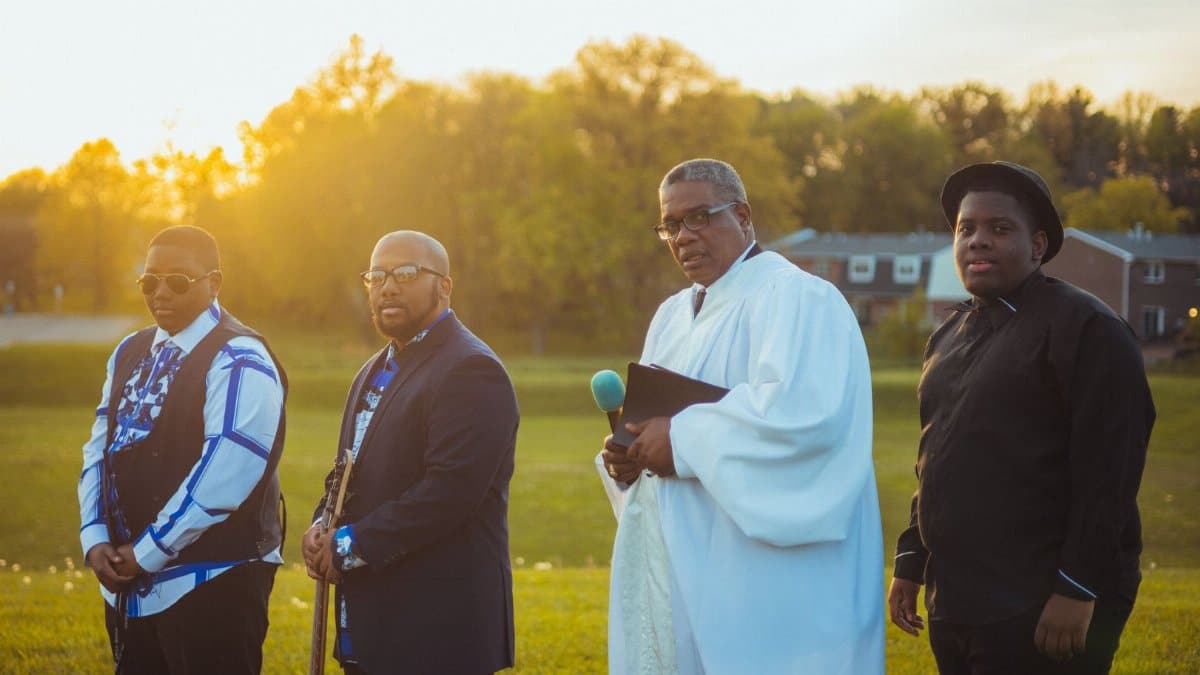
Kirk Franklin has spent decades proving that gospel can be both congregational and cosmopolitan. His nominations in this round matter for reasons that extend past personal acclaim. They place sacred music, specifically the sacred music of Black Texas churches and the choirs that grew from them, inside a ceremony that still struggles to treat gospel as more than a guest genre.
Franklin’s method has always been collaborative in the literal sense. Choirs, guest vocalists, and arrangements that borrow from hip hop and R&B are not decorations. They are the theology of the performance: many voices, one aim. That approach can confuse category systems built for solo stars. It should not confuse listeners. A Franklin record is built to move a room, whether the room is a sanctuary or an arena.
Including him among the notable Texas Grammy nominations also corrects a geographic habit. National coverage of Texas music still defaults to guitars and two step floors. Those matter. So do the churches of Oak Cliff and the gospel circuits that trained singers long before streaming metrics existed. Franklin is not a token of that world. He is one of its most effective translators.
What voters are really rewarding

A nomination is not a moral verdict and not a sales receipt. It is a signal that a defined group of music professionals, working inside rules that change slowly and sometimes unfairly, found the work competitive. That modesty is useful. It keeps fans from treating the ballot as scripture and keeps artists from treating a snub as exile.
Still, patterns mean something. When several Texas artists land nominations in the same year, the pattern is not that the state has suddenly become talented. The talent was already there. The pattern is that the listening class inside the academy happened to align, for a season, with records that carry regional grain. Grain is not the same as novelty. Lambert’s grain is narrative precision. Musgraves’s is tonal control. Crockett’s is repertoire and road wear. Franklin’s is communal lift. Voters do not have to love all four equally to recognize that each solves a different problem in popular music.
There is a commercial afterlife to that recognition. Playlists update. Casual listeners sample a song they would have skipped in March. Local venues book a little fuller in the spring. None of that replaces the music. It does change who gets to encounter it without already being a devotee.
The rooms that trained these voices
Awards coverage tends to start at the announcement and end at the telecast. The more interesting chronology starts earlier, in rooms that do not care about ballots. Lambert’s early circuit, Musgraves’s Texas songwriting circles, Crockett’s constant touring, Franklin’s church apprenticeship: these are not colorful backstories pasted onto careers. They are the method.
Texas still offers a density of live rooms that many states have lost. Honky tonks, listening rooms, church sanctuaries, festival side stages, and bars that book original music on a Tuesday are not guarantees of greatness. They are repetitions. Repetition is how a singer learns which line survives a distracted crowd and which arrangement dies under bad monitors. By the time a record reaches Grammy voters, that education is already in the vocal. You can hear whether someone has been believed by strangers.
That education also explains why these artists can share a state and not share a pose. The rooms were different. The standards were similar. Hold the song. Do not hide behind production. Leave people with a line they can repeat on the drive home.
How a national prize handles a regional accent

The Grammy process has a recurring tension. It wants to honor American music in its variety, and it wants a telecast that a general audience can follow. Regional accent sometimes loses that bargain. A fiddle tune, a choir shout, a border inflected ballad can be flattened into a presenter joke or a fifteen second clip. Nomination is the stage before that risk. It is still language, not spectacle. Names on a list can be read slowly.
For Texas artists, the risk of flattening is familiar. Outsiders reach for cowboy hats or megachurch stereotypes and stop listening. The current ballot pushes back if anyone bothers to play the records in sequence. Lambert is not a cartoon of toughness. Musgraves is not a cartoon of detachment. Crockett is not a museum piece. Franklin is not a crossover guest. They are working musicians whose Texas ties are audible without being costumes.
Listeners outside the state might use the nominations as a map rather than a ranking. Start with the song that fits the hour you actually have, not the song a preview package chooses. Maps are more useful than scoreboards, and they age better when the envelopes are opened.
The money, the myth, and the morning after

It is tempting to translate every nod into a business forecast. Some of that translation is fair. A nomination can lift streams, justify a tour routing decision, and give a label a sentence for a bio. It can also distort a career if the artist starts writing toward the voters who just noticed them. The healthiest version of this moment is narrower. The work already exists. The nod is a delayed echo.
The myth is louder than the money. Texans like to believe the state exports a disproportionate share of American songs, and the myth has enough evidence to survive a fact check without becoming a law of nature. California, New York, Tennessee, and Georgia export plenty. What Texas exports with unusual consistency is a preference for narrative and for live proof. You can hear that preference in these four careers even when the productions diverge.
The morning after the ceremony will sort winners from nominees and will tempt everyone to treat that sort as final. It is not final. Catalogs outlast telecasts. A Lambert album will still be in truck speakers. A Musgraves couplet will still ambush someone on a walk. A Crockett record will still sound like distance. A Franklin choir will still be learned by people who have never watched an awards show. Nomination is a flare. The road is the job.
Listening without keeping score

If the list is an invitation, the useful response is ordinary. Play the records in full, not as clips. Notice where a song refuses the expected rhyme. Notice when a choir enters not as climax but as argument. Notice the Texas place names when they appear, and notice when they do not, because absence can be as local as mention. Artists from this state are not required to narrate the map in every verse. Sometimes the map is in the meter.
There is no need to rank Lambert against Musgraves or to force Crockett and Franklin into a single essay about roots. The point of a broad ballot is breadth. Texas Grammy nominations this season illustrate that breadth without asking the artists to pose as a delegation. They did not campaign as a unit. They made records. Voters responded. The rest is listening, which remains the only part of the process a reader can actually do well.
A state heard in more than one key
The 69th Grammy cycle will move on to predictions, red carpets, and the familiar disappointment of viewers who wanted a different envelope. Before that machinery fully takes over, it is worth sitting with the simpler fact. Miranda Lambert is in the mix with seven nominations. Kacey Musgraves is in it with four. Charley Crockett and Kirk Franklin are in it too. That spread crosses country, the edges of country, the traveling songbook, and gospel. It is a more accurate portrait of the state’s musical life than any single headliner could provide.
Portrait is the right word. A prize cannot govern a culture. It can, for a few weeks, widen the frame. Texas Grammy nominations do that widening when the names on the list refuse to sound like one another and still feel, to anyone who has spent time in the state’s rooms, entirely plausible. Plausible is a modest compliment. In a season built on superlatives, modest might be the one that lasts.