

On a Thursday evening in Burbank, the lobby of a multiplex still smelled like popcorn and raincoats. Parents compared start times while a child in a faded cowboy hat recited lines he had not learned in school. The picture on the marquee was familiar, almost old, and yet the ticket line moved. That small scene is one way to read Disney earnings this season: a company whose oldest stories are again doing new financial work, not as nostalgia alone but as revenue that management can point to in a crowded market.
A quarter that put entertainment back in front

The latest report put the entertainment division at the center of the story. Revenue there rose 17 percent to $11.9 billion, lifted by streaming and by the theatrical run of Toy Story 5. For a company that spent years explaining why films and series were investments rather than engines, the shift in tone matters. Wall Street does not fall in love with a franchise on principle. It looks at whether a title fills seats, feeds a service, and keeps households from canceling. This quarter, the answer was clearer than it has been in several reporting periods.
Companywide, full year revenue reached $102.3 billion. That figure is large enough to absorb a weak month in one park or a soft week at the box office without rewriting the year. It is also large enough that a single animated sequel can move the conversation without moving the whole enterprise. The useful question is not whether Disney is big. It is which parts of the business are earning the right to set the narrative.
Why Toy Story 5 landed when it did
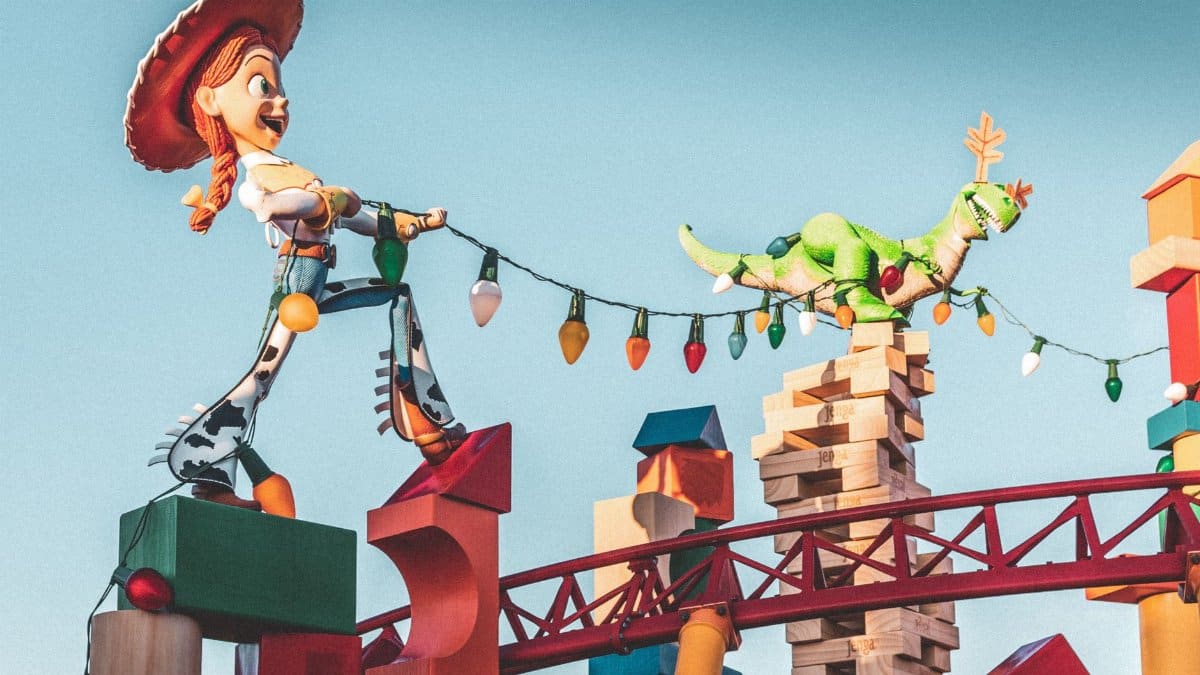
Sequels are easy to dismiss until the receipts arrive. Toy Story 5 arrived with a built in audience that spans parents who saw the first film in the nineteen nineties and children who know the characters from streaming thumbnails. That overlap is the commercial gift of a durable franchise. It lowers marketing risk. It also raises the penalty for a film that feels like a product extension rather than a story.
Early audience behavior suggests the film cleared that bar for enough families to matter. Weekends were strong. Midweek showings held up better than many sequels manage once the opening surge fades. Merchandise tied to the release moved through stores and through the company’s own shops, a reminder that a film is also a storefront. None of that guarantees the next chapter. It does explain why entertainment, not the parks alone, is the line item people are quoting.
Streaming as a partner rather than a rival

For several years the internal argument at large studios was simple and painful. Theatrical windows shrank. Subscription services needed volume. Films were asked to serve two masters and often pleased neither. The current Disney earnings picture looks different because the two channels reinforced each other. People who saw Toy Story 5 in a theater had a reason to open the app later. People who already lived inside the app had a reason to buy a ticket.
That loop is not magic. It depends on release timing, on not dumping a title onto a service so fast that theaters feel used, and on a library deep enough that a new film does not have to carry the whole month. Disney has that library. The report suggests management is finally using it as a system rather than as a pile of separate bets. Subscribers still churn. Advertising on streaming is still young. But the division no longer has to apologize for the screen that sits in the living room.
Parks remain the quiet majority partner

Anyone who has stood in a rope line at Anaheim or Orlando knows the parks do not need a film opening to stay busy. Hotels, food, and lightning lane style products turn a day out into a large check. Those businesses are sensitive to wages, to weather, and to the mood of middle income travelers. They are also unusually good at turning affection into repeat visits.
The entertainment surge does not shrink that role. It changes the mix of what executives can claim. When films and streaming contribute more, the company is less exposed to a single soft season at the gates. When the parks are steady, a miss at the multiplex does not become an existential story. Investors like that balance even when they argue about price increases at the turnstiles. Families notice those increases. So do local workers. A strong film quarter does not settle those arguments. It only keeps them from being the only arguments.
What the numbers do not say about taste

Revenue is not a review. A film can sell tickets and still feel thin. A service can add subscribers and still feel like a shelf of leftovers. The spiritual pull of these stories, if that word is not too large, sits in recognition. Children want to see a toy that worries about being left behind. Adults recognize the worry. That recognition is older than any earnings release and harder to manufacture on a schedule.
Disney has sometimes treated recognition as a formula: revive the title, raise the budget, trust the logo. Audiences have punished that approach often enough that the punishment should be part of any honest reading of this quarter. Toy Story 5 appears to have earned its gross rather than borrowed it. Other titles in the pipeline will not get the same courtesy. The entertainment division’s 17 percent gain is a result, not a promise that every green light will be wise.
Costs, labor, and the price of spectacle

Animated features of this scale are expensive before a single ticket is sold. Voice work, rendering, music, and global marketing add up. So do the contracts that keep parks staffed and sets built. A good quarter can hide a cost structure that only works if hits keep arriving. Labor negotiations in entertainment have reminded every studio that the people who make the images are not a rounding error.
Shareholders will ask whether margins in entertainment improved with the revenue, or whether the top line grew while the bottom line stayed stubborn. That distinction decides whether this is a turn or a spike. Management’s own commentary, as reported alongside the figures, has emphasized discipline. Discipline is a word executives like. It becomes real only when a tempting sequel is delayed or a series is cut because it does not earn its keep.
How investors are likely to read the year

A full year at $102.3 billion gives the company scale that smaller studios cannot match. Scale is not the same as momentum. Momentum is what this entertainment print is meant to signal: films that people leave the house for, a streaming business that no longer drains the story, and a brand that still converts memory into money.
Skeptics will note that one sequel can flatter a quarter. They will look at the next two release windows, at international attendance, and at whether price increases in parks slow demand. They will also compare Disney earnings with the rest of media, where advertising is uneven and cord cutting has not finished its work. In that comparison, a company with parks, a deep library, and a hit family film looks sturdier than a company that owns only a feed.
Families as the real constituency

The people in that Burbank lobby are not reading segment footnotes. They are deciding whether a night out is worth the ticket, the snacks, and the babysitter they did not hire because they brought the children with them. If the film holds them, they may subscribe for a month to watch the older chapters. If the parks feel fair the next time they visit, they will defend the brand at the dinner table. If either experience feels like a toll, they will say so, and the next earnings call will hear it in the attendance line.
That is the unglamorous truth under the percentages. Entertainment revenue of $11.9 billion is a pile of small decisions. Some are habitual. Some are hopeful. A company can lose the hopeful ones faster than a model predicts, especially when cheaper screens are one click away.
The risk of believing the franchise is enough

Success has a specific danger at Disney. It tempts the company to treat every beloved title as a renewable resource. Sequels, series, cruises, and retail can follow so quickly that the original feeling thins out. Toy Story has survived that pressure better than most properties because the films have usually had a point beyond the reunion. The fifth chapter appears to have kept a point. The sixth, if it comes, will be judged more harshly because this one worked.
There is also competitive risk that a single report cannot settle. Other studios have family films. Other services have libraries. Sports rights and news remain costly neighbors inside the broader corporate structure. A strong entertainment quarter does not retire those bills. It gives management room to pay them without sounding defensive.
What to watch in the next report

The next set of Disney earnings will answer whether this entertainment lift was a moment or a run. Look for whether streaming additions stick after the film’s glow fades. Look for whether theatrical grosses on non franchise titles improve, which would mean the division is healthier than one cowboy hat. Look for park attendance against higher prices. And look for whether management talks about cost with the same confidence it uses for revenue.
None of those checks requires cynicism. They require memory. This company has had bright quarters before and long arguments afterward. The argument this time starts in a better place: a film people wanted, a streaming business that helped rather than hindered, and a year large enough, at $102.3 billion, to fund the next bet. Whether that bet respects the audience that stood in the rain for tickets is the part no spreadsheet can finish.