
On a bright Texas morning, departure boards in Houston began to freeze in place. Families with roller bags watched the same flight number sit unchanged while gate agents stopped calling names. The halt was not a storm, and it was not a runway closure. It was an FAA ground stop, the kind of order that tells aircraft not to leave the ground because the system that keeps them separated in the sky is no longer trustworthy enough to proceed. For people waiting in terminals, the reason arrived later, in fragments, and those fragments pointed far from the runways they could see.
What passengers actually experienced
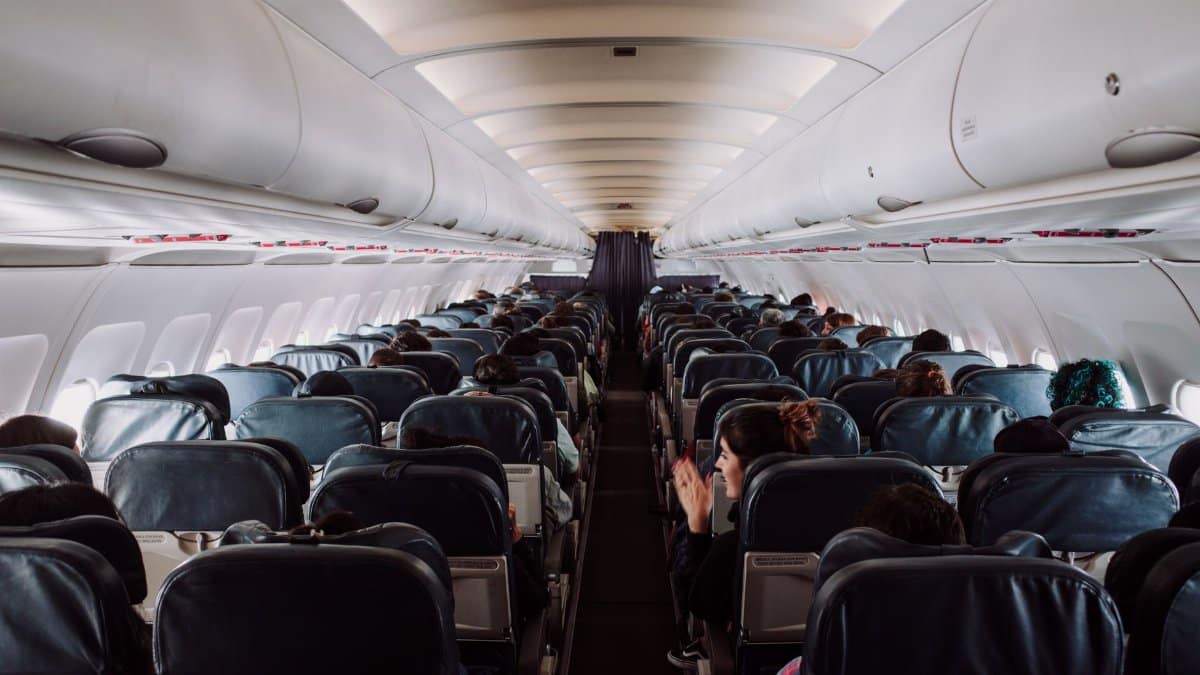
The first sign was ordinary confusion. A departure time slipped. Then another. Then the board filled with holds that did not explain themselves. Some travelers were already seated when the cabin door stayed open and the captain said the flight could not push back. Others never left the gate area. Hotel clerks near the airports started taking calls from people who had planned to be in another city by dinner.
A ground stop feels personal when you are in it. A missed connection becomes a missed shift, a wedding, a hospital visit, a job interview. The national system, though, does not experience the event as a collection of personal stories. It experiences a loss of confidence in a piece of the network that controllers and pilots rely on to know where aircraft are and where they are allowed to go. When that confidence drops, the safest immediate move is often the most disruptive one: keep planes on the ground.
Houston felt the interruption in a concentrated way because so much connecting traffic moves through its airports. A pause there does not stay in one terminal. It ripples into crew schedules, aircraft positioning, and arrival banks in cities that never saw the original fault.
How a ground stop differs from a delay

Airlines delay flights every day for weather, maintenance, and late inbound aircraft. Those delays are messy, but they are usually local decisions made inside an airline operation. An FAA ground stop is different. It is a traffic management action. It can cover a city, a region, or, in rare cases, a much wider slice of the country. Aircraft that have not departed are told to stay put. Flights already airborne are generally allowed to continue, land, and then join the aircraft that cannot leave again until the order lifts.
That distinction matters for anyone trying to read a news alert on a phone in a food court. A delay can be worked around. A ground stop is a hard boundary. Gate agents cannot talk their way past it. A captain cannot decide that the weather looks fine and go anyway. The order exists because separation, communication, and surveillance of traffic have to be intact before the sky fills up again.
The phrase FAA ground stop therefore carries more weight than a generic travel headline. It signals that the constraint is coming from the safety system, not from a single carrier having a bad morning.
The routers named in early reporting

Public reporting, including work by the Houston Chronicle, has raised a specific and still unsettled question. Did problems involving routers in Amarillo, Texas, and in Arkansas play a role in the halt that hit Houston flights and echoed more widely? Officials and industry accounts have pointed toward those locations while an upgrade of fiber service associated with L3Harris was underway. The reporting does not, at this stage, amount to a finished engineering verdict. It is a map of where investigators and operators have been looking.
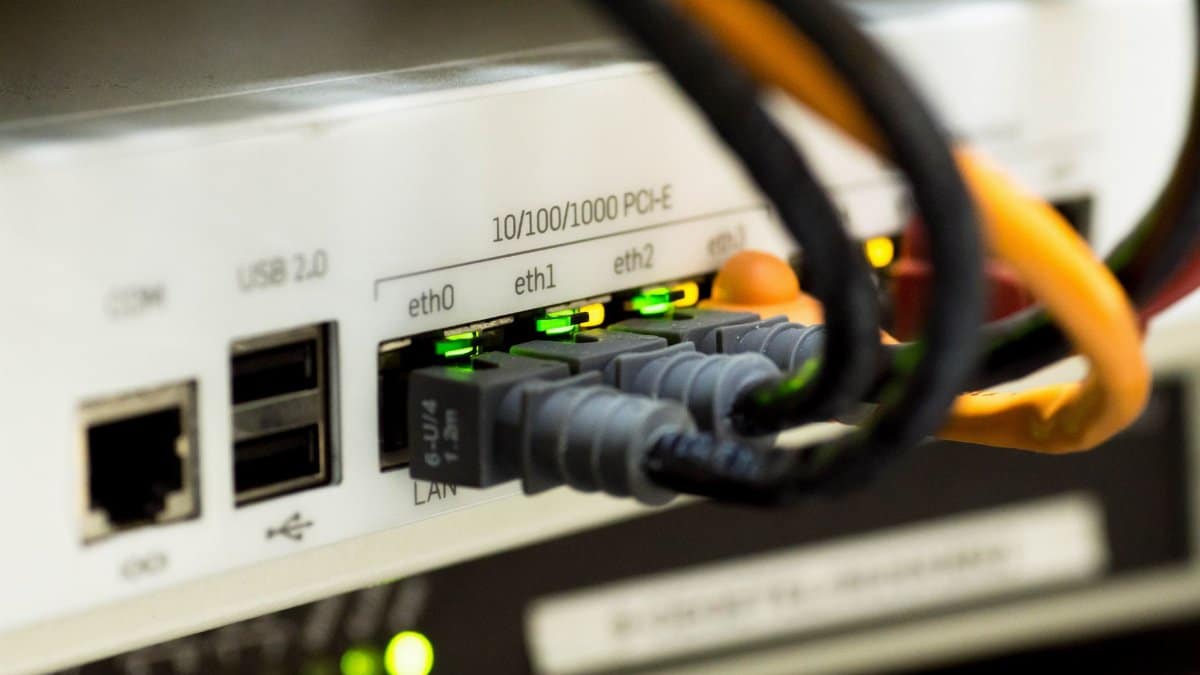
A router is an unglamorous object. In an office it moves email and video calls. In the systems that support air traffic, similar hardware can sit on paths that carry surveillance data, voice, and other operational traffic between facilities. If a path fails, backup paths are supposed to take the load. If an upgrade changes how traffic is routed, or if a device does not fail the way designers expected, the backup story can become the main story.
Amarillo is not a hub in the popular imagination. That is part of why the detail startles people. Critical links do not have to live in the city whose airport is on the evening news. They live where the network was built, sometimes in places most passengers will never visit.
What a fiber upgrade is supposed to do

Fiber upgrades are routine in modern infrastructure. Carriers replace older circuits, add capacity, and shift traffic onto newer routes. Done well, users notice nothing except, later, fewer outages. Done during a window that touches safety critical communications, the work requires coordination that would look excessive in almost any other industry. Notices go out. Maintenance windows are chosen. Rollback plans are written. Someone is supposed to be able to say, with a straight face, what happens if the new path does not come up cleanly.
L3Harris is a major contractor in aviation communications and related systems. An upgrade touching its fiber footprint would not be exotic on its own. The question raised by this episode is narrower. Did a change in that footprint, interacting with routers in Texas and Arkansas, remove or degrade a path that the air traffic system still needed in that hour? Investigators look for timing. They compare the moment traffic shifted, the moment alarms appeared, and the moment facilities lost the data or voice quality they require to keep launching flights.
None of that is the same as blaming a single metal box on a rack. Networks fail in combinations. A router can be the visible point of collapse while the real mistake sits in a configuration, a cutover sequence, or an assumption that a second path was independent when it was not.
Why Houston became the public face of the halt
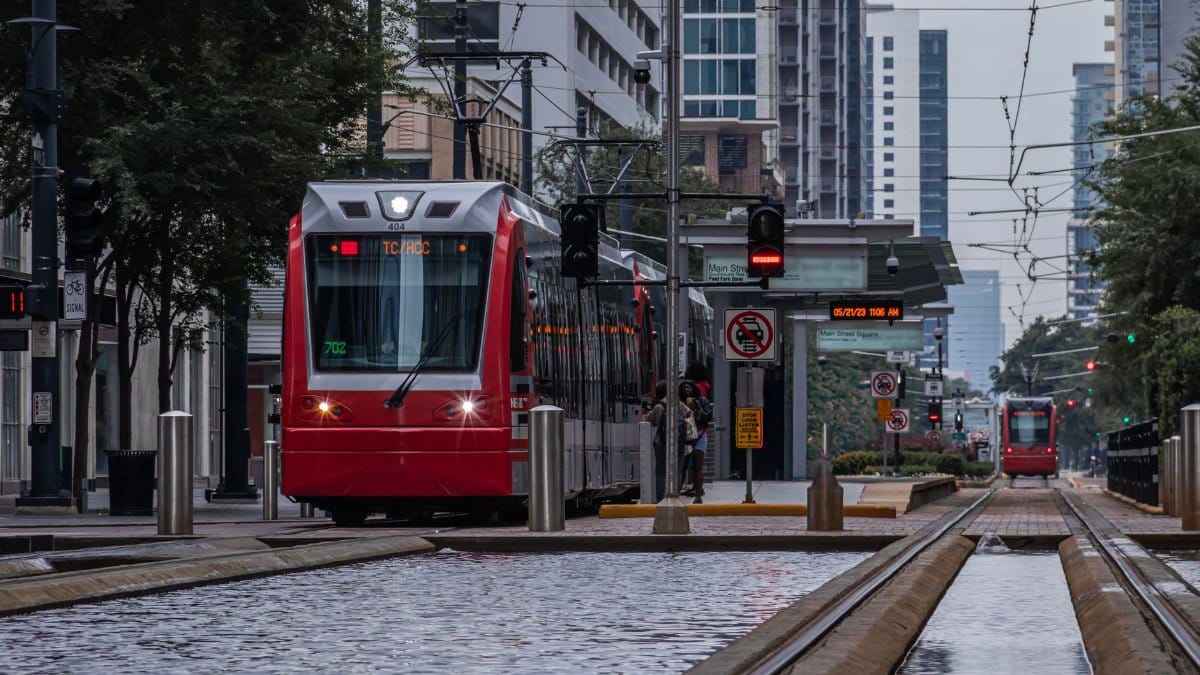
Houston is a connecting machine. When departures stop there, aircraft and crews stack up in a pattern that is hard to hide. Passengers heading to Latin America, to the coasts, and to smaller Texas cities all share the same frozen board. Local television cameras find the terminal easily. The story becomes a Houston story even if the suspect equipment is hours away by car.
There is a fairness issue in that framing, and also a useful one. Travelers deserve to know why their specific airport stopped moving. Engineers deserve a picture that includes Amarillo, Arkansas, and any other node on the path. Both descriptions can be true. The public face of a failure and the technical origin of a failure are often different places.
Early accounts have described the interruption as national in reach even when the most visible pileup was in Houston. That is how a tightly linked system behaves. A facility that cannot trust its data may stop accepting departures bound for its airspace. Other facilities then hold flights rather than launch them into a constrained sky. The result can look, from a passenger seat, like the whole country paused.
What officials have confirmed and what they have not
Caution is the honest posture here. Transportation and aviation officials have not laid out a complete public timeline that would let an outside reader assign blame with confidence. They have acknowledged disruption and pointed, through statements and through reporting, at communications trouble tied to network equipment and to upgrade work. They have not published a root cause report that names a single misconfigured router as the proven cause.
That gap is not a cover story by default. Complex outages take time to reconstruct. Logs from several organizations have to be aligned. Contractors, telecom providers, and the Federal Aviation Administration do not keep clocks and records in one shared notebook. A premature certainty can be as misleading as silence.
What can be said without stretching the facts is limited and still important. An FAA ground stop halted departures in a way that stranded Houston travelers and affected the wider schedule. Reporting has tied the inquiry to routers in Amarillo and Arkansas during fiber upgrade work involving L3Harris. The causal chain remains under examination. Anyone who claims a tidier ending is ahead of the public record.
How thin the margin can be

Air travel sells an image of redundancy. Two engines. Two pilots. Multiple runways. The communications layer underneath that image is redundant too, until a shared dependency shows up. Two routers in different states can still depend on one provider, one upgrade plan, or one incorrect belief about which circuit is the spare.
Passengers rarely see that layer. They see uniforms, jet bridges, and apps that promise a new gate. The people who see it are controllers, technicians, and the engineers who design how radar tracks and radio calls move between buildings. When they lose a feed, the procedure is not to improvise in the interest of on time departures. The procedure is to reduce traffic until the picture is whole again.
This is why a story about a router can also be a story about institutional habit. Upgrades will keep coming. Fiber will keep replacing older lines. The test is whether the people who schedule that work treat a quiet Tuesday as seriously as a holiday rush, and whether backup paths are tested as separate paths rather than as lines on a diagram.
What a careful reader should watch next

Follow the documents, not the loudest caption. A useful update will include a timeline, the facilities affected, the services lost, and the specific change that preceded the loss. It will say whether traffic failed over as designed. It will say whether the ground stop was a direct response to lost surveillance, lost voice, or a precaution taken when either looked unreliable. It will distinguish a local Houston impact from a national one with numbers, not adjectives.
Travelers can also watch their own airlines for how recovery is handled. After a ground stop lifts, the aircraft and crews are often in the wrong cities. Schedules do not snap back because a router comes back online. Rebooking, hotel vouchers, and crew legality rules keep shaping the day after the technical fault is gone. That second day is part of the event even if it never appears in an engineering memo.
I keep returning to the gap between the rack and the terminal. One is a room most of us will never enter. The other is where the consequences stand in line for coffee. Bridging that gap, in plain language, is the job of the next official account.
The question the headline is really asking

Did a Texas router play a role? The fairest answer, today, is that it may have, and that investigators have reason to look there, alongside equipment and circuits in Arkansas and the fiber work tied to L3Harris. A role is not the same as a sole cause. A router can be the point where a bad cutover became visible. It can also be a victim of a change made somewhere else on the path.
The FAA ground stop remains the fact passengers can verify in their own ruined plans. The hardware story is the fact the public is still owed in fuller form. Until that form arrives, the responsible account is the incomplete one: a halt ordered for safety, a network upgrade in the background, and a pair of places on the map that do not match the airport on the ticket.
That incompleteness is frustrating. It is also how serious systems should be discussed. Confidence returns when the explanation is specific enough to be checked, not when it is smooth enough to close the tab.